
 Facebook
 X
X
 Pinterest
 Copy Link
Homeowner Flood Guide: Broward County
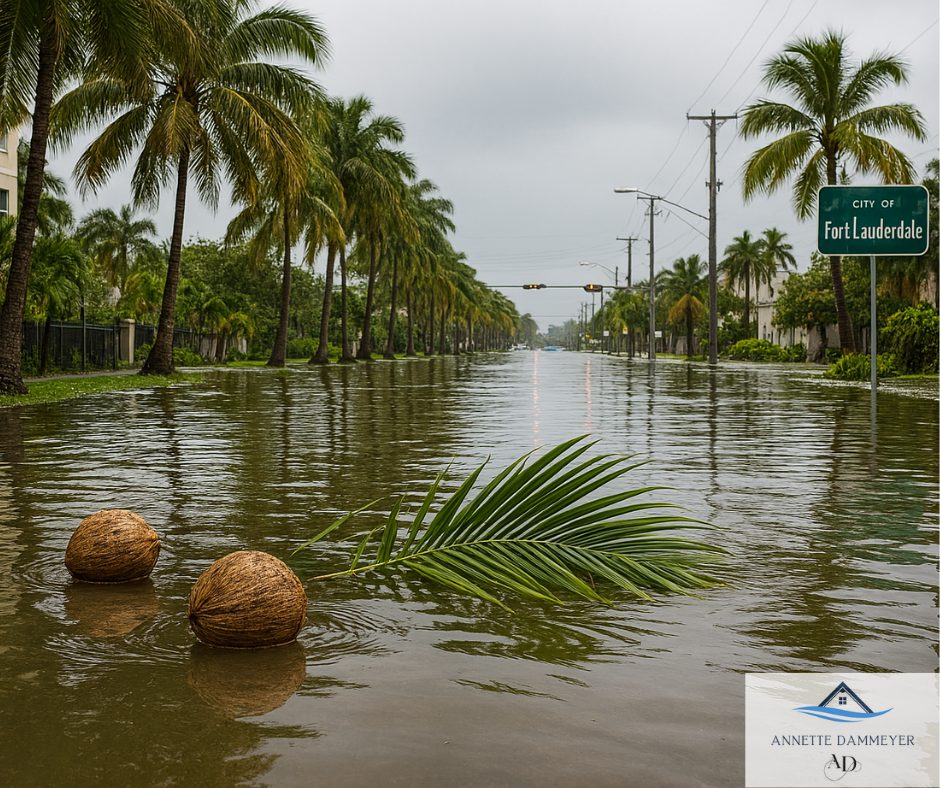
Understanding Flooding in Southeast Florida: What Fort Lauderdale and Surrounding Homeowners Need to Know (2026 Guide)
Flooding has always been part of life in Southeast Florida—but recent climate shifts, updated FEMA flood maps, and major changes to flood insurance are now reshaping what it means to own a home here. Whether you’re a long‑time local or a recent transplant to Fort Lauderdale, understanding your flood risk and insurance options is essential for protecting your home and financial security.
This guide brings together the latest information on flooding concerns, insurance changes, FEMA map updates, and how to find your flood zone, along with links to official tools and local contacts.
1. Why Flooding Is Getting Worse in Southeast Florida
Compound Flooding Is Now the New Normal
A groundbreaking Broward County study revealed that flooding in our region is no longer caused by rainfall alone. Today, rainfall, rising seas, king tides, and even groundwater rising from below combine to create compound flooding—leading to more widespread and frequent water intrusion in neighborhoods that previously stayed dry.
Many drainage canals—some more than 80 years old—can no longer drain effectively during high tides, causing backups inland and making even light rainstorms more disruptive.
Aging Infrastructure Is Falling Behind
South Florida’s flood control system was designed decades ago to manage 7–12 inches of rain in 24 hours—conditions that no longer reflect today’s climate realities. Annual flood risk in vulnerable areas has increased from under 4% to over 20%, meaning homeowners face significantly higher odds of experiencing flooding each year.
2. How Flooding Affects Fort Lauderdale Homeowners
Flooding impacts more than just the structure—it affects your home’s value, insurance costs, and long‑term financial stability.
Common Types of Damage
- Foundation cracking and settlement
- Electrical and HVAC system failure
- Mold growth from prolonged moisture
- Damage to pools, landscaping, and seawalls
- Repeated standing water affecting driveways and garages
Even neighborhoods on “high ground” have reported rising groundwater flooding, especially after large storms.
3. Flood Insurance in 2026: What’s Changed
Risk Rating 2.0: FEMA’s New Pricing Model
Flood insurance pricing is no longer dictated solely by flood zones. Under Risk Rating 2.0, premiums now reflect a property’s individual flood risk based on:
- Distance to water
- First‑floor elevation
- Flood frequency and severity
- Cost to rebuild
While some homeowners have seen premiums decrease, others—particularly in coastal or high-value areas—are experiencing annual increases of up to 18% (the legal cap).
NFIP (National Flood Insurance Program) Highlights for Florida
- Roughly two-thirds of older pre‑FIRM (Flood Insurance Rate Maps) homes see some premium decrease.
- Higher‑value homes or homes near tidal waters tend to see increases.
Growing Popularity of Private Flood Insurance
Private insurers can sometimes offer:
- Higher coverage limits
- Additional living expense coverage
- More flexible pricing
For many Fort Lauderdale homes—especially condos and waterfront properties—private flood insurance is now worth comparing.
3A. Understanding Flood Insurance: “Seeping” vs. Water Damage
Flood insurance can feel confusing, especially when terms like “water damage,” “seepage,” “intrusion,” or “flood loss” are used interchangeably. Here’s a clear, homeowner‑friendly explanation of how these concepts usually play out in policies:
What Flood Insurance Typically Covers
Flood insurance—whether through the National Flood Insurance Program (NFIP) or a private insurer—is designed primarily to protect you from sudden, temporary, external flooding events, such as:
- Water rising from outside the home
- Street or neighborhood flooding after heavy rainfall
- Canal, lake, or Intracoastal overflow
- King tides and storm surge pushing water inland
In short: flood insurance focuses on unexpected flooding caused by natural events, not long‑term maintenance issues.
What “Seepage” Usually Means
“Seepage” (also called gradual intrusion or slow water penetration) refers to moisture that enters over time—for example:
- Water wicking through foundation cracks
- Dampness around windows/doors due to aging seals
- Groundwater slowly migrating into slabs, garages, or crawlspaces
- Humidity/condensation‑related moisture
Most policies treat slow seepage as a maintenance issue, which is generally not covered—either by standard homeowners insurance or by flood insurance.
Flood Damage vs. Seepage: The Key Difference
- ✔️ Flood damage (often covered): A sudden event with a definable cause (e.g., a storm, surge, or rapid accumulation) that affects the area around you—not just your home.
- ❌ Seepage (often excluded): A gradual process linked to property condition or site drainage, not a single, sudden weather event.
Why This Matters in Southeast Florida
Because our region features high groundwater and porous limestone, homes may experience both sudden flooding and slow moisture intrusion. Knowing the difference helps you:
- Ask the right questions when buying or renewing coverage
- Avoid claim surprises tied to “gradual damage” exclusions
- Target maintenance (grading, sealing, drainage) that reduces moisture risks
Practical Steps to Reduce Seepage Risks
- Reseal windows/doors and repair stucco or slab cracks
- Maintain gutters and extend downspouts away from the foundation
- Regrade soil to slope away from the house
- Consider French drains, sump pumps, vapor barriers, or waterproof membranes
Pro tip: Document your maintenance (photos/receipts). Good records can support your claim when a sudden flood event does occur.
(Note: Policy terms vary. Always review your declarations and endorsements with a licensed agent for specifics.)
4. FEMA Flood Map Updates: Broward County & Fort Lauderdale
New FEMA Maps Effective July 31, 2024
Broward County residents are now subject to updated Flood Insurance Rate Maps (FIRMs), which expanded the Special Flood Hazard Areas (SFHAs) and adjusted many Base Flood Elevations (BFEs).
In Hollywood alone, over 11,000 properties were newly placed into high‑risk zones, requiring flood insurance for federally backed mortgages and mandating higher construction elevations.
What This Means for You
If your home’s zone changed, you may now:
- Be required to carry flood insurance
- Face higher premiums
- Need elevation documentation for remodeling or rebuilding
Checking your updated zone is crucial (see links below).
5. How to Find Your Flood Zone (Step‑By‑Step)
Below are the official, most accurate tools available to Broward County and Fort Lauderdale homeowners.
A. Fort Lauderdale GIS Flood Zone App (City Tool)
This is one of the best local tools for residents:
👉 https://www.fortlauderdale.gov/government/departments-a-h/development-services/building-services/flood/flood-risk-information
Use it to:
- Look up flood zones by address
- View local SFHAs
- Download zone information for insurance or permitting
B. Broward County Flood Zone Map (County Tool)
For countywide 2024 FEMA maps:
👉 https://www.broward.org/Environment/FloodZoneMaps/Pages/Default.aspx
Includes:
- Updated maps effective July 31, 2024
- Contact information for your Community Floodplain Manager
C. FEMA Flood Map Service Center (National Tool)
Use FEMA’s official link to search your exact address:
👉 https://msc.fema.gov/portal/search
This is the definitive source lenders use for mortgage requirements.
D. Broward County FEMA 2024 Interactive Map (Experience Builder App)
Offers parcel‑specific BFEs and legacy/comparison maps:
👉 https://experience.arcgis.com/experience/8dfc61c972e148f8b12953ddffe299c9/
6. Who to Contact for Help (Local & Federal)
Fort Lauderdale Floodplain Group
Email: PCardenas@FortLauderdale.gov
Great for:
- Flood zone questions
- Elevation certificates
- Flood risk reports
Broward County Community Floodplain Manager
Found via the county’s flood map site:
👉 https://www.broward.org/Environment/FloodZoneMaps/Pages/Default.aspx
FEMA Mapping & Insurance Exchange
Phone: 1‑877‑336‑2627
Email: FEMAMapSpecialist@riskmapcds.com
Your Local Insurance Agent
Ideal for comparing NFIP vs. private flood insurance pricing. (I have excellent referrals if needed.)
7. How to Prepare Your Home for Flooding
Elevate Utilities & Equipment
FEMA now recommends (and some insurers require) that HVAC units, electrical panels, and batteries be elevated at least one foot above the BFE (Base Flood Elevation).
Improve Drainage
- Keep gutters and downspouts clear
- Install French drains or sump pumps
- Ensure grading slopes away from the home
Use Flood‑Resistant Materials
Especially during renovations—this can reduce your claim risk and insurance costs.
Store Documents Safely
Keep insurance documents and IDs in waterproof containers or digital cloud storage.
8. Final Thoughts for Our SE Florida Community
Flooding in Southeast Florida is evolving quickly—but with the right information, preparation, and insurance strategy, homeowners can stay ahead of the risk. Understanding your flood zone, reviewing updated FEMA maps, and comparing insurance options are some of the most important steps you can take to protect your home and your long-term financial stability.
As a local experienced real estate professional, my goal is to empower our community with the knowledge we all need to protect our homes, our investments, and our peace of mind. Flooding is a growing reality in Southeast Florida, but staying informed puts you one step ahead. I’m always here to help—whether you’d like guidance understanding your flood zone, need trusted resources, or want to explore how these changes may affect your property. Please feel free to reach out anytime; it would be my pleasure to support you and our beautiful coastal community.
CONTACT ANNETTE
Let’s start working together!

Annette Dammeyer, REALTOR®, ABR®, AHWD®
Coldwell Banker Realty
901 E Las Olas Blvd STE 101, Fort Lauderdale, FL 33301
808.747.3686
SL 3535792
Navigating Home Insurance in Southeast Florida
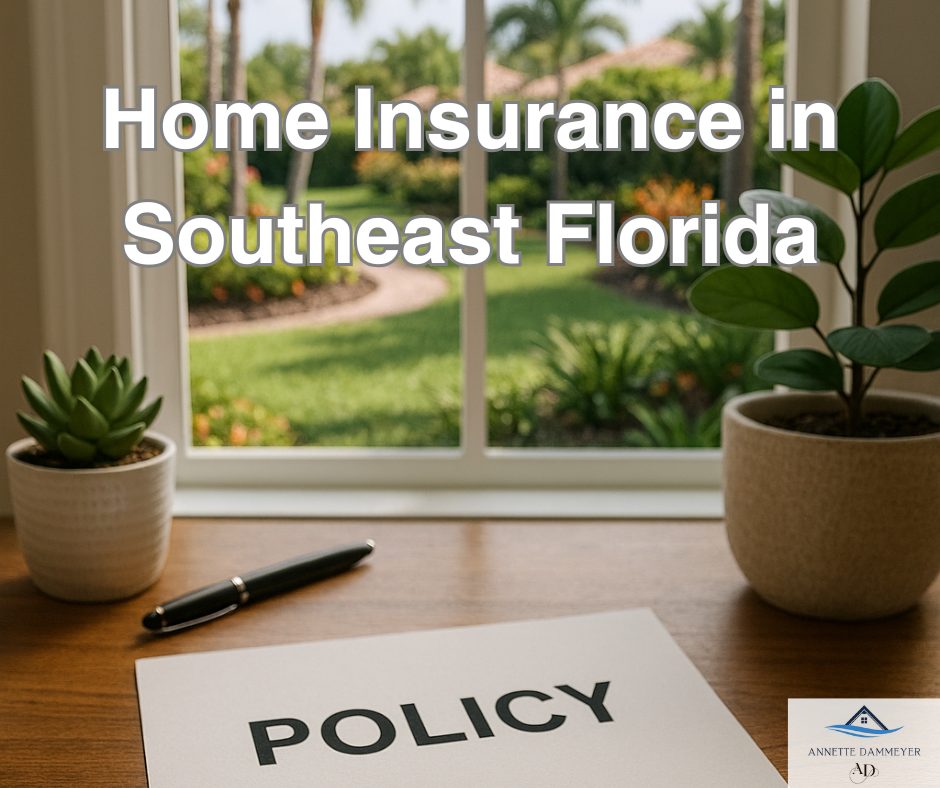
🏡 Navigating Home Insurance in Southeast Florida: What Every Homeowner Needs to Know
As a local real estate professional in South Florida’s waterfront and lifestyle-driven communities, I know firsthand how confusing—and crucial—home insurance can be. With recent shifts in the market, including rate reductions from select private insurers (excluding Citizens), now is the time to get informed and empowered.
Let’s break down the essentials so you can protect your investment with confidence.
📉 Positive Trends: Some Insurers Are Lowering Rates
After years of skyrocketing premiums, private insurers are beginning to file for rate decreases in 2025. This is a welcome shift, especially for homeowners in Fort Lauderdale, Hollywood, and surrounding areas who’ve been navigating a volatile insurance market.
Note: Citizens Insurance is not included in these reductions, but its policy count is dropping as private carriers re-enter the market.
🆕 New Home Insurance Providers Entering the SE Florida Market
Thanks to recent legislative reforms aimed at curbing litigation abuse and stabilizing the insurance market, several new private insurers have entered Florida in the past year. These companies are offering competitive rates and broader coverage options, especially in areas like Hollywood, Fort Lauderdale, and Dania Beach.
✨ Notable New Entrants (2024–2025)
Here are some of the most promising new providers now serving SE Florida:
- Viceroy Preferred Insurance
Focused on personalized property coverage with competitive premiums.- Vision Insurance Exchange
Offers flexible policy structures and is gaining traction for its customer-first approach.- Tailrow Insurance Company
Specializes in homeowners insurance with a niche focus on Florida’s unique risks.- Mainsail Insurance Company
Provides bundled options (home, auto, commercial) for convenience and savings.- Orange Insurance Exchange
A Florida-based startup offering innovative, locally tailored solutions.- Trident Reciprocal Exchange
One of the newer carriers authorized to operate statewide.- Ovation Home Insurance Exchange
Known for tech-forward underwriting and streamlined claims processing.These companies are helping to restore competition and lower premiums—a welcome shift for homeowners who’ve faced steep rate hikes in recent years.
🛡️ What Is Citizens Insurance—and Why Are They Depopulating?
Citizens Property Insurance Corporation is Florida’s state-backed insurer of last resort. It was created to provide coverage when private insurers won’t, especially in high-risk areas.
Why It Matters:
- Citizens grew rapidly during the insurance crisis, becoming the largest insurer in Florida.
- However, it’s not designed to be a long-term solution—its rates are often capped and don’t reflect actual market risk.
- If Citizens faces massive claims (e.g., after a hurricane), all Florida policyholders may be assessed fees to cover shortfalls.
🚪 Depopulation Explained:
- As private insurers return to the market, Citizens is encouraging policyholders to switch to private carriers.
- This reduces Citizens’ exposure and helps stabilize the overall insurance ecosystem.
- Homeowners may receive offers from private insurers to take over their Citizens policy—often with better coverage or pricing.
🧮 Understanding Replacement Cost vs. Purchase Price
Insurance premiums are based on replacement cost, not market value.
- Replacement Cost: What it would cost to rebuild your home today using current labor and materials.
- Purchase Price: Influenced by location, demand, and market trends.
💡 Example: A home purchased for $500K may cost $600K to rebuild—your insurance is based on the latter.
🌤️ Best Time to Shop for Insurance: Avoid Hurricane Season
Timing matters.
- Ideal Window: Late fall through early spring (November–April)
- Why: During hurricane season (June–November), insurers often restrict new policies or raise rates due to increased risk.
📍 Zip Code Eligibility Can Change Fast—Act Quickly
Insurance companies frequently open and close zip codes based on risk models.
- If you find a favorable quote, bind it immediately.
- If your home purchase falls through, you can cancel the policy—no harm done.
🏠 Home Age Matters—Even If It’s Renovated
Insurance rates are heavily influenced by the year the home was built, not when it was renovated.
- A renovated 1950s home is still considered a 1950s home.
- To be considered “new construction,” the property must be:
- Completely torn down (no walls left)
- Rebuilt with permits
- Issued a new Certificate of Occupancy
🛠️ Lower Your Premium with a 4-Point Inspection
A 4-point inspection evaluates key systems in older homes and can help reduce your premium if deficiencies are corrected.
What’s Included:
1. 🏚️ Roof
- Inspectors look for:
- Age, condition, leaks, and remaining life
- Typical lifespans:
- Flat: 10–20 years
- Shingle: 15–30 years
- Tile: 25–50 years
- Insurers require at least 5 years of life left (5 years beyond the closing date).
🚫 The Problem with Roof Coatings in SE Florida Insurance
While roof coatings (like acrylic, silicone, or elastomeric sealants) can help protect and extend the life of a roof by sealing cracks and improving water resistance, insurance providers in Southeast Florida typically do not recognize coatings as valid roof replacements.
Why It Matters:
- Coating ≠ Replacement: Insurers view coatings as cosmetic or temporary fixes—not structural upgrades.
- Coverage Denial Risk: If a roof is coated instead of replaced, it may be deemed ineligible for coverage, especially by Citizens Insurance and many private carriers.
- Age Still Counts: Even with a fresh coating, the roof’s original age remains unchanged in the eyes of insurers.
Citizens Insurance explicitly states that using coatings in place of full replacement makes the property ineligible for coverage.
🔍 Bottom Line for Homeowners:
If you’re trying to insure or sell a home with a coated roof, be prepared for:
- Higher premiums
- Limited carrier options
- Possible denial of coverage
For insurance purposes, a roof must be structurally replaced—not just cosmetically refreshed—to be considered compliant.
2. ⚡ Electrical
- Inspectors check:
- Panel type, wiring, grounding, and safety
- Panels often rejected:
- Federal Pacific (FPE)
- Zinsco
- Challenger
- Sylvania (certain models)
- Stab Lok
3. ❄️ HVAC & Water Heater
- Life expectancies:
- AC/HVAC: 10–15 years
- Water Heater: 8–12 years
- Tip: Water-related claims are the #1 source of insurance payouts—keep these systems updated.
4. 🚰 Plumbing
- Inspectors assess:
- Pipe material, leaks, water pressure
- Preferred pipes:
- Copper, CPVC, PEX
- Problem pipes:
- Polybutylene (gray plastic, often stamped “PB2110”)
- These must be replaced to avoid coverage denial.
🌬️ Wind Mitigation Inspection: Save Big with Impact Protection
A wind mitigation inspection can significantly reduce your premium.
- What it checks:
- Roof shape and attachment
- Impact-rated windows and doors
- Shutters and garage door reinforcement
- All windows and doors must be impact
- 🪟 Partial Impact Protection: How It Affects Insurance Premiums in SE Florida
In Southeast Florida, insurance companies reward homes with full impact protection—meaning all exterior openings (windows, doors, skylights, and garage doors) must be impact-rated or have approved shutters.
🔍 What Happens If Only Some Are Impact?
- No Full Credit: If only some windows or doors are impact-rated, the home typically does not qualify for the highest wind mitigation discounts.
- Tiered Discounts: Florida law allows insurers to offer tiered credits, but partial protection often falls into a lower category—sometimes resulting in minimal or no premium reduction.
- Uniform Mitigation Verification Form: Inspectors must document each opening. If any are unprotected, the form reflects that, and insurers adjust the discount accordingly.
Example: A home with 80% impact windows but a non-impact front door and garage door may still be considered unprotected under wind mitigation standards.
🏷️ Why Full Impact Matters
- Windstorm coverage is a major portion of Florida premiums—often 60–70% of the total.
- Homes with full impact protection can save 10–45% on that portion of the premium.
- Partial protection may only qualify for basic credits, or none at all, depending on the carrier.
⚠️ Pro Tip: Never Remove Impact Labels
To qualify for discounts, insurers require:
- Visible labels with product approval codes (e.g., Miami-Dade= NOA or ASTM standards, Broward= TAS/Product Approval #)
- Documentation from the manufacturer or installer
Removing labels can make it impossible to verify compliance—even if the product is impact-rated.
🌊 Flood Insurance: Always a Smart Move in SE Florida
Flooding isn’t just a coastal issue—it can happen anywhere.
- Covers:
- Water damage from rising water, storm surge, and seepage
- Flood insurance rates are not decreasing and remain essential.
- Flood zones:
- Zone A & V: Mandatory insurance if you have a mortgage
- Zone X: Optional but recommended (not optional for Citizens)
💡 Even if you’re in Zone X, a low-cost policy can protect you from unexpected events.
💬 Final Thoughts from Your Local Real Estate Ally
I hope this guide helps you feel more confident navigating home insurance in Southeast Florida. Whether you’re buying, selling, or simply reviewing your current policy, knowledge is power—and protection.
If you’d like trusted referrals to local insurance providers or want to review your own policy, I’m happy to connect you with professionals who understand our unique market.
Let’s keep your home—and peace of mind—secure.
Your SE Florida Real Estate Guide & Advocate
CONTACT ANNETTE
Let’s start working together!
Annette Dammeyer, REALTOR®, ABR®, AHWD®
Coldwell Banker Realty
901 E Las Olas Blvd STE 101, Fort Lauderdale, FL 33301
808.747.3686
SL 3535792


