
 Facebook
 X
X
 Pinterest
 Copy Link
How to Know Your Current Home Equity

🌴 How to Know Your Current Home Equity in SE Florida (2026 Guide for Homeowners)
If you’re a homeowner in Fort Lauderdale and surrounding communities, understanding your current home equity is one of the smartest financial steps you can take. Equity is simply the portion of your home you truly own, and in SE Florida’s fast‑moving coastal market, it can shift more quickly than many people realize.
Here’s how to calculate it — and why working with a local real estate professional gives you the most accurate picture.
-
Start With Your Home’s True Market Value
Your home’s current value is the foundation of your equity. While online estimates can be a starting point, they often miss the nuances that matter most in SE Florida, such as:
- Waterfront premiums and canal access
- Impact windows, roof age, and insurance‑friendly upgrades
- Neighborhood micro‑trends within 0.25 miles
- Condo reserve strength and milestone inspection status
- Local development (Dania Pointe, Brightline expansion, new parks)
- Seasonal buyer demand and relocation patterns
This is where a local real estate agent becomes invaluable. An experienced SE Florida agent understands how these factors influence value street‑by‑street — something algorithms simply cannot do. A professional CMA (Comparative Market Analysis) reflects real buyer behavior, real neighborhood trends, and real market conditions.
-
Subtract Your Current Loan Balances
Once you know your home’s true market value, subtract:
- Your remaining mortgage principal
- Any HELOCs or second mortgages
- Any solar or improvement loans tied to the property
Your lender’s portal will show your exact payoff amount.
-
Consider SE Florida‑Specific Equity Factors
Our region has unique variables that directly affect equity:
- Insurance requirements — newer roofs, impact windows, and updated systems increase value
- Flood zone changes — Risk Rating 2.0 impacts desirability and premiums
- Waterfront infrastructure — seawall condition, dock permits, and canal depth matter
- HOA/condo reserves — strong reserves boost value; deferred maintenance lowers it
- Local revitalization — walkability improvements and new businesses raise neighborhood equity
A local agent tracks these shifts in real time, ensuring your equity estimate reflects today’s realities — not outdated data.
-
The Simple Formula
Once you have your numbers:
Current Market Value – Total Loan Balances = Your Home Equity
Example: If your home is worth $750,000 and you owe $310,000, your equity is $440,000.
🌺 Why a Local Agent Gives You the Most Accurate Equity Picture
Equity isn’t just a number — it’s a reflection of your home’s position in the current market. A seasoned SE Florida agent:
- Knows how buyers value specific upgrades
- Understands neighborhood micro‑trends
- Accounts for insurance and inspection realities
- Recognizes lifestyle-driven demand (walkability, waterfront access, outdoor living)
- Provides a personalized valuation rooted in real data, not generic algorithms
This ensures you’re making decisions based on true equity, not guesswork.
🌞 Smart Ways to Use Your Home Equity
If you’re considering tapping into your equity, the wisest uses are those that strengthen your financial stability or improve your lifestyle. Many SE Florida homeowners use equity to:
- Upgrade roofs, windows, or systems to reduce insurance costs
- Renovate kitchens, baths, or outdoor spaces
- Consolidate high‑interest debt
- Purchase a second home or investment property
- Downsize into a simpler, low‑maintenance lifestyle
As your local SE Florida real estate resource, I’m here to help you understand exactly where your equity stands — with real data, neighborhood insight, and the kind of street‑level expertise no online estimate can match. If you’re ready for a personalized equity check or want to explore what your equity could unlock in today’s market, reach out anytime. Your home’s next chapter starts with clarity, confidence, and a trusted local expert by your side. 🌴✨
CONTACT ANNETTE
Let’s start working together!

Annette Dammeyer, REALTOR®, ABR®, AHWD®
Coldwell Banker Realty
901 E Las Olas Blvd STE 101, Fort Lauderdale, FL 33301
808.747.3686
SL 3535792

Fort Lauderdale July 2026 Area Report
Fort Lauderdale July 2026 real estate statistics have been published.
Single Family Homes
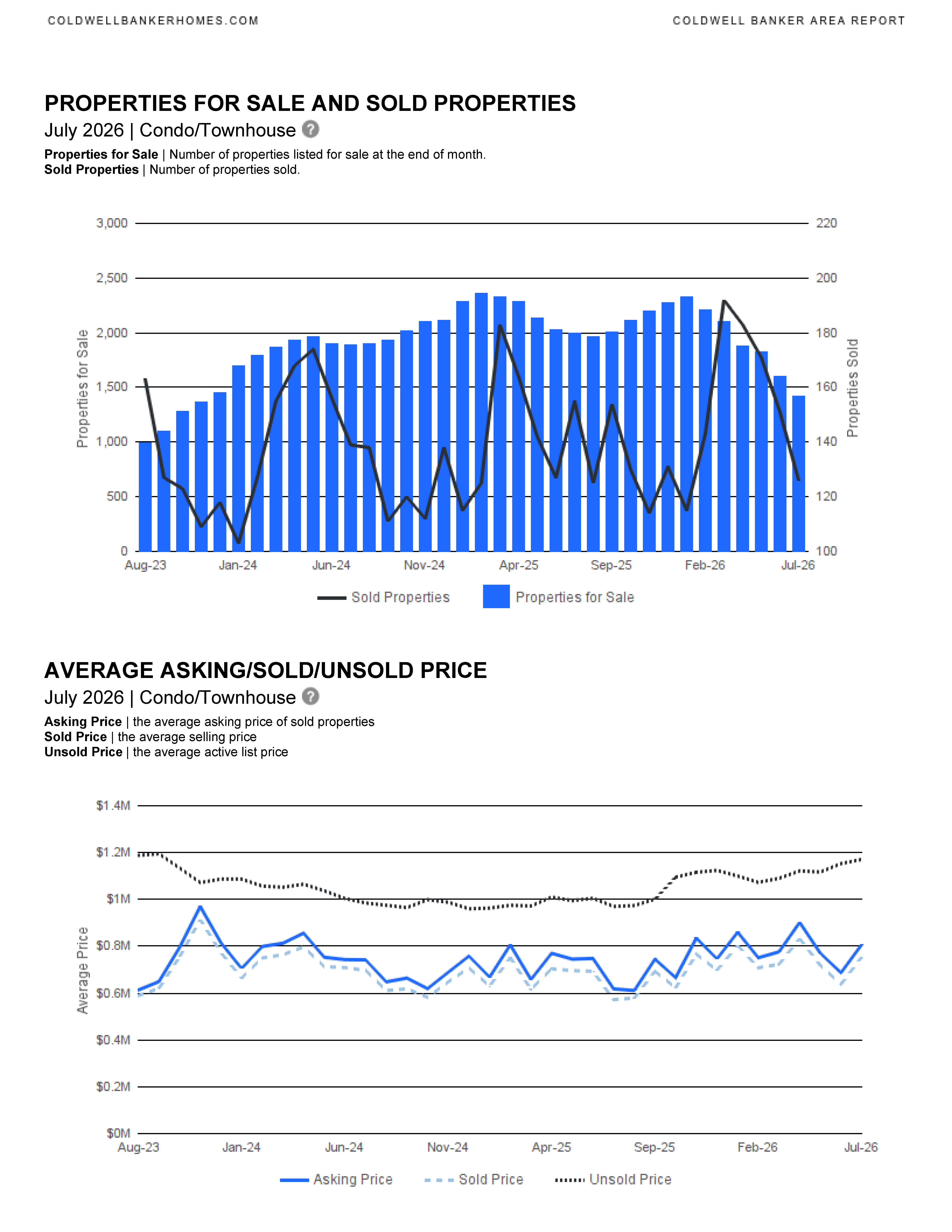
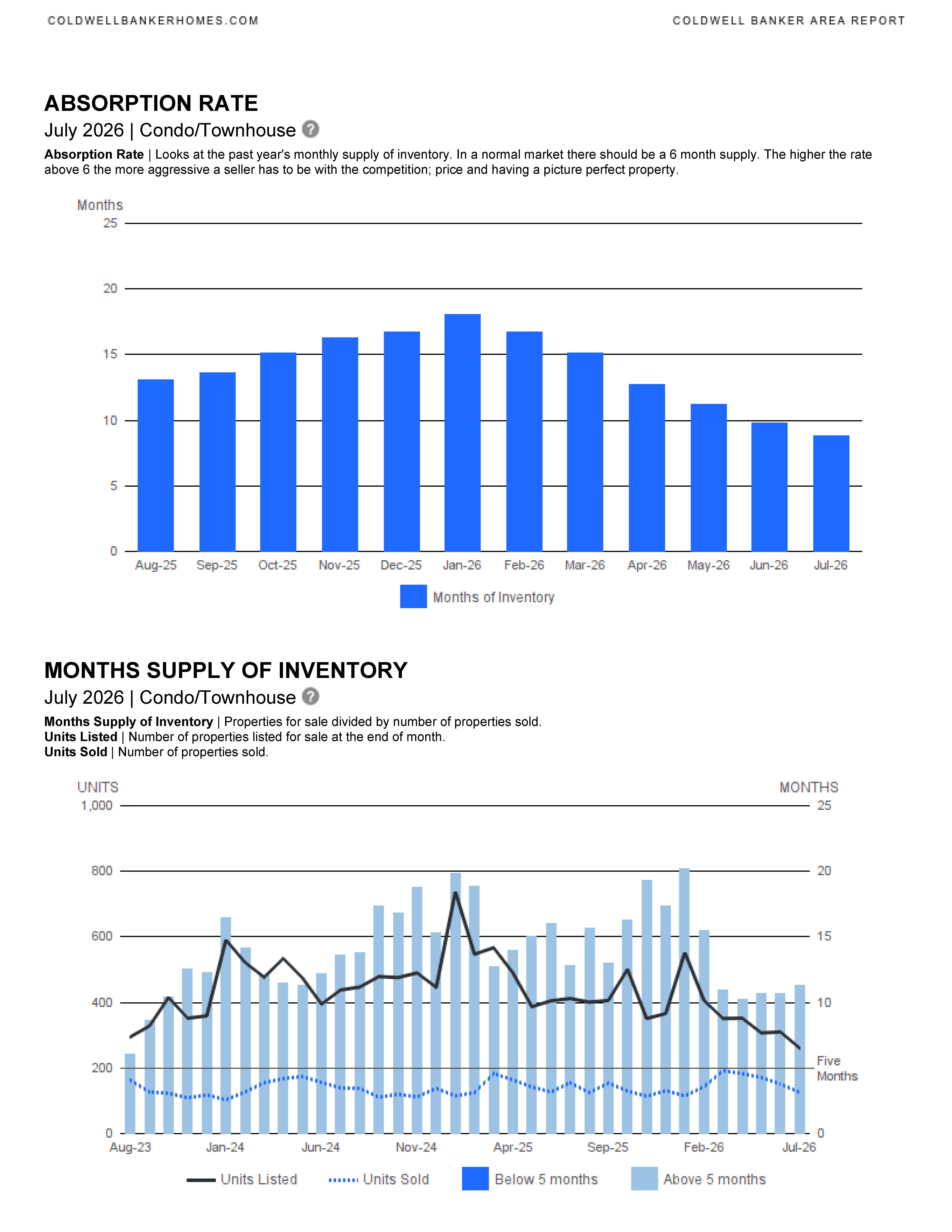
Condominium & Townhouses
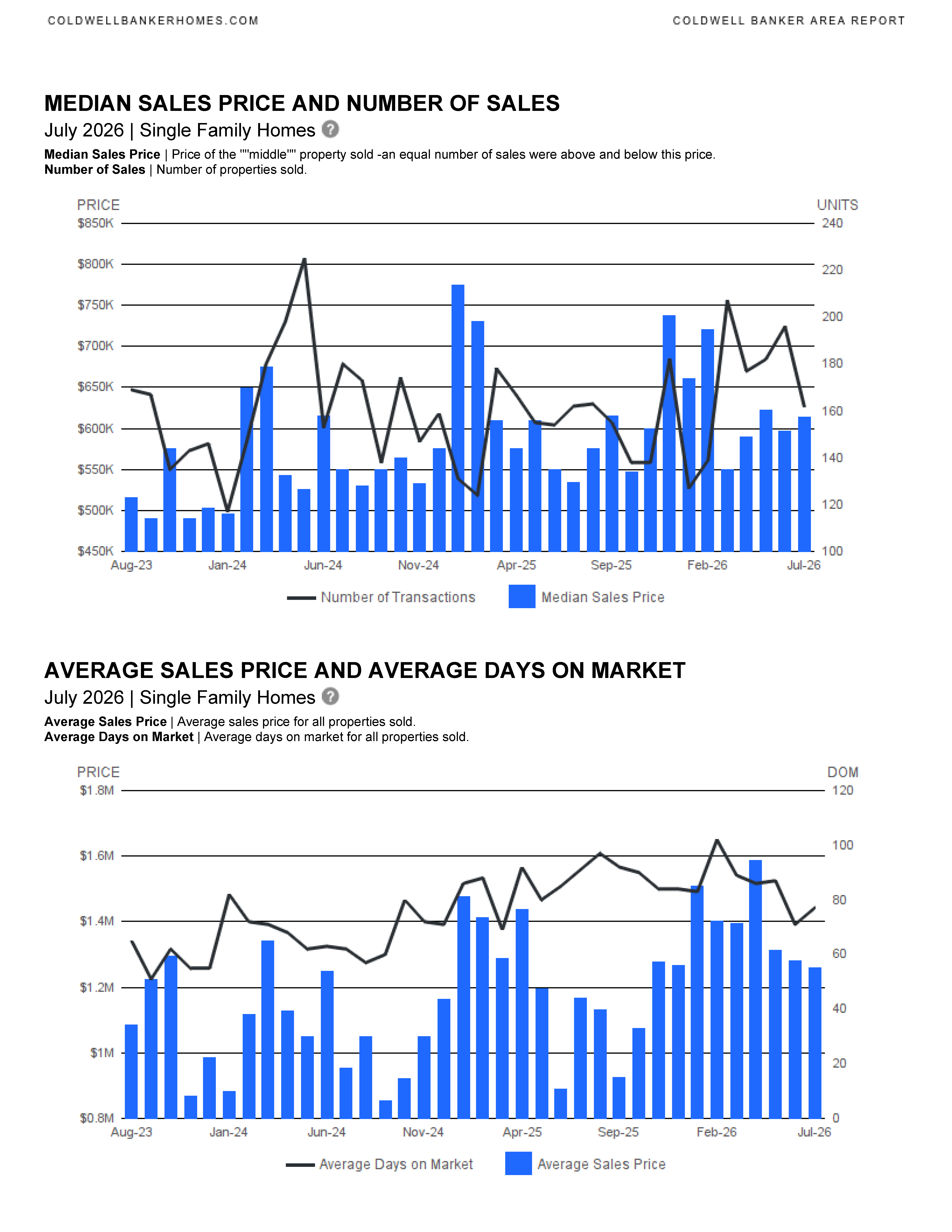
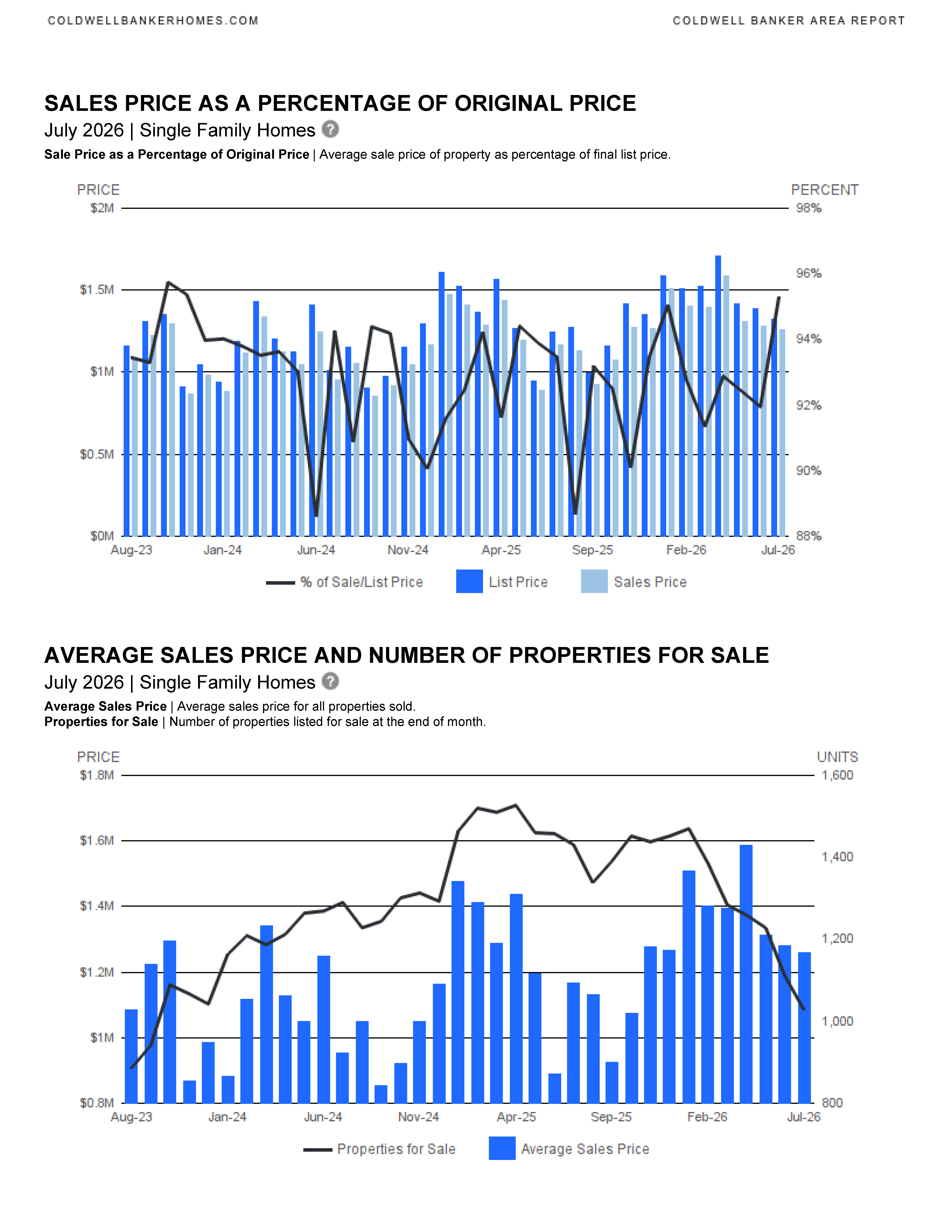
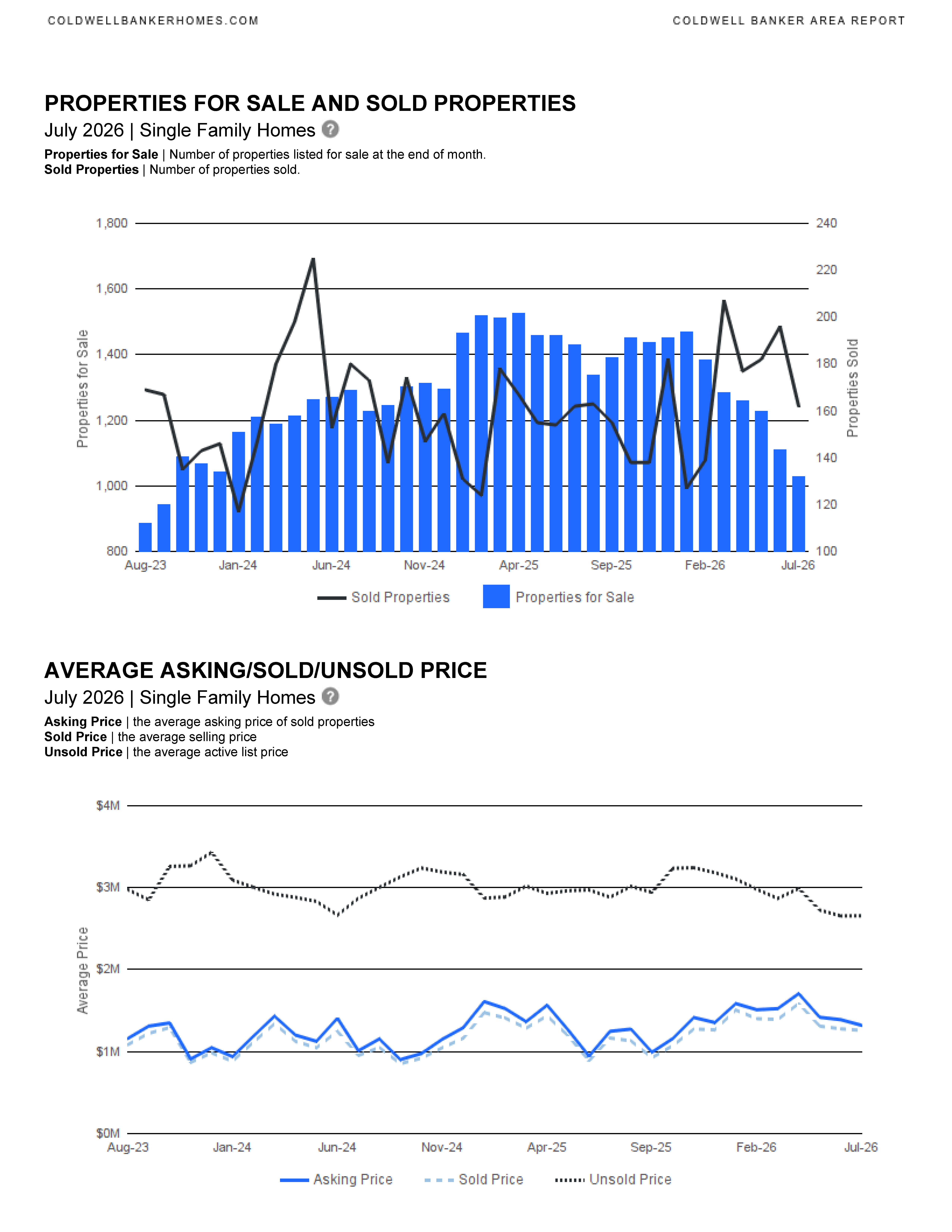
As a local REALTOR® who follows our market closely, here are the key takeaways from the latest Fort Lauderdale market report. Overall, we’re seeing fewer new listings, rising prices, and improving conditions in the single-family home market, while the condo market continues to offer buyers more choices and negotiating power.
Single-Family Homes: Strong Prices, Less Competition
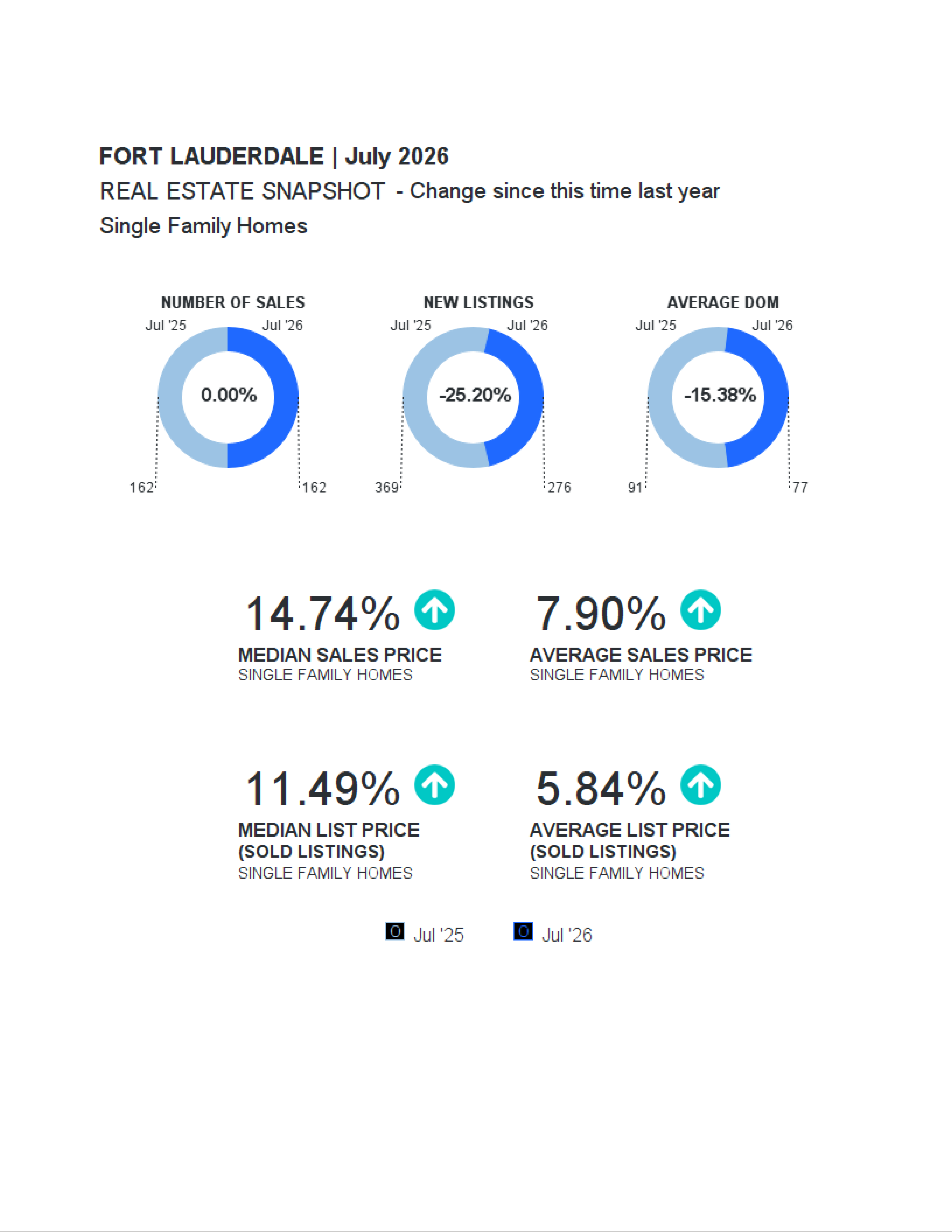
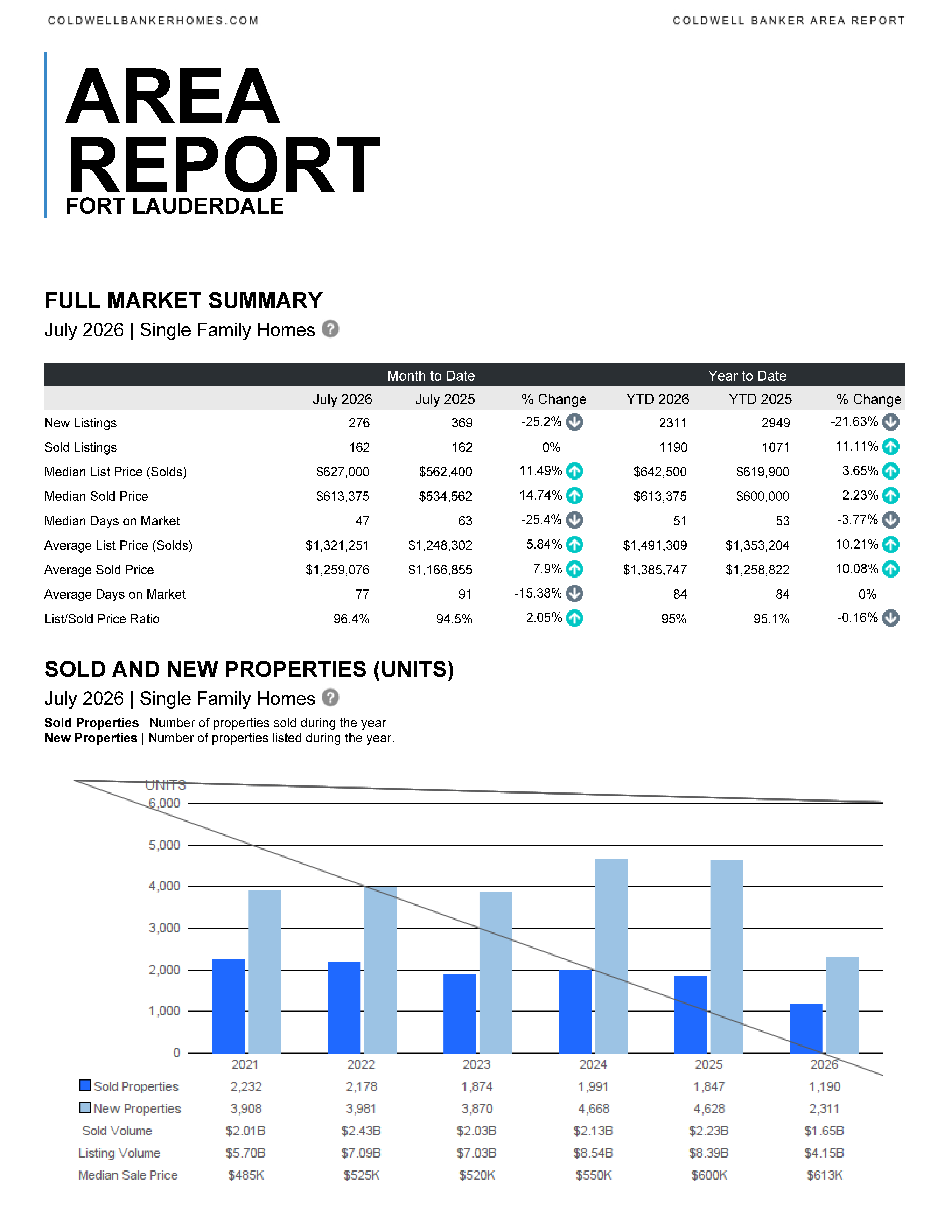
- New listings were down 25.2% from last July, meaning fewer homes are coming onto the market.
- Sales remained steady with the same number of homes sold as last year.
- The median sold price increased nearly 15% year-over-year, reaching $613,375.
- Homes sold faster, with median days on market dropping from 63 days to 47 days.
- Sellers received about 96.4% of their asking price on average.
What it means: The single-family home market remains resilient. Limited inventory is helping support home values, and well-priced properties are attracting buyers relatively quickly.
Condo & Townhouse Market: More Opportunities for Buyers
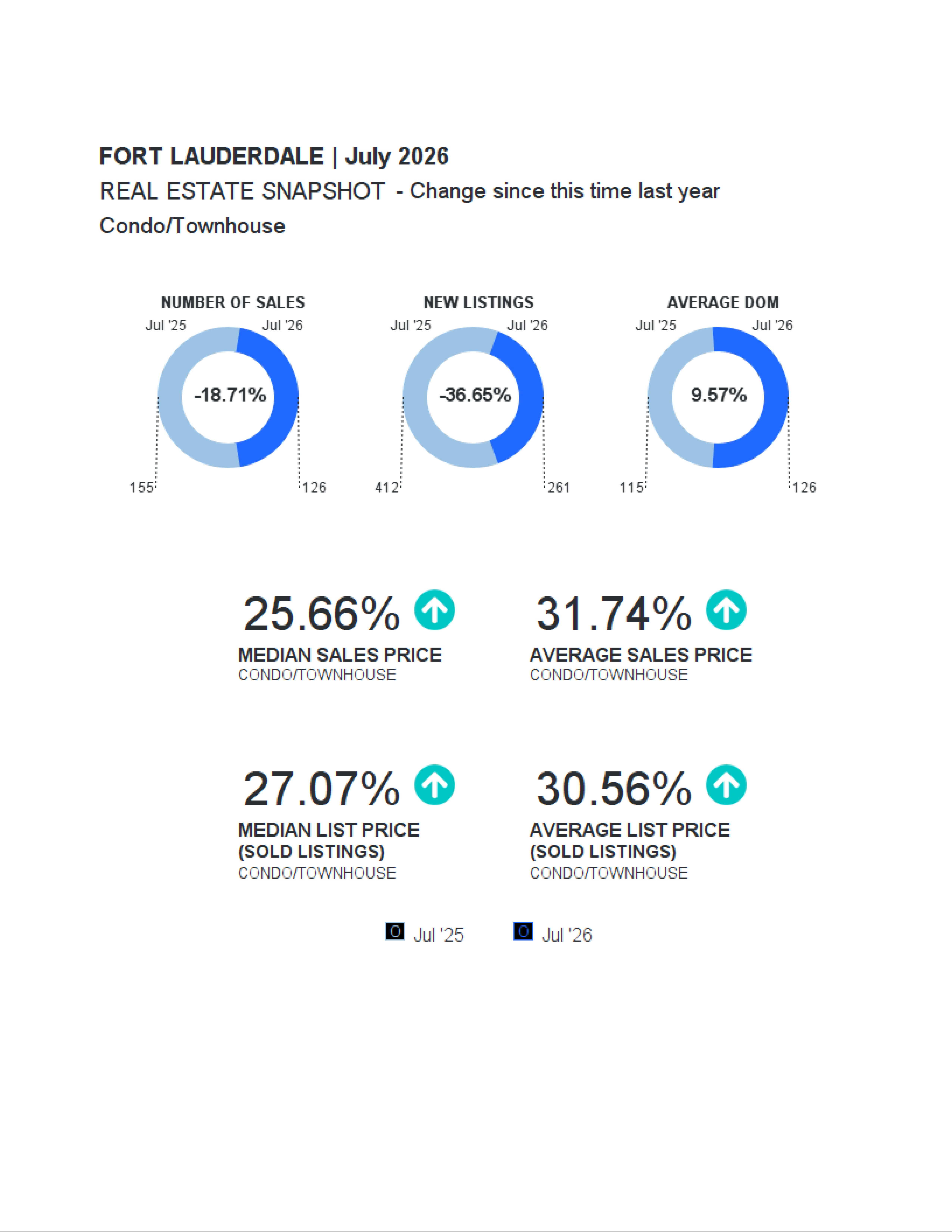
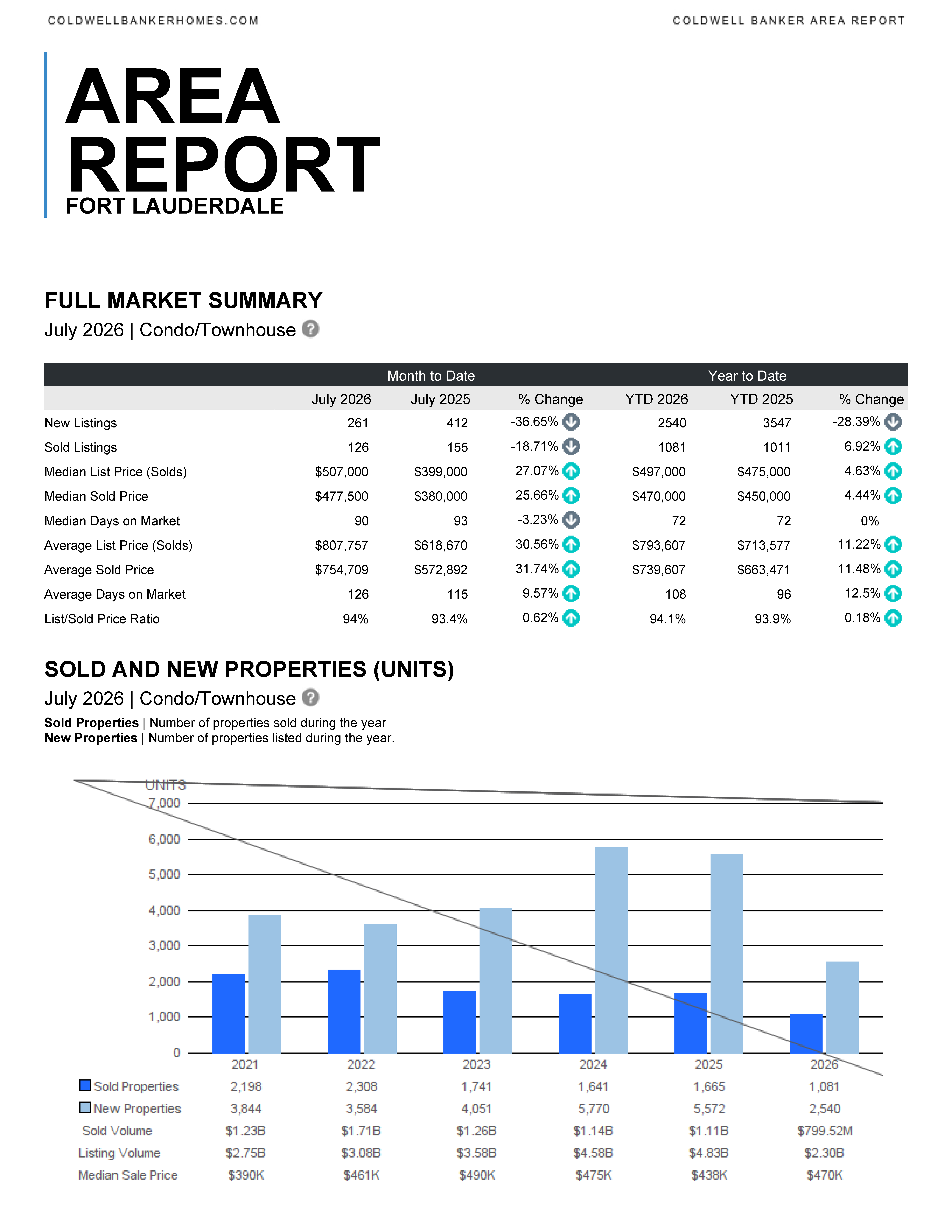
- New condo listings fell 36.7% compared to last year.
- Closed sales declined nearly 19% year-over-year.
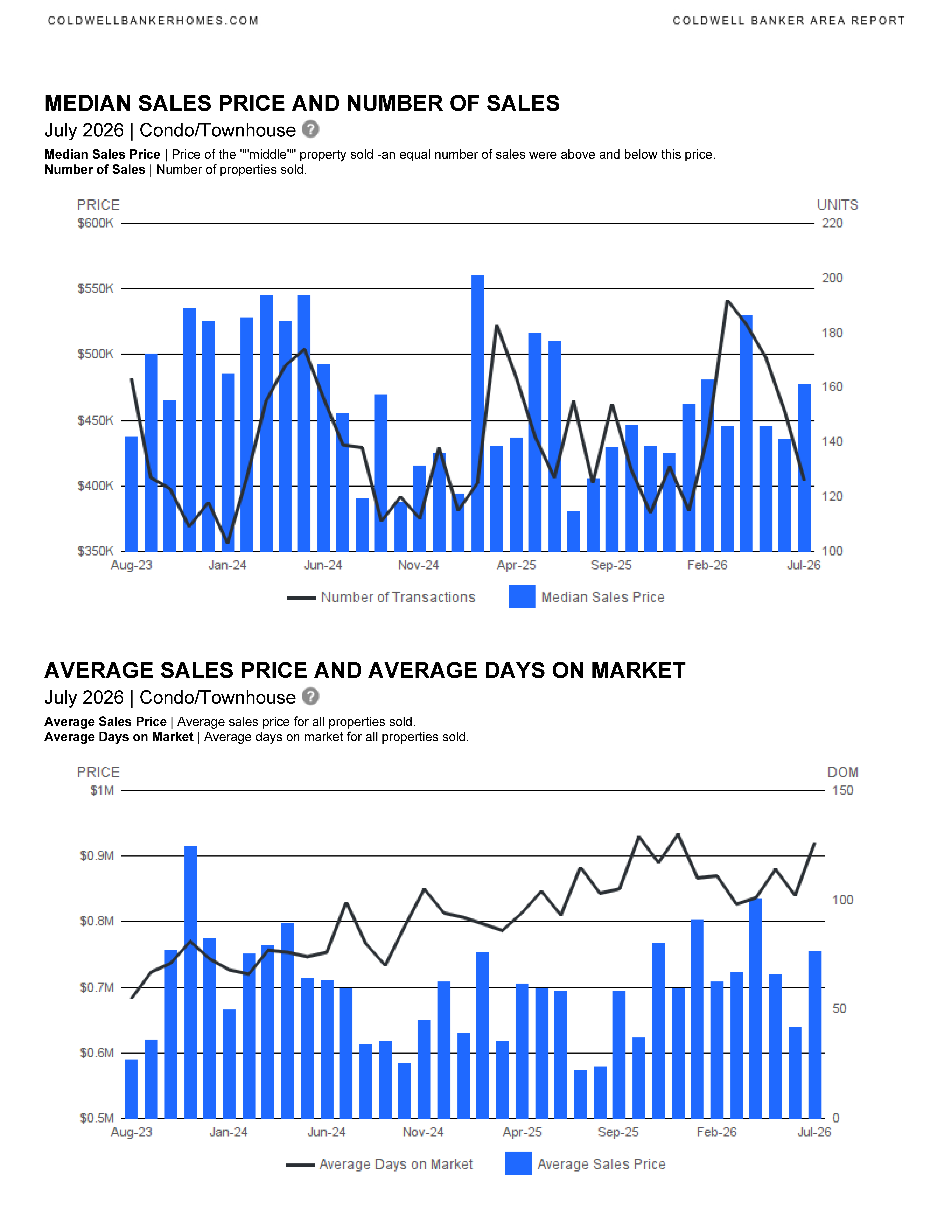
- Despite slower sales, the median sold price increased 25.7%, reaching $477,500.
- Condos are taking longer to sell, averaging 126 days on market.
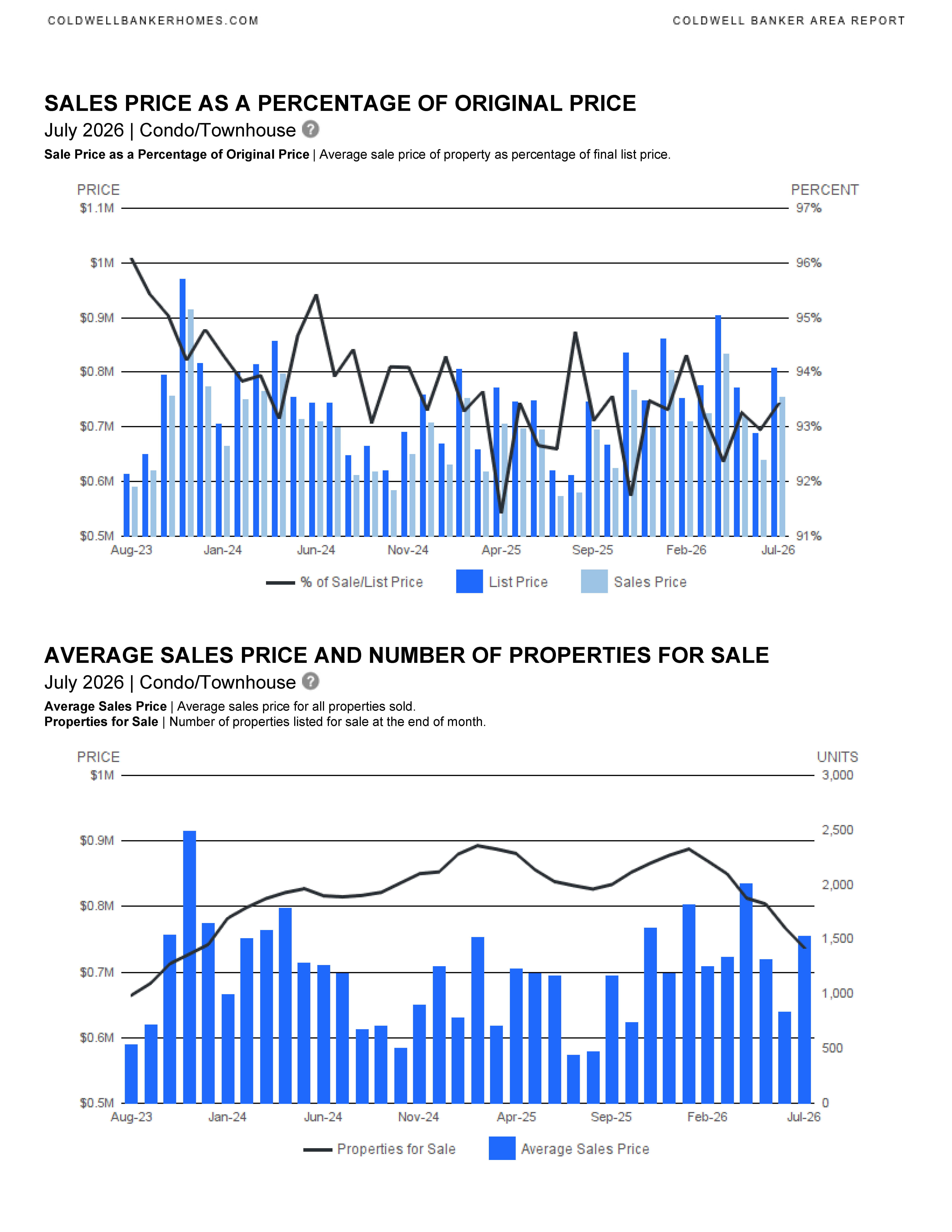
- Sellers are receiving about 94% of their asking price.
What it means: Condo buyers have more time to evaluate options and negotiate, while sellers need to focus on competitive pricing and presentation.
Inventory Snapshot
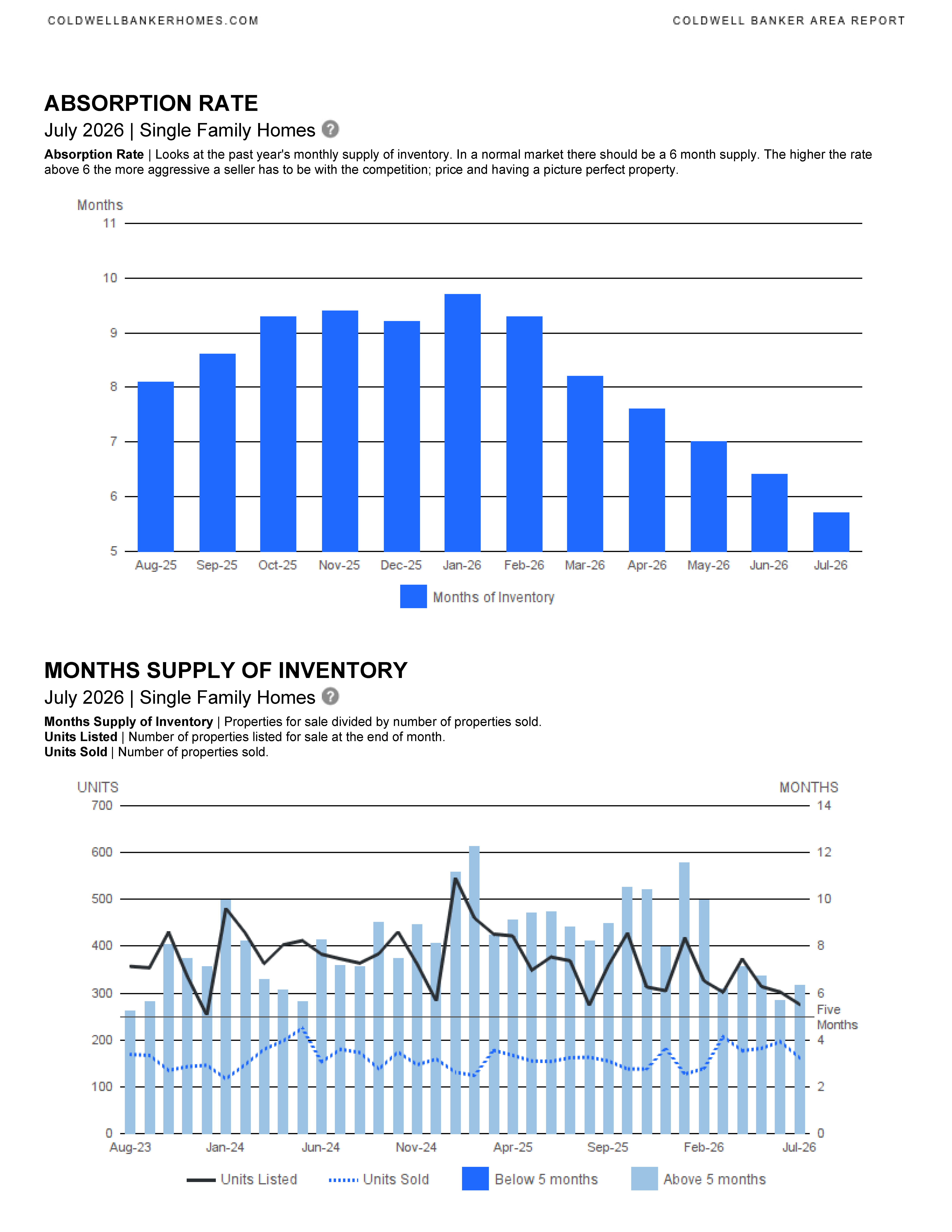
- Single-family homes have approximately 5.7 months of inventory, close to a balanced market.
- Condos have approximately 8.8 months of inventory, giving buyers more leverage.
My Advice to Buyers
If you’re shopping for a home, don’t focus only on headlines about interest rates. In Fort Lauderdale, inventory remains limited for single-family homes, and prices continue to rise. Being prepared and acting quickly on the right property can make a difference. Condo buyers may find more negotiating opportunities and a wider selection.
My Advice to Sellers
The data shows buyers are still purchasing homes, especially in the single-family segment. However, today’s buyers are value-conscious. Strategic pricing, strong marketing, and excellent presentation remain critical to attracting offers and maximizing your sale price.
Bottom Line: Fort Lauderdale’s housing market remains healthy, with home values continuing to appreciate. Single-family homes favor sellers more than condos, while condo buyers enjoy greater inventory and negotiation opportunities. Whether buying or selling, success depends on understanding the unique conditions of your specific neighborhood and property type.

Whether you’re thinking about buying, selling, or simply keeping an eye on your home’s value, the Fort Lauderdale market continues to present opportunities. Single-family homes remain in demand with strong price growth, while the condo market offers buyers more selection and room to negotiate. The key in today’s market is understanding your local neighborhood trends and having a strategy tailored to your goals.
Thinking about your next move? I’d be happy to provide a complimentary market analysis, discuss current opportunities, or answer any questions about our local market. Reach out anytime, and let’s talk about how today’s market conditions can work in your favor.
CONTACT ANNETTE
Let’s start working together!
Annette Dammeyer, REALTOR®, ABR®, AHWD®
Coldwell Banker Realty
901 E Las Olas Blvd STE 101, Fort Lauderdale, FL 33301
808.747.3686
SL 3535792
SE Florida Market Snapshot – July 2026
SE Florida Market Snapshot – July 2026
Snapshot of Today’s Broward County Market
July 2026 Real Estate Market Snapshot: More Choices, Slower Pace, Select Areas Holding Strong
As we move through the summer selling season, the July 2026 housing data across Fort Lauderdale, Wilton Manors, Hollywood, Dania Beach, and Hallandale Beach tells a consistent story: inventory continues to rise while sales activity slows. This shift is creating a more balanced market and giving buyers more options and negotiating power than we’ve seen in recent years.
While the overall number of homes sold declined across all five markets compared to last year, pricing trends varied by location. Some communities, particularly Fort Lauderdale and Wilton Manors, continued to see price appreciation, while others experienced softer pricing as inventory levels climbed.
Key Market Trends
Inventory Is Growing
One of the biggest themes across South Broward County is the significant increase in available homes for sale.
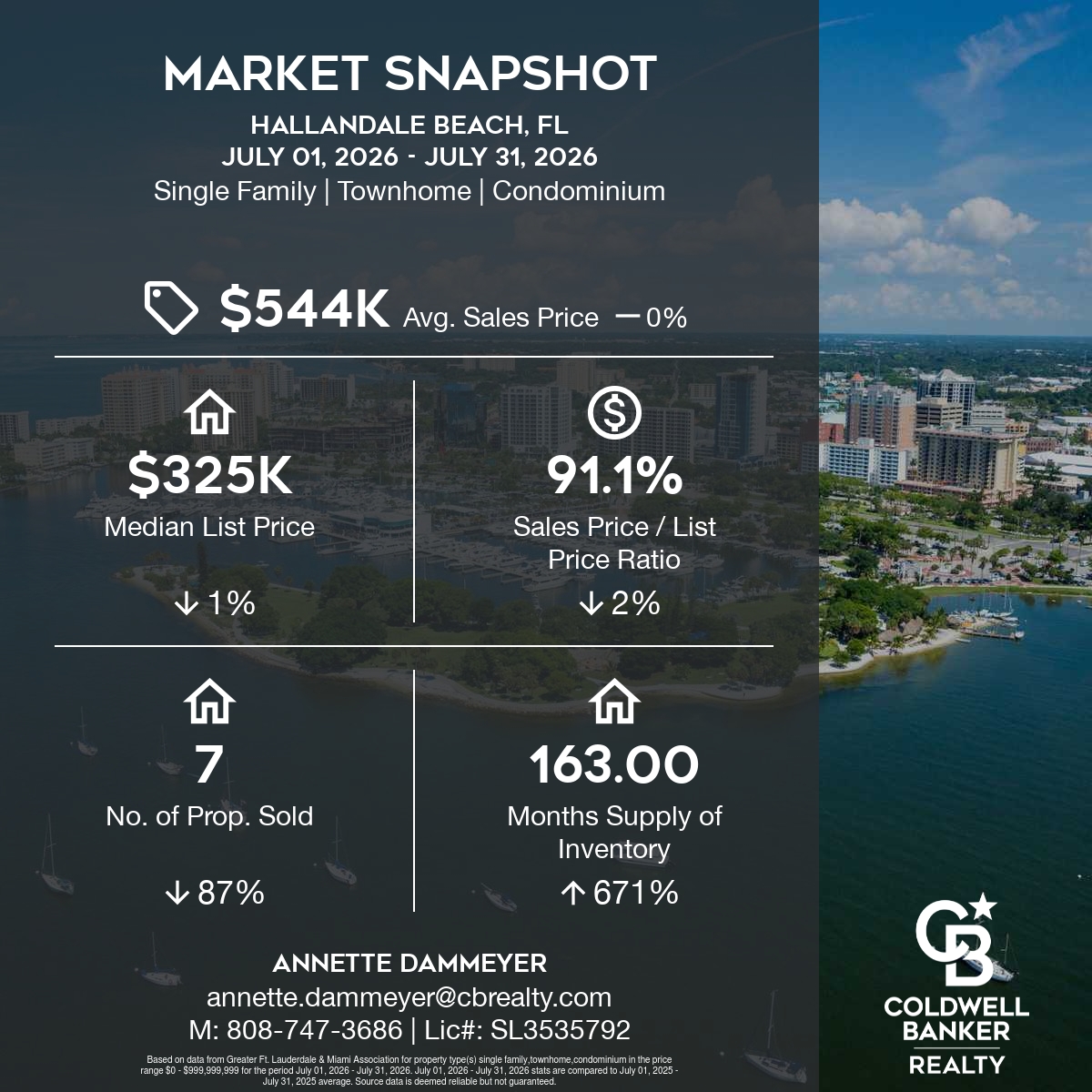
- Hallandale Beach inventory surged 671%
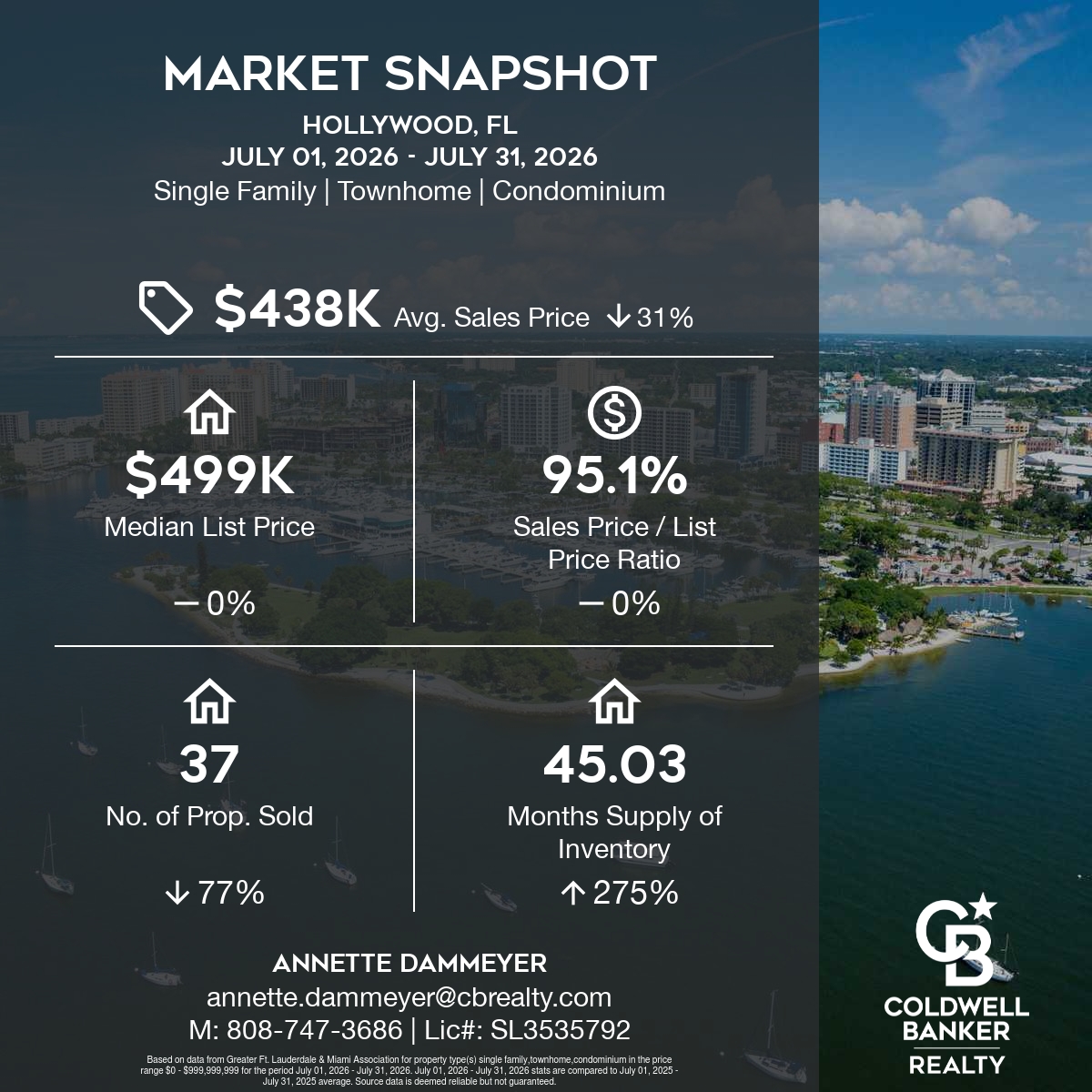
- Hollywood inventory increased 275%
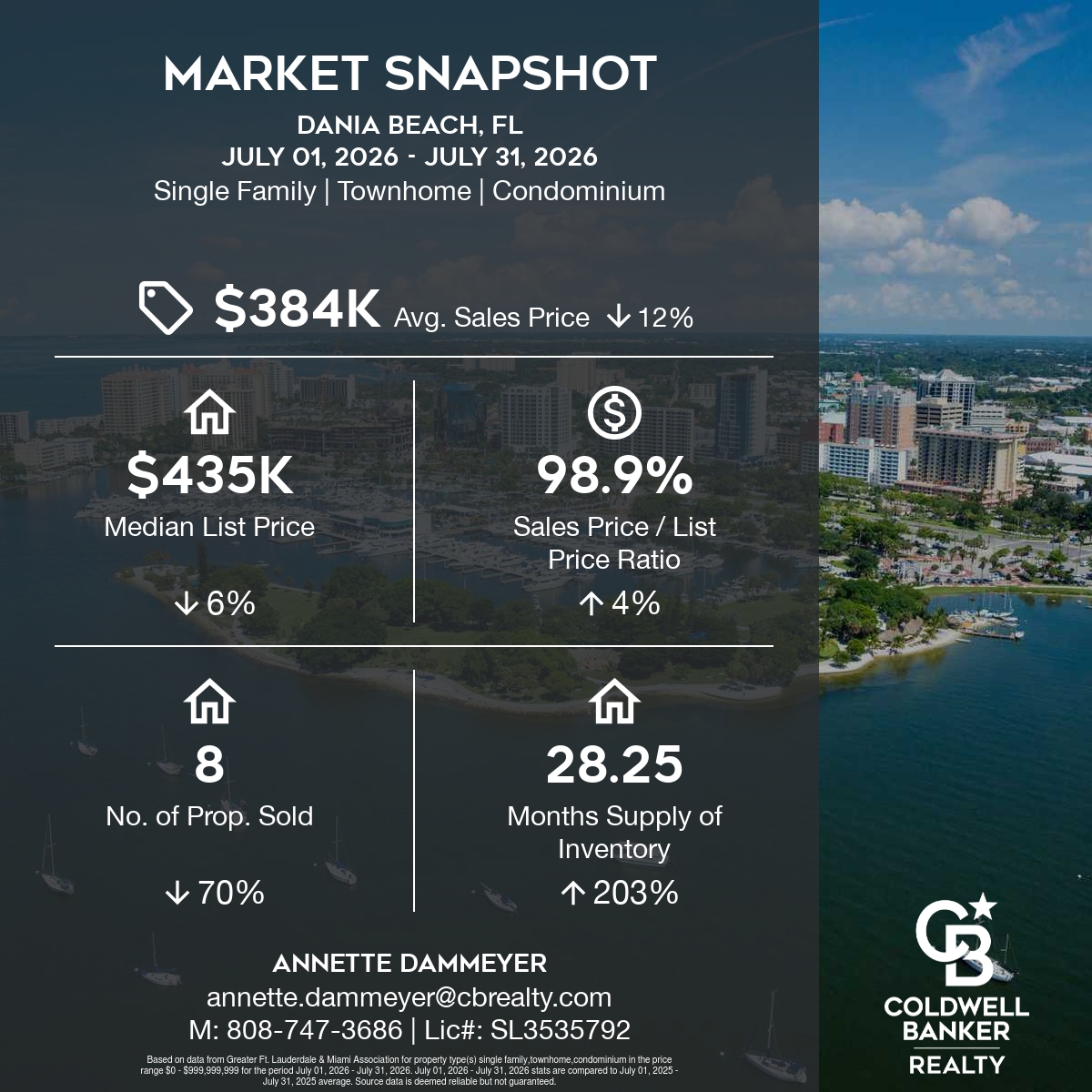
- Dania Beach inventory climbed 203%
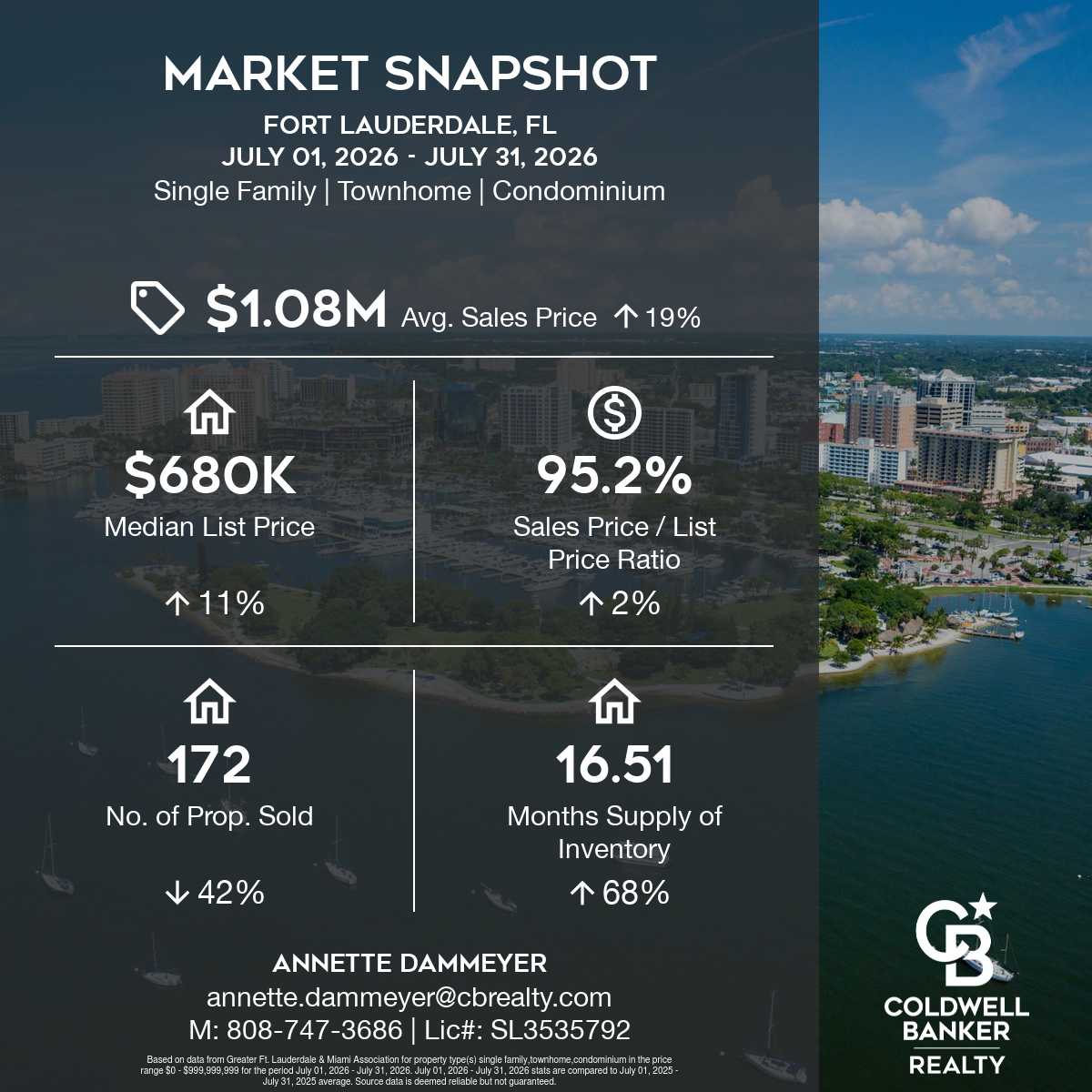
- Fort Lauderdale inventory rose 68%
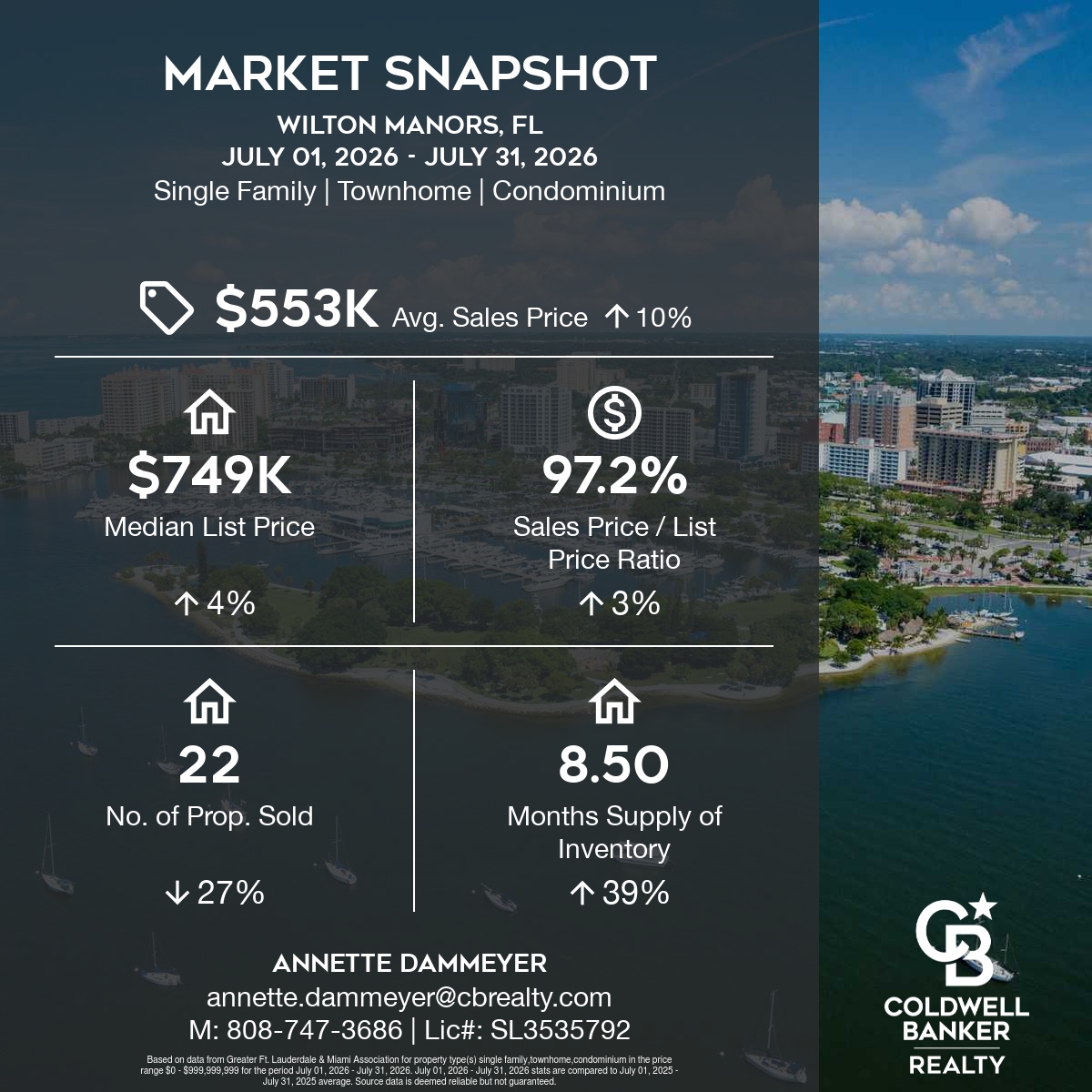
- Wilton Manors inventory increased 39%
More inventory means buyers have more choices, can take more time making decisions, and may have greater leverage during negotiations.
Home Sales Are Slower
Closed sales were down in every market compared to July 2025:
- Hallandale Beach: -87%
- Hollywood: -77%
- Dania Beach: -70%
- Fort Lauderdale: -42%
- Wilton Manors: -27%
Higher inventory combined with longer decision-making periods and ongoing affordability considerations continue to slow transaction volume.
Pricing Remains Market-Specific
Price performance varied significantly by location:
Gaining Strength
- Fort Lauderdale average sales price increased 19% to $1.08M
- Wilton Manors average sales price increased 10% to $553K
Holding Steady
- Hallandale Beach average sales price remained unchanged at $544K
Experiencing Price Adjustments
- Dania Beach average sales price declined 12% to $384K
- Hollywood average sales price declined 31% to $438K
These variations demonstrate why hyper-local market knowledge is more important than ever. Conditions can differ dramatically from one community to the next.
Sellers Are Still Receiving Strong Offers
Despite increased competition, most homes continued to sell close to their asking prices:
- Dania Beach: 98.9% of list price
- Wilton Manors: 97.2% of list price
- Fort Lauderdale: 95.2% of list price
- Hollywood: 95.1% of list price
- Hallandale Beach: 91.1% of list price
Well-priced, well-presented homes continue to attract serious buyers.
What This Means for Buyers and Sellers
For Buyers:
The market is offering more opportunities than we’ve seen in several years. With inventory levels increasing, buyers have more choices, less competition, and greater room for negotiation.
For Sellers:
Pricing strategy is critical. Buyers have options, so homes that are accurately priced and professionally marketed are the ones generating activity. The good news is that quality listings are still achieving strong sale-to-list-price ratios.
Here are the Market Snapshots reflecting the last month (compared to the same month last year) for the following areas:
- Fort Lauderdale
- Wilton Manors
- Hollywood
- Dania Beach
- Hallandale Beach
These take into account all property types (Single Family Homes/Condos/Townhomes).
My Local Perspective
As a South Florida REALTOR®, I’m seeing a market that is gradually finding balance after years of limited inventory and intense competition. While sales activity has slowed, property values remain resilient in many neighborhoods, particularly in Fort Lauderdale and Wilton Manors. The current environment rewards preparation, realistic pricing, and local market expertise.
Real estate is no longer a one-size-fits-all market. Whether you’re considering buying, selling, or simply curious about your home’s value, understanding what’s happening in your specific neighborhood is more important than ever.
If you’d like a personalized market update for your community, I’d be happy to help.
CONTACT ANNETTE
Let’s start working together!
Annette Dammeyer, REALTOR®, ABR®, AHWD®
Coldwell Banker Realty
901 E Las Olas Blvd STE 101, Fort Lauderdale, FL 33301
808.747.3686
SL 3535792
August 2026 ~ Permits, Pantries and Staycations!

August 2026 Newsletter
Welcome to Your August 2026 Real Estate & Lifestyle Update!
|
As we settle into the heart of summer here in SE Florida, August is the perfect time to focus on the places and spaces we call home. Whether you’re planning a local staycation, tackling long-awaited home improvement projects, or simply looking for fresh ways to organize and refresh your living space, this month’s newsletter is filled with practical tips and insights to help you make the most of the season. Our featured article takes a closer look at one of the most overlooked aspects of home improvement: building permits. Understanding when permits are required, why they matter, and how they can impact your home’s safety, value, and future sale can save homeowners significant time, money, and frustration. I’ll walk you through the basics so you can move forward with confidence on your next project. You’ll also find creative staycation ideas to enjoy everything our beautiful community has to offer, simple strategies for organizing your kitchen pantry, and a look at outdated home features that may be making your property feel less current than it should. And, as always, I’ve included the latest real estate market reports for our local neighborhoods to keep you informed about current trends, home values, and market activity across our area. Thank you for being part of our community. I hope this month’s newsletter provides valuable information, useful inspiration, and a few ideas to help you enjoy the remainder of summer. As always, if you have questions about the local real estate market or your home’s value, I’m just a phone call, text, or email away. Warm regards, Annette |
|||||||||||
National Stories
|
|||||||||||
Real Estate Updates | Area Reports | June 2026
As always, I’m here to be a resource for you—whether you’re dreaming about your next move, considering updates to maximize your home’s value, or simply looking for trusted guidance along the way. Summer in SE Florida is a beautiful time to pause, enjoy, and plan ahead, and I’d love to support you in making the most of it. If you have questions about the market, your property, or would like a personalized home valuation, please don’t hesitate to reach out. I’m always just a call, text, or email away—and ready to help whenever you need it.
⇒ CONTACT ANNETTE ⇐Let’s start working together!
Annette Dammeyer, REALTOR®, ABR®, AHWD® Coldwell Banker Realty 901 E Las Olas Blvd STE 101, Fort Lauderdale, FL 33301 808.747.3686 SL 3535792
|




When Do You Need a Permit for Home Repairs in Broward County?
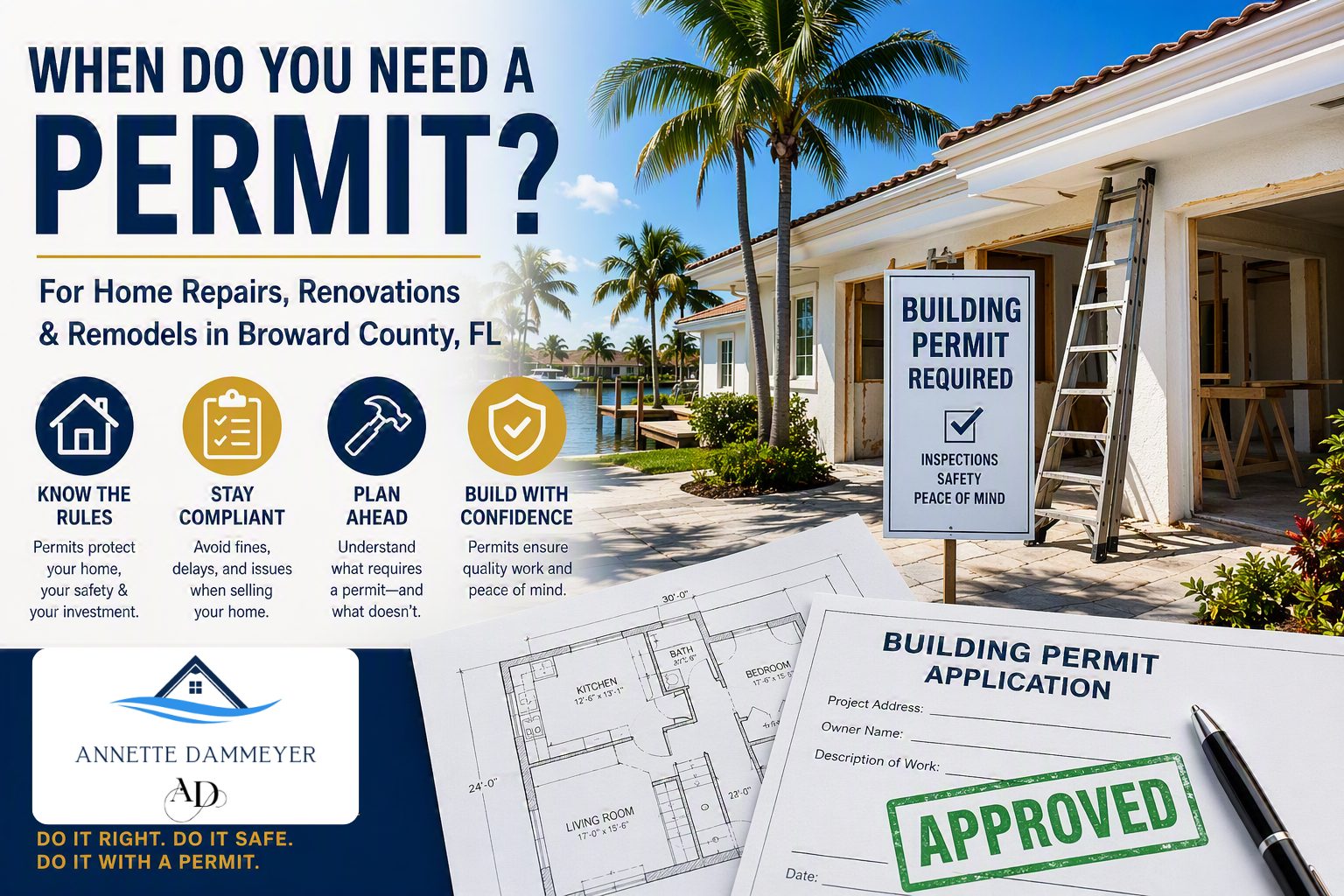
When Do You Need a Permit for Home Repairs, Renovations, and Remodels in Broward County, FL?
By Annette Dammeyer, REALTOR® | Serving Fort Lauderdale and Southeast Florida Homeowners
If you’re planning to update your home, replace a roof, remodel a kitchen, or tackle long-overdue repairs, one of the most common questions I hear from homeowners is:
“Do I need a permit for this project?”
The answer is often yes, but not always. In Broward County, permit requirements can vary depending on the scope of work, the city where your property is located, and whether the project affects structural, electrical, plumbing, or mechanical systems.
Understanding permit requirements before starting a project can help you avoid fines, delays, insurance issues, and complications when it’s time to sell your home.
Why Permits Matter
Building permits exist to protect homeowners, contractors, and future buyers. They help ensure work is performed according to current building codes and safety standards.
In Broward County and throughout Florida, permits typically trigger inspections designed to verify that work has been completed correctly and safely. Unpermitted work can create problems during insurance claims, property appraisals, and real estate transactions.
What Home Projects Usually Require a Permit?
As a general rule, permits are required when a project involves:
Structural Changes
Examples include:
- Removing or modifying load-bearing walls
- Room additions
- Garage conversions
- New door or window openings
- Major framing modifications
- Building a deck, dock, shed, or screen enclosure
Electrical Work
Permits are generally required for:
- New electrical circuits
- Service panel upgrades
- Rewiring
- Generator connections
- Significant lighting installations
- Electric vehicle charging stations
Plumbing Work
Permits are commonly required for:
- Re-piping a home
- Moving plumbing lines
- Water heater replacements
- Sewer line work
- Bathroom remodels involving plumbing changes
- Kitchen renovations that relocate sinks or appliances
HVAC and Mechanical Systems
Permits are typically required for:
- Air conditioning replacement
- New ductwork
- Mechanical system alterations
- Heat pump installations
Roofing Projects
Permits are usually required for:
- Roof replacement
- Re-roofing
- Significant roof repairs
Windows and Doors
Many Broward municipalities require permits for:
- Impact window replacement
- Exterior door replacement
- Hurricane-rated door installations
Because Broward County is within Florida’s High Velocity Hurricane Zone (HVHZ), exterior improvements often have additional code requirements regarding wind resistance and impact protection.
What Home Improvements Can Often Be Done Without a Permit?
Many cosmetic improvements do not typically require permits.
Common Examples Include:
✅ Interior painting
✅ Exterior painting
✅ Flooring replacement
✅ Carpet installation
✅ Cabinet replacement without plumbing or electrical changes
✅ Countertop replacement
✅ Minor trim and molding work
✅ Cosmetic drywall repairs
✅ Interior decorating projects
✅ Landscaping improvements
✅ Fence repairs (depending on scope and municipality)
However, even seemingly simple projects can trigger permit requirements if they involve electrical, structural, plumbing, or mechanical modifications.
For example:
- Replacing kitchen cabinets may not require a permit.
- Moving a sink or adding outlets during the cabinet installation probably will.
Florida’s New Permit Exemption for Some Small Projects
Beginning July 1, 2026, Florida law provides an exemption for certain work on single-family homes valued under $7,500.
However, homeowners should understand that this exemption does not generally apply to projects involving:
- Electrical work
- Plumbing work
- Mechanical/HVAC work
- Gas systems
- Structural changes
- Certain flood-hazard areas
Additionally, projects cannot be divided into smaller phases simply to avoid permit requirements.
This change may make it easier for homeowners to complete certain cosmetic or minor non-structural projects, but it does not eliminate the need to verify permit requirements with local authorities.
City, County, or State: Who Issues the Permit?
This is where many homeowners get confused.
Municipal Building Departments
Most Broward County cities have their own building departments that issue permits.
Examples include:
- Fort Lauderdale
- Plantation
- Coral Springs
- Pembroke Pines
- Davie
- Hollywood
- Miramar
- Sunrise
- Pompano Beach
If your property is located within a city, that municipality is often your first point of contact.
Broward County
Broward County issues permits primarily for:
- Unincorporated Broward County properties
- Certain contract jurisdictions
- County-specific reviews related to environmental or development requirements
State of Florida
State involvement often comes into play through:
- Contractor licensing
- Building code requirements
- Specialized permitting regulations
- Certain coastal, environmental, or transportation-related projects
What Happens If You Skip a Required Permit?
Unfortunately, homeowners sometimes discover permit issues years later when they decide to sell.
Potential consequences may include:
- Fines and penalties
- Stop-work orders
- Difficulties obtaining insurance coverage
- Delays during closing
- Problems with appraisals
- Requirements to obtain after-the-fact permits
- Costly corrective work
As a real estate agent, I’ve seen permit issues delay transactions and create unnecessary stress for both buyers and sellers.
Questions to Ask Before Starting a Project
Before any major repair, renovation, or remodel, ask:
- Does the project affect structure, plumbing, electrical, HVAC, or roofing?
- Is my property inside a municipality with its own permitting department?
- Will inspections be required?
- Is a licensed contractor needed?
- Could this project affect future resale value?
- Are HOA approvals also required?
If you’re unsure, it’s always best to check before work begins.
Final Thoughts
Home improvements can increase comfort, improve safety, and boost property value. But understanding permit requirements is an important part of planning any project.
When in doubt, verify permit requirements with your city, Broward County, licensed contractor, or building department before starting work. A quick phone call today may save significant time, money, and headaches down the road.
As your local real estate resource, I know that maintaining and improving a home is one of the biggest investments many of us will make. Whether you’re updating a kitchen, replacing a roof, installing impact windows, or tackling a long-awaited remodeling project, taking a few extra minutes to verify permit requirements can help protect your investment and prevent unexpected headaches down the road.
My goal is always to help our Broward County community make informed decisions about homeownership—whether you’re planning renovations, preparing to sell, or simply looking for ways to maintain your property’s value. If you have questions about how a renovation may affect your home’s marketability, insurance, or resale value, I’m always happy to be a resource.
Thinking about remodeling, selling, or buying a home in Southeast Florida? Let’s connect! I’d love to help you understand how today’s improvements can impact tomorrow’s home value. Feel free to reach out anytime for trusted guidance, local market insight, or a complimentary home value consultation.
📞 Contact me today to start the conversation—and let’s make sure your next home project adds both value and peace of mind.
CONTACT ANNETTE
Let’s start working together!
Annette Dammeyer, REALTOR®, ABR®, AHWD®
Coldwell Banker Realty
901 E Las Olas Blvd STE 101, Fort Lauderdale, FL 33301
808.747.3686
SL 3535792
Disclaimer
This article is intended for general informational purposes only and should not be considered legal, construction, code, or permitting advice. Permit requirements change frequently and can vary by city, county, project scope, property type, flood zone designation, and state regulations. Always verify current requirements with your local building department, municipality, Broward County, the State of Florida, your licensed contractor, and other applicable agencies before beginning any repair, renovation, remodeling, or construction project.
Fort Lauderdale June 2026 Area Report
Fort Lauderdale June 2026 real estate statistics have been published.
Single Family Homes
Condominium & Townhouses
Key Takeaway
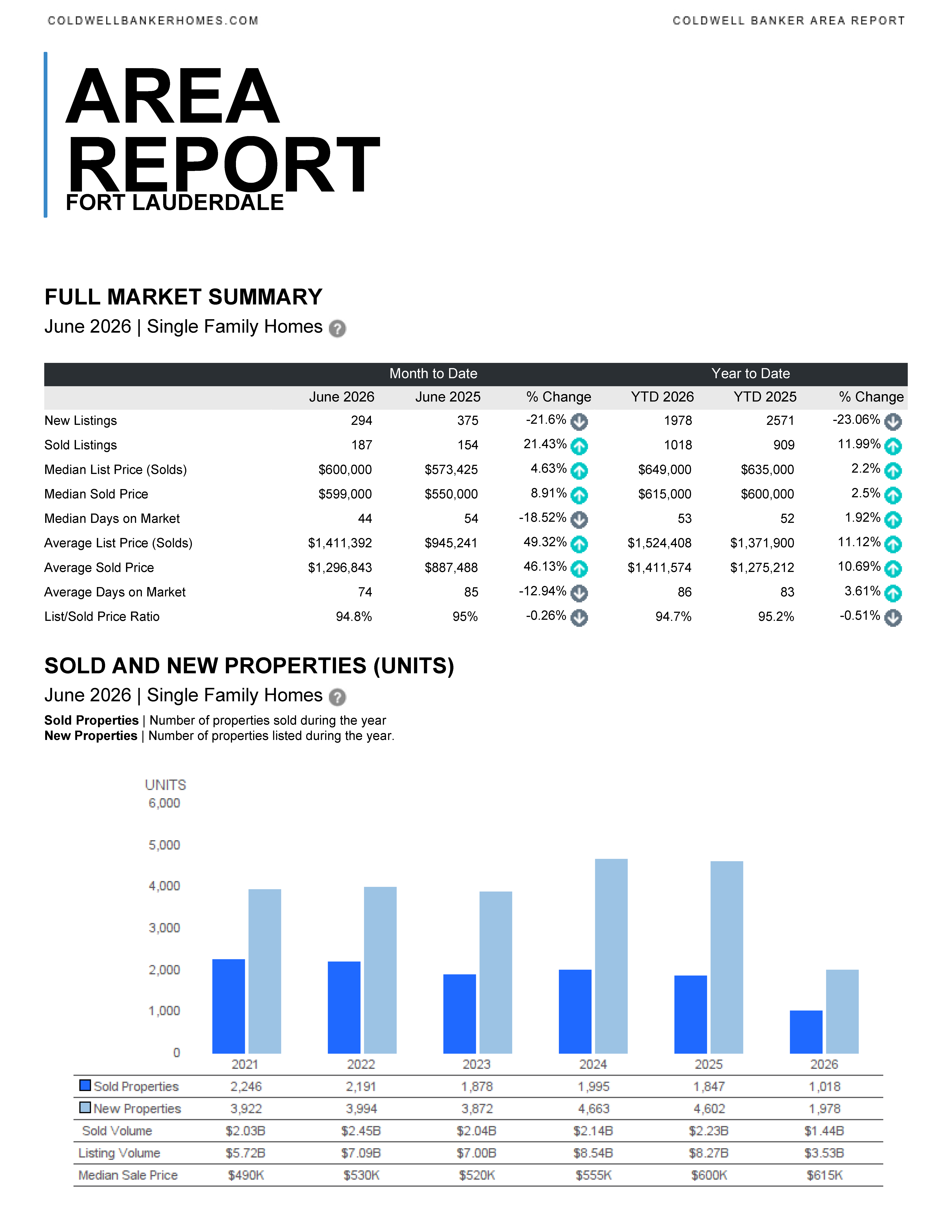
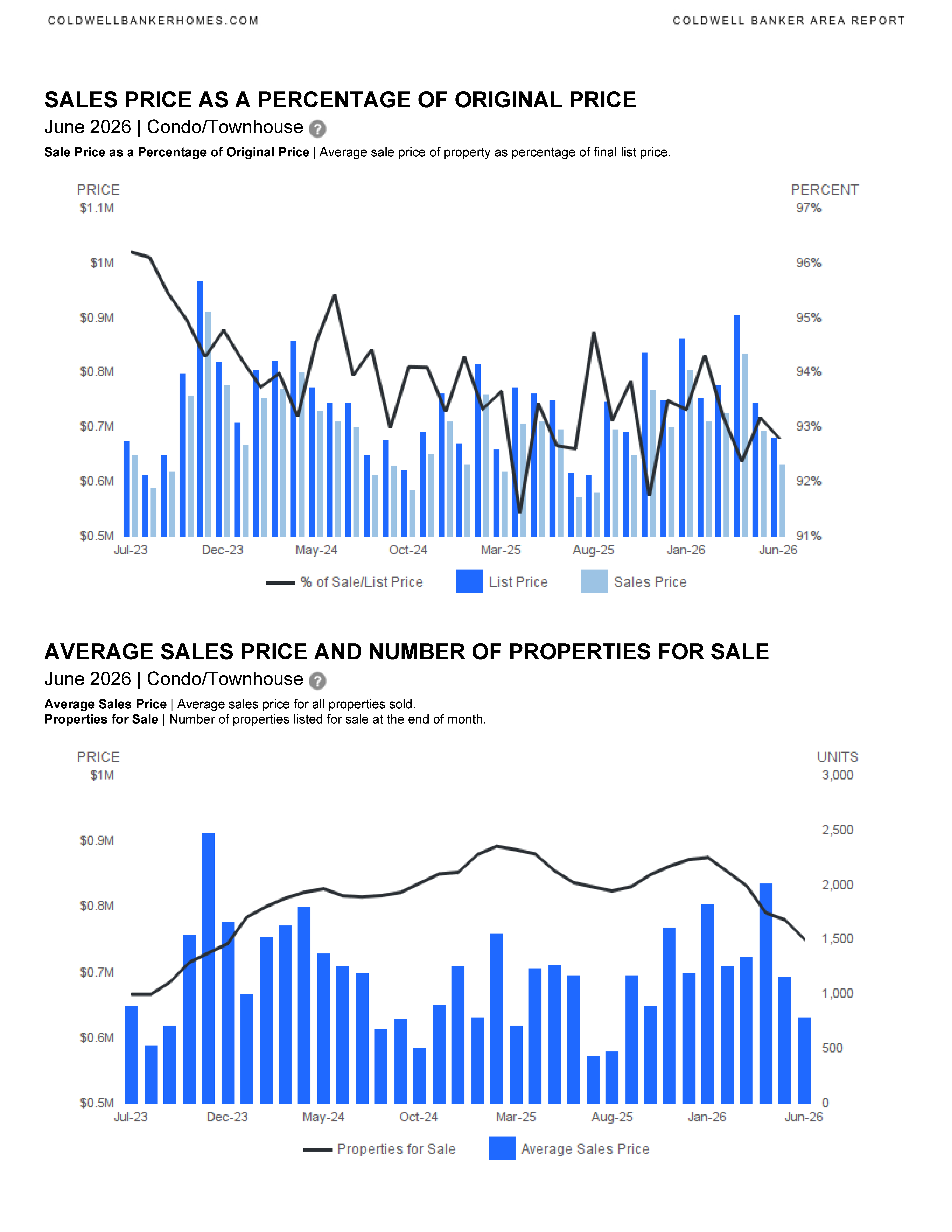
The Fort Lauderdale housing market remained active in June 2026, but trends differed significantly between single-family homes and condos/townhomes. Single-family homes saw rising prices and stronger sales activity, while condos experienced lower prices despite increased sales volume.
Single-Family Homes: Strong Seller Market
What Happened in June 2026?
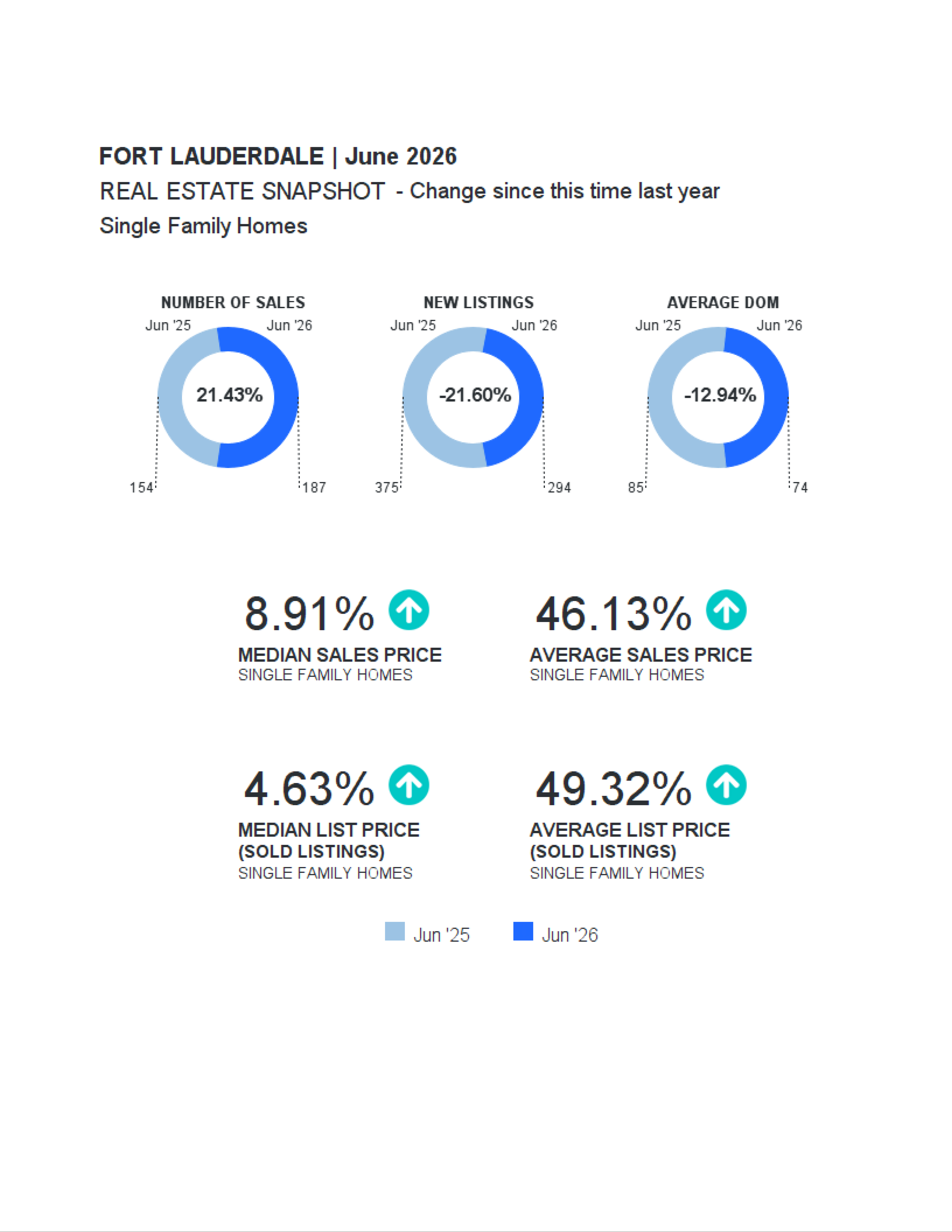
- Home sales increased 21.4% compared to June 2025 (187 homes sold vs. 154).
- New listings fell 21.6%, creating less competition among sellers.
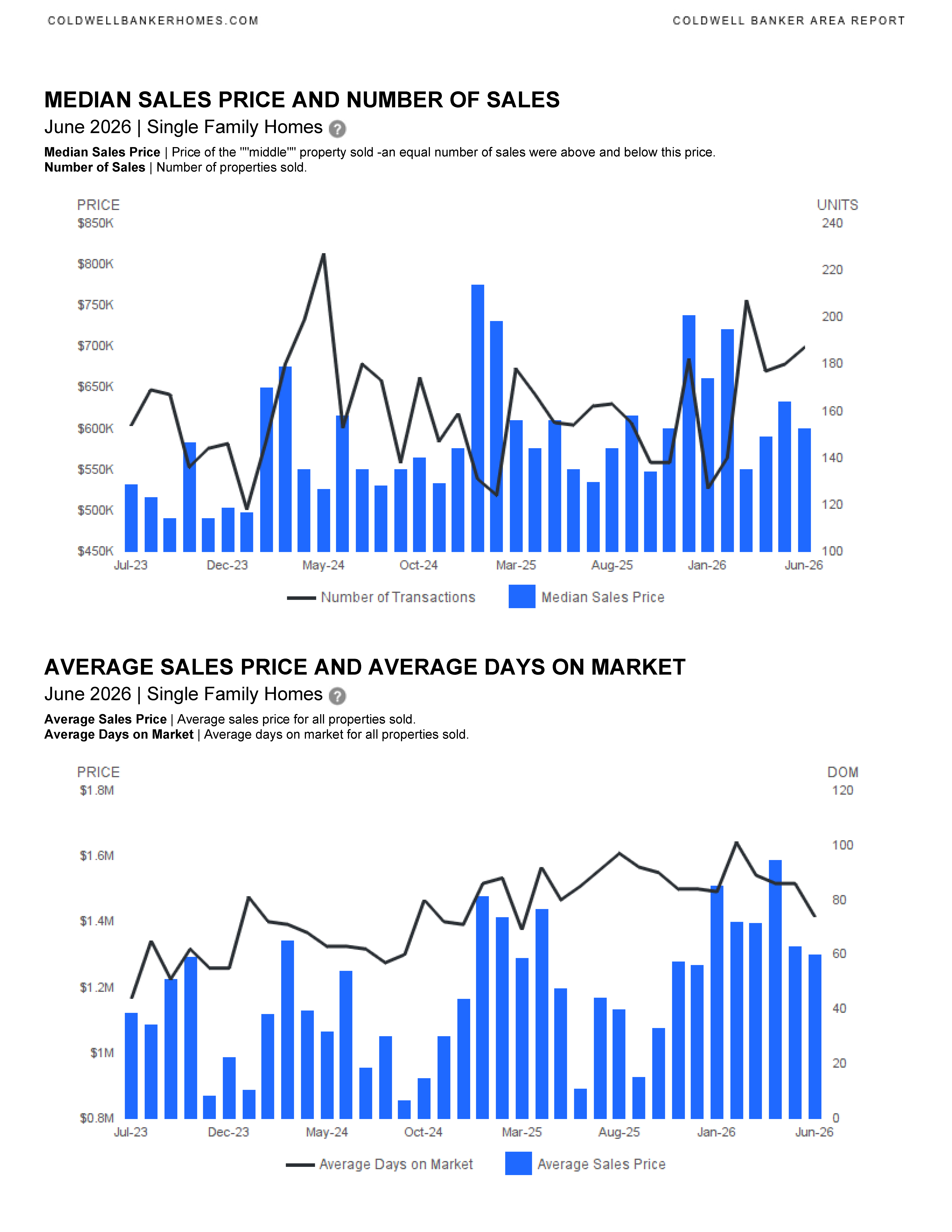
- The median home price rose to $599,000, up 8.9% year-over-year.
- The average sales price jumped 46.1% to nearly $1.3 million, indicating more luxury and waterfront sales.
- Homes sold faster, with average days on market dropping from 85 to 74 days.
What This Means
✅ Buyers are still purchasing despite higher prices.
✅ Inventory is tighter because fewer homeowners are listing properties.
✅ Sellers continue to have leverage, especially in desirable neighborhoods and luxury markets.
✅ Well-priced homes are attracting buyers more quickly than last year.
Condos & Townhomes: More Sales, But Lower Prices
What Happened in June 2026?
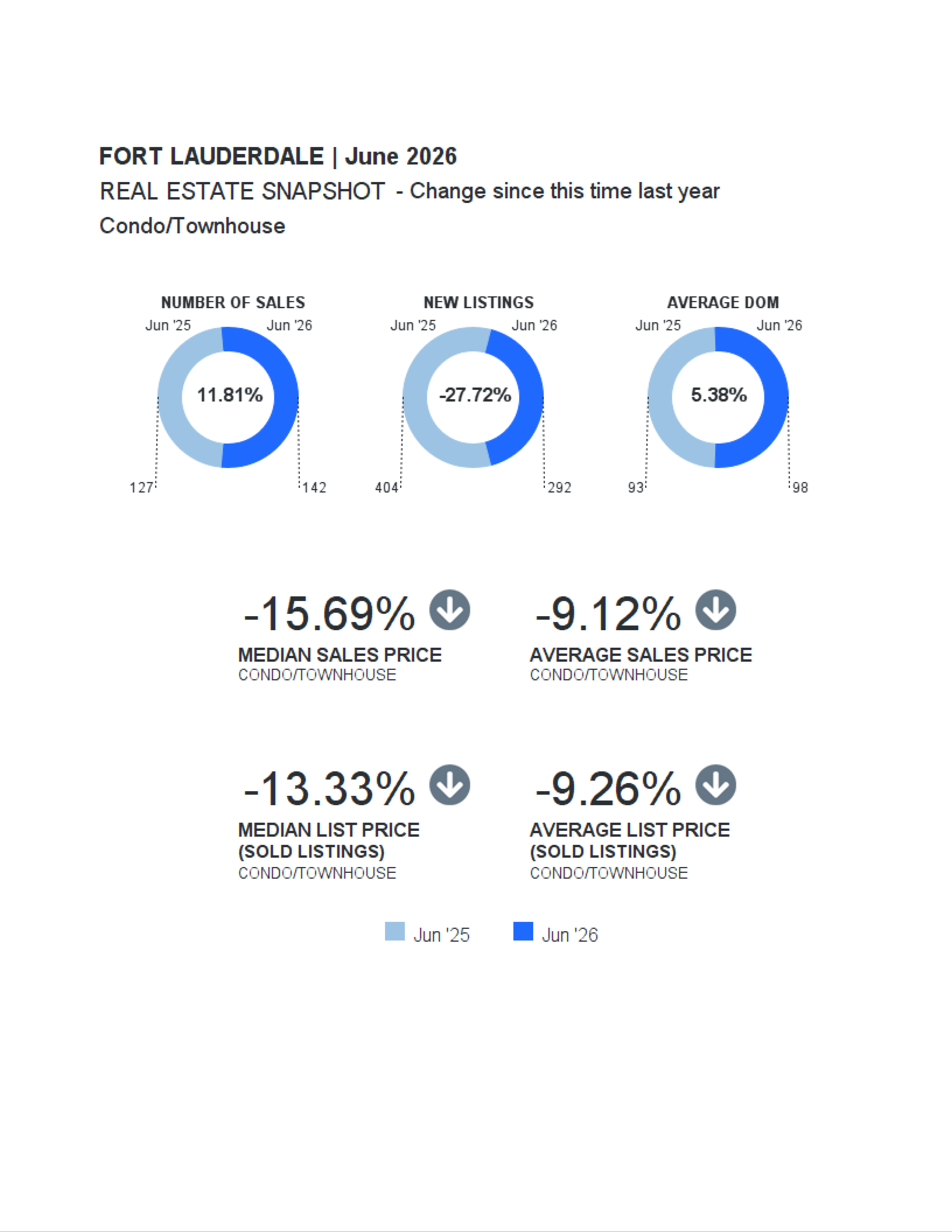
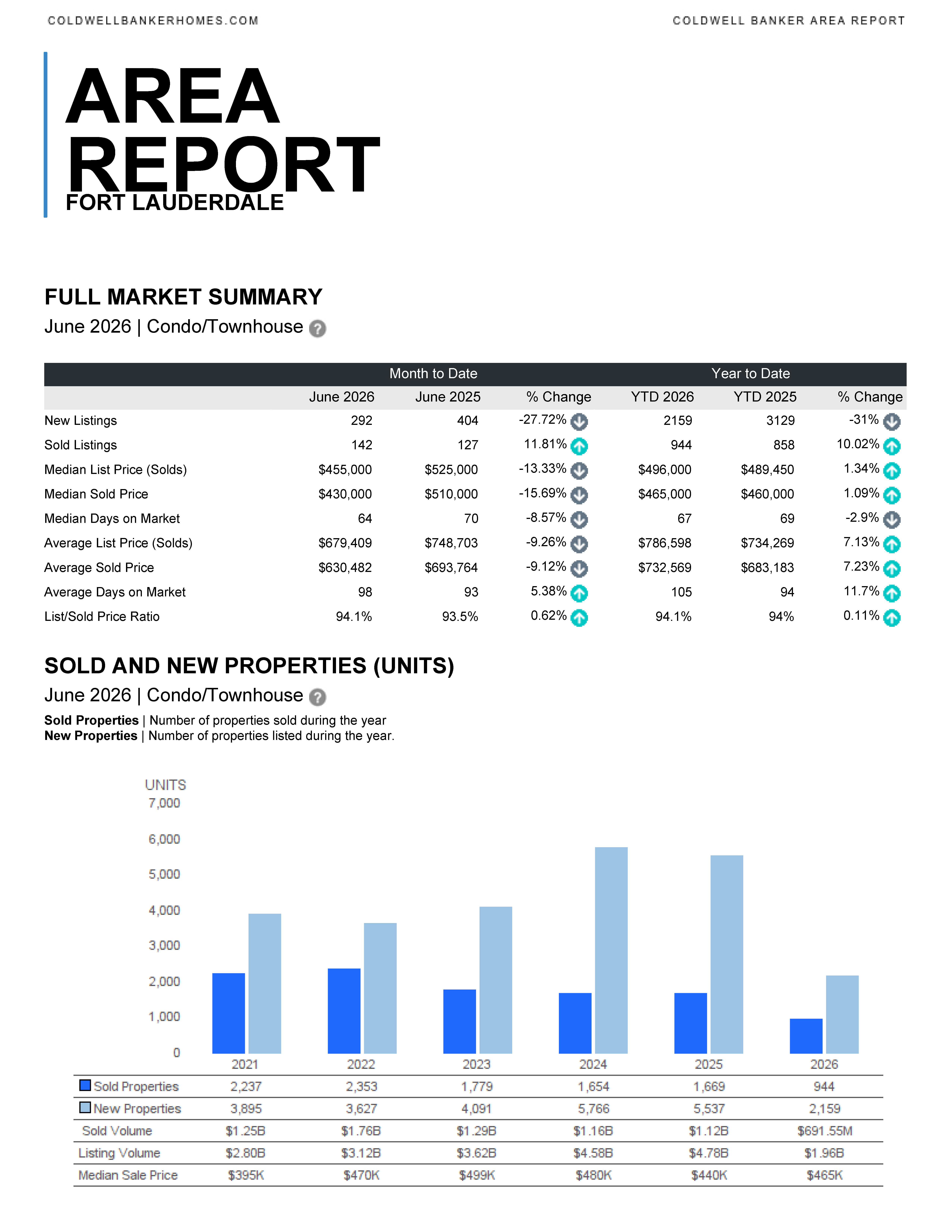
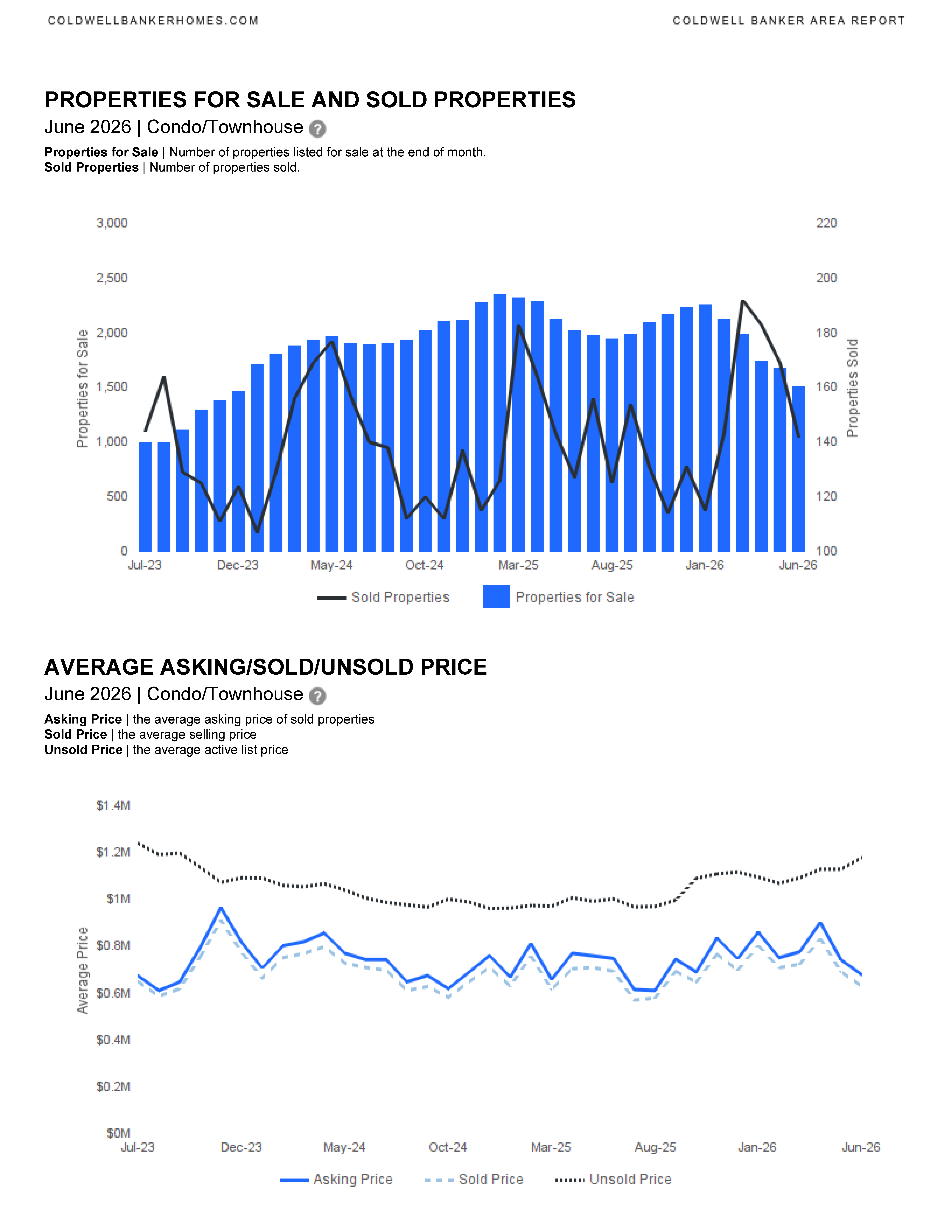
- Sales increased 11.8% compared to June 2025.
- New listings dropped 27.7%, reducing available inventory.
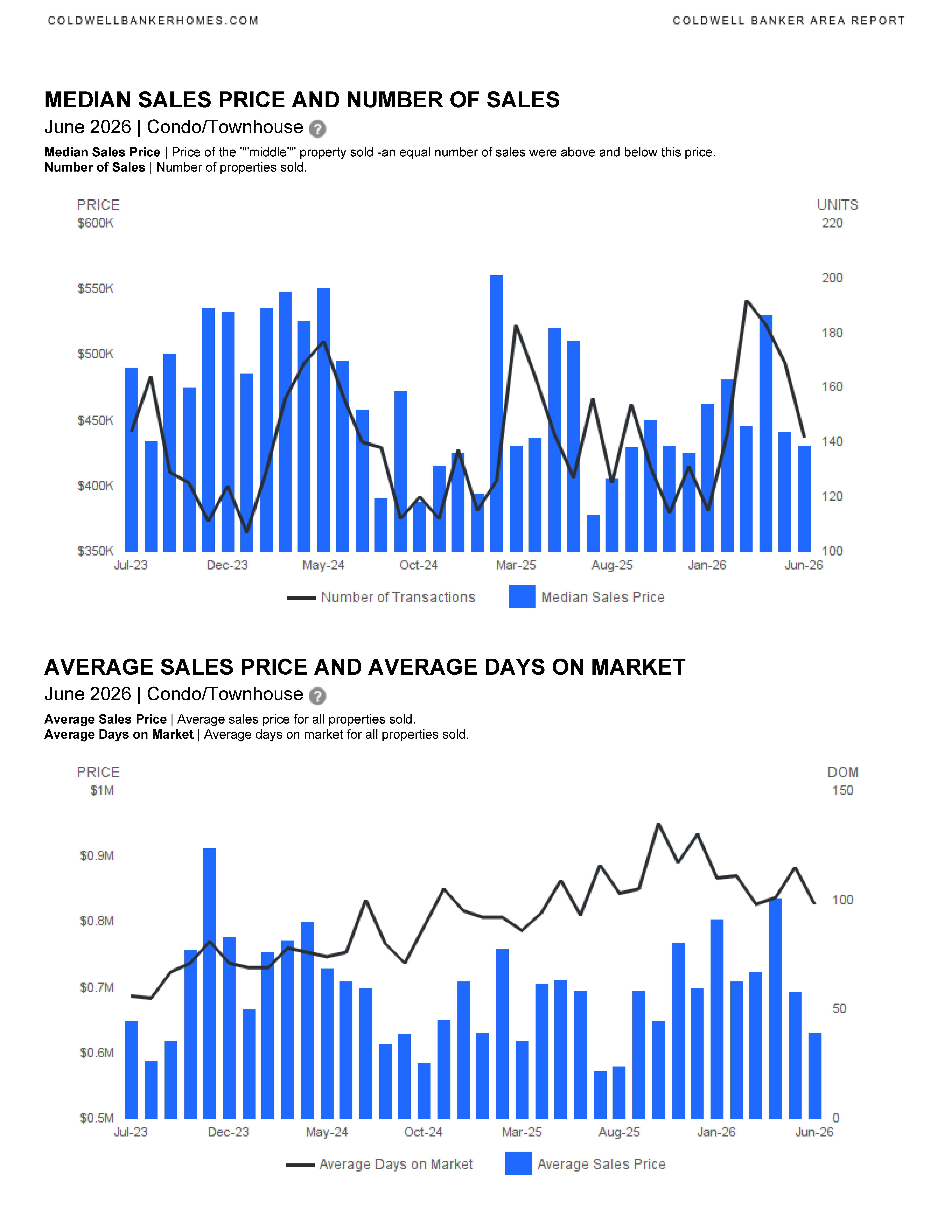
- The median condo/townhome price fell 15.7% to $430,000.
- The average sales price declined 9.1% to $630,482.
- Properties took slightly longer to sell, averaging 98 days on market.
What This Means
✅ Condo buyers are finding more negotiating opportunities.
✅ Prices have softened compared to a year ago.
✅ Sales activity remains healthy despite declining prices.
✅ Buyers who were priced out of single-family homes may find more value in the condo market.
Inventory & Market Conditions
Single-Family Homes
- Inventory has tightened significantly.
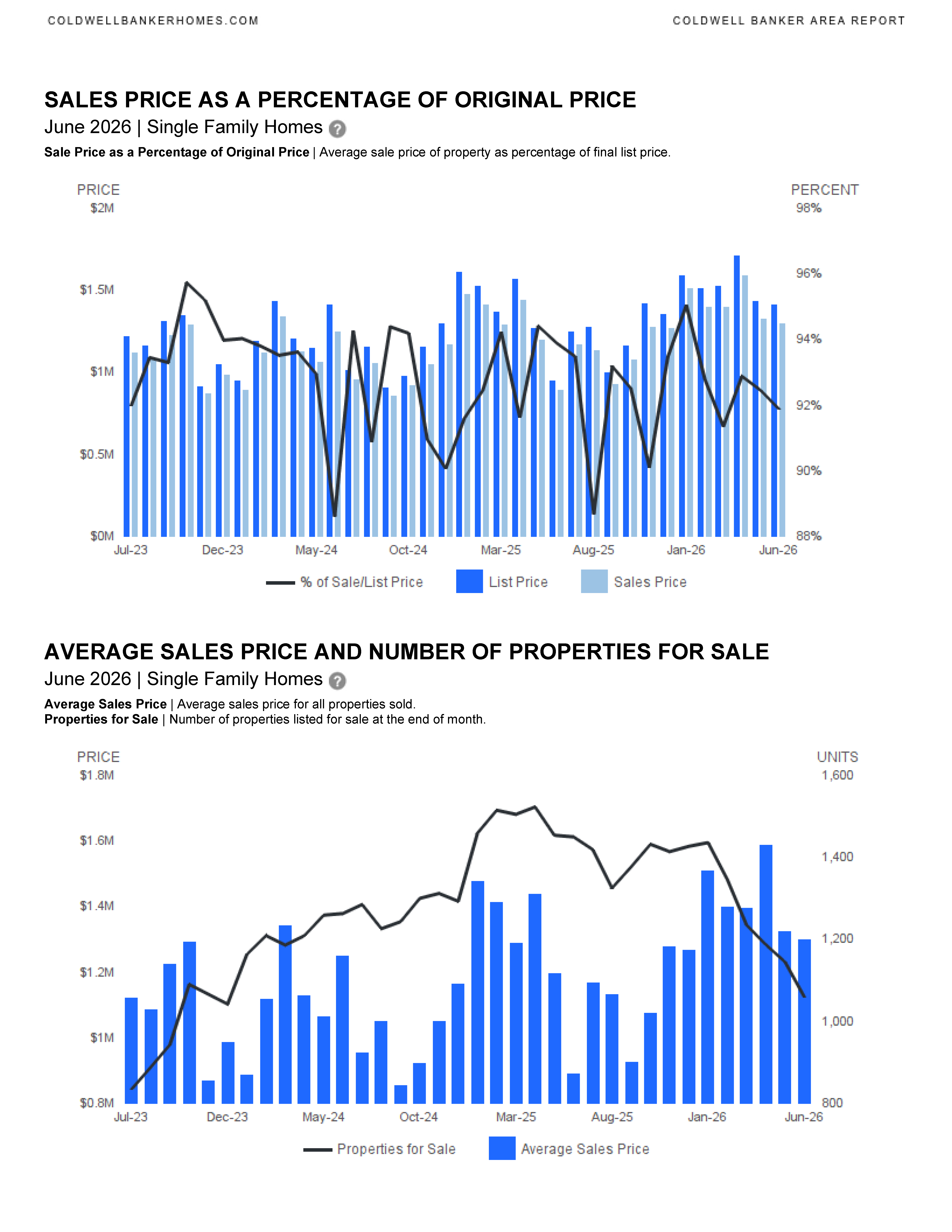
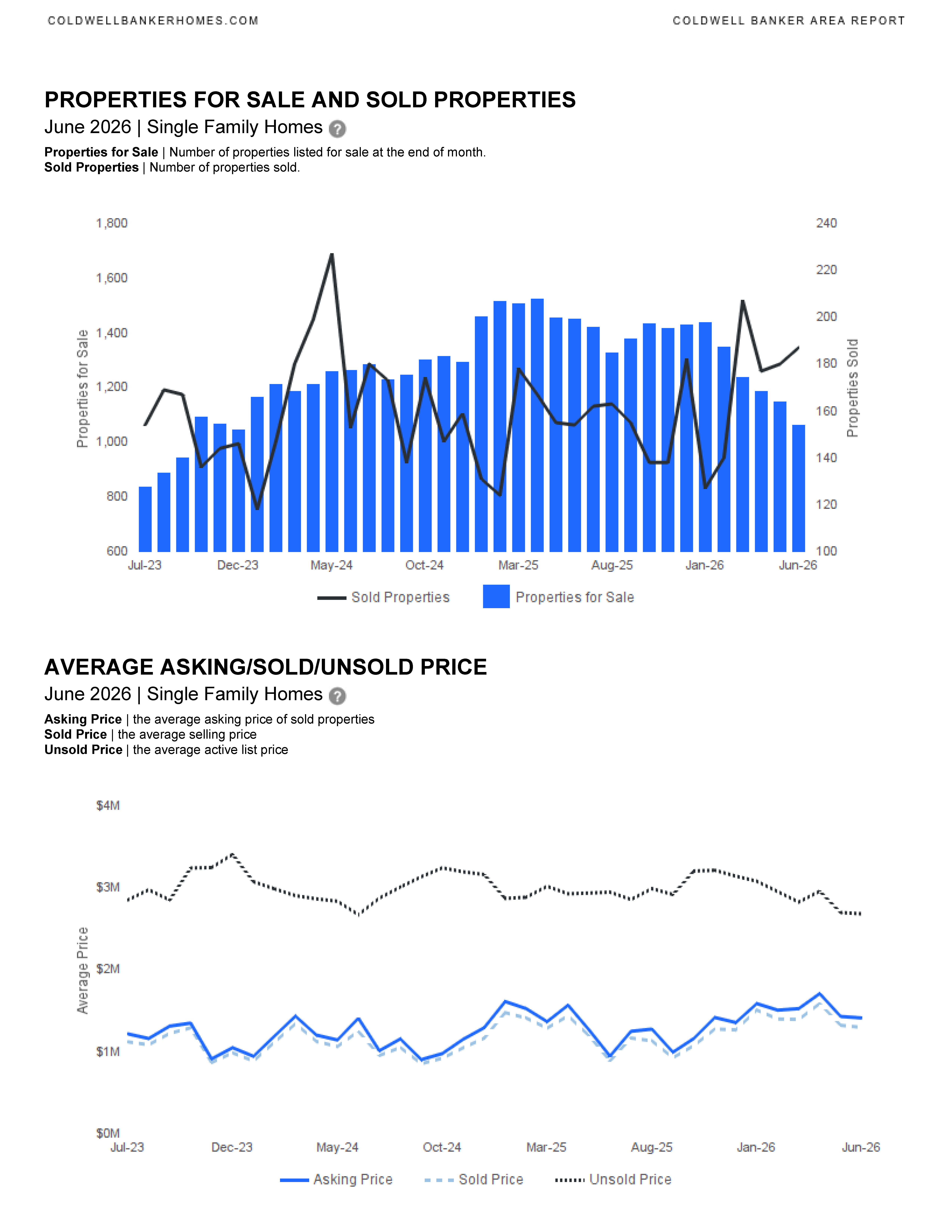
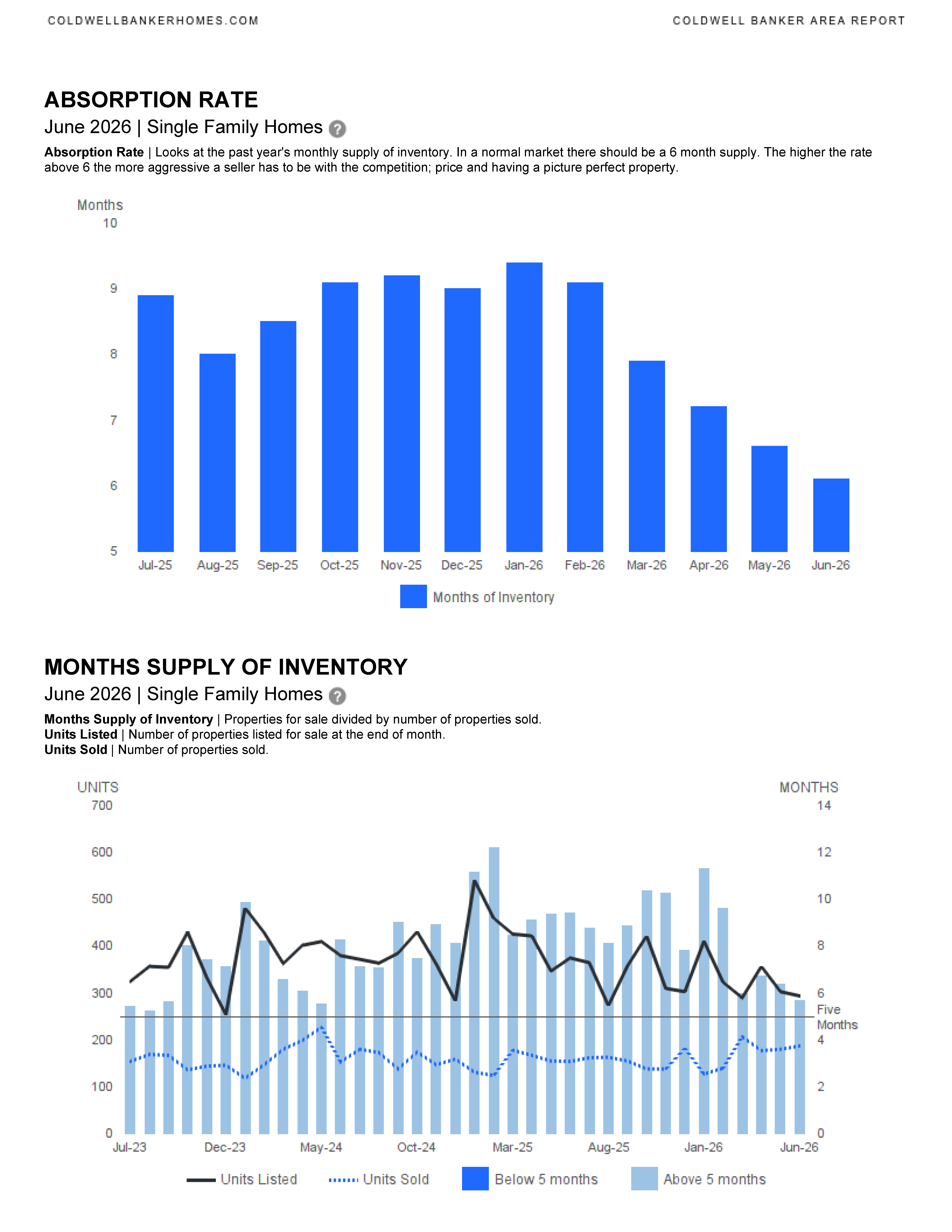
- Months of supply fell to approximately 6.1 months, close to a balanced market.
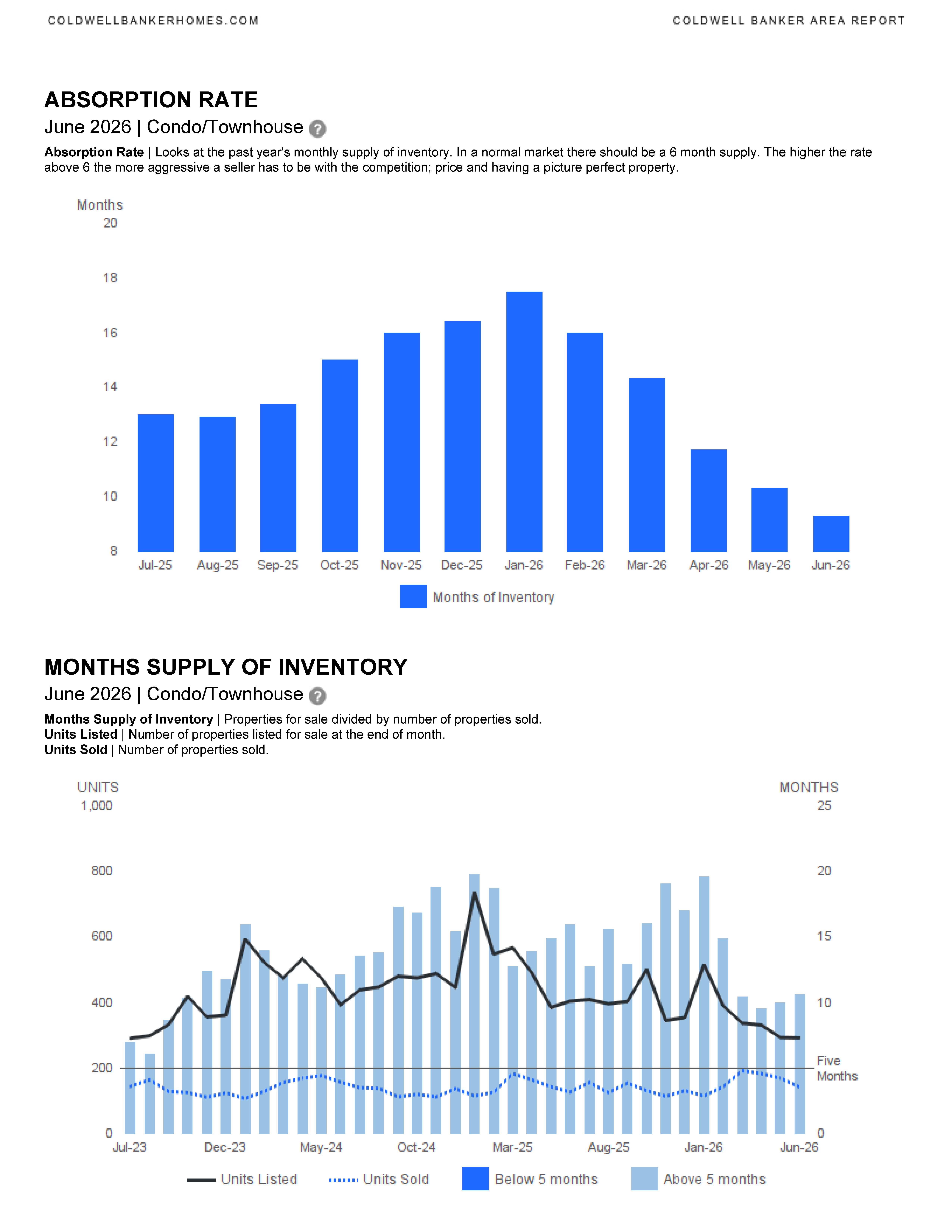
Condos & Townhomes
- Inventory remains much higher.
- Months of supply is approximately 9.3 months, giving buyers more choices and negotiating power.
In Plain English
- Single-family homes = stronger seller market
- Condos/townhomes = more balanced to buyer-friendly market
Year-to-Date Highlights (2026)
Single-Family Homes
- Sales are up 12% compared to 2025.
- Median sales price is up 2.5% to $615,000.
- Average sales price is up 10.7%.
Condos & Townhomes
- Sales are up 10% compared to 2025.
- Median sales price is up only 1.1% year-to-date.
- Average sales price is up 7.2% year-to-date despite the June pullback.
Fort Lauderdale Market Outlook
The June 2026 data shows a market that remains active but is becoming more selective. Single-family homes continue to outperform with rising prices, solid demand, and decreasing inventory. Meanwhile, condos and townhomes are offering buyers better opportunities due to softer pricing and more available inventory. Overall, sales activity is increasing across both property types, a positive sign for the Fort Lauderdale real estate market heading into the second half of 2026.

In today’s competitive SE Florida housing market, it’s essential to work with an experienced and knowledgeable real estate professional. If you’d like up‑to‑date market reports for your neighborhood, Fort Lauderdale, or any other SE Florida community, I’d be happy to send them. We can review current trends, discuss the market, and explore how we can work together to achieve your real estate goals. I’m here to support you every step of the way.
CONTACT ANNETTE
Let’s start working together!
Annette Dammeyer, REALTOR®, ABR®, AHWD®
Coldwell Banker Realty
901 E Las Olas Blvd STE 101, Fort Lauderdale, FL 33301
808.747.3686
SL 3535792
SE Florida Market Snapshot – June 2026
SE Florida Market Snapshot – June 2026
Snapshot of Today’s Broward County Market
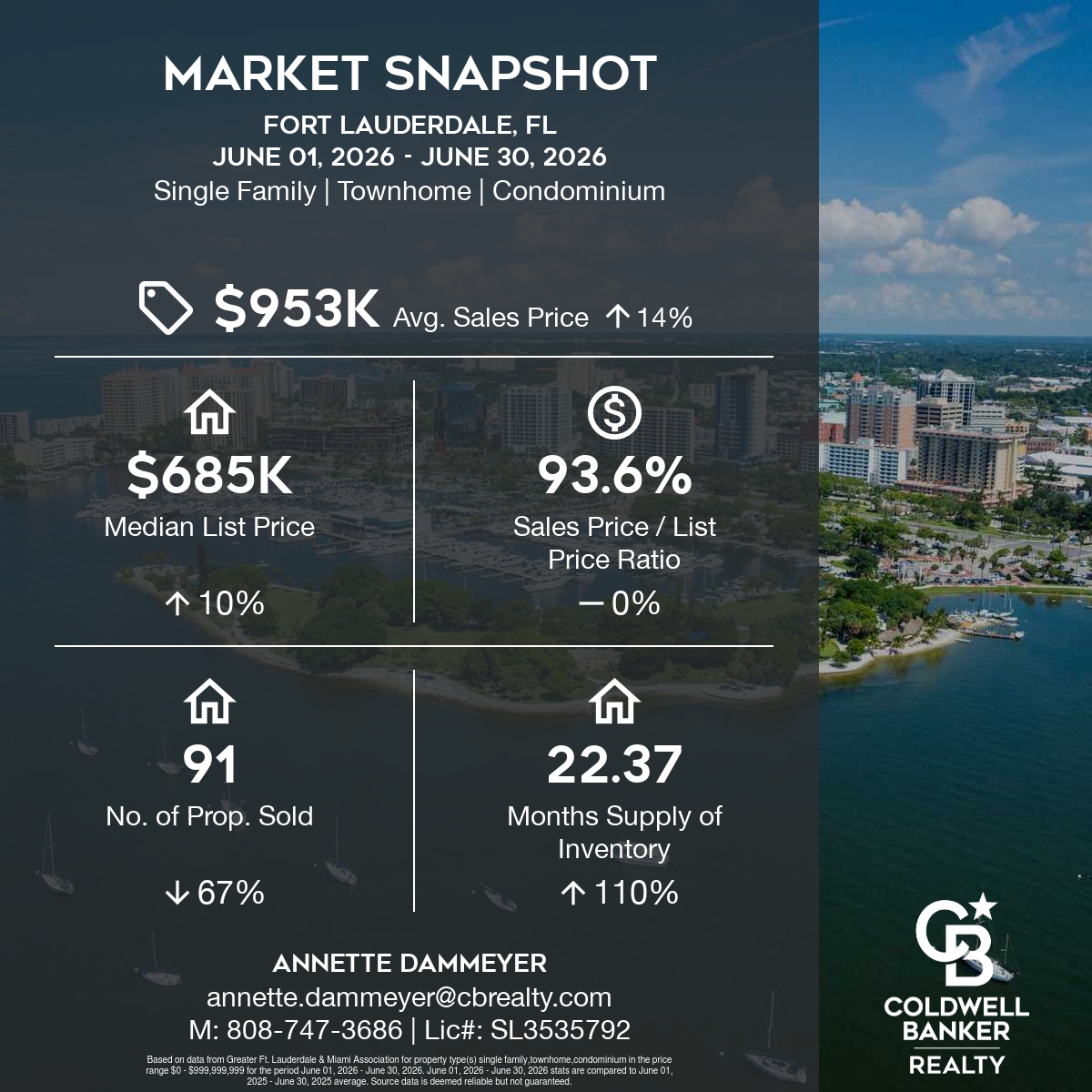
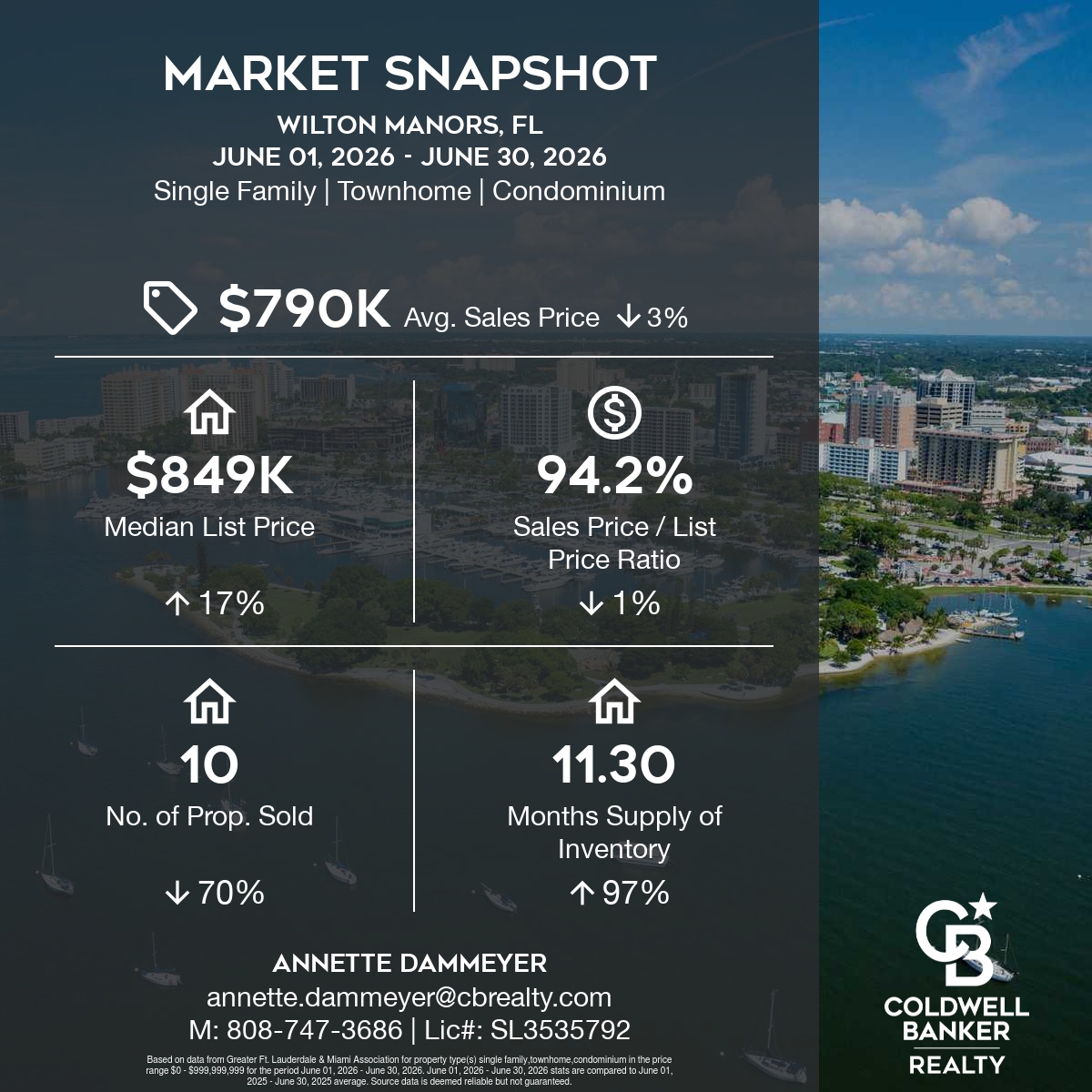
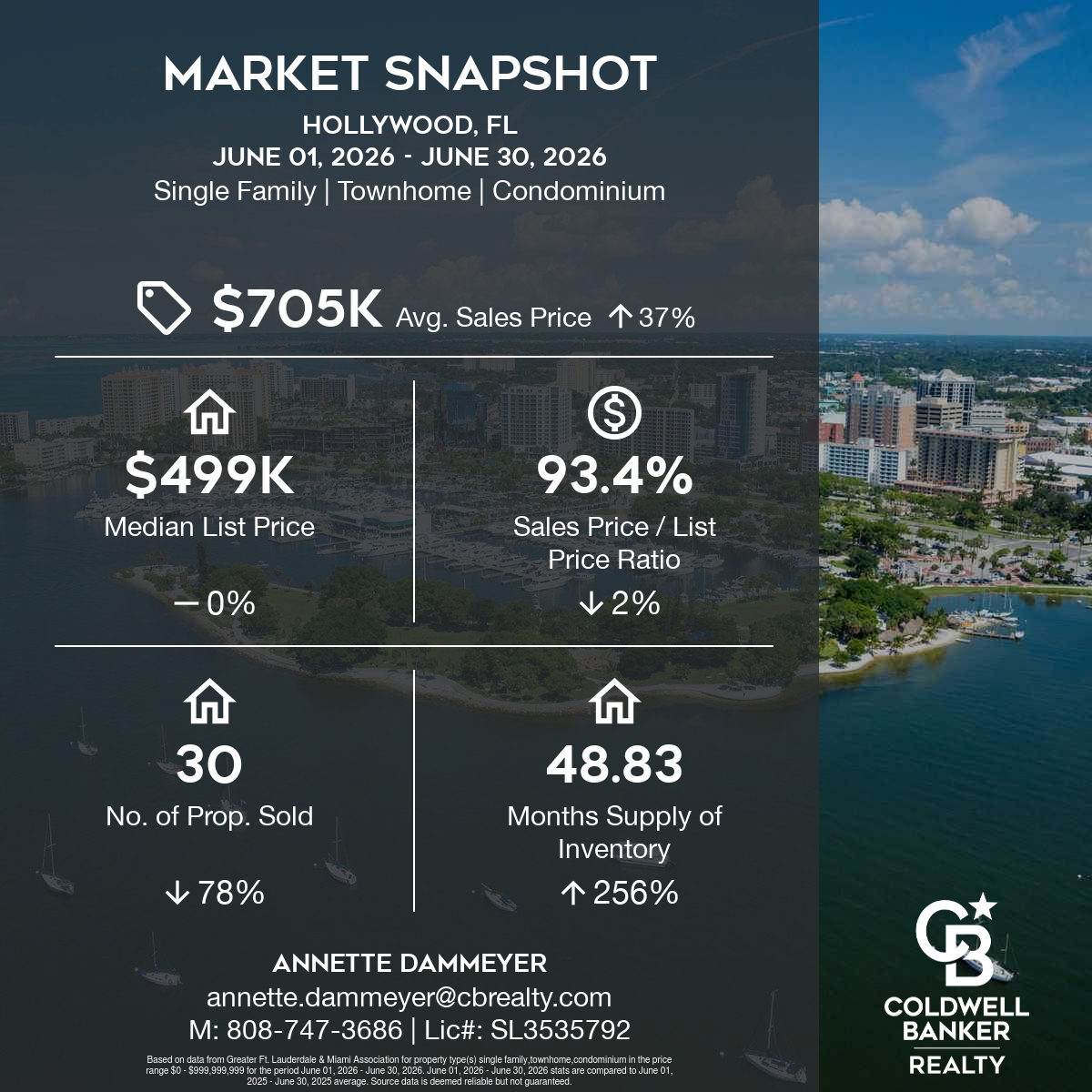
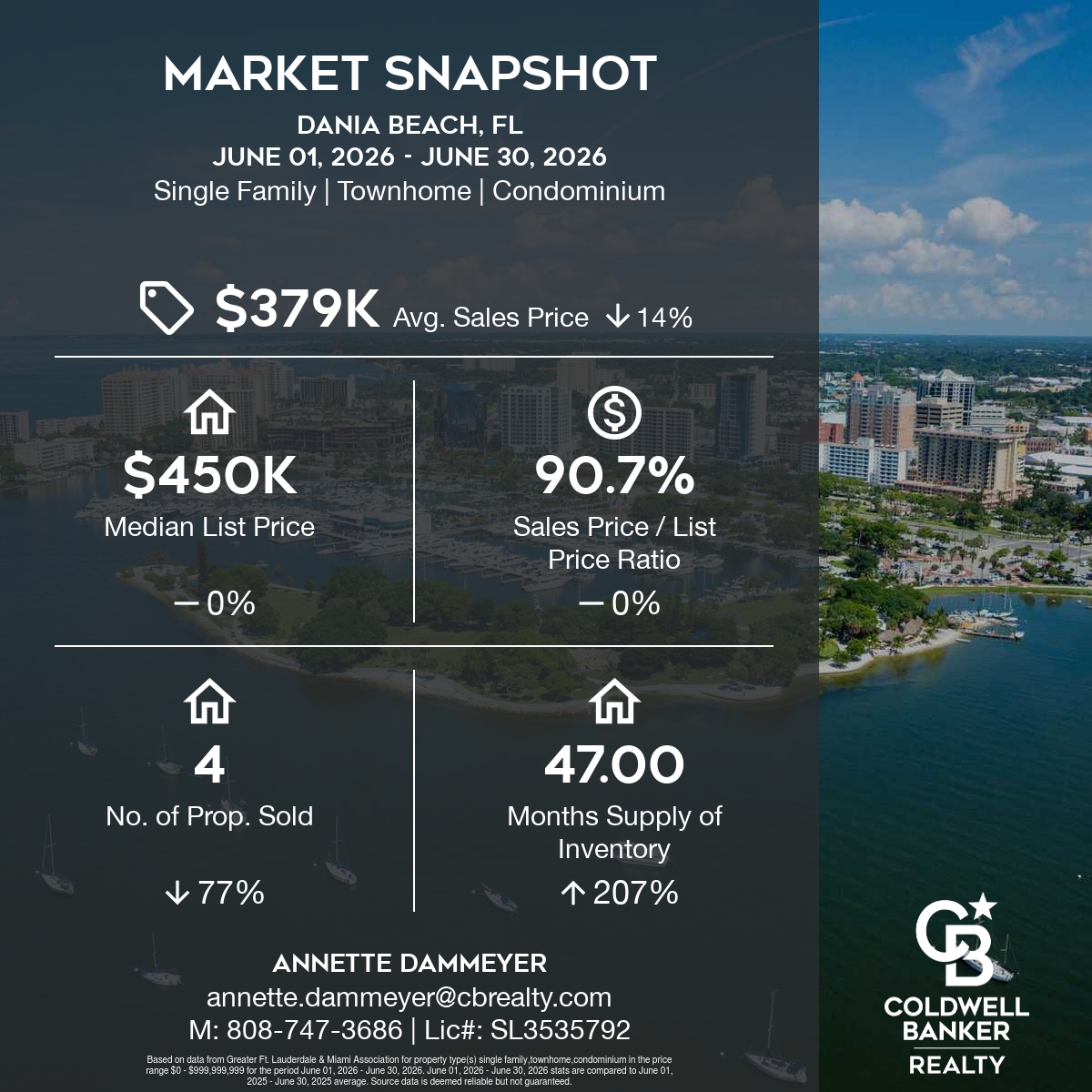
The Broward County real estate market continued to show a clear shift toward buyers in June 2026, with inventory levels rising sharply across Hallandale Beach, Dania Beach, Hollywood, Wilton Manors, and Fort Lauderdale. While average sales prices remained resilient in several markets—including Hollywood (+37%), Hallandale Beach (+28%), and Fort Lauderdale (+14%)—closed sales activity declined significantly, ranging from 67% to 87% fewer properties sold year-over-year. Buyers also gained more negotiating power, with homes selling at approximately 91% to 94% of list price and months of inventory increasing between 97% and 579%, depending on the city.
Bottom Line: Broward County home prices are holding relatively strong, but rising inventory and slower sales are creating a more balanced, buyer-friendly market. Sellers should focus on strategic pricing and strong property presentation, while buyers may find more choices and greater negotiating opportunities than they have seen in recent years.
Advice for buyers
- Leverage the extra inventory, but don’t overplay your hand
- You often have multiple options and more time to decide—use that to compare HOA fees, insurance quotes, and reserves (especially for condos).
- Focus on total monthly cost, not just price
- Insurance + taxes + HOA can swing affordability more than a small price difference, particularly in Broward’s coastal and condo markets. Get quotes early and build them into your budget.
- Negotiate with data
- Use recent days‑on‑market and price reductions in the neighborhood to justify your offer and repair credits. In a cooler market, sellers are more open to concessions on closing costs, repairs, or rate buydowns.
- Be picky about building quality and reserves
- For condos, review the budget, reserves, and recent engineering reports. Newer safety and reserve rules can mean higher assessments—better to know now than be surprised later.
- Get pre‑approved and be clear on your walk‑away line
- A strong, clean pre‑approval still stands out. Decide in advance the max payment you’re comfortable with so you don’t stretch just because a property feels “perfect.”
Advice for sellers
- Price for today’s market, not yesterday’s peak
- With prices slightly correcting and days on market rising, overpricing is the fastest way to sit stale and invite lowball offers. Start at a realistic, data‑backed price that matches recent closed sales, not just active listings.
- Win on presentation
- In a higher‑inventory market, your home is competing hard for attention. Professional photos, good lighting, decluttering, minor repairs, and neutral paint can be the difference between “scroll past” and “schedule a showing.”
- Be ready to negotiate—and to give value
- Buyers now expect something: a price adjustment, closing cost help, or a credit for updates. Decide ahead of time what you’re willing to offer so you can respond quickly and keep good buyers engaged.
- Mind the first 2–3 weeks on market
- That’s when you get the most eyeballs. If showings are slow or feedback is consistently about price, adjust quickly rather than waiting months and chasing the market down.
- For condo sellers: get your paperwork tight
- Have association docs, budgets, reserves, and recent inspections ready. The smoother and more transparent the building looks, the less nervous buyers (and their lenders) will be.
Here are the Market Snapshots reflecting the last month (compared to the same month last year) for the following areas:
- Fort Lauderdale
- Wilton Manors
- Hollywood
- Dania Beach
- Hallandale Beach
These take into account all property types (Single Family Homes/Condos/Townhomes).
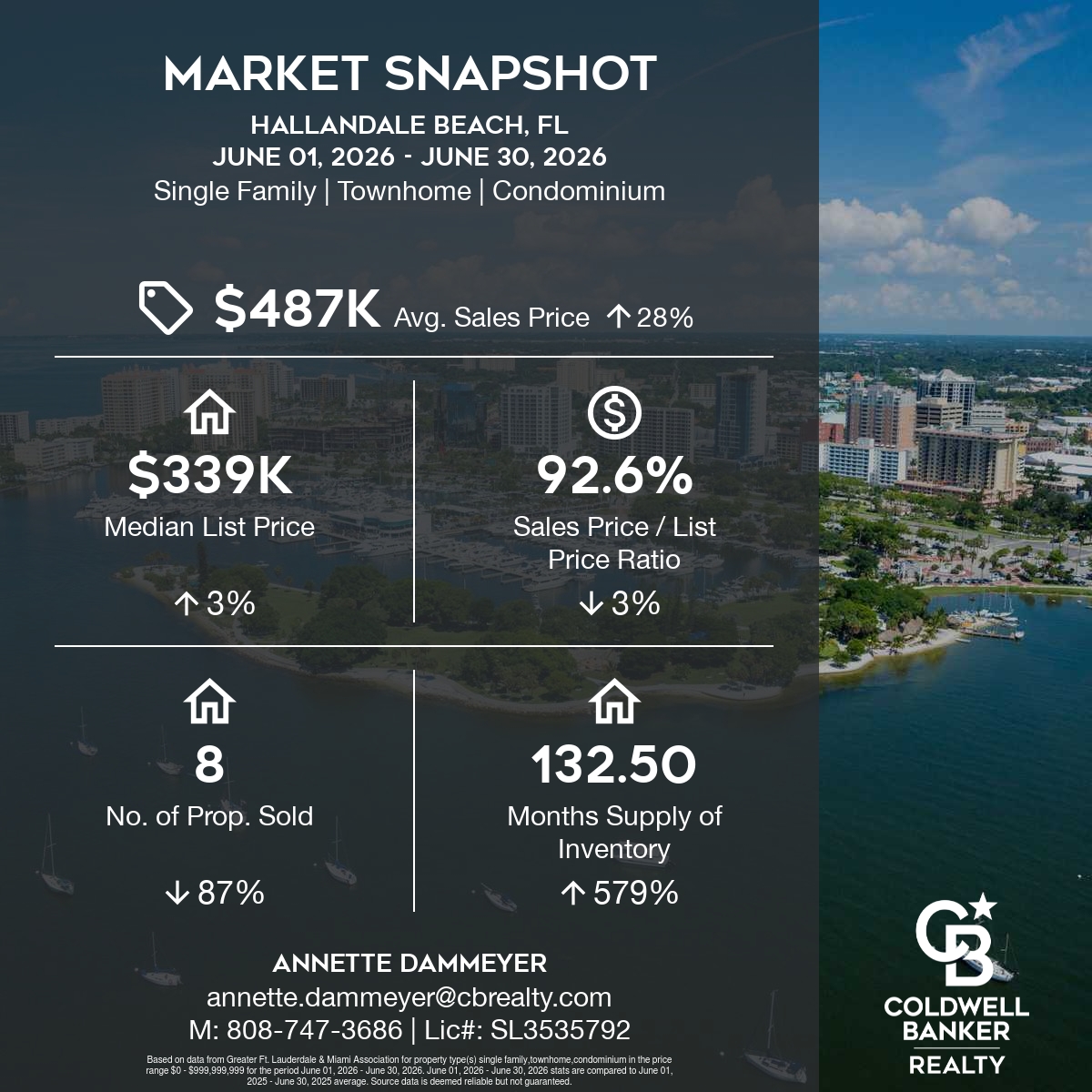
The real estate landscape in South Florida is evolving. Making smart, timely decisions has never been more important. Whether you’re considering selling, buying, or simply staying informed, I’m here to be your local advisor and resource.
Let’s talk about current market trends and how we can align your goals with today’s opportunities. I’d be happy to provide customized market reports for Fort Lauderdale, any SE Florida city, or even your specific neighborhood—all automatically delivered to your inbox.
Call or email me anytime. I’m here to help you move forward with clarity and confidence.
CONTACT ANNETTE
Let’s start working together!
Annette Dammeyer, REALTOR®, ABR®, AHWD®
Coldwell Banker Realty
901 E Las Olas Blvd STE 101, Fort Lauderdale, FL 33301
808.747.3686
SL 3535792
July 2026 ~ 4th of July Fun, Vintage Trends and Barndominiums!

July 2026 NewsletterWelcome to Your July 2026 Real Estate & Lifestyle Update!
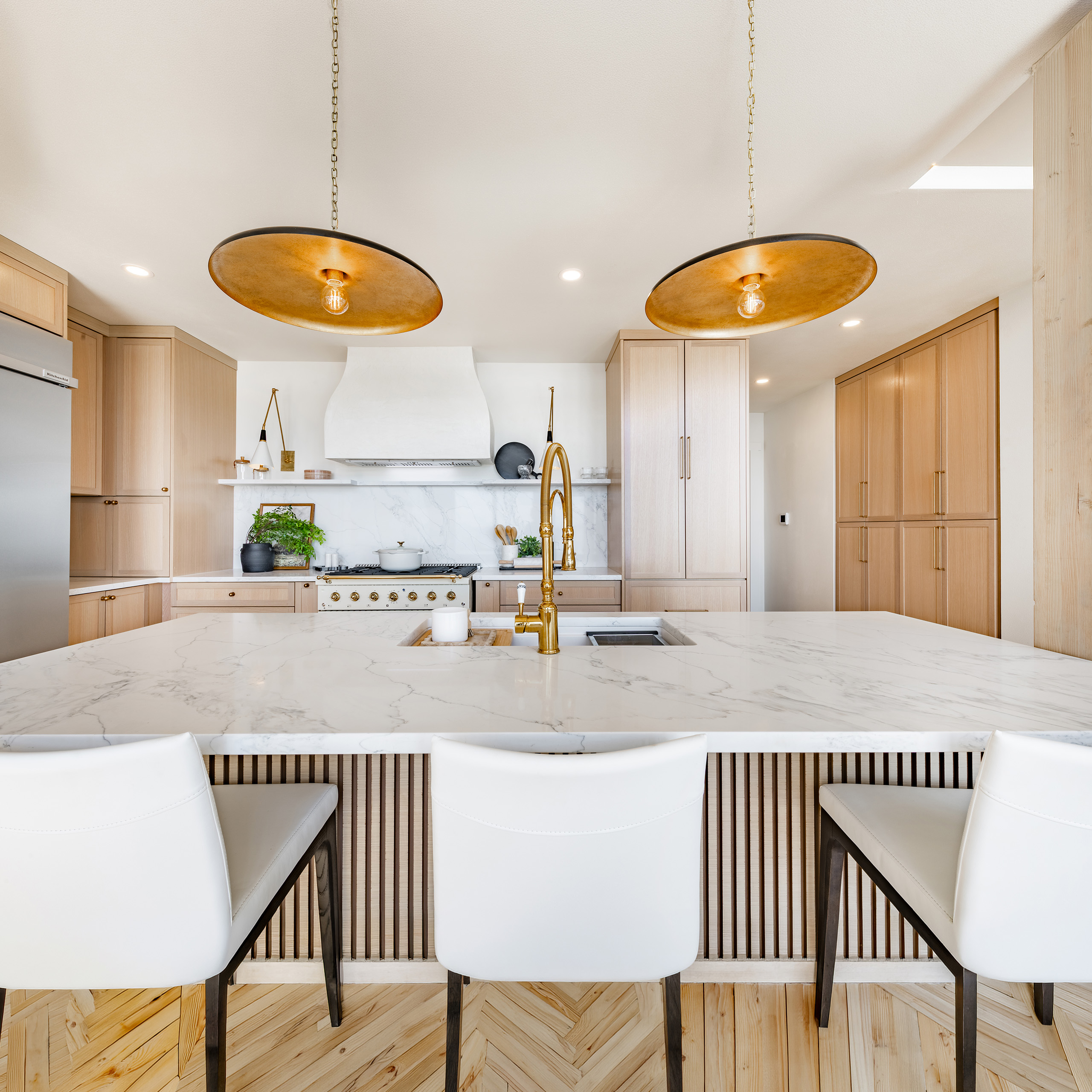
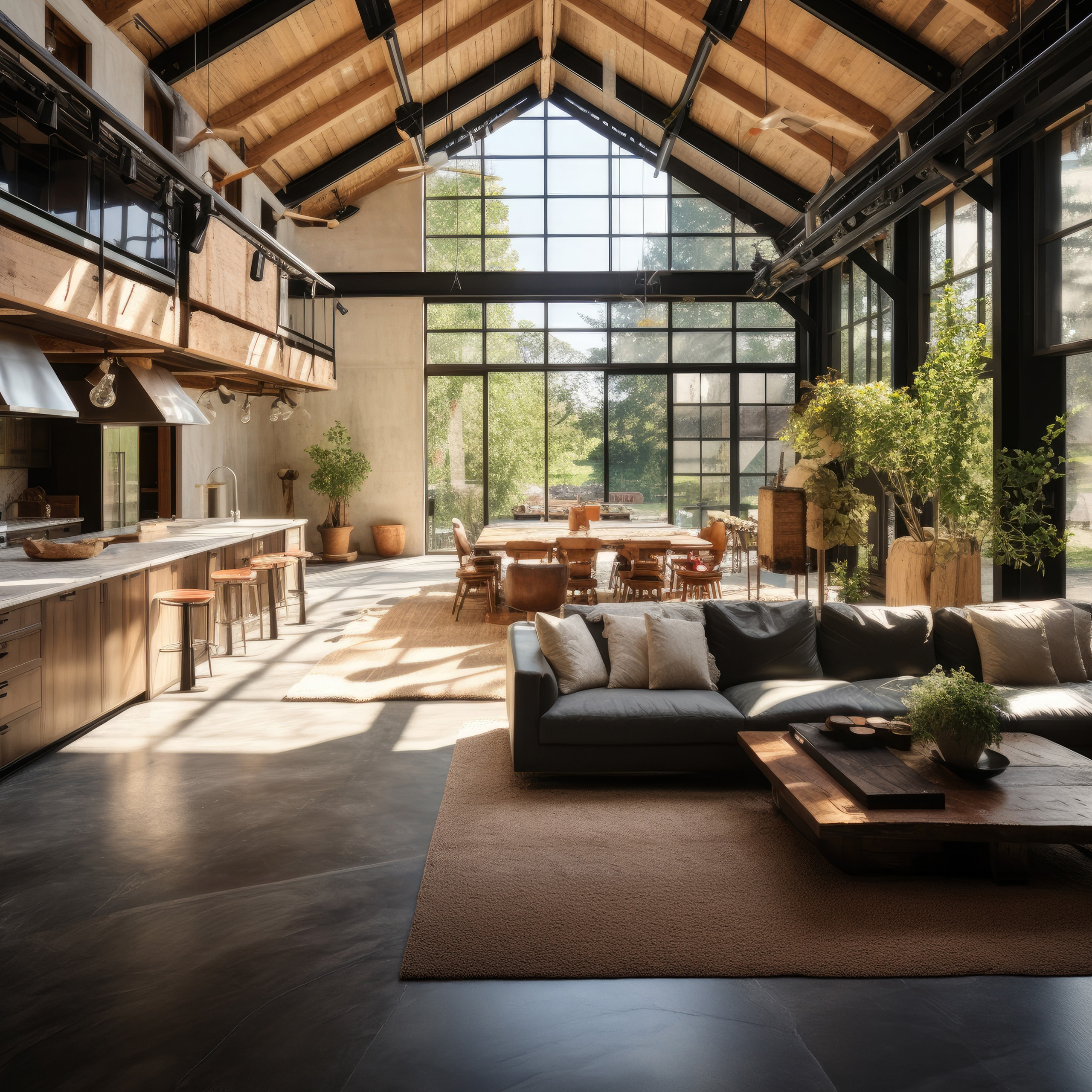
Hello friends, neighbors, and sunshine lovers ☀️ July is officially arriving here in beautiful South Florida—and you can feel the energy everywhere. Between long beach days, backyard gatherings, and fireworks lighting up the sky, this is the season where home truly becomes the heart of it all. As your local real estate resource (and someone who absolutely loves where we live), I always think of July as the perfect blend of celebration, inspiration, and fresh ideas for making your home even more special. And this month’s newsletter is packed with just that. With the 4th of July right around the corner, we’re sharing a few fun, fresh celebration ideas—from simple ways to elevate your backyard party to practical reminders to help keep your family, guests (and even pets!) safe while enjoying the festivities. After all, while fireworks and summer traditions bring us together, safety is just as important as the celebration itself. Inside your home, it’s all about effortless upgrades that feel high-end without the heavy lift. You’ll find inspiration for incorporating brass, copper, and gold accents—a trend that’s having a major comeback thanks to its warm, timeless appeal and ability to instantly elevate a space. We’re also taking a closer look at one of the most talked-about housing trends right now: barndominiums. These versatile, open-concept homes are gaining popularity across the U.S. for their flexibility, durability, and unique blend of modern design with rustic charm. And if you love a little nostalgia mixed with style (who doesn’t?), you’ll enjoy our spotlight on vintage-inspired décor—a trend that’s bringing warmth, personality, and story-driven design back into today’s homes. Whether you’re thinking about buying, selling, updating your space, or just soaking in everything summer has to offer, my goal is always the same—to keep you informed, inspired, and connected to our amazing community. Here’s to a joyful, safe, and beautifully styled July ✨ |
|||||||||||
National Stories
|
|||||||||||
|
|
|||||||||||
Real Estate Updates | Area Reports | May 2026
As always, I’m here to be a resource for you—whether you’re dreaming about your next move, considering updates to maximize your home’s value, or simply looking for trusted guidance along the way. Summer in SE Florida is a beautiful time to pause, enjoy, and plan ahead, and I’d love to support you in making the most of it. If you have questions about the market, your property, or would like a personalized home valuation, please don’t hesitate to reach out. I’m always just a call, text, or email away—and ready to help whenever you need it.
⇒ CONTACT ANNETTE ⇐Let’s start working together!
Annette Dammeyer, REALTOR®, ABR®, AHWD® Coldwell Banker Realty 901 E Las Olas Blvd STE 101, Fort Lauderdale, FL 33301 808.747.3686 SL 3535792
|

4th of July Fun!
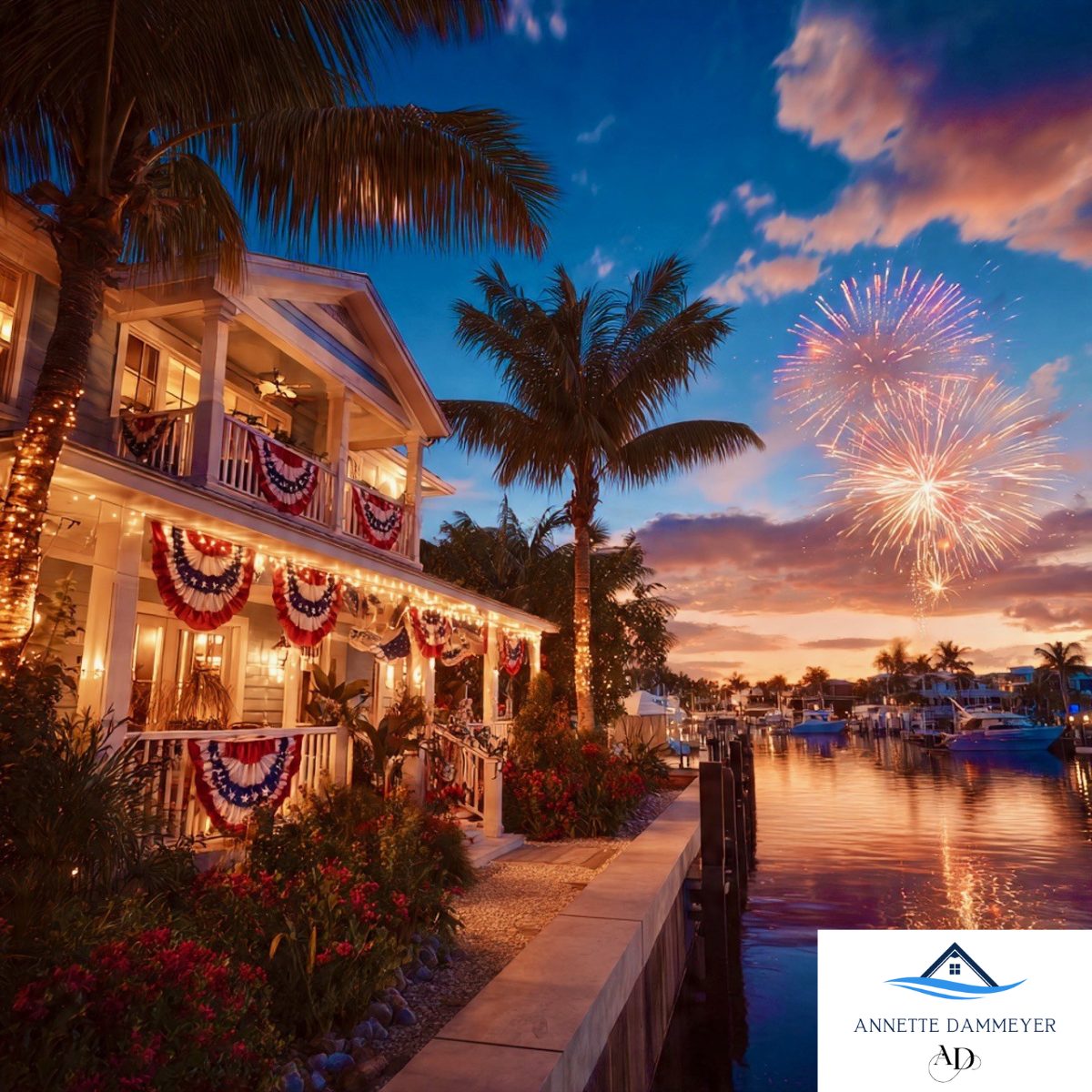
🎆 Celebrating the 4th of July in Our SE Florida Community
From your local REALTOR® and neighbor who loves where we live
Every year, the Fourth of July gives us a chance to pause, celebrate, and appreciate the freedoms we enjoy — all while soaking up sunshine, good food, and great company. As someone who lives, works, and plays right here in our beautiful SE Florida neighborhoods, I love seeing how our community comes alive with red, white, and blue spirit.
A Very Brief History (The Fun, Fast Version)
The Fourth of July marks the adoption of the Declaration of Independence in 1776 — the moment the 13 colonies officially said, “We’re doing our own thing now.” Since then, Americans have celebrated with fireworks, parades, cookouts, and gatherings big and small. It’s a holiday rooted in unity, pride, and the joy of community — three things we do exceptionally well here along the coast.
🎉 Fresh Celebration Ideas for a Florida‑Style Fourth
Sure, we all love fireworks and BBQs… but here are some fun, not‑so‑overdone ideas that fit our SE Florida lifestyle perfectly:
🌊 1. Sunrise Freedom Walk on the Beach
Beat the heat, enjoy the breeze, and start the day with gratitude. Bring coffee, a flag, and maybe a neighbor or two.
🛶 2. Red, White & Blue Paddle Parade
Kayaks, paddleboards, even inflatable flamingos — decorate them and cruise the Intracoastal or lakes. Great photo ops and a fun way to cool off.
🍉 3. Watermelon Carving Contest
Think pumpkin carving… but juicier. Kids and adults love it, and it’s a refreshing twist on a classic summer treat.
🐶 4. Patriotic Pup Parade
Dress up your furry friends (safely and comfortably) and stroll the neighborhood. Bonus points for matching outfits.
🎶 5. Backyard “American Classics” Playlist Party
Instead of blasting the same songs everyone else uses, curate a mix of feel‑good hits from different decades. Add a few tropical tunes to keep it Florida‑fresh.
🏡 6. Neighborhood Porch Decorating Challenge
Encourage neighbors to decorate their porches, balconies, or docks. It builds community pride and makes evening walks extra festive.
🔥 Safety Tips to Keep the Day Fun (and Stress‑Free)
A little planning goes a long way:
- Hydrate like it’s your job — July heat in SE Florida is no joke.
- Protect your pets — fireworks can be scary; keep them indoors with calming music.
- Be firework‑smart — if you’re lighting your own, keep a bucket of water nearby and avoid windy conditions.
- Grill safely — check propane connections, keep kids at a distance, and never leave the grill unattended.
- Sun safety — SPF 30+, hats, shade breaks, and plenty of water.
- Boat responsibly — designate a sober captain and check weather conditions before heading out.
💙 A Note From Your Neighbor & Local REALTOR®
As someone who’s deeply invested in our SE Florida community — from Dania Beach to Fort Lauderdale to Boca Raton — I love seeing how our neighborhoods come together during holidays like this. Whether you’re hosting a backyard BBQ, enjoying fireworks on the beach, or simply relaxing at home, I hope your Fourth of July is filled with joy, connection, and a little extra sparkle.
If you ever need local recommendations, market insights, or help navigating your next real estate move, I’m always here for you. Wishing you and your loved ones a safe, happy, and memorable Independence Day! 🎇🌴
Happy Independence Day!
CONTACT ANNETTE
Let’s start working together!
Annette Dammeyer, REALTOR®, ABR®, AHWD®
Coldwell Banker Realty
901 E Las Olas Blvd STE 101, Fort Lauderdale, FL 33301
808.747.3686
SL 3535792
Fort Lauderdale May 2026 Area Report
Fort Lauderdale May 2026 real estate statistics have been published.
Single Family Homes
Condominium & Townhouses
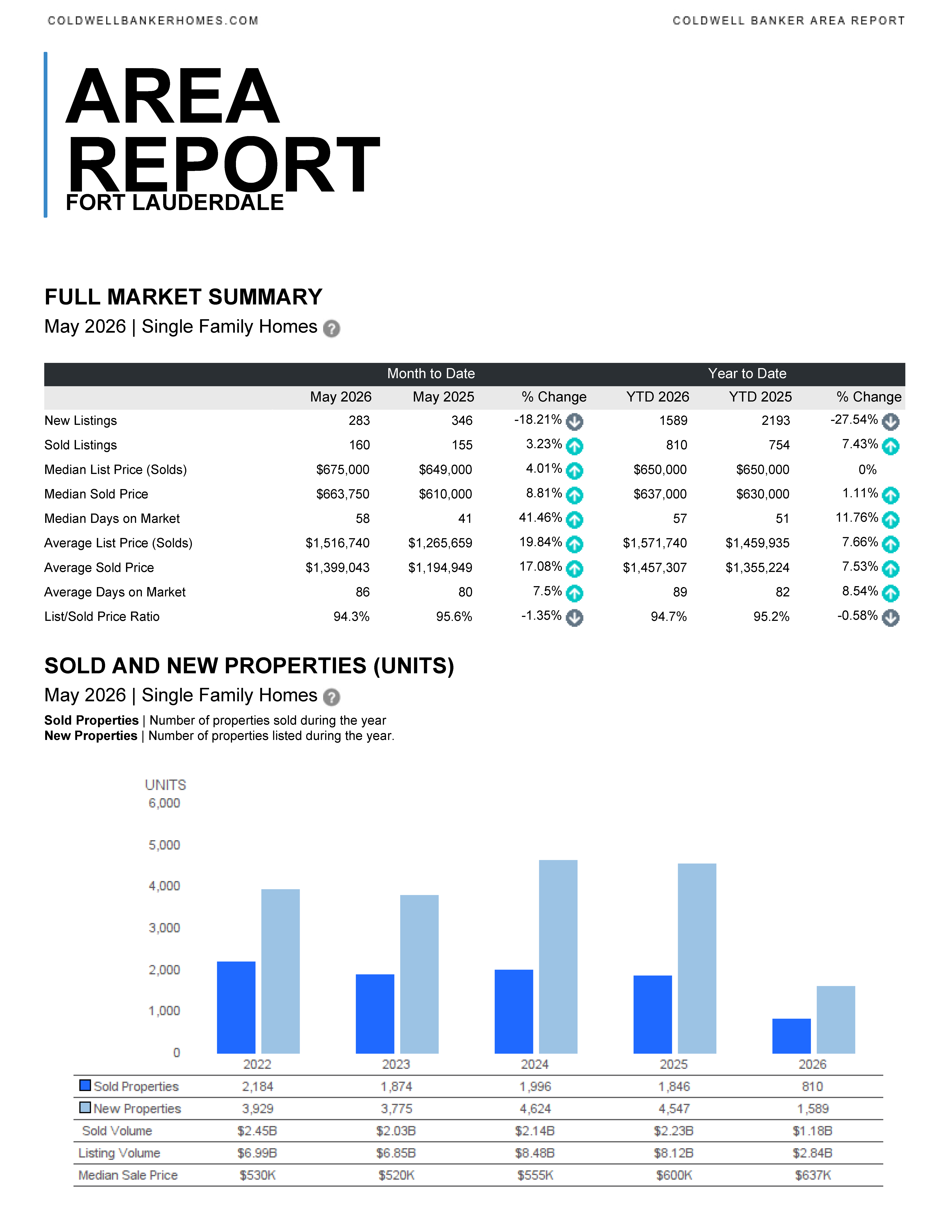
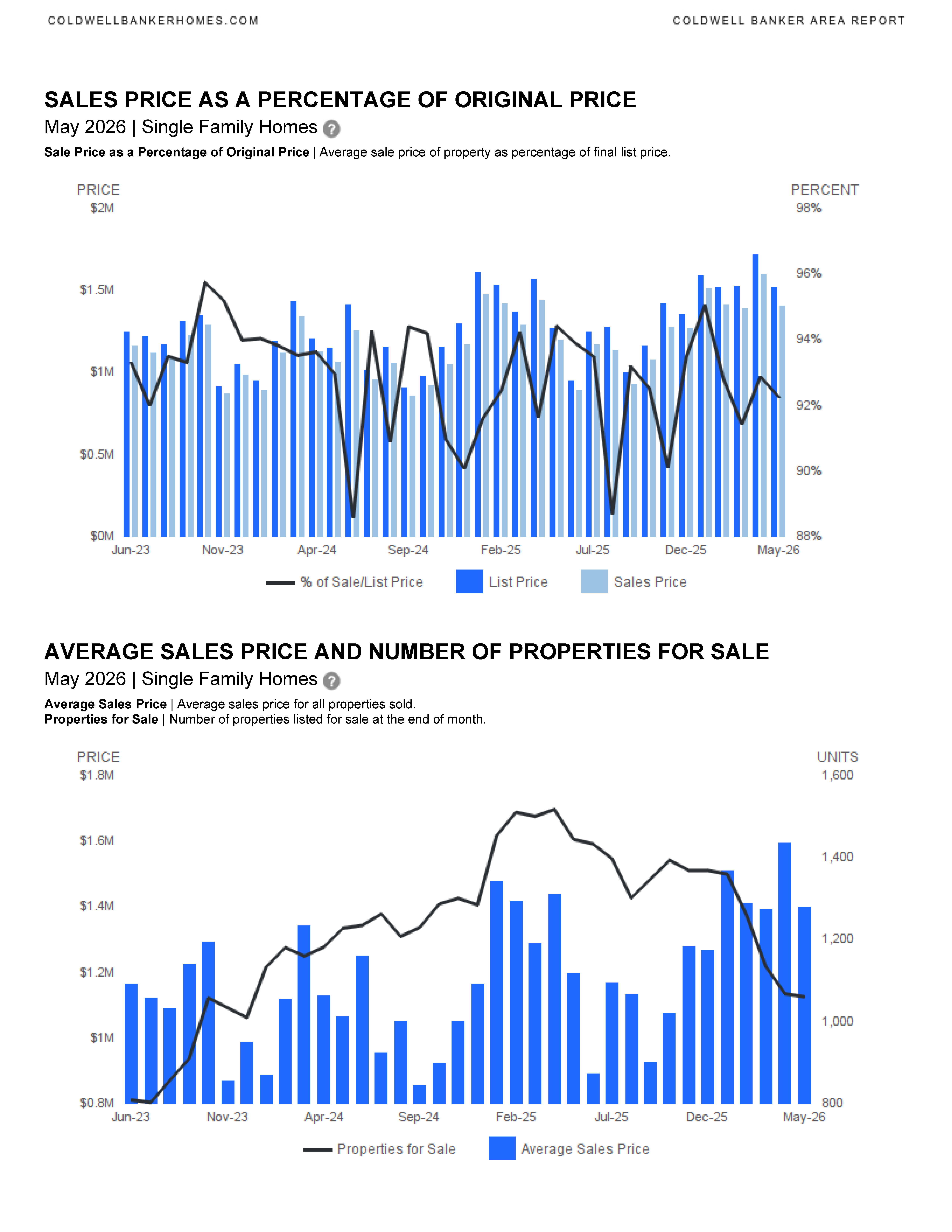
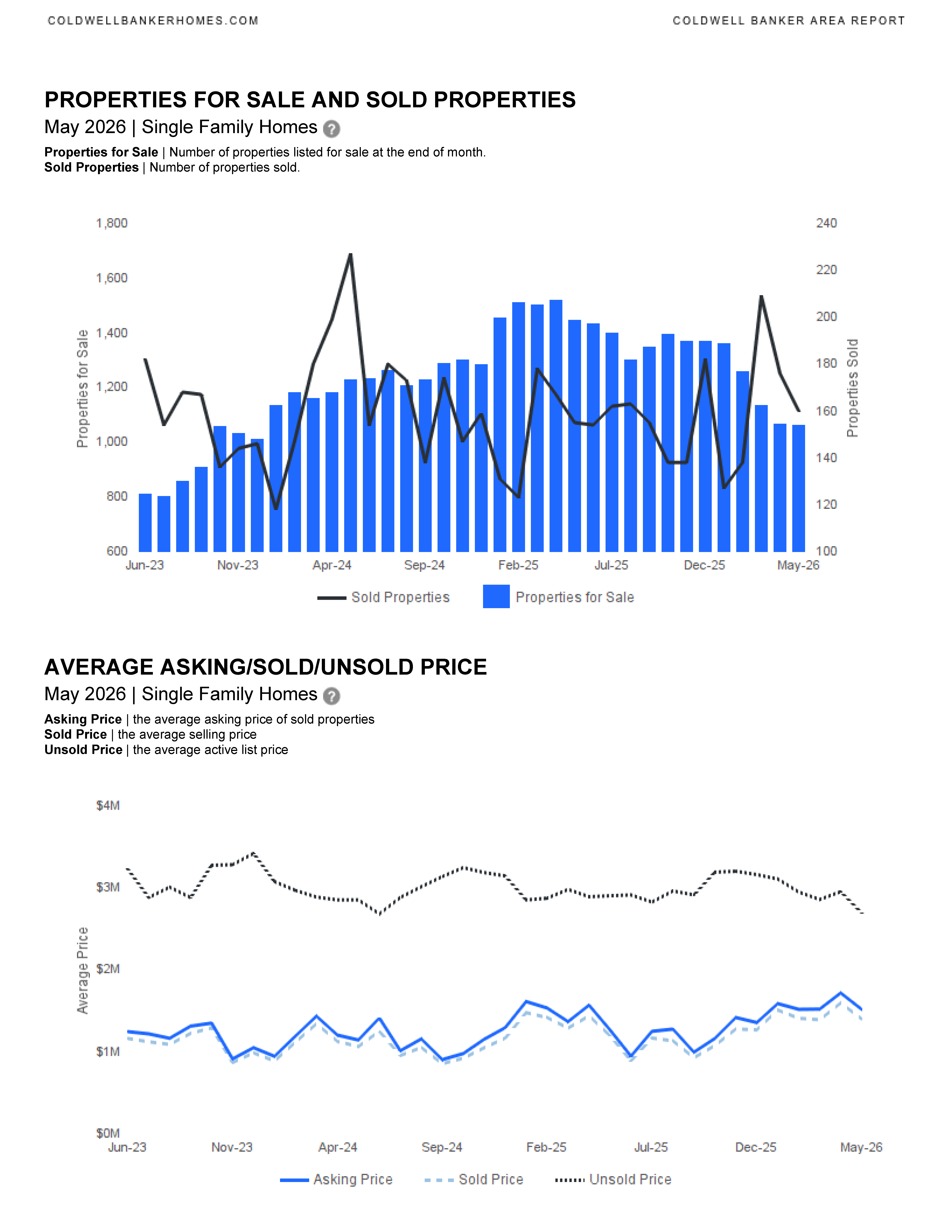
🏡 Single Family Homes – May 2026 Highlights
(Fort Lauderdale)
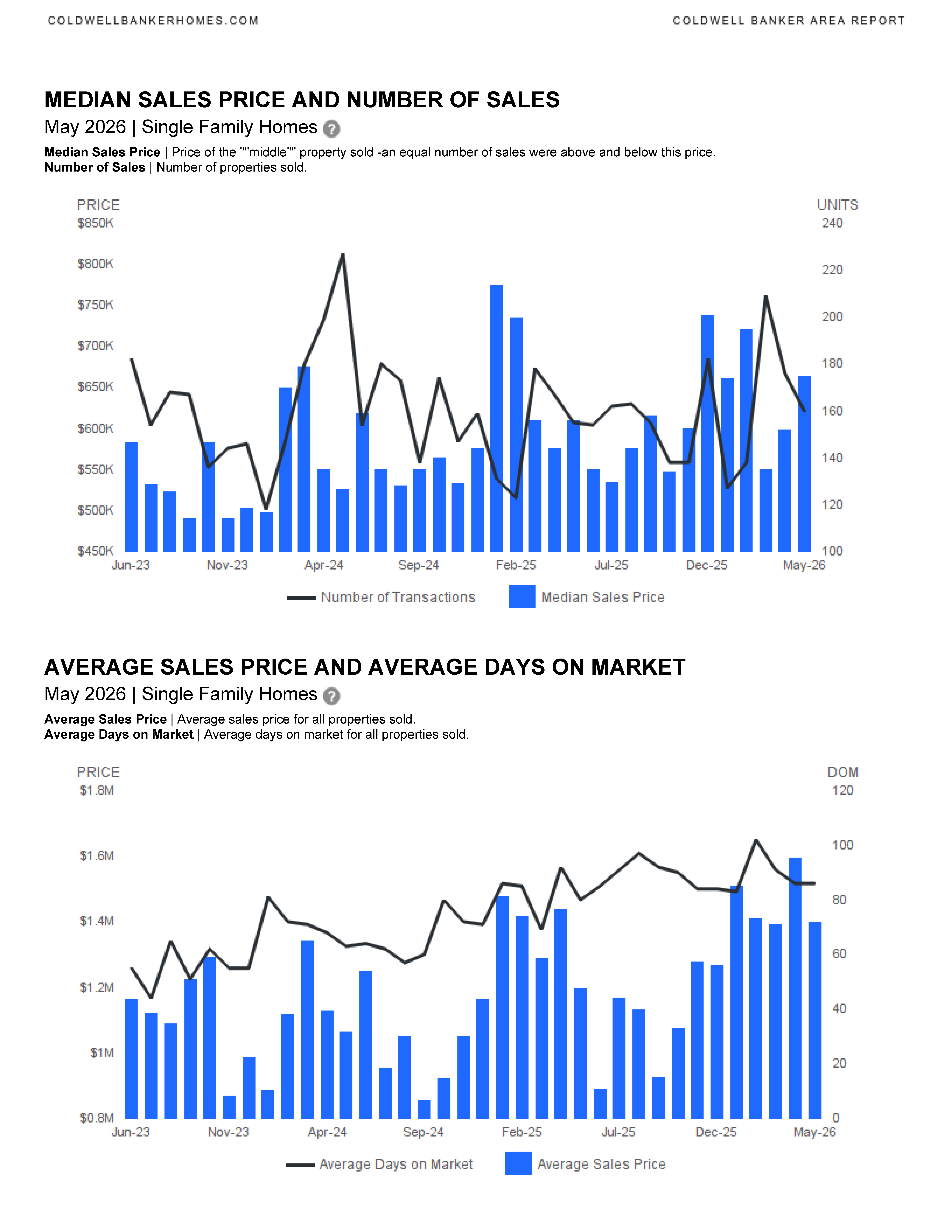
📈 Price Trends
- Median sales price ↑ 8.81% YoY to ~$663,750
- Average sales price ↑ 17.08% YoY
- Median list price (sold homes) ↑ 4.01%
- Average list price ↑ 19.84%
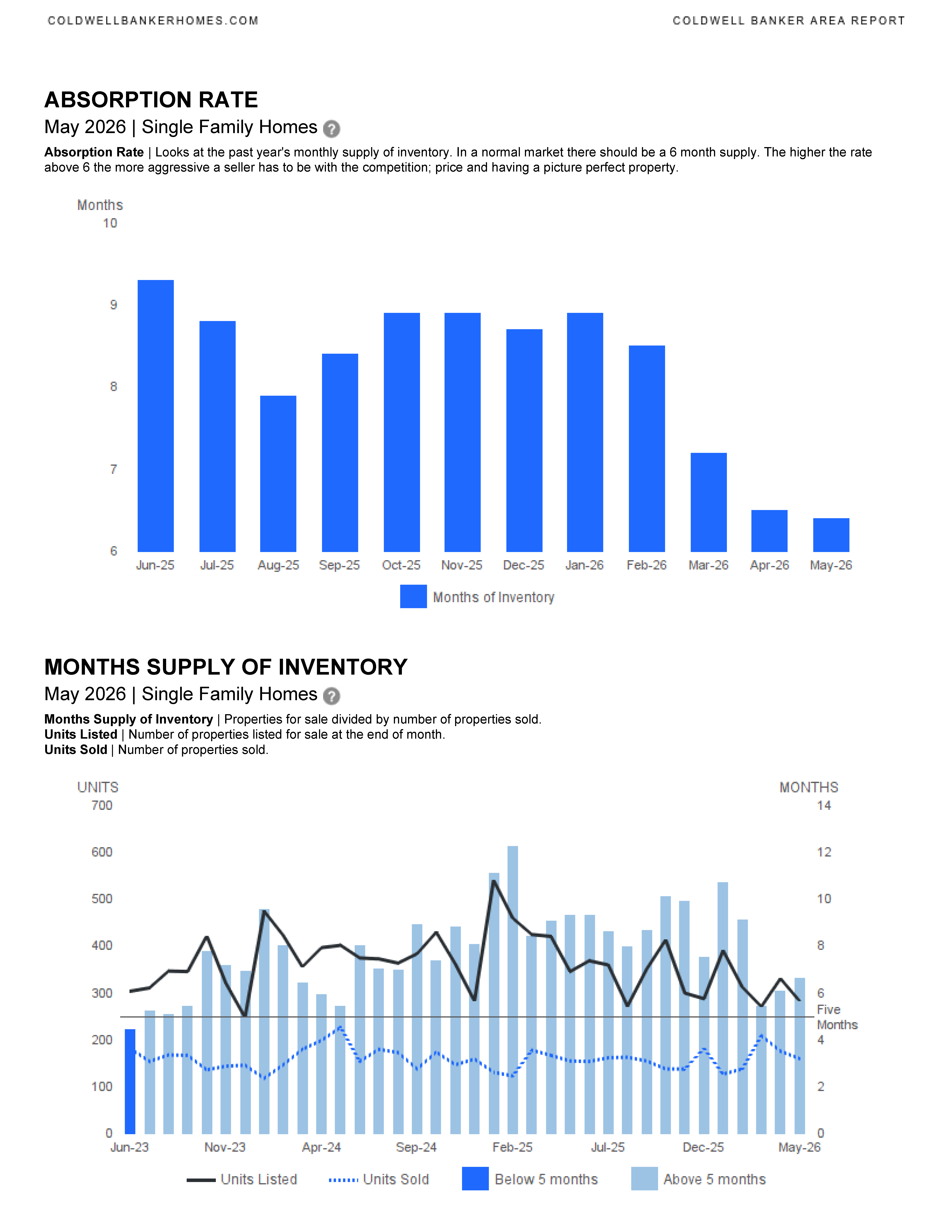
📉 Inventory & Supply
- New listings ↓ 18.21% YoY
- Year-to-date new listings ↓ 27.54%
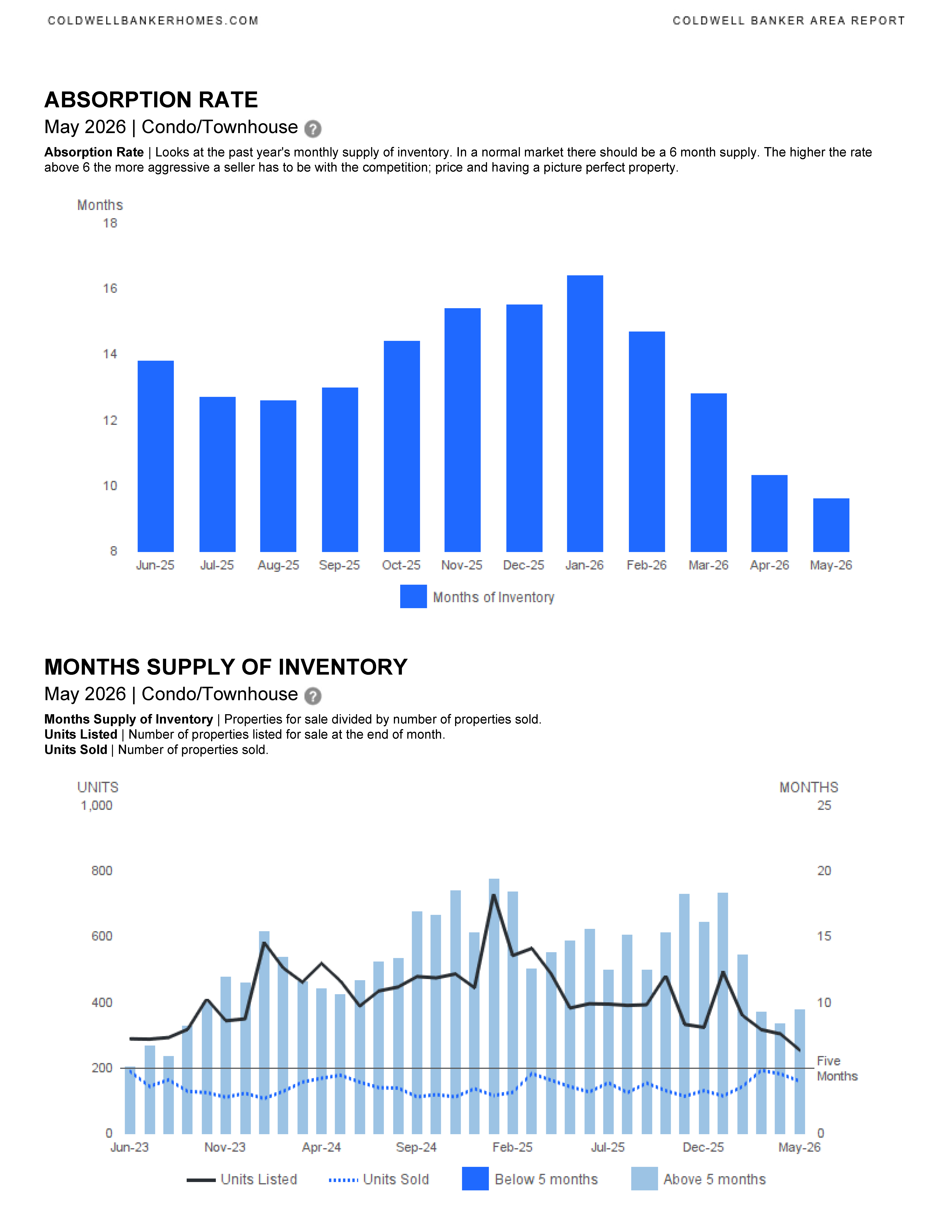
- Months of inventory trending around ~6 months (balanced range) based on chart
📊 Sales Activity
- Closed sales ↑ 3.23% YoY
- Year-to-date sales ↑ 7.43%
⏳ Market Speed
- Median days on market ↑ 41.46% (58 days)
- Average days on market ↑ 7.5% (86 days)
💰 Pricing Behavior
- List-to-sale ratio ~94.3% (slightly down YoY)
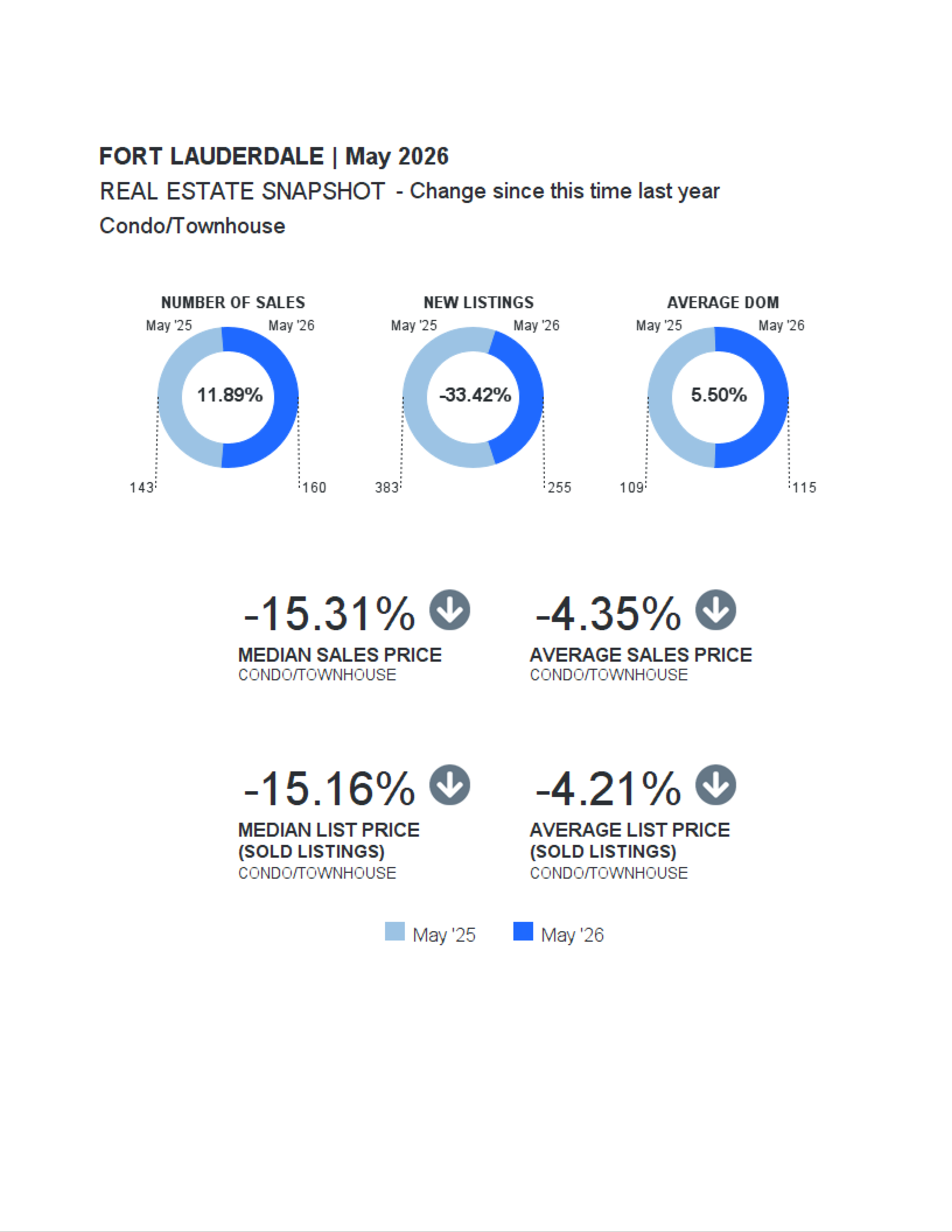
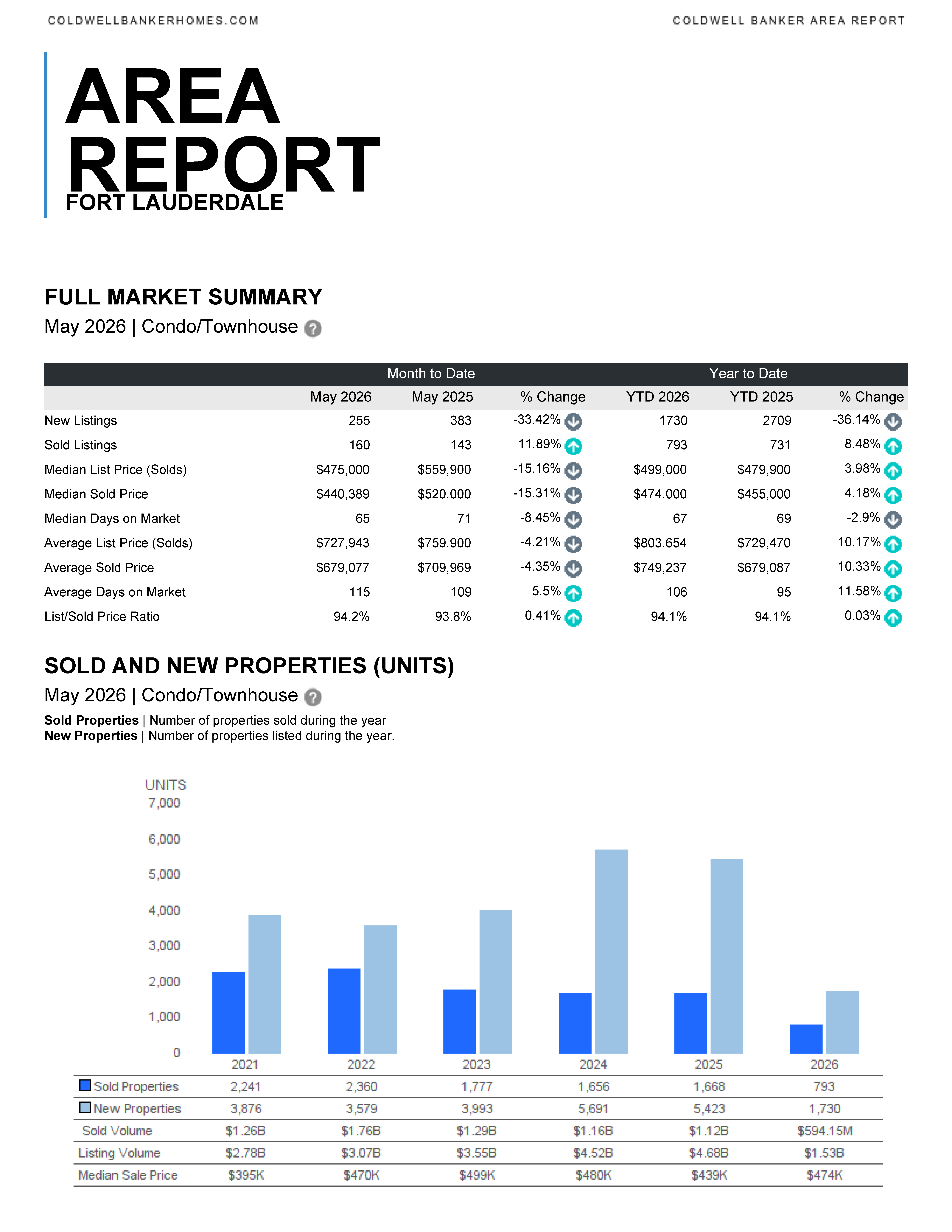
🏢 Condos & Townhouses – May 2026 Highlights
(Fort Lauderdale)
📉 Price Trends
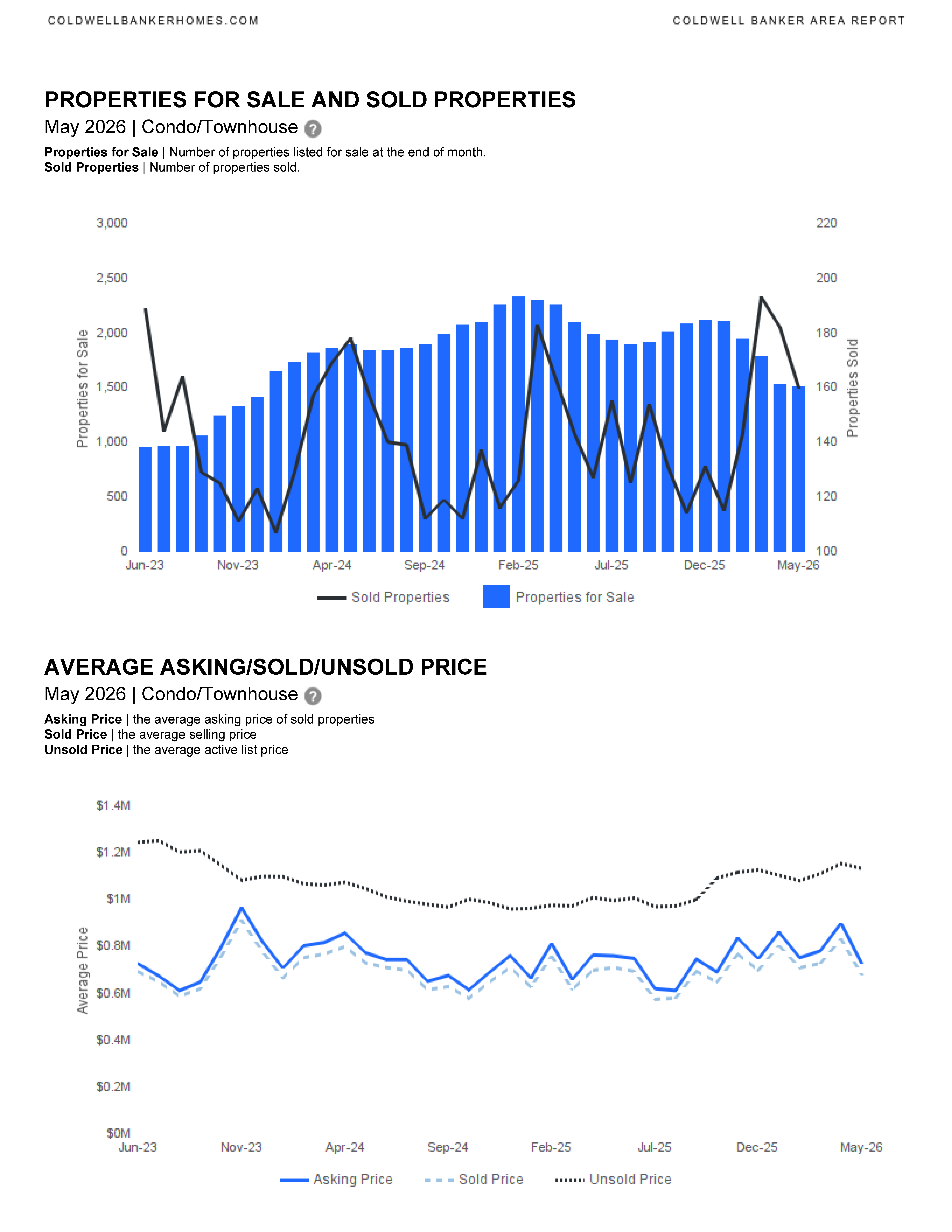
- Median sales price ↓ 15.31% YoY to ~$440K
- Average sales price ↓ 4.35%
- Median list price (sold units) ↓ 15.16%
- Average list price ↓ 4.21%
📉 Inventory & Supply
- New listings ↓ 33.42% YoY
- Year-to-date new listings ↓ 36.14%
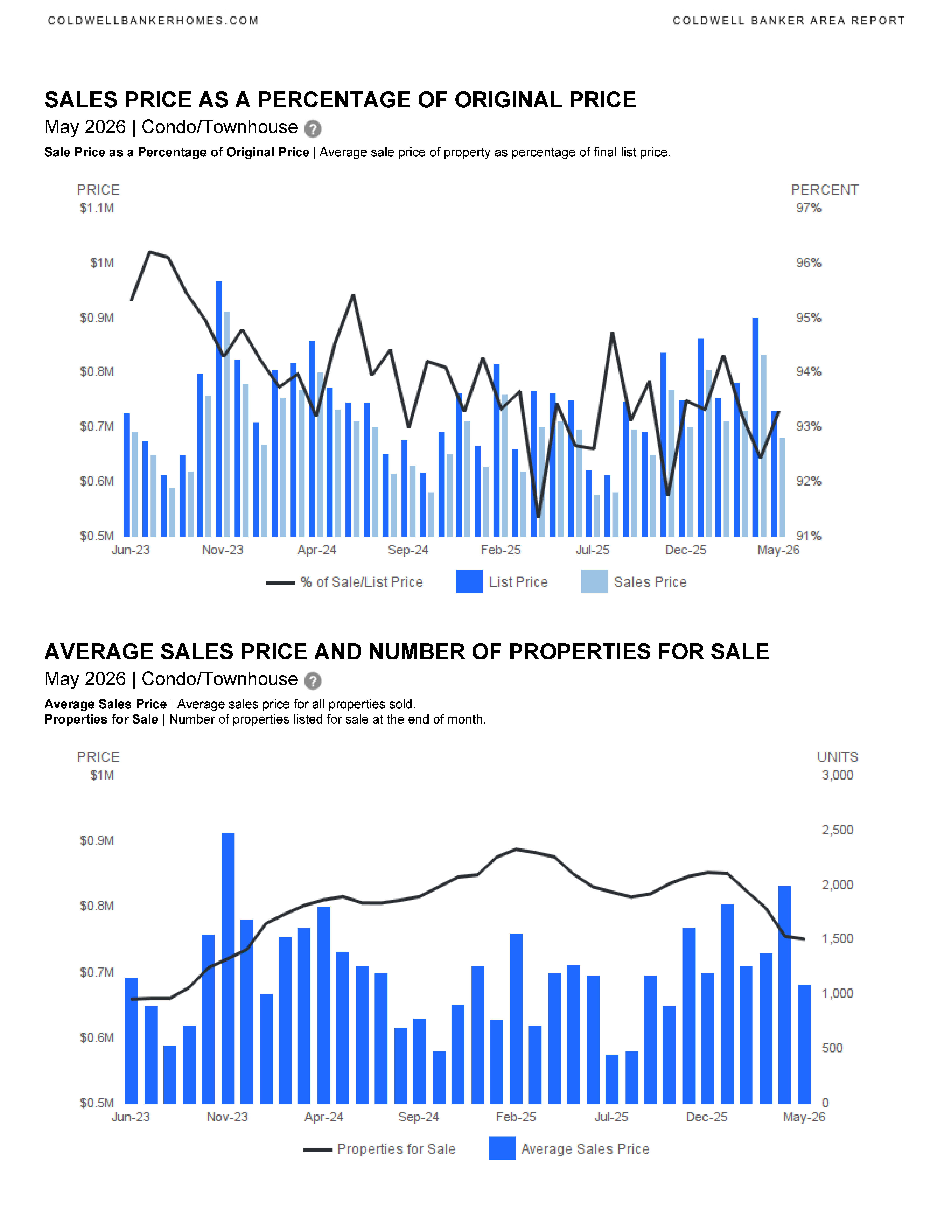
- Months of inventory remains elevated (~9–10 months range)
📊 Sales Activity
- Closed sales ↑ 11.89% YoY
- Year-to-date sales ↑ 8.48%
⏳ Market Speed
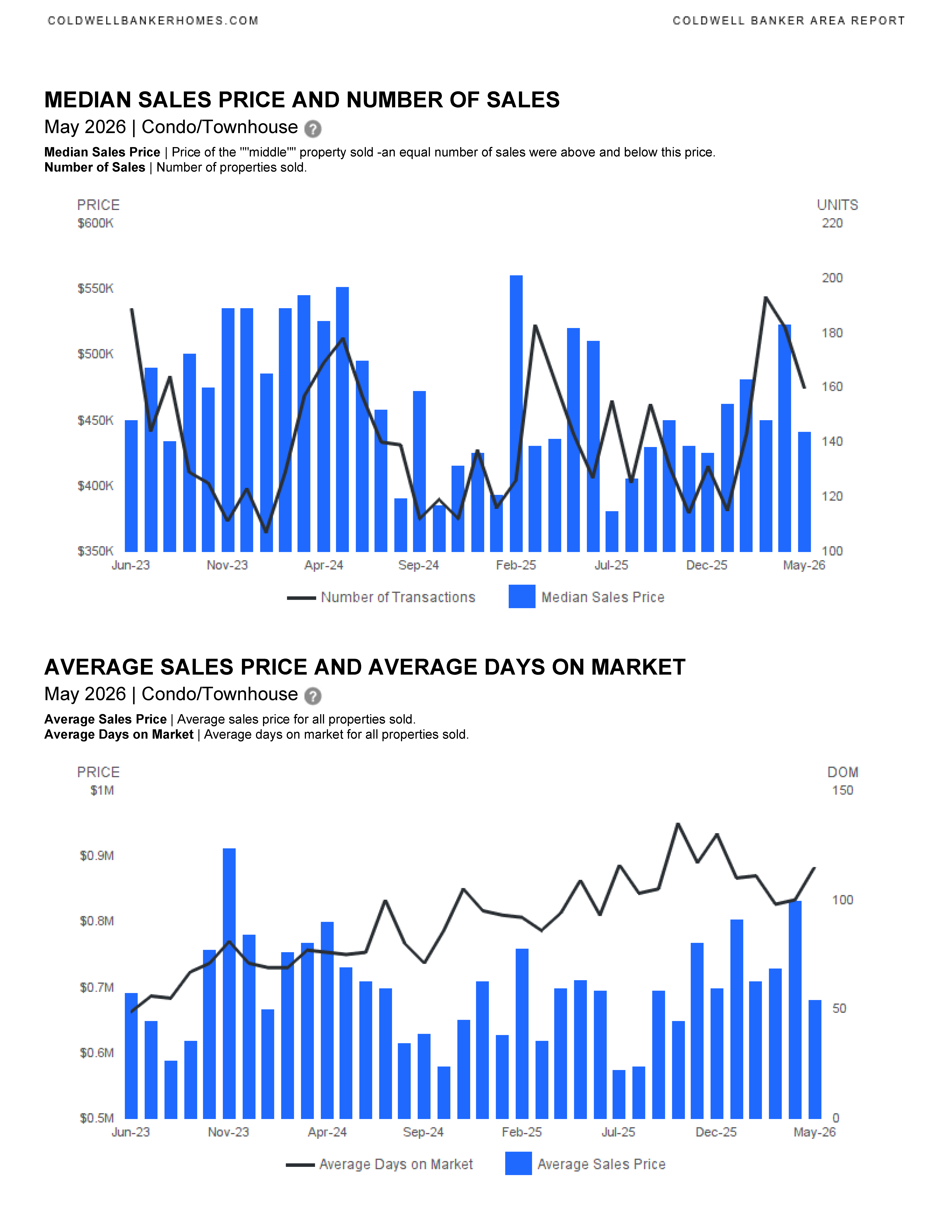
- Median days on market ↓ 8.45% (65 days)
- Average days on market ↑ 5.5% (115 days)
💰 Pricing Behavior
- List-to-sale ratio ~94.2% (slightly improved)
🔑 Key Takeaways (Big Picture)
✅ 1. Two Very Different Markets
- Single-family homes: Prices are rising strongly → seller advantage remains
- Condos/townhomes: Prices are declining → more buyer leverage
✅ 2. Inventory Is Driving the Split
- Single-family inventory is tight (fewer new listings) → pushing prices up
- Condo inventory remains higher and more competitive → putting pressure on prices
✅ 3. Buyers Are Still Active
- Sales are up in both segments
- Even with higher rates and pricing shifts, demand hasn’t disappeared
✅ 4. Market Pace Is Normalizing
- Homes are taking longer to sell overall
- Indicates a shift away from the ultra-fast pandemic market to a more balanced environment
✅ 5. Pricing Strategy Matters More Than Ever
- Both markets show ~94% list-to-sale ratios
- Buyers are negotiating → accurate pricing is critical for sellers
🧭 Your Positioning Insight
- 🏡 Single-family market:
“Still strong—but strategic pricing and presentation are key as buyers become more selective.” - 🏢 Condo market:
“Opportunities for buyers are emerging, especially with motivated sellers and softer pricing.”


In today’s competitive SE Florida housing market, it’s essential to work with an experienced and knowledgeable real estate professional. If you’d like up‑to‑date market reports for your neighborhood, Fort Lauderdale, or any other SE Florida community, I’d be happy to send them. We can review current trends, discuss the market, and explore how we can work together to achieve your real estate goals. I’m here to support you every step of the way.
CONTACT ANNETTE
Let’s start working together!
Annette Dammeyer, REALTOR®, ABR®, AHWD®
Coldwell Banker Realty
901 E Las Olas Blvd STE 101, Fort Lauderdale, FL 33301
808.747.3686
SL 3535792


