
 Facebook
 X
X
 Pinterest
 Copy Link
When Do You Need a Permit for Home Repairs in Broward County?
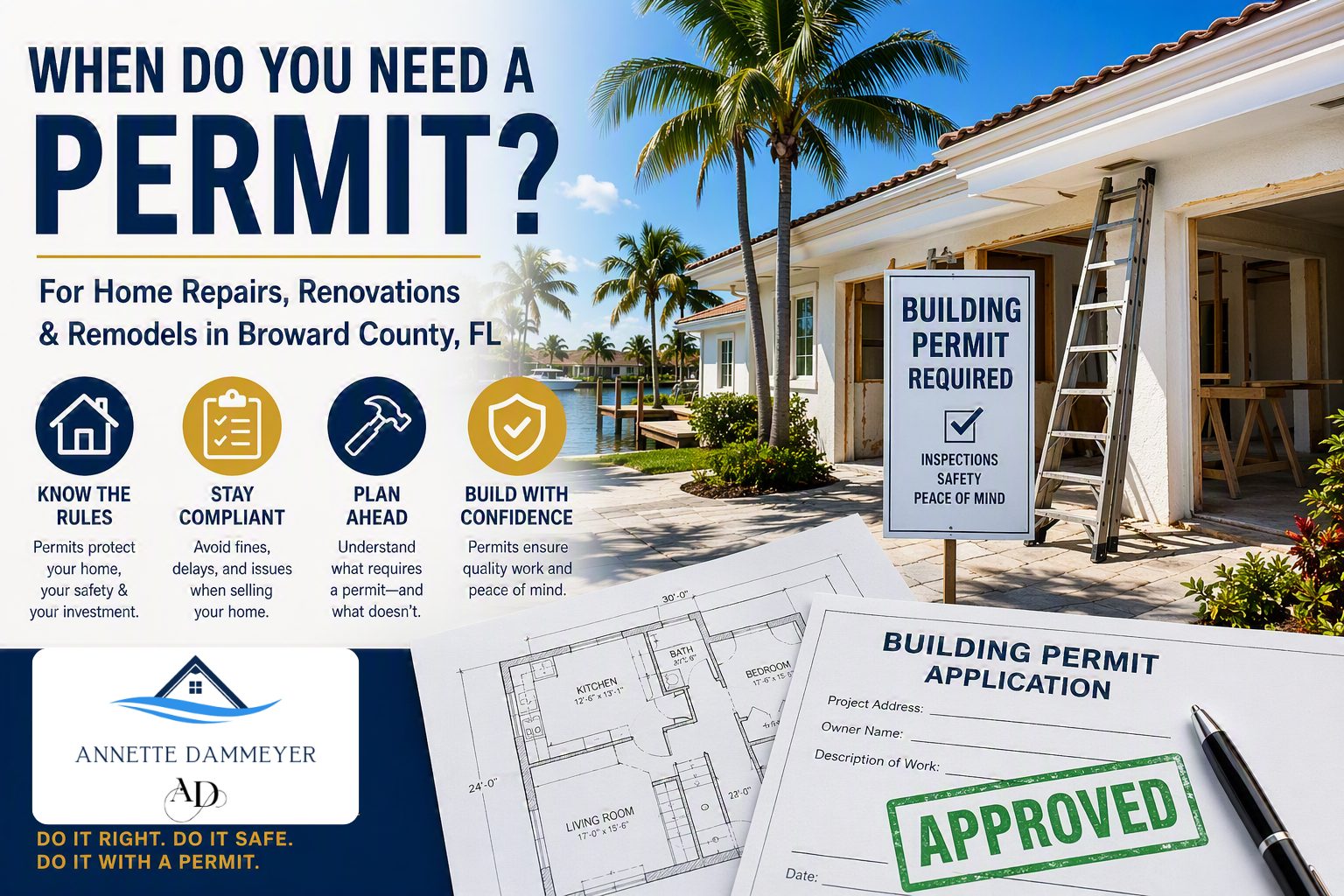
When Do You Need a Permit for Home Repairs, Renovations, and Remodels in Broward County, FL?
By Annette Dammeyer, REALTOR® | Serving Fort Lauderdale and Southeast Florida Homeowners
If you’re planning to update your home, replace a roof, remodel a kitchen, or tackle long-overdue repairs, one of the most common questions I hear from homeowners is:
“Do I need a permit for this project?”
The answer is often yes, but not always. In Broward County, permit requirements can vary depending on the scope of work, the city where your property is located, and whether the project affects structural, electrical, plumbing, or mechanical systems.
Understanding permit requirements before starting a project can help you avoid fines, delays, insurance issues, and complications when it’s time to sell your home.
Why Permits Matter
Building permits exist to protect homeowners, contractors, and future buyers. They help ensure work is performed according to current building codes and safety standards.
In Broward County and throughout Florida, permits typically trigger inspections designed to verify that work has been completed correctly and safely. Unpermitted work can create problems during insurance claims, property appraisals, and real estate transactions.
What Home Projects Usually Require a Permit?
As a general rule, permits are required when a project involves:
Structural Changes
Examples include:
- Removing or modifying load-bearing walls
- Room additions
- Garage conversions
- New door or window openings
- Major framing modifications
- Building a deck, dock, shed, or screen enclosure
Electrical Work
Permits are generally required for:
- New electrical circuits
- Service panel upgrades
- Rewiring
- Generator connections
- Significant lighting installations
- Electric vehicle charging stations
Plumbing Work
Permits are commonly required for:
- Re-piping a home
- Moving plumbing lines
- Water heater replacements
- Sewer line work
- Bathroom remodels involving plumbing changes
- Kitchen renovations that relocate sinks or appliances
HVAC and Mechanical Systems
Permits are typically required for:
- Air conditioning replacement
- New ductwork
- Mechanical system alterations
- Heat pump installations
Roofing Projects
Permits are usually required for:
- Roof replacement
- Re-roofing
- Significant roof repairs
Windows and Doors
Many Broward municipalities require permits for:
- Impact window replacement
- Exterior door replacement
- Hurricane-rated door installations
Because Broward County is within Florida’s High Velocity Hurricane Zone (HVHZ), exterior improvements often have additional code requirements regarding wind resistance and impact protection.
What Home Improvements Can Often Be Done Without a Permit?
Many cosmetic improvements do not typically require permits.
Common Examples Include:
✅ Interior painting
✅ Exterior painting
✅ Flooring replacement
✅ Carpet installation
✅ Cabinet replacement without plumbing or electrical changes
✅ Countertop replacement
✅ Minor trim and molding work
✅ Cosmetic drywall repairs
✅ Interior decorating projects
✅ Landscaping improvements
✅ Fence repairs (depending on scope and municipality)
However, even seemingly simple projects can trigger permit requirements if they involve electrical, structural, plumbing, or mechanical modifications.
For example:
- Replacing kitchen cabinets may not require a permit.
- Moving a sink or adding outlets during the cabinet installation probably will.
Florida’s New Permit Exemption for Some Small Projects
Beginning July 1, 2026, Florida law provides an exemption for certain work on single-family homes valued under $7,500.
However, homeowners should understand that this exemption does not generally apply to projects involving:
- Electrical work
- Plumbing work
- Mechanical/HVAC work
- Gas systems
- Structural changes
- Certain flood-hazard areas
Additionally, projects cannot be divided into smaller phases simply to avoid permit requirements.
This change may make it easier for homeowners to complete certain cosmetic or minor non-structural projects, but it does not eliminate the need to verify permit requirements with local authorities.
City, County, or State: Who Issues the Permit?
This is where many homeowners get confused.
Municipal Building Departments
Most Broward County cities have their own building departments that issue permits.
Examples include:
- Fort Lauderdale
- Plantation
- Coral Springs
- Pembroke Pines
- Davie
- Hollywood
- Miramar
- Sunrise
- Pompano Beach
If your property is located within a city, that municipality is often your first point of contact.
Broward County
Broward County issues permits primarily for:
- Unincorporated Broward County properties
- Certain contract jurisdictions
- County-specific reviews related to environmental or development requirements
State of Florida
State involvement often comes into play through:
- Contractor licensing
- Building code requirements
- Specialized permitting regulations
- Certain coastal, environmental, or transportation-related projects
What Happens If You Skip a Required Permit?
Unfortunately, homeowners sometimes discover permit issues years later when they decide to sell.
Potential consequences may include:
- Fines and penalties
- Stop-work orders
- Difficulties obtaining insurance coverage
- Delays during closing
- Problems with appraisals
- Requirements to obtain after-the-fact permits
- Costly corrective work
As a real estate agent, I’ve seen permit issues delay transactions and create unnecessary stress for both buyers and sellers.
Questions to Ask Before Starting a Project
Before any major repair, renovation, or remodel, ask:
- Does the project affect structure, plumbing, electrical, HVAC, or roofing?
- Is my property inside a municipality with its own permitting department?
- Will inspections be required?
- Is a licensed contractor needed?
- Could this project affect future resale value?
- Are HOA approvals also required?
If you’re unsure, it’s always best to check before work begins.
Final Thoughts
Home improvements can increase comfort, improve safety, and boost property value. But understanding permit requirements is an important part of planning any project.
When in doubt, verify permit requirements with your city, Broward County, licensed contractor, or building department before starting work. A quick phone call today may save significant time, money, and headaches down the road.
As your local real estate resource, I know that maintaining and improving a home is one of the biggest investments many of us will make. Whether you’re updating a kitchen, replacing a roof, installing impact windows, or tackling a long-awaited remodeling project, taking a few extra minutes to verify permit requirements can help protect your investment and prevent unexpected headaches down the road.
My goal is always to help our Broward County community make informed decisions about homeownership—whether you’re planning renovations, preparing to sell, or simply looking for ways to maintain your property’s value. If you have questions about how a renovation may affect your home’s marketability, insurance, or resale value, I’m always happy to be a resource.
Thinking about remodeling, selling, or buying a home in Southeast Florida? Let’s connect! I’d love to help you understand how today’s improvements can impact tomorrow’s home value. Feel free to reach out anytime for trusted guidance, local market insight, or a complimentary home value consultation.
📞 Contact me today to start the conversation—and let’s make sure your next home project adds both value and peace of mind.
CONTACT ANNETTE
Let’s start working together!

Annette Dammeyer, REALTOR®, ABR®, AHWD®
Coldwell Banker Realty
901 E Las Olas Blvd STE 101, Fort Lauderdale, FL 33301
808.747.3686
SL 3535792

Disclaimer
This article is intended for general informational purposes only and should not be considered legal, construction, code, or permitting advice. Permit requirements change frequently and can vary by city, county, project scope, property type, flood zone designation, and state regulations. Always verify current requirements with your local building department, municipality, Broward County, the State of Florida, your licensed contractor, and other applicable agencies before beginning any repair, renovation, remodeling, or construction project.
How to Avoid Going Over Budget in Your Home Renovation
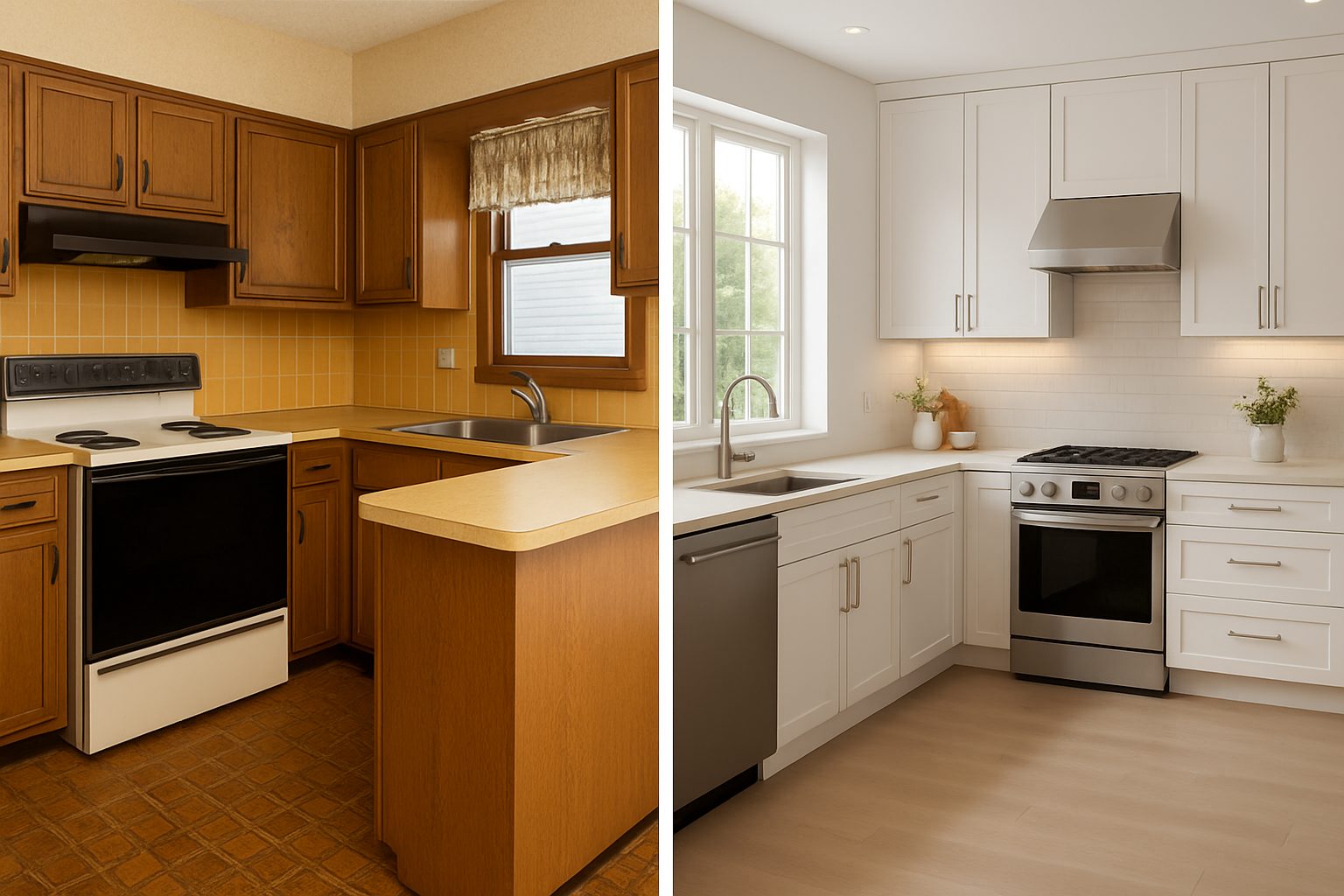
YOUR HOME RENOVATION
You are renovating your home? How exciting! Now is the time to carefully plan, research and create your budget. The high-impact home upgrades can deliver a substantial ROI (Return on Investment) – as long as you carefully manage the cost. ROI is calculated by dividing the net income from an investment by the original cost of the investment.
How to Avoid Going Over Budget in Your Home Renovation
Lessons from Homeowners Who Learned the Hard Way
Renovating a home can be exciting, but it’s easy for costs to spiral out of control if you’re not careful. As a real estate professional, I’ve seen firsthand how simple mistakes can lead to expensive surprises. Here’s how to stay on budget while still achieving the renovation results you want—plus real examples of costly mistakes homeowners have made.
1. Set a Realistic Budget—Then Add a Buffer
Many homeowners set their renovation budget based on best-case scenarios. The reality? Unexpected costs WILL pop up. Whether it’s hidden plumbing issues or delays in material deliveries, adding a 10–20% contingency fund to your budget can save you from financial headaches.
❌ Costly Mistake Example: A homeowner planned to renovate their kitchen for $25,000 but didn’t account for hidden electrical issues behind the walls. After hiring an electrician and bringing everything up to code, they ended up spending an additional $8,000—completely throwing their budget off track.
✅ Smart Move: Get a professional inspection of your home before finalizing your renovation budget. This way, you can anticipate potential structural, electrical, or plumbing surprises.
2. Don’t Over-Customize—Stick to Practical Upgrades
Personalizing your home is great, but going overboard with custom work can drain your budget quickly. Specialty designs, rare materials, and custom-built cabinetry or fixtures can easily cost double what standard options do.
❌ Costly Mistake Example: One homeowner insisted on custom tile work imported from Italy for their bathroom remodel. Between shipping fees, installation costs, and unexpected delays, the final bill exceeded their initial budget by 40%—all for a feature that didn’t significantly increase the home’s value.
✅ Smart Move: Focus on upgrades that balance aesthetics and resale value. Opt for high-quality but readily available materials that give a luxurious look without breaking the bank.
3. Choose the Right Contractor—Not Just the Cheapest
Hiring the lowest-bid contractor might seem like a way to save money, but it can be a costly mistake if the quality of work is poor. Cutting corners on labor can lead to more repairs and reworks down the line.
❌ Costly Mistake Example: A homeowner hired a contractor offering a kitchen remodel at half the price of competitors. Turns out, the contractor failed to get permits, used substandard materials, and left plumbing unsealed—causing leaks and damage weeks later. The homeowner ended up hiring another team to redo everything properly, doubling their initial budget.
✅ Smart Move: Get multiple quotes and check references before hiring a contractor. Look for professionals who are licensed, insured, and experienced in the type of work you need.
4. Avoid Scope Creep—Stick to the Original Plan
Many homeowners start with a simple project, only to get inspired mid-renovation and expand the scope of work. Adding extra features or changing materials mid-way can quickly inflate costs.
❌ Costly Mistake Example: A family planned a minor bathroom refresh but decided last-minute to expand the footprint by knocking down a wall. This required new flooring, plumbing adjustments, and structural reinforcements, turning what was supposed to be a $10,000 update into a $35,000 remodel.
✅ Smart Move: Set clear renovation goals upfront. If you want to make changes mid-project, assess the financial impact before moving forward.
5. Source Materials Wisely—Don’t Rush Purchases
Ordering materials on impulse or relying solely on one supplier can cost more than necessary. Many homeowners fail to shop around for better pricing, bulk deals, or alternative materials.
❌ Costly Mistake Example: A homeowner rushed to order custom countertops just before installation without comparing vendors. Later, they discovered another supplier offering the same quality for 30% less, but it was too late to cancel the original order.
✅ Smart Move: Research multiple suppliers before purchasing materials. Check for discounts, bulk deals, and seasonal promotions. Also, consider remnant sales for countertops, flooring, and other materials.
6. The Pitfalls of DIY Renovations—Know Your Limits
DIY renovations can be rewarding, but they can also lead to unexpected costs and complications if you lack the necessary skills or experience. While painting a room or updating fixtures may be manageable, major renovations require professional expertise.
❌ Costly Mistake Example: A homeowner attempted to install new flooring without professional help, mismeasuring materials and failing to level the subfloor properly. As a result, boards began warping and separating within months, requiring a full replacement—adding thousands to the overall budget.
✅ Smart Move: Be honest about your skill level and know when to hire a pro. Electrical work, plumbing updates, and structural changes should always be handled by licensed professionals to avoid safety risks and future repairs.
Home renovations don’t have to drain your savings. The key is to plan ahead, expect the unexpected, and make informed decisions along the way. By learning from common budgeting mistakes, you can ensure your renovation stays on track—without financial regrets.
If you are renovating in preparation to sell, I can introduce you to another way to control your upfront cost through RealVitalize®, our program that provides home sellers with home improvement resources during the listing period, with no upfront costs or interest fees. Reach out today, I am here to help.
CONTACT ANNETTE
Let’s start working together!
Annette Dammeyer, REALTOR®, ABR®, AHWD®
Coldwell Banker Realty
901 E Las Olas Blvd STE 101, Fort Lauderdale, FL 33301
808.747.3686
SL 3535792
Home Renovations Worth the Time and Effort

The right renovations won’t just make your space more comfortable to live in, they can also increase the overall value of your home. Curious about which home renovations experts say are worth the time and effort? I’ve got you covered!
🛁 Update an old-fashioned bathroom.
🚰 Upgrade the kitchen with modern appliances and finishes.
🏠 Preserve interesting architectural elements.
🛠️ Renovate an underused area of your home.
🌳 Create an outdoor oasis.

Annette Dammeyer, REALTOR
Coldwell Banker Realty
808.747.3686
SL 3535792


