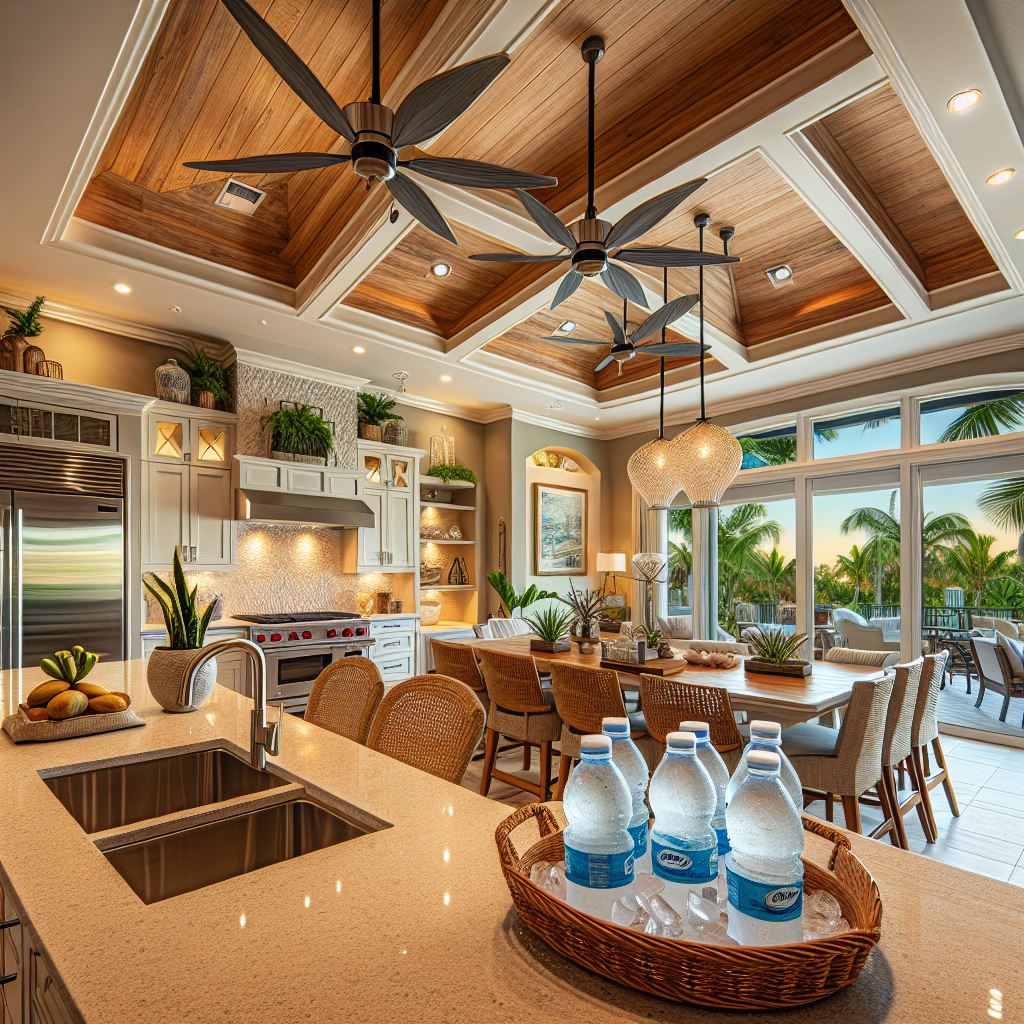
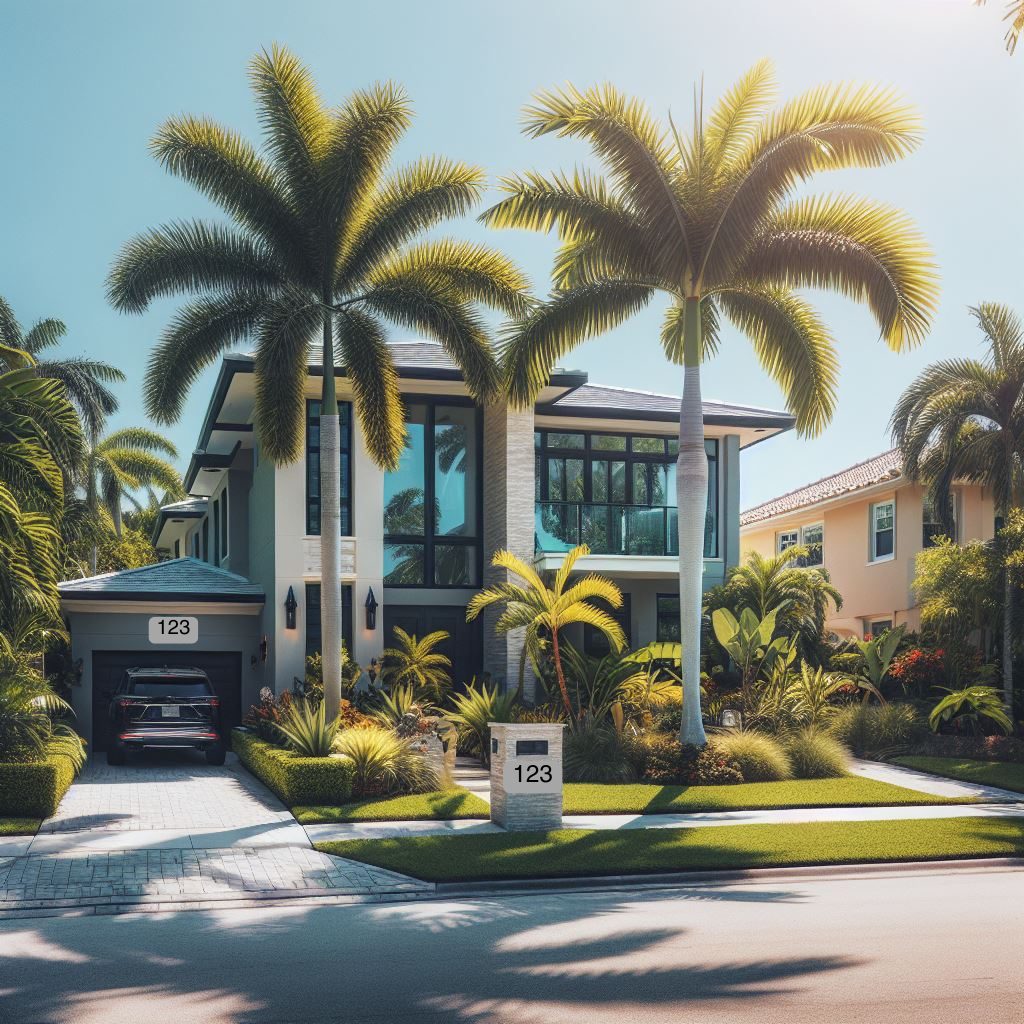
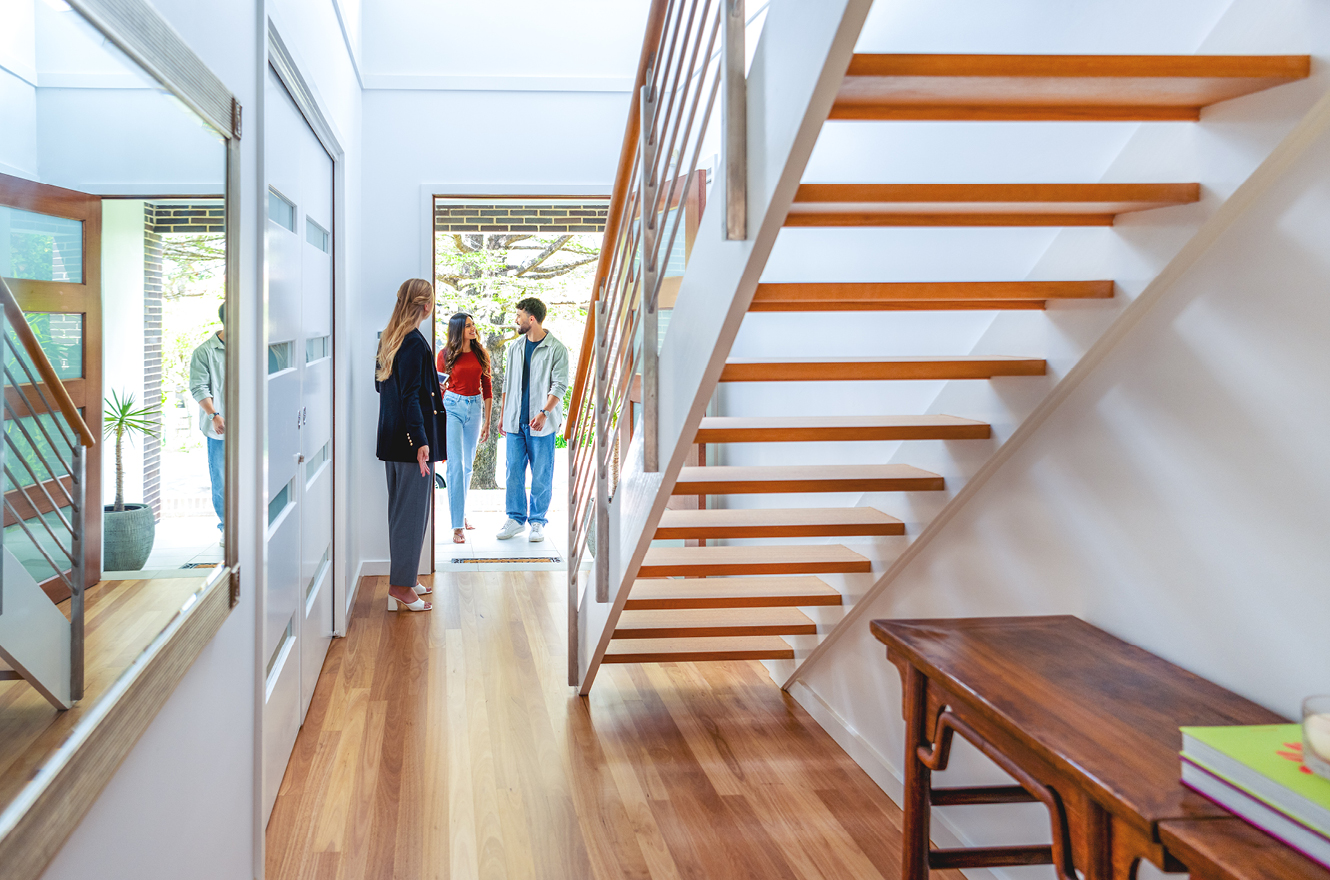
Owning a home brings joy, belonging, and countless benefits to your life. From stability and personalization to building equity and creating a lasting legacy, homeownership is a game-changer. Join the celebration and discover why having a place to call your own is a dream worth achieving!
If you are looking for help making your homeownership dreams come true, I am here to help! It would be my privilege to help you through every step with experience, integrity and dedication.
Annette Dammeyer, REALTOR
Coldwell Banker Realty
901 E Las Olas Blvd STE 101, Fort Lauderdale, FL 33301
Weathering the Storm: A Guide to Hurricane Preparedness in Southeast Florida
Living in Southeast Florida offers many benefits, from sunny beaches to vibrant communities. However, it also means facing the annual threat of hurricanes. With the Atlantic hurricane season stretching from June to November, preparedness becomes paramount for residents in this region. Understanding how to safeguard yourself, your loved ones, and your property is crucial in ensuring safety and minimizing damage. The following provides essential tips and strategies for hurricane preparedness in Southeast Florida.
Stay Informed:
Keep track of weather updates from reliable sources such as the National Hurricane Center (NHC), local news channels, and weather apps.
Sign up for emergency alerts and notifications provided by your county’s emergency management office.
Familiarize yourself with hurricane terminology, including the difference between a hurricane watch and a hurricane warning.
Create a comprehensive emergency plan that outlines evacuation routes, designated meeting points, and communication methods.
Ensure that all family members know the plan and practice it regularly, especially children.
Compile important documents such as identification, insurance policies, medical records, and contact information in a waterproof container.
Source: Broward.org
Prepare Your Home:
Reinforce windows and doors with storm shutters or plywood to protect against high winds and flying debris.
Trim trees and bushes around your property to minimize potential damage from falling branches.
Secure outdoor furniture, decorations, and other loose items that could become projectiles during a storm.
Consider investing in a backup generator to ensure power supply during outages.
Source: Broward.org
Stock Up on Supplies:
Create a hurricane supply kit that includes non-perishable food, water (one gallon per person per day), medications, first aid supplies, flashlights, batteries, and hygiene products.
Don’t forget about supplies for pets, including food, water, medications, and carriers.
Keep your gas tank full and have extra cash on hand as ATMs and credit card machines may not be operational during power outages.
Source: Broward.org
Evacuation Planning:
Know your evacuation zone and follow evacuation orders issued by local authorities.
Plan your evacuation route in advance, considering alternate routes in case of traffic congestion or road closures.
Make arrangements for transportation if you don’t have access to a vehicle.
If evacuating, leave early to avoid last-minute rush and potential hazards.
Source: Broward.org
Stay Connected:
Keep in touch with friends, family, and neighbors before, during, and after the hurricane to offer support and assistance.
Utilize social media and online platforms to stay informed and share updates with others.
Check in with elderly or vulnerable neighbors to ensure their safety and well-being.
Source: Broward.org
After the Storm:
Wait for official clearance from authorities before returning to your home or community.
Beware of hazards such as downed power lines, flooded roads, and weakened structures.
Document any damage to your property by taking photographs for insurance claims.
Be patient and cooperative with emergency responders and relief agencies as they work to restore services and provide assistance.
Source: Broward.org
Hurricanes are a recurring reality in Southeast Florida, but with careful planning and preparation, you can minimize their impact on your life and property. By staying informed, developing a comprehensive emergency plan, securing your home, stocking up on supplies, and knowing when to evacuate, you can weather the storm with greater resilience and peace of mind. Remember, preparedness is key to staying safe and resilient in the face of nature’s fury. Stay safe, stay informed, and stay prepared.
Please feel free to share this information. I care about our community and I am here to help.
Let’s stay prepared and safe together!
Annette Dammeyer, REALTOR
Coldwell Banker Realty
901 E Las Olas Blvd STE 101, Fort Lauderdale, FL 33301
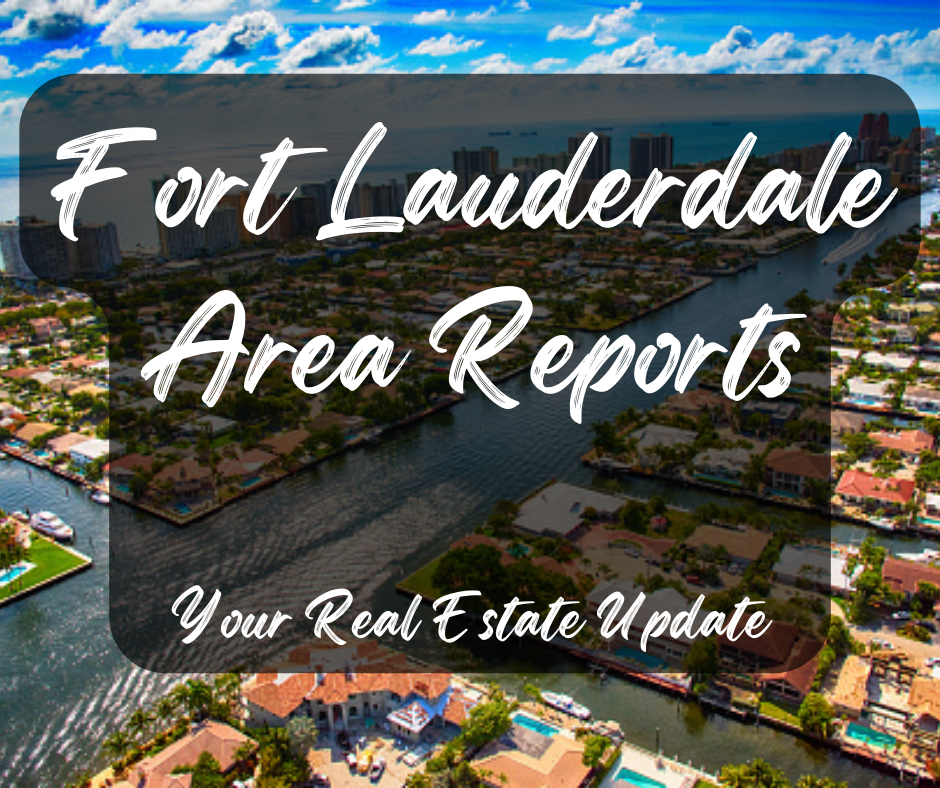
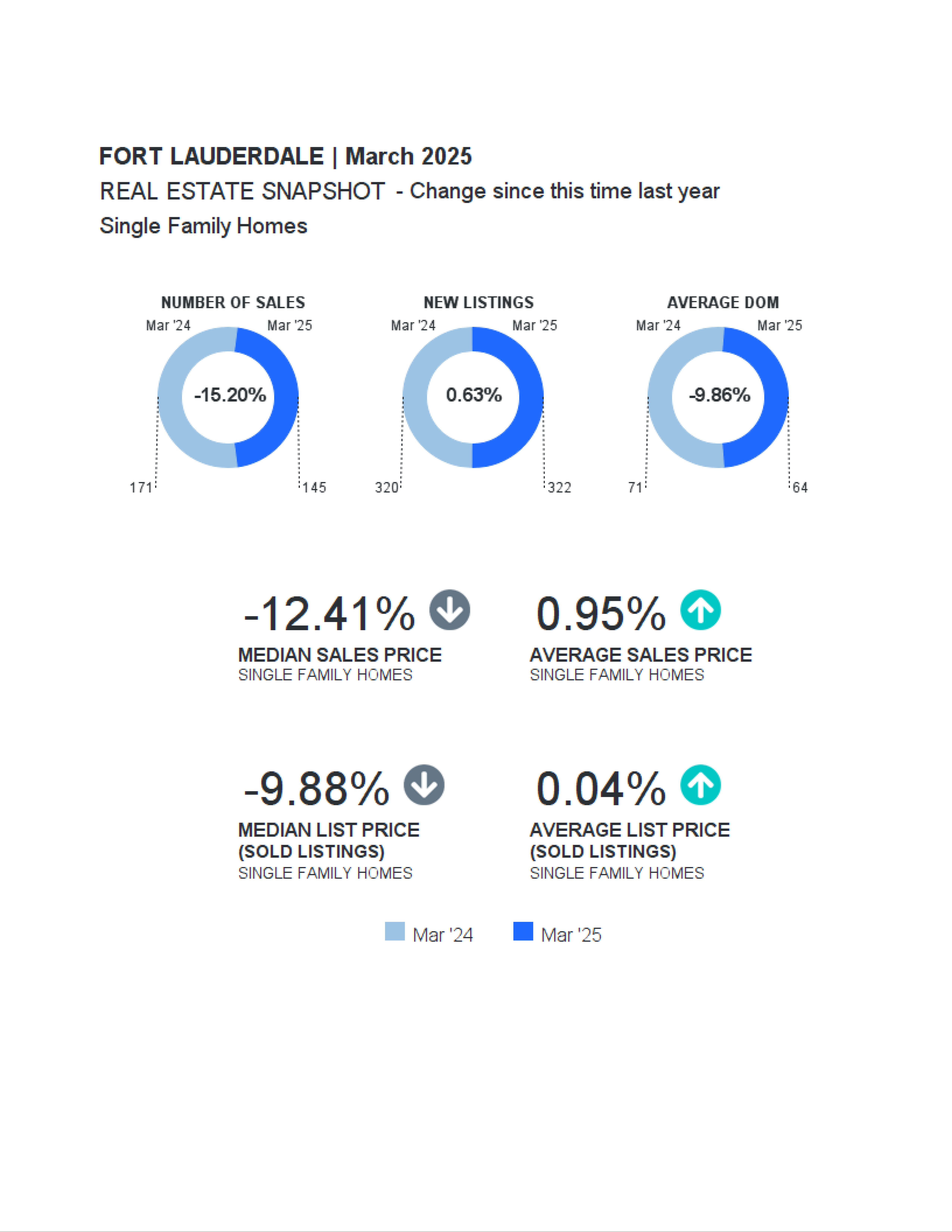
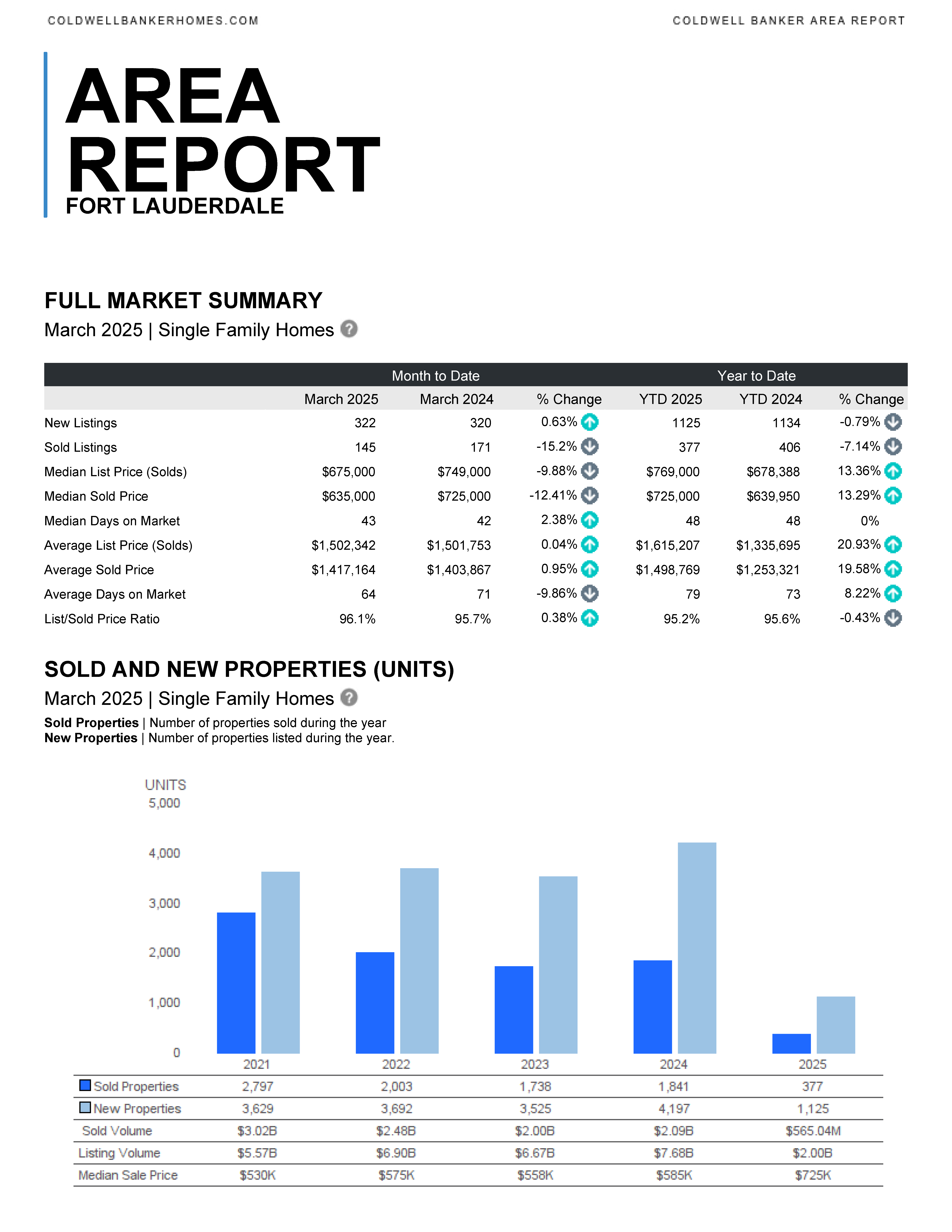
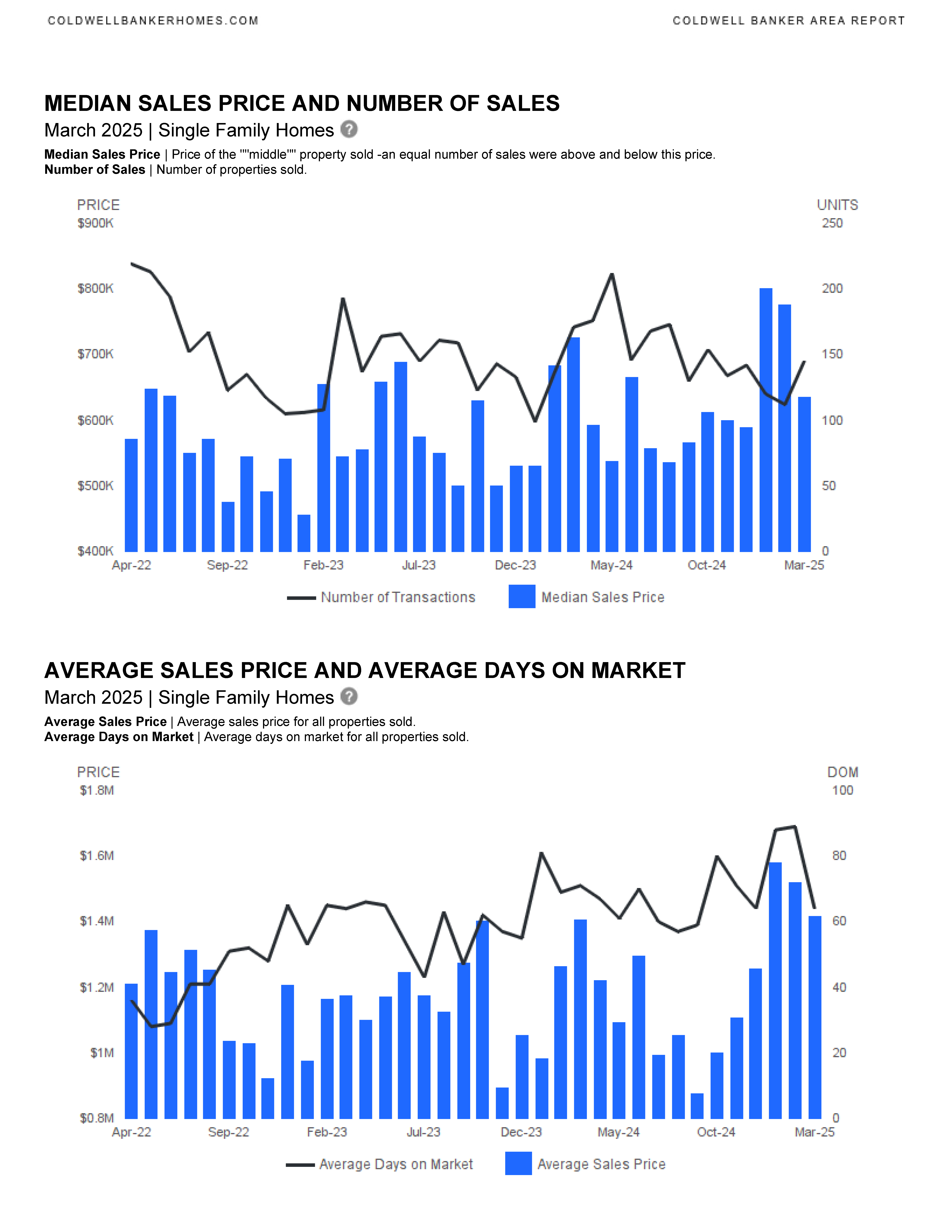
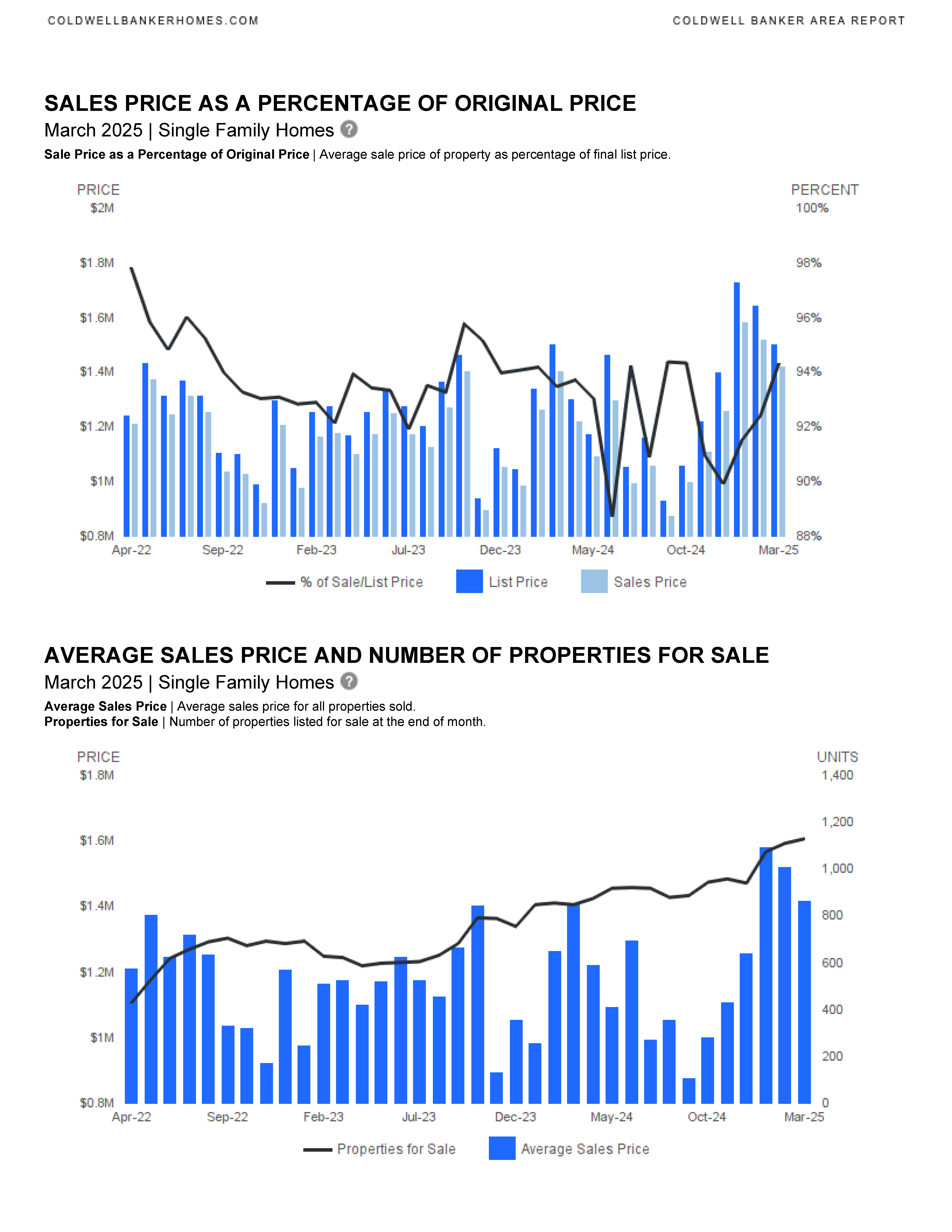
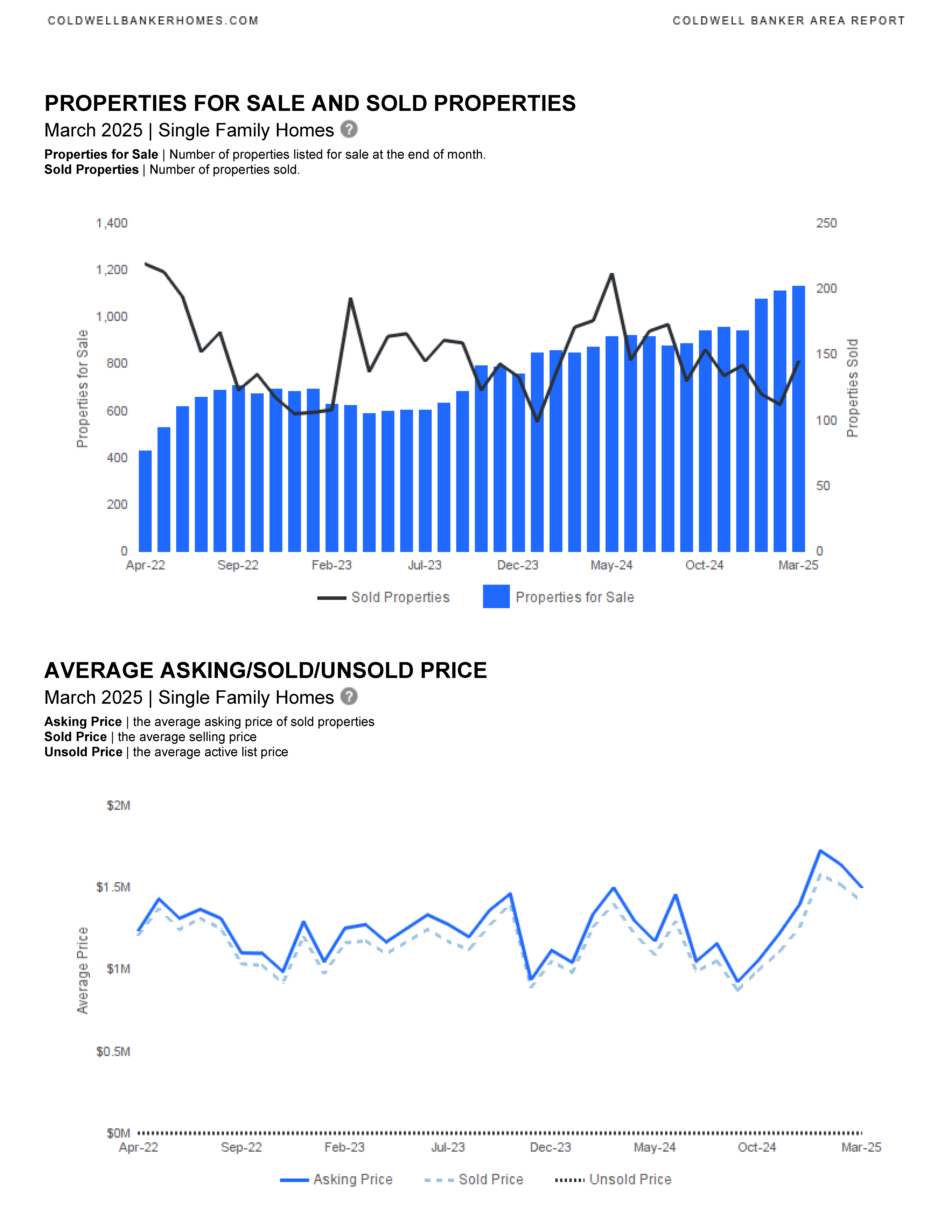
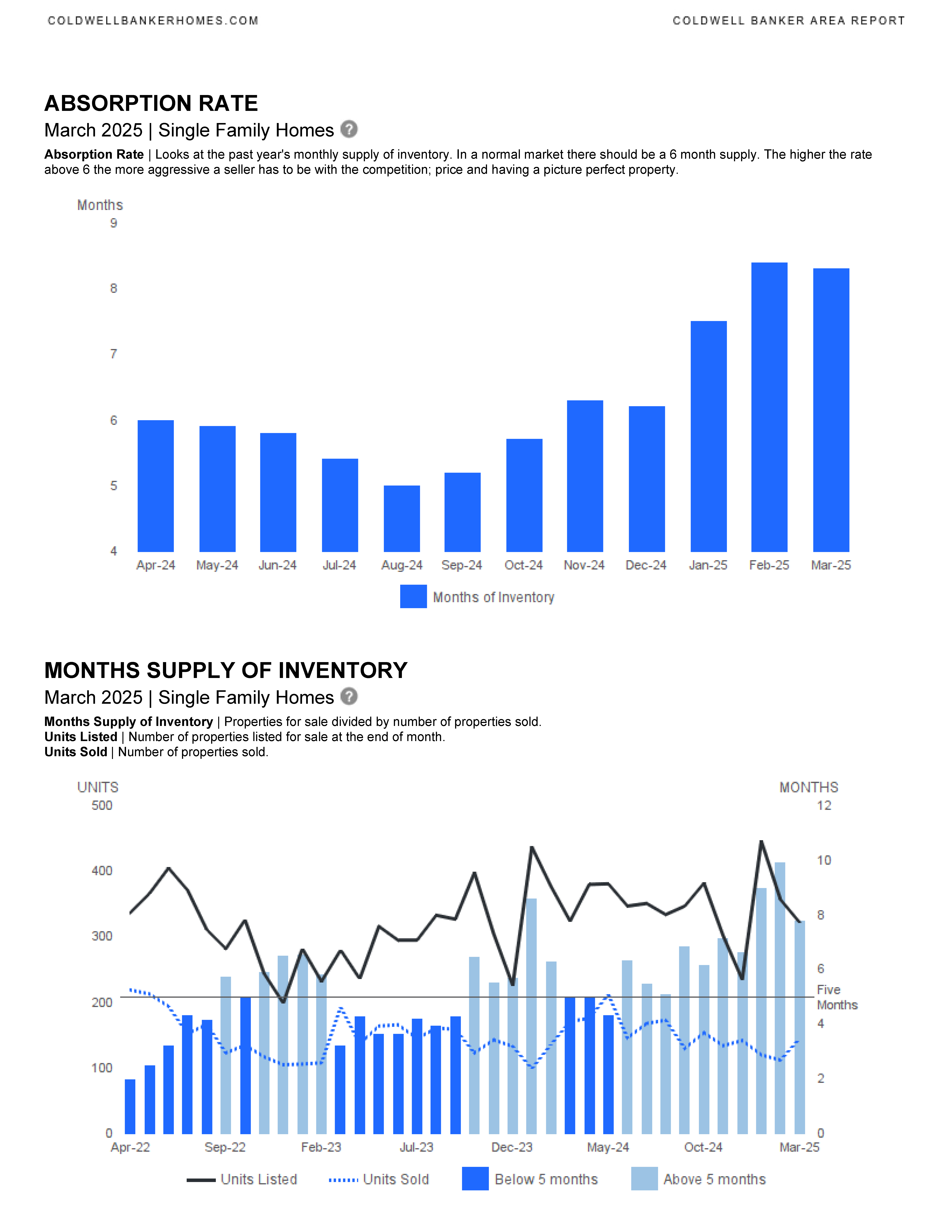
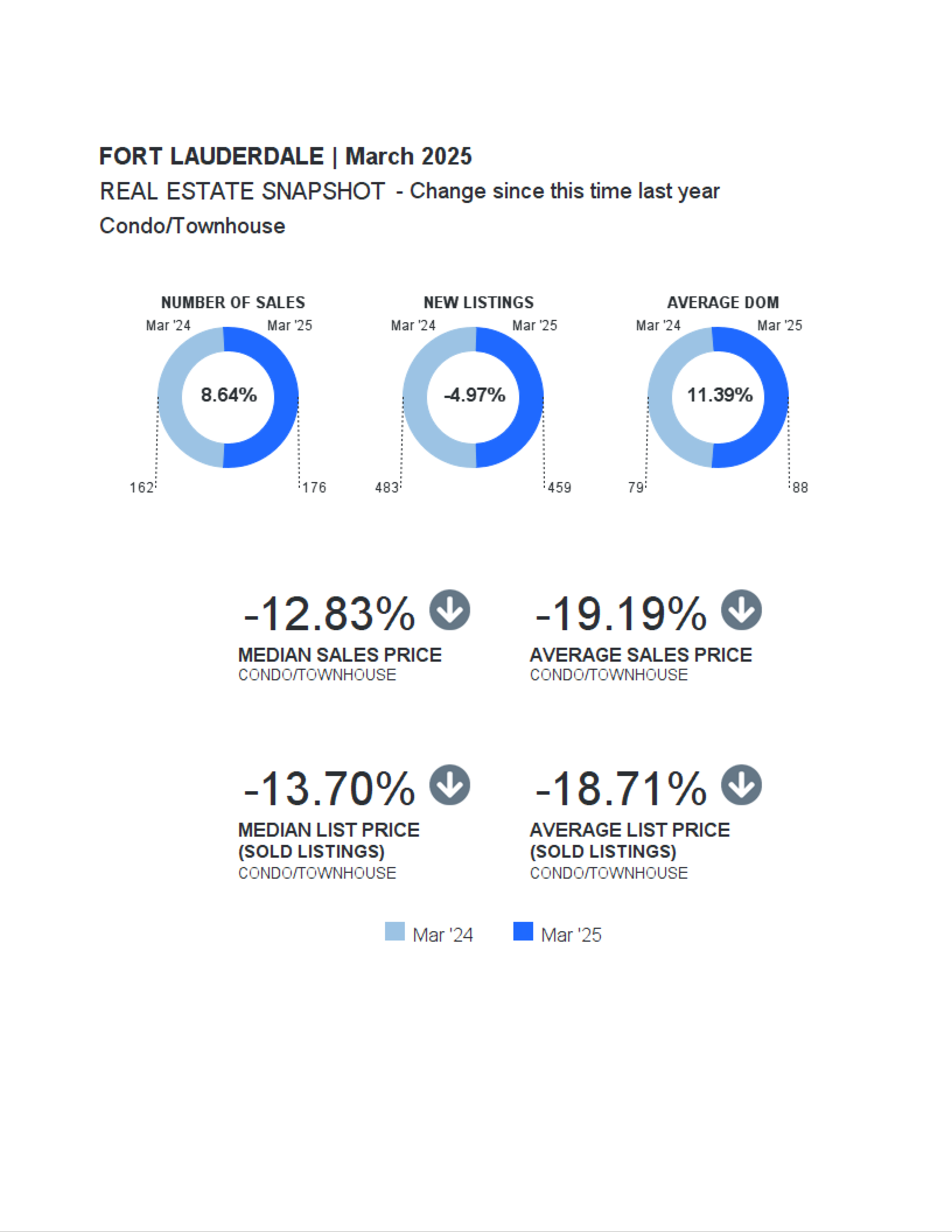
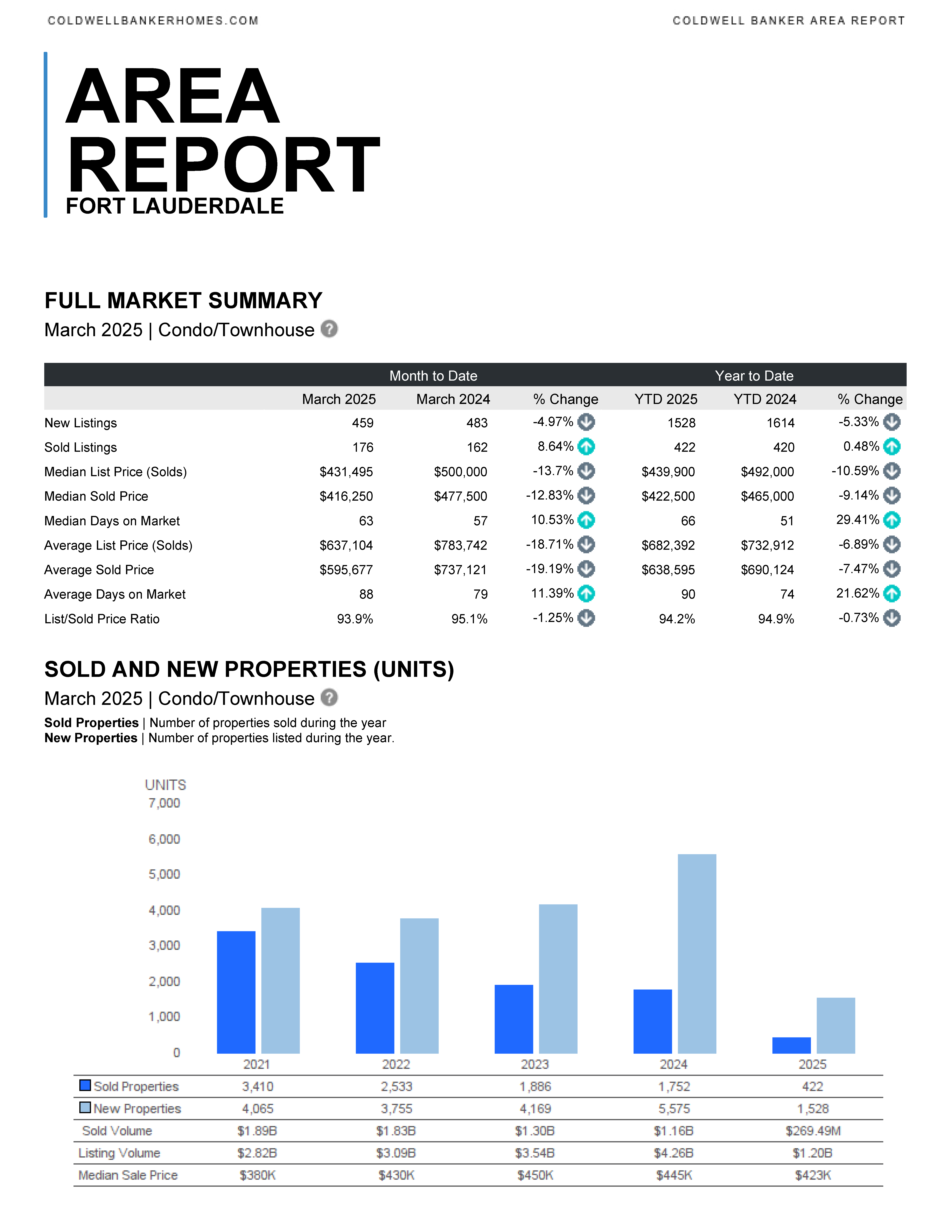
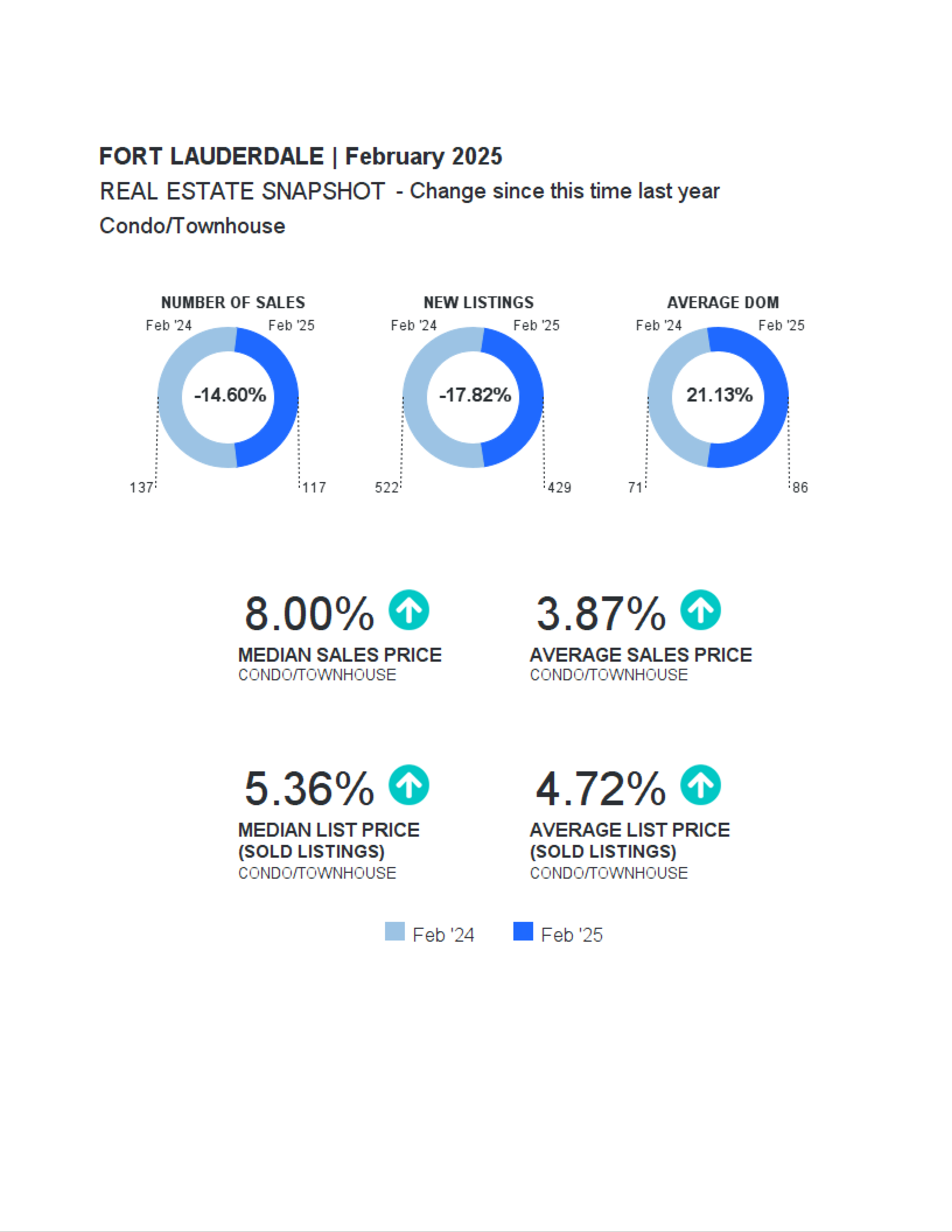
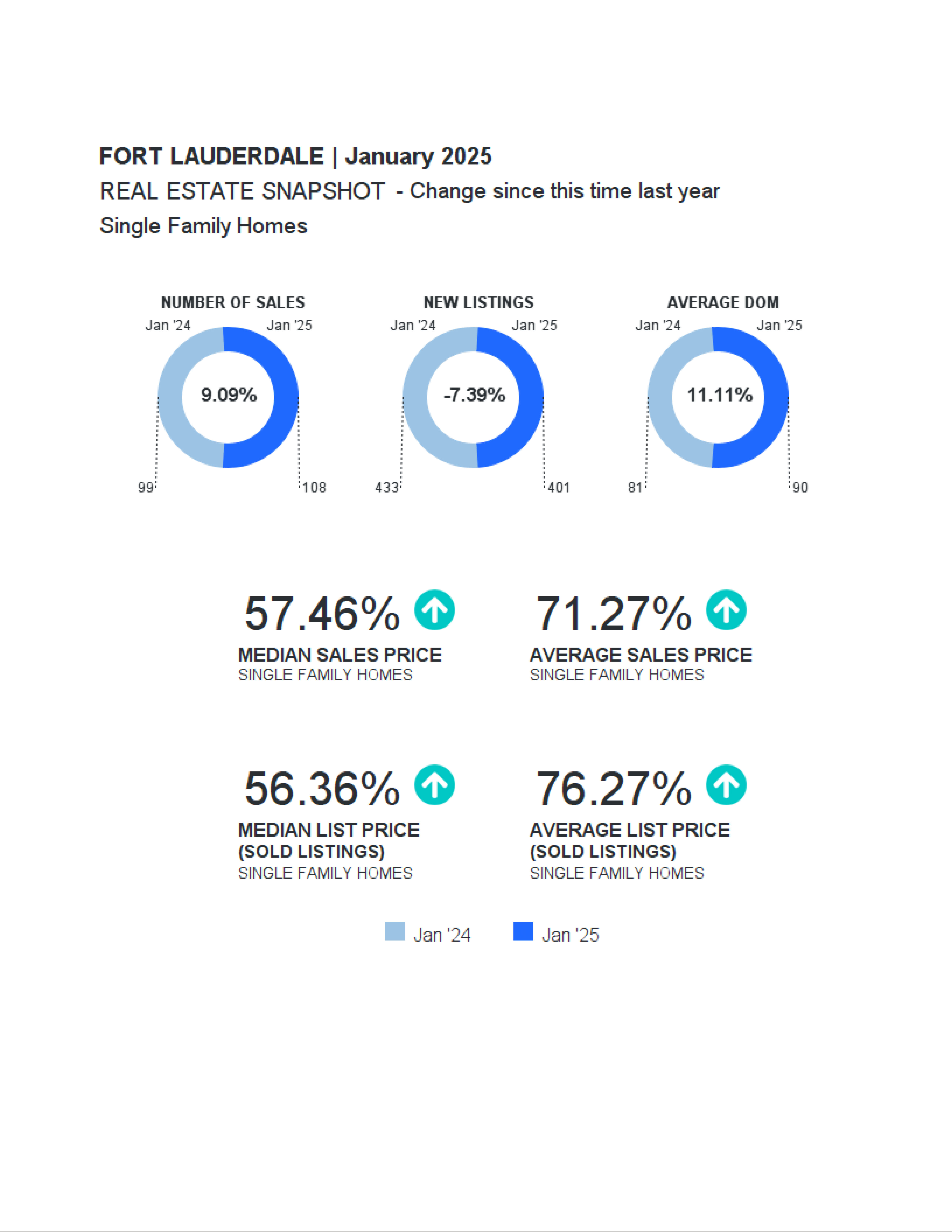
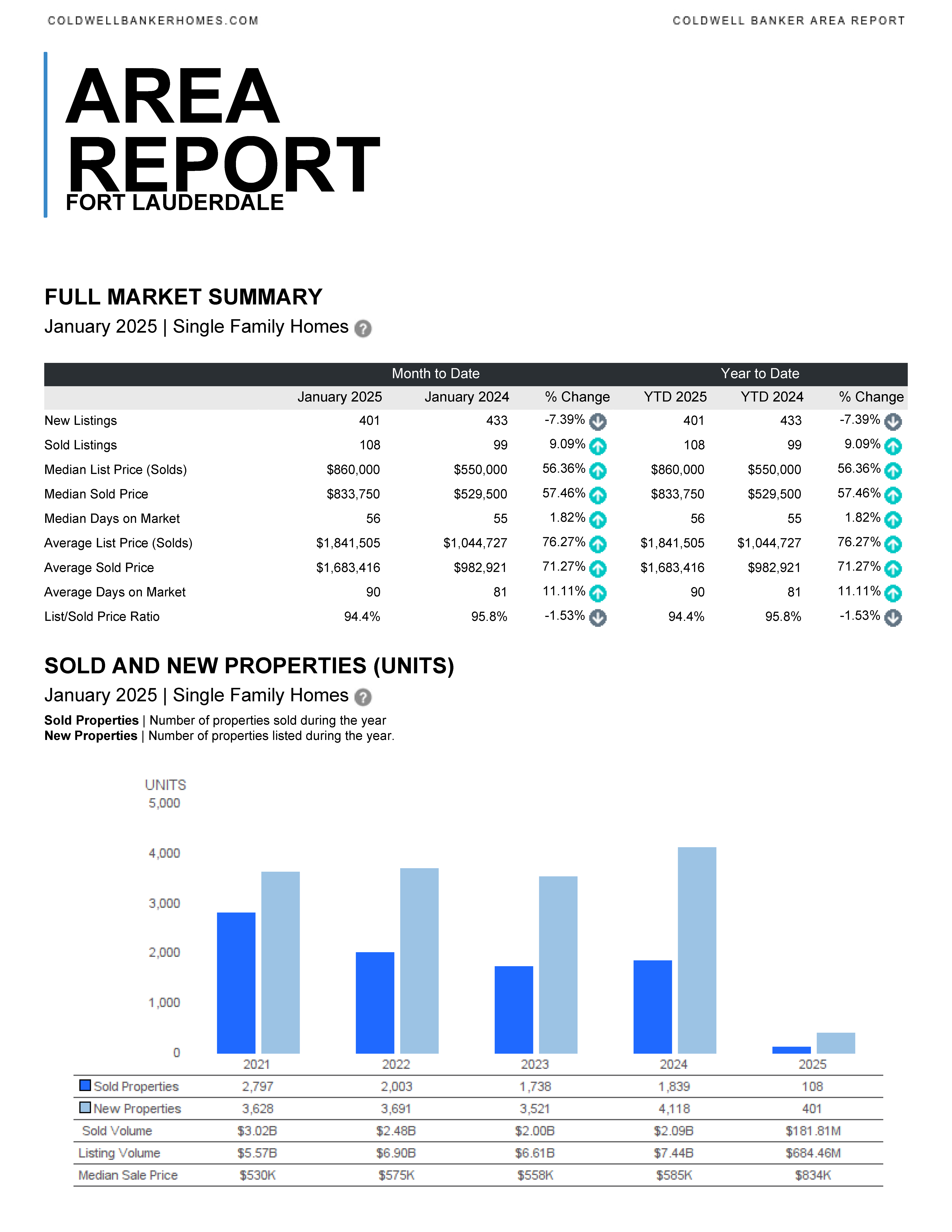
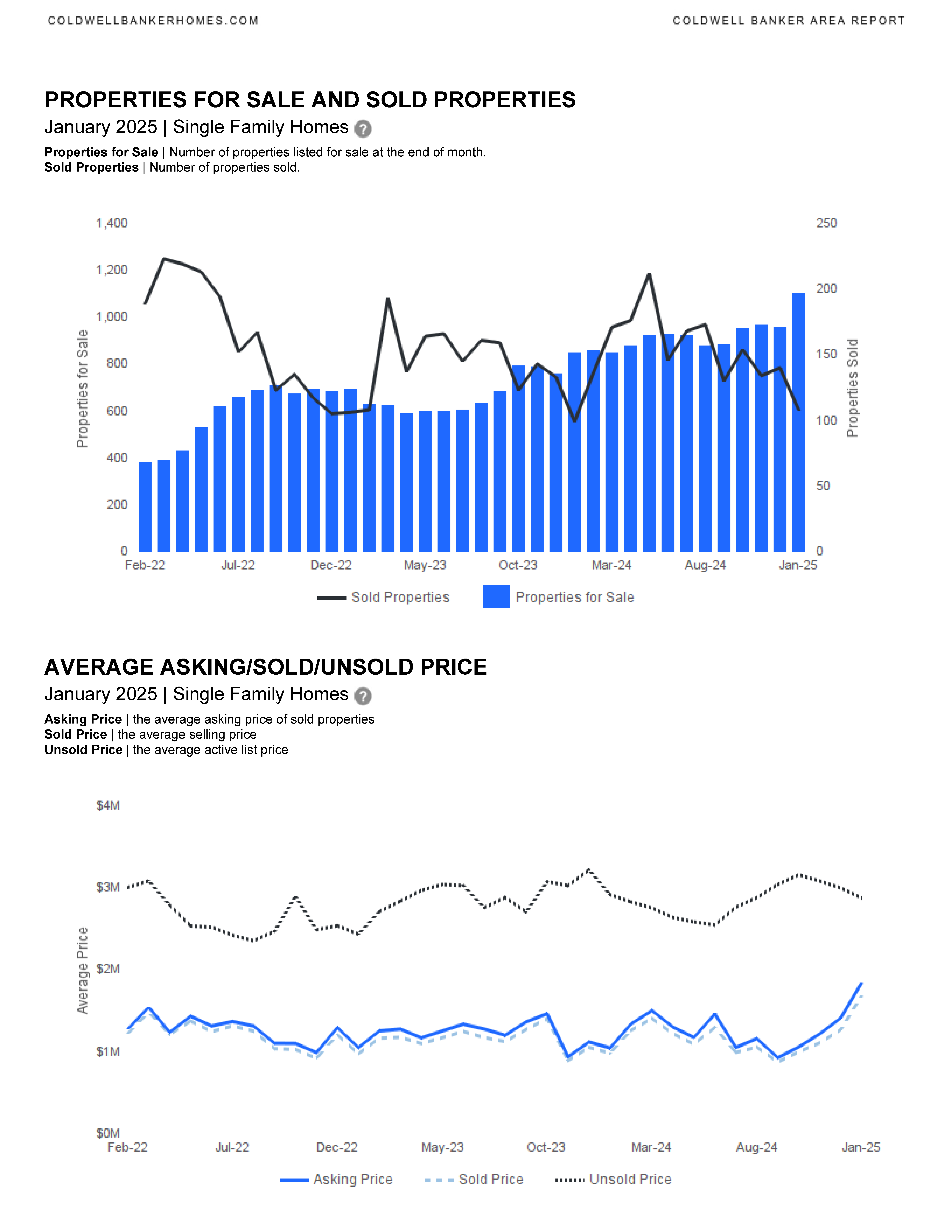
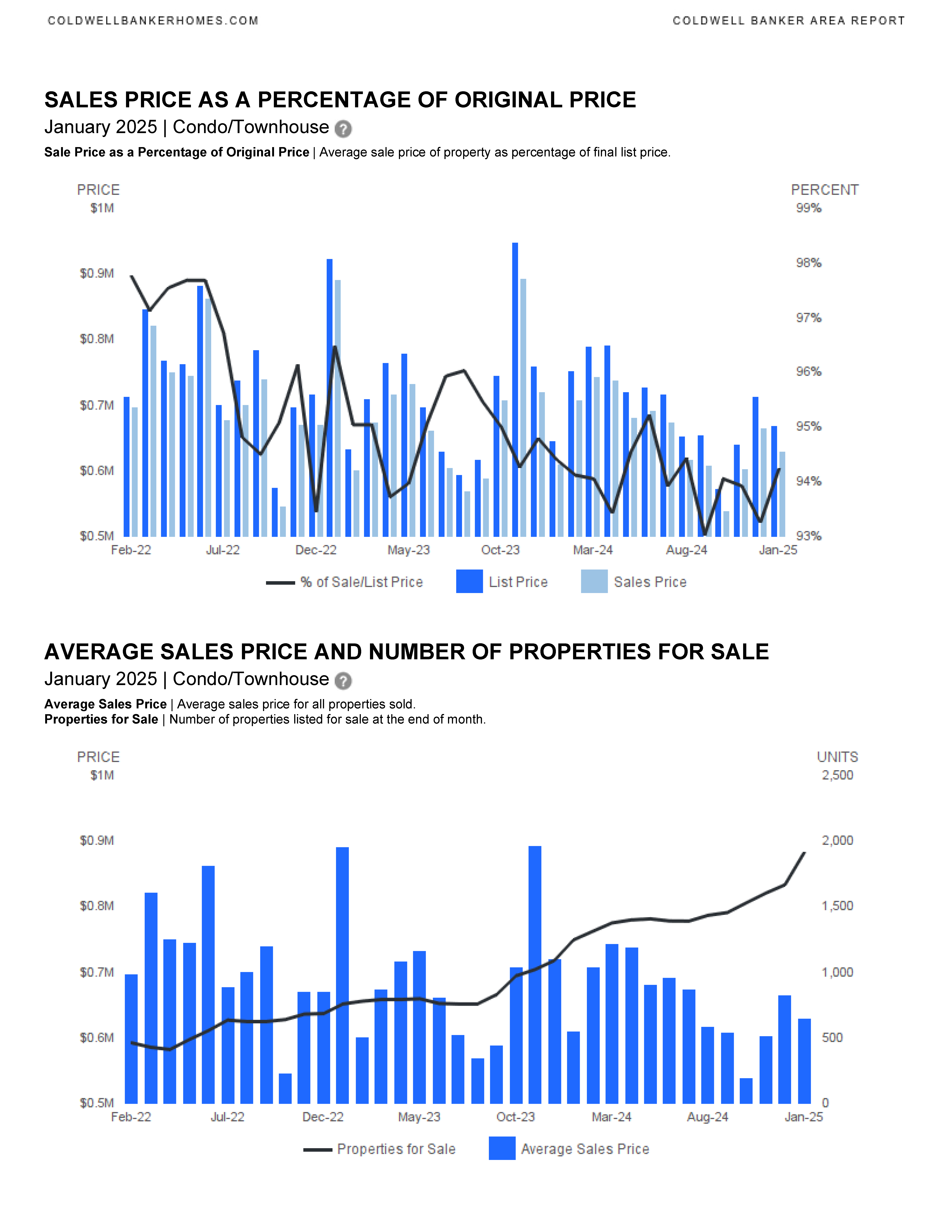
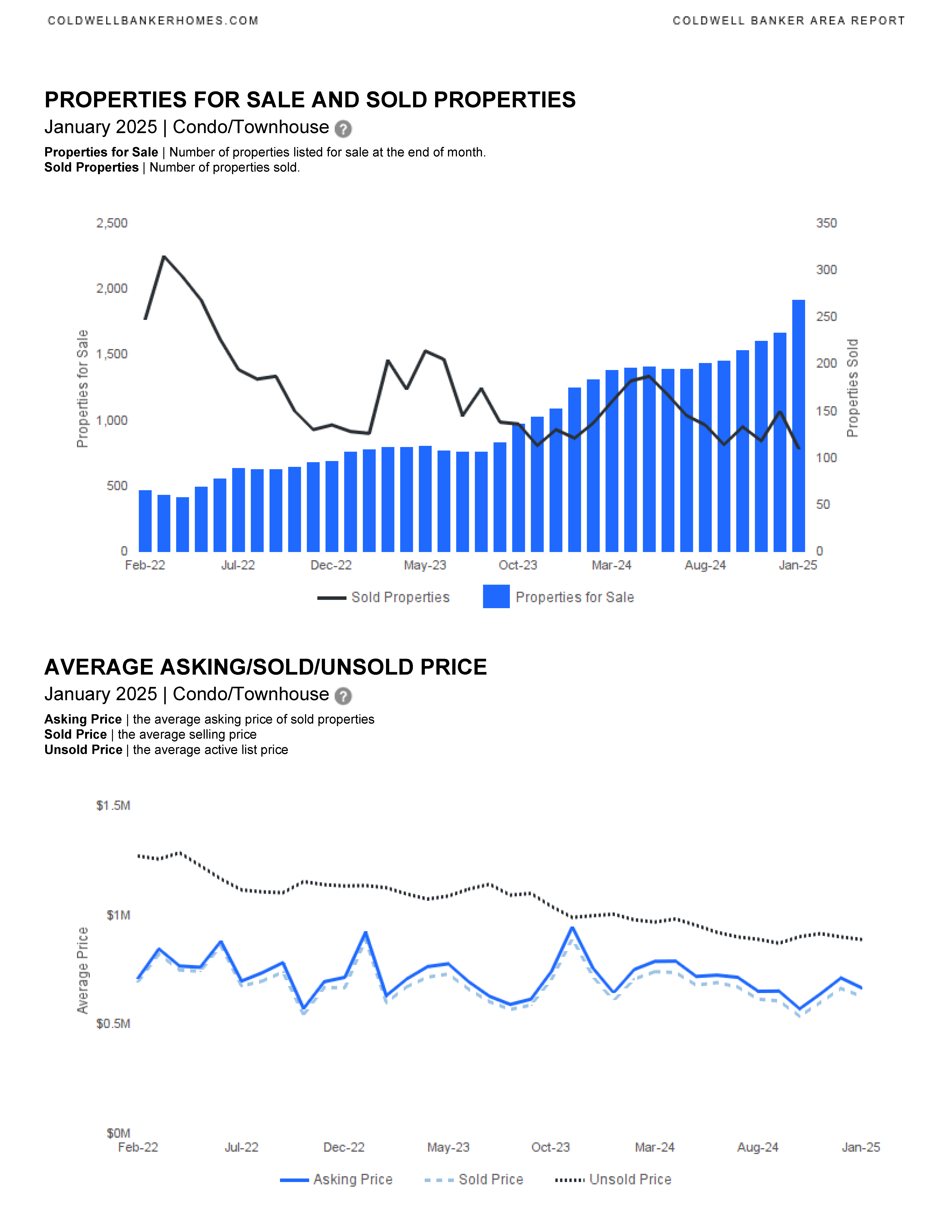
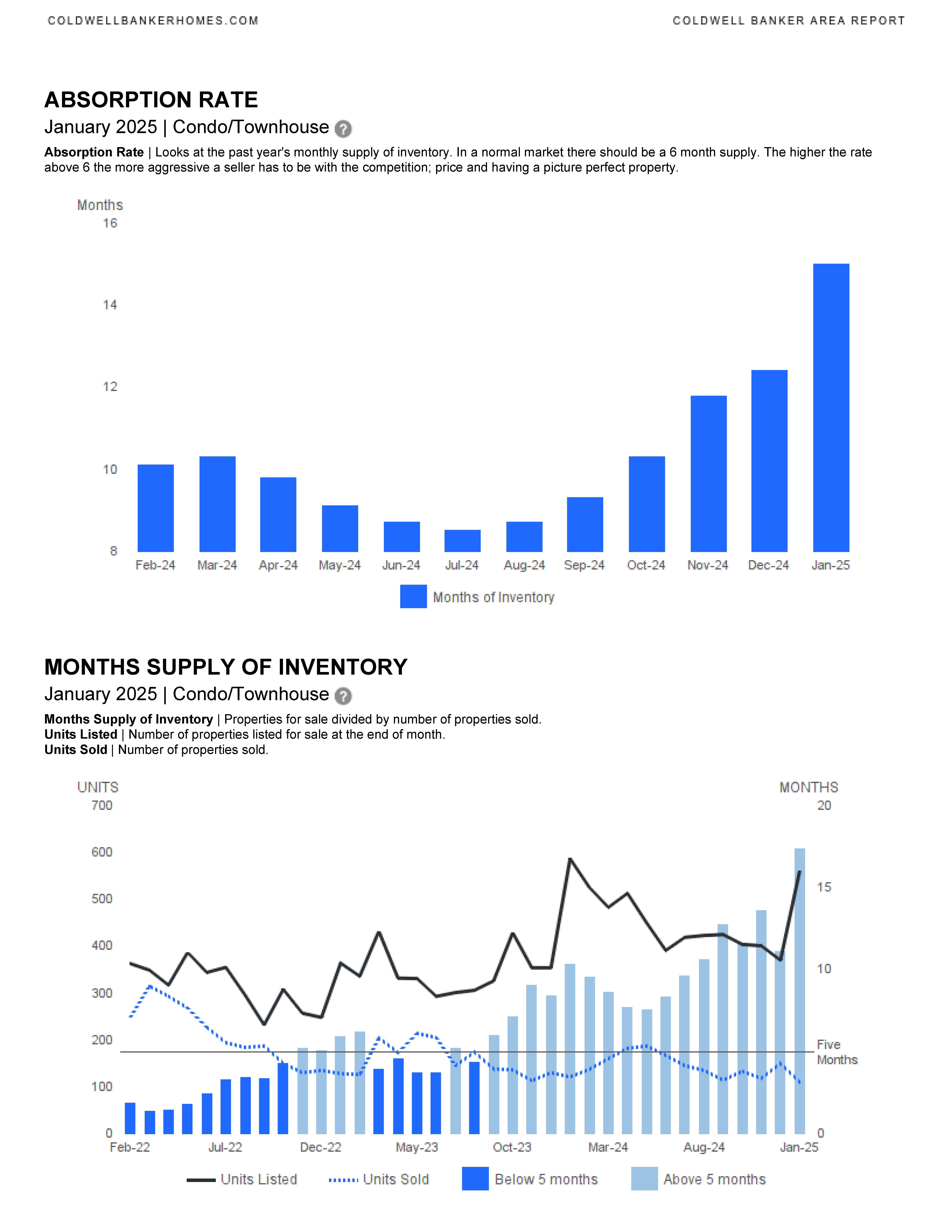
Fort Lauderdale April 2024 real estate statistics have been released!
Fort Lauderdale Area Reports
Single Family Homes
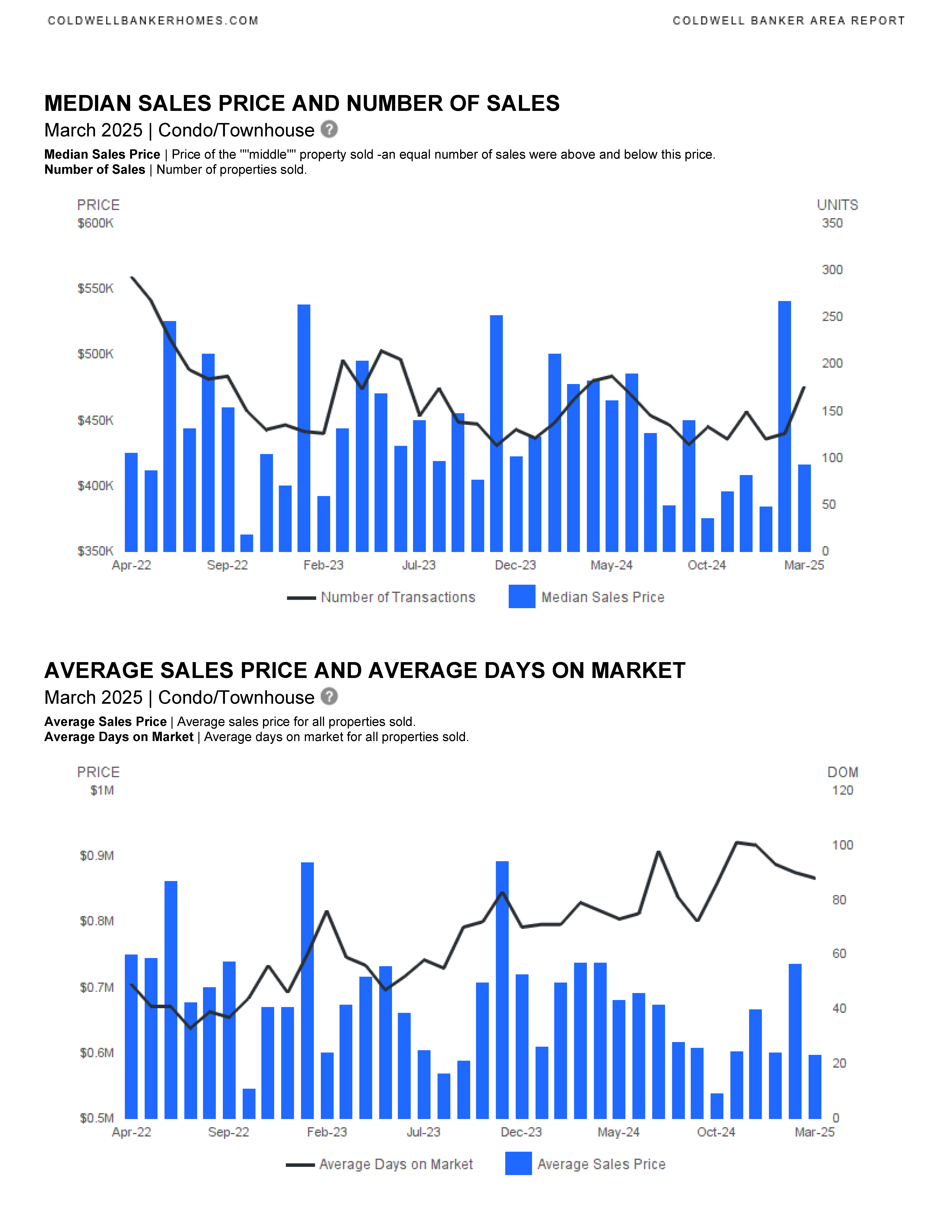
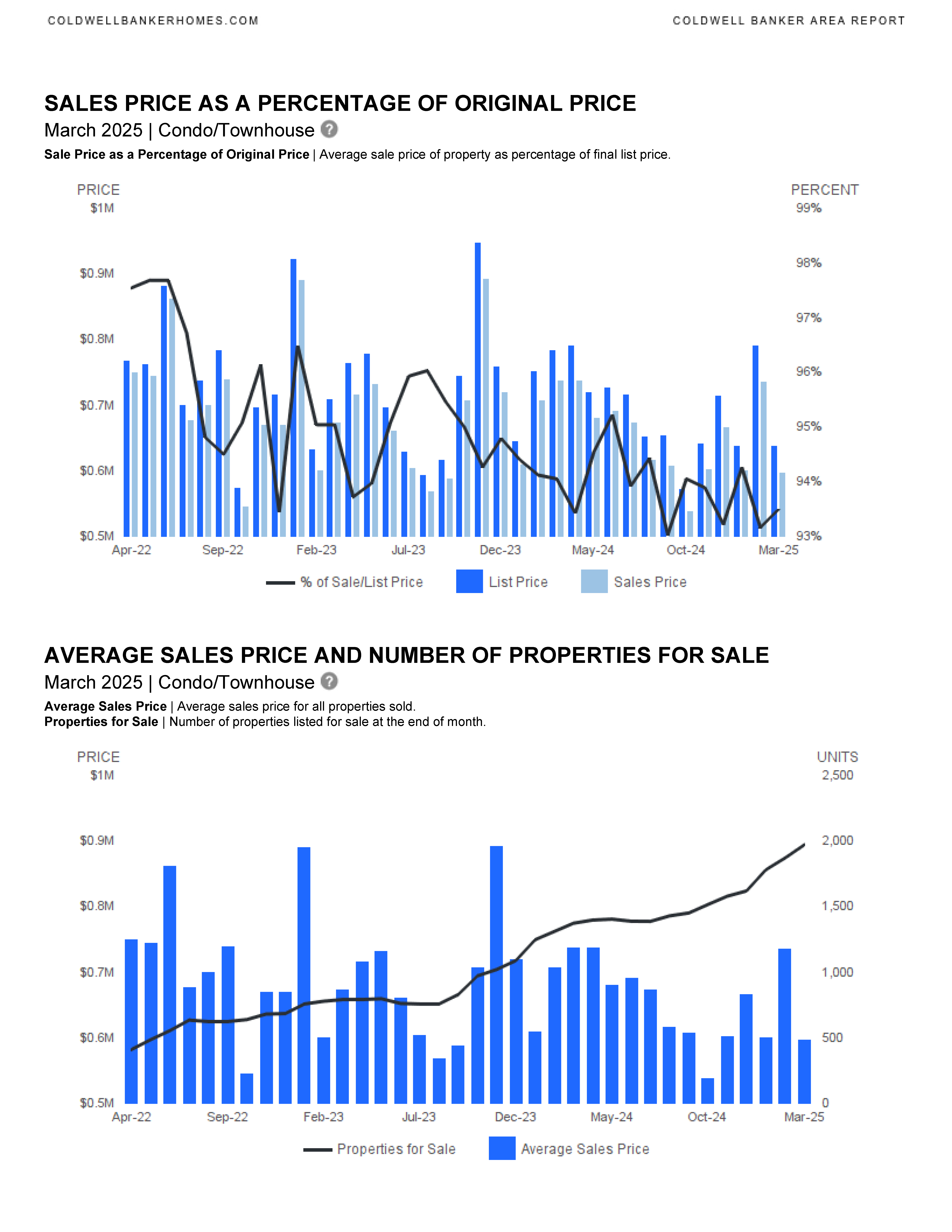
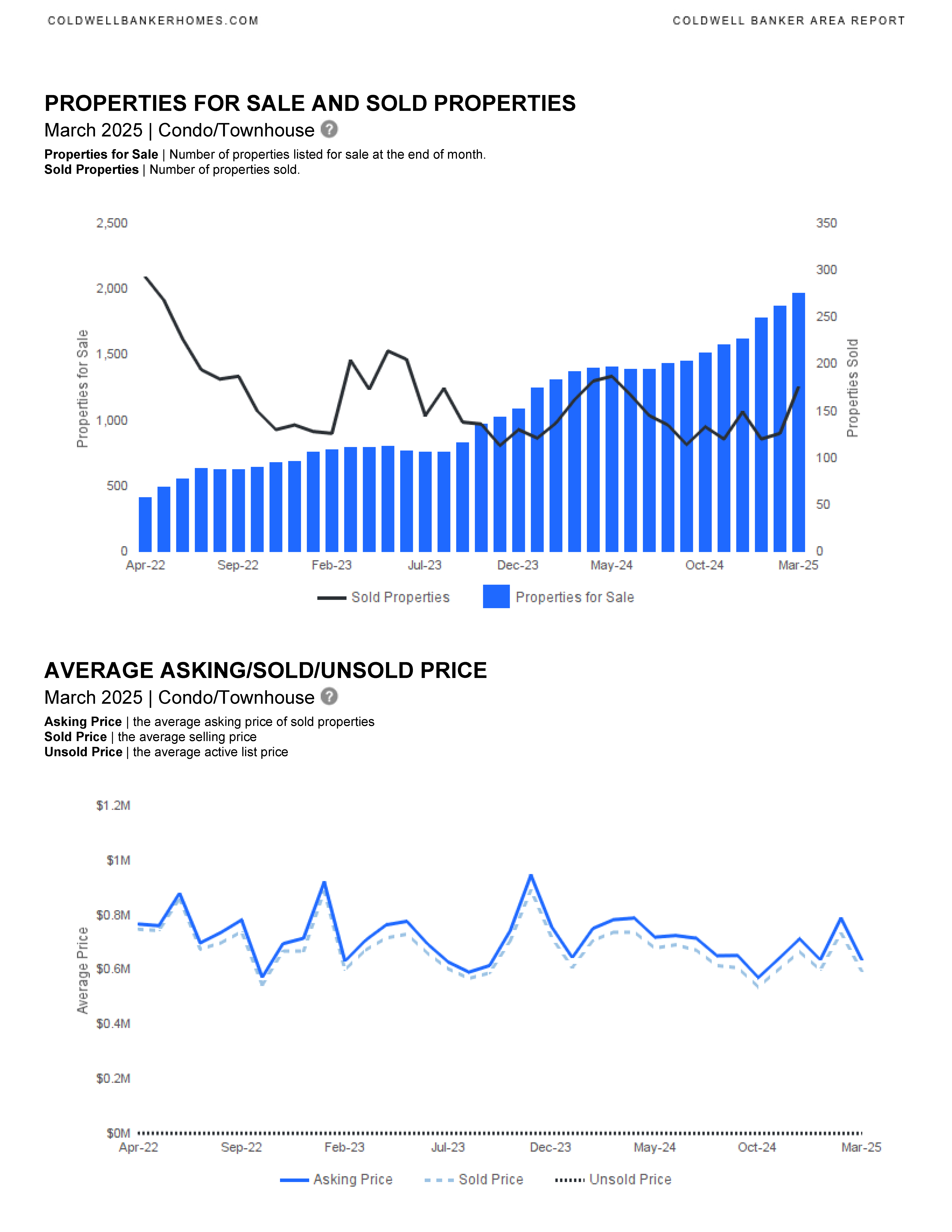
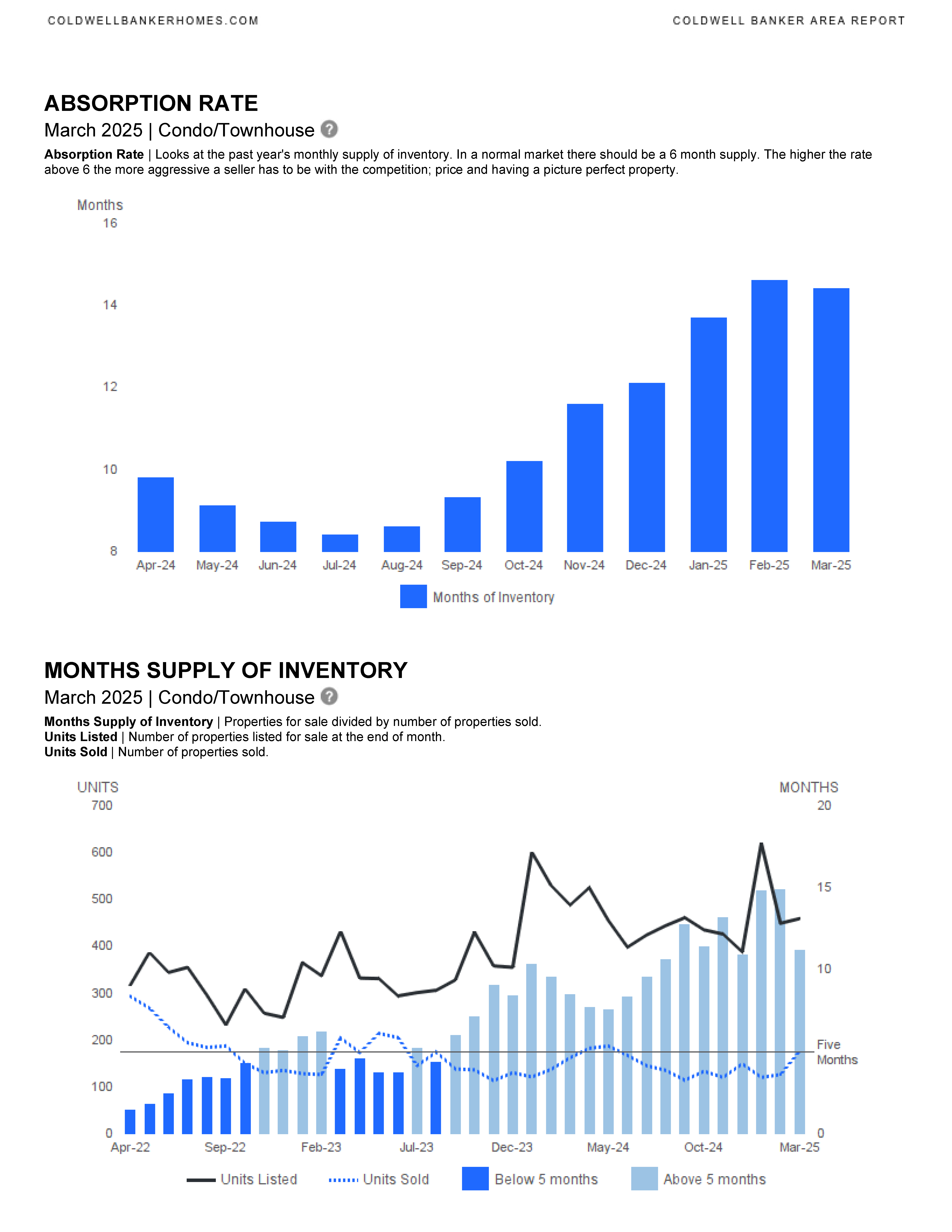
Condominium & Townhouses
Commonly asked questions while reviewing the reports:
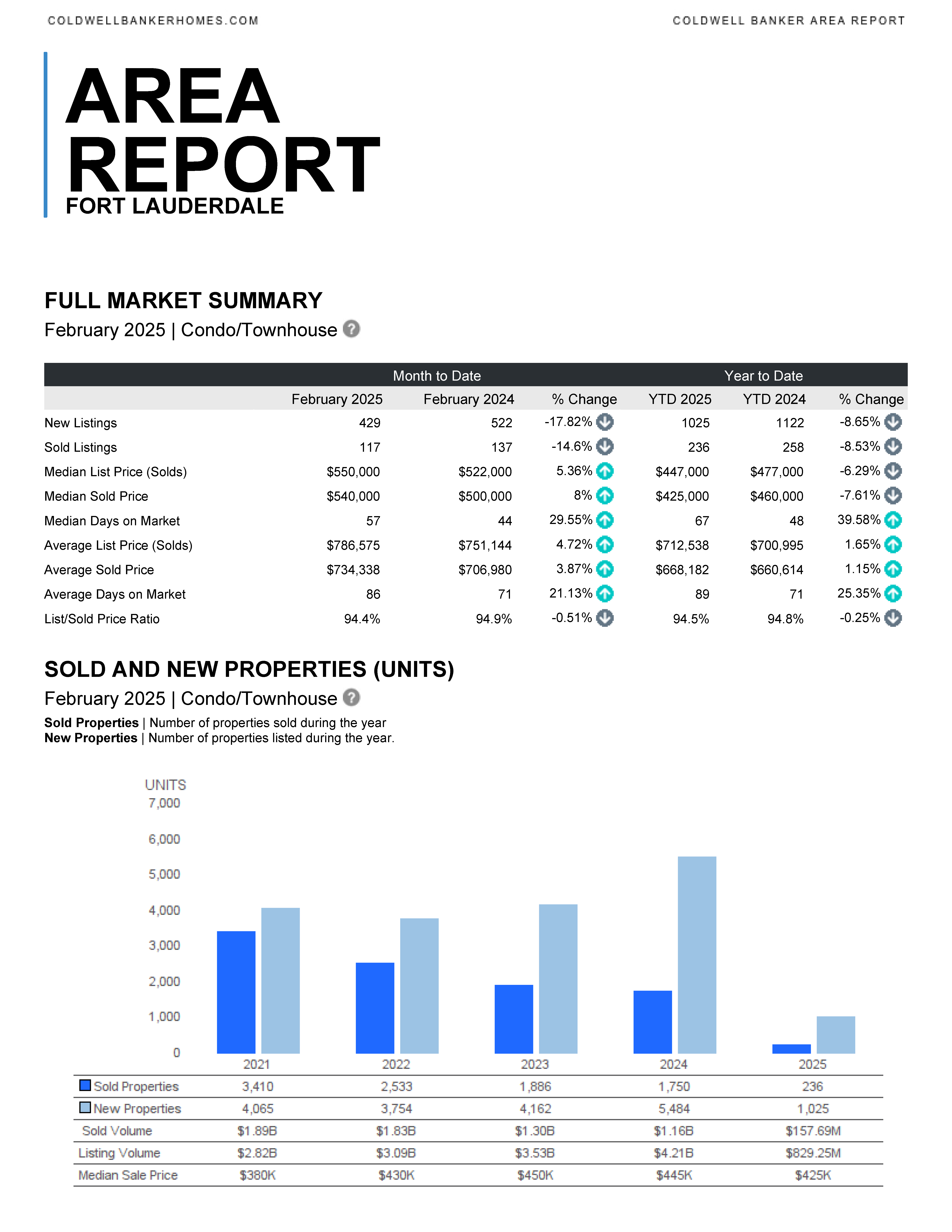
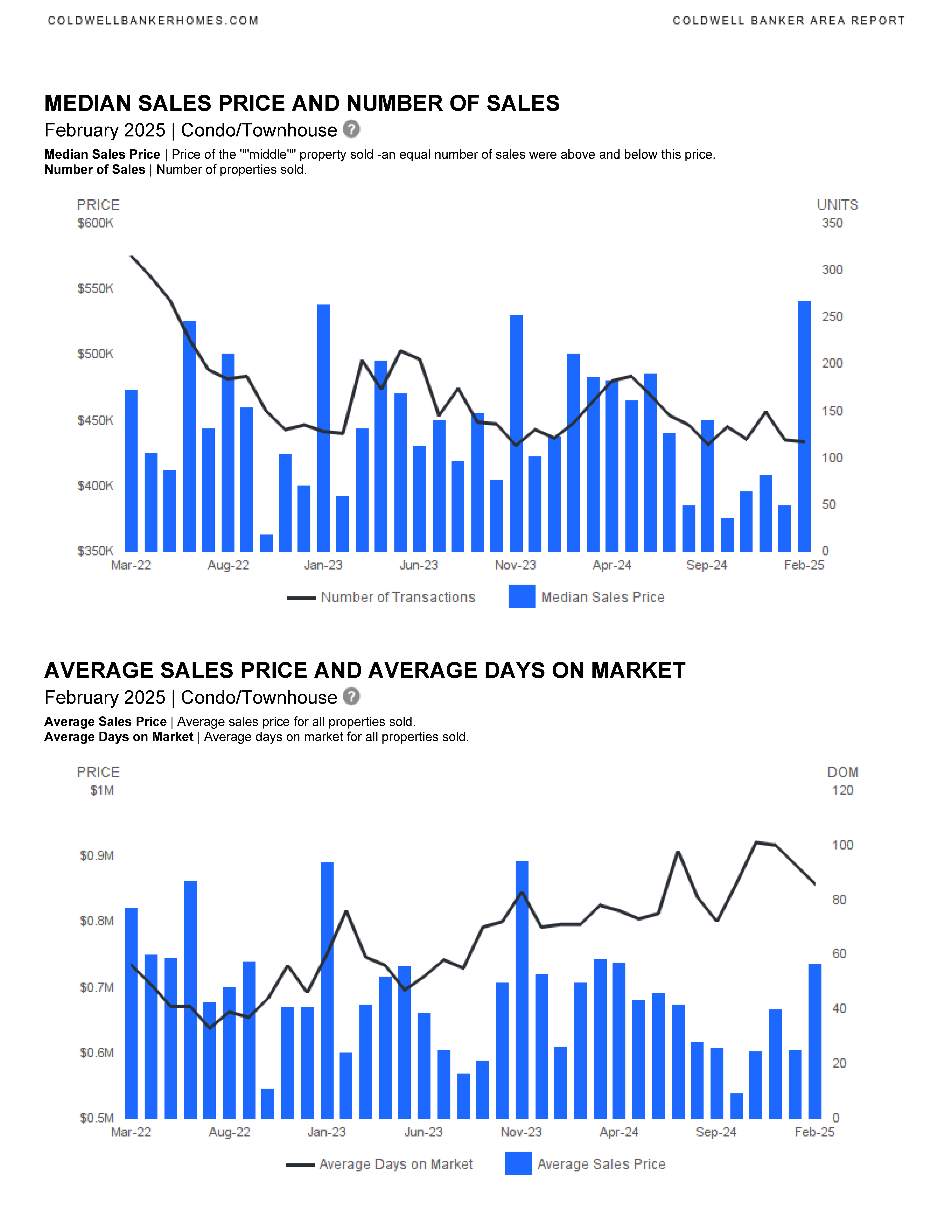
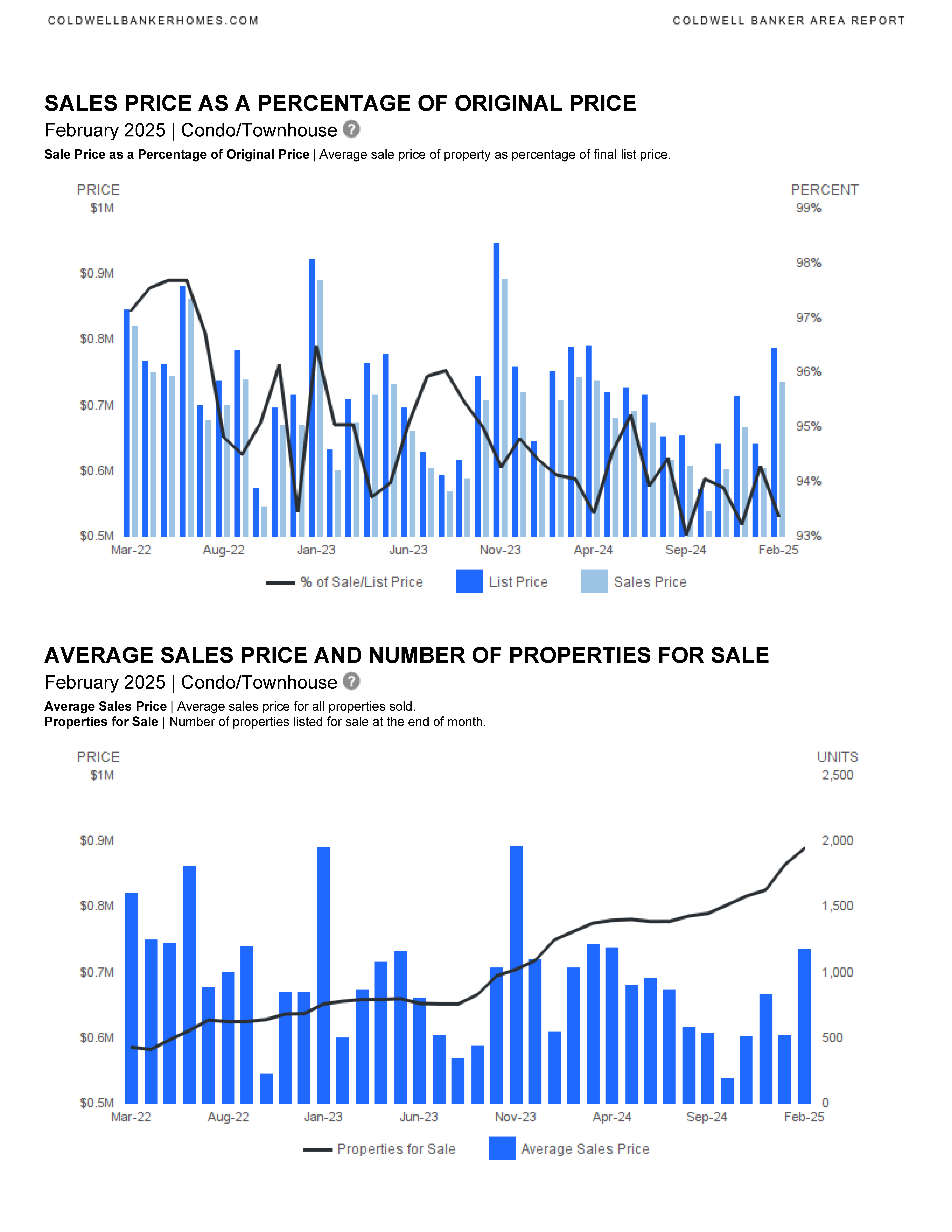
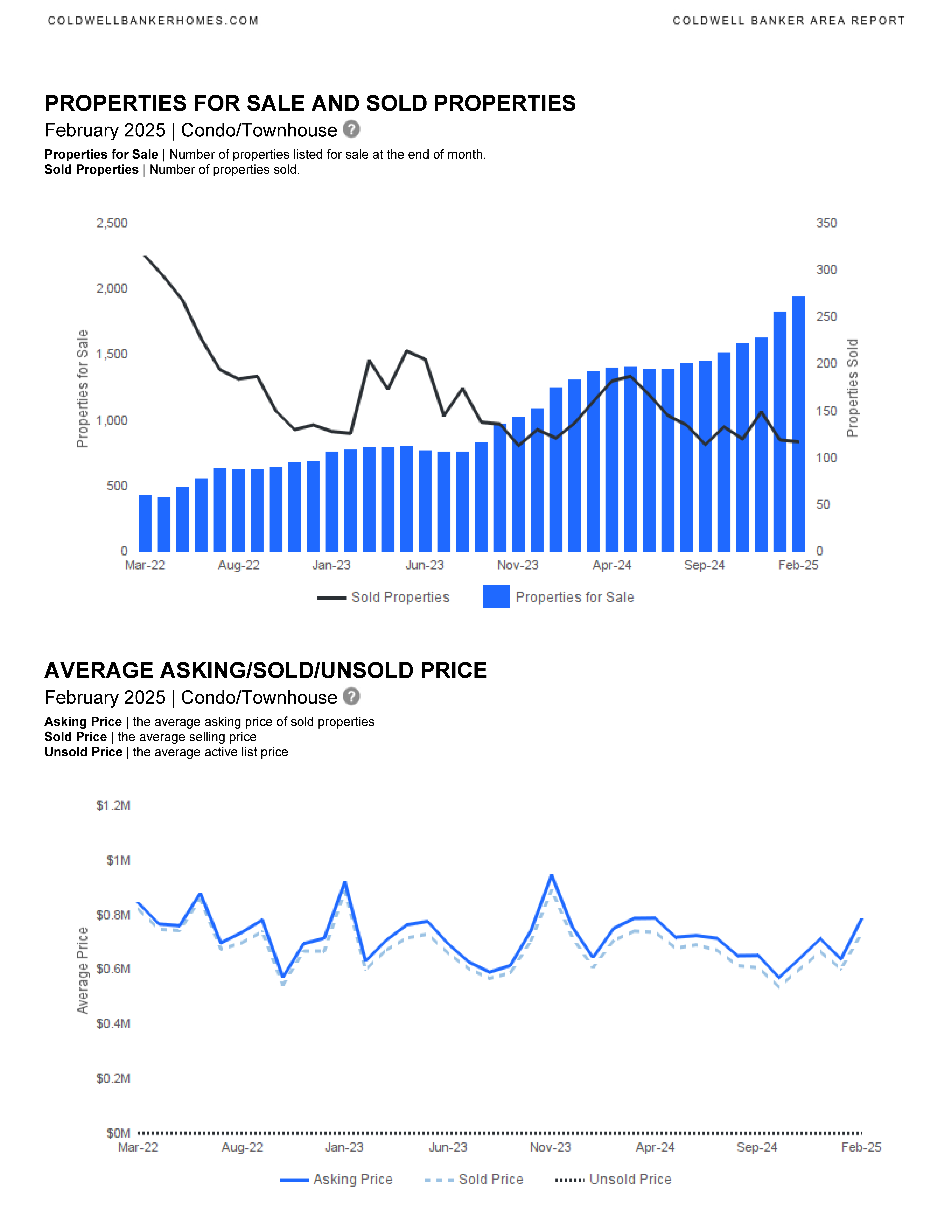
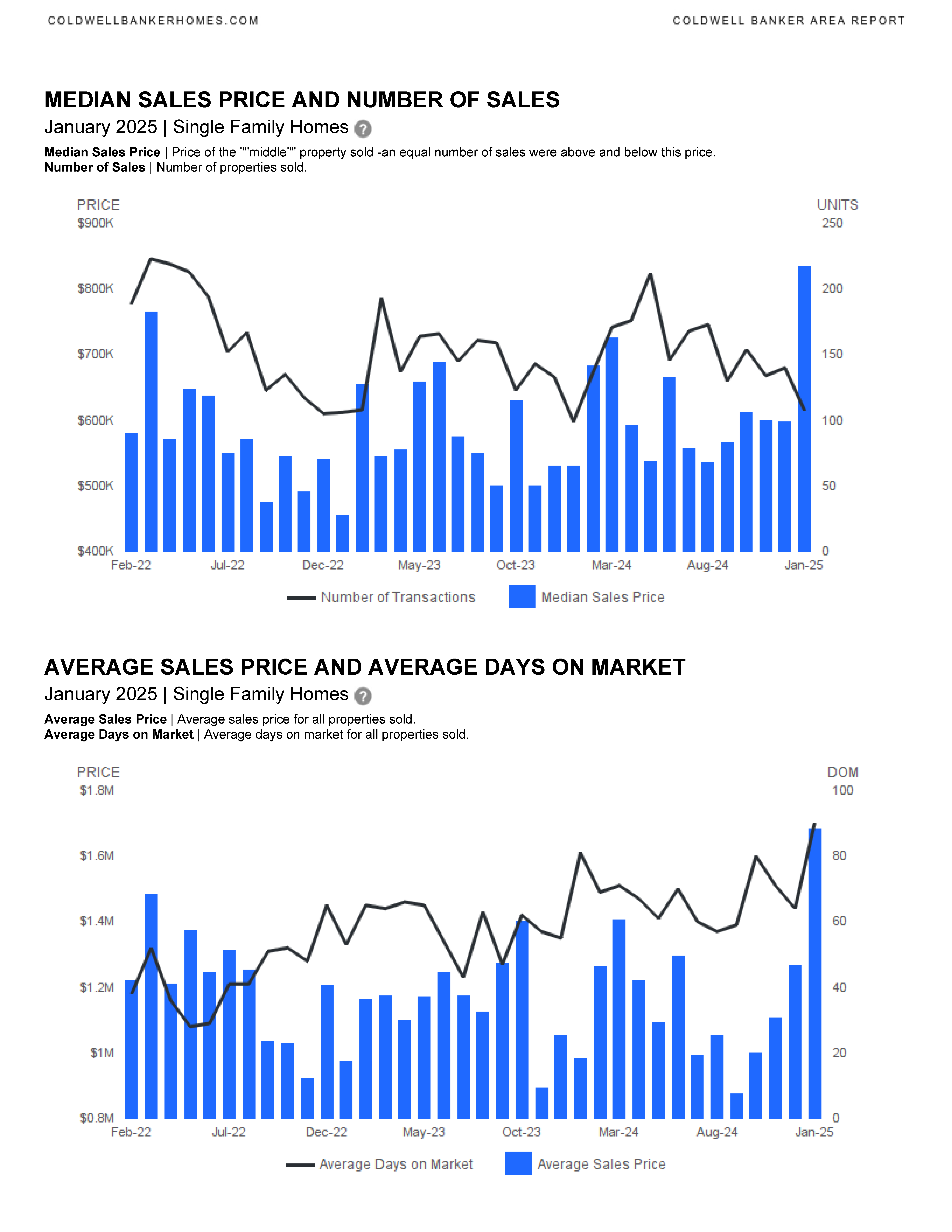
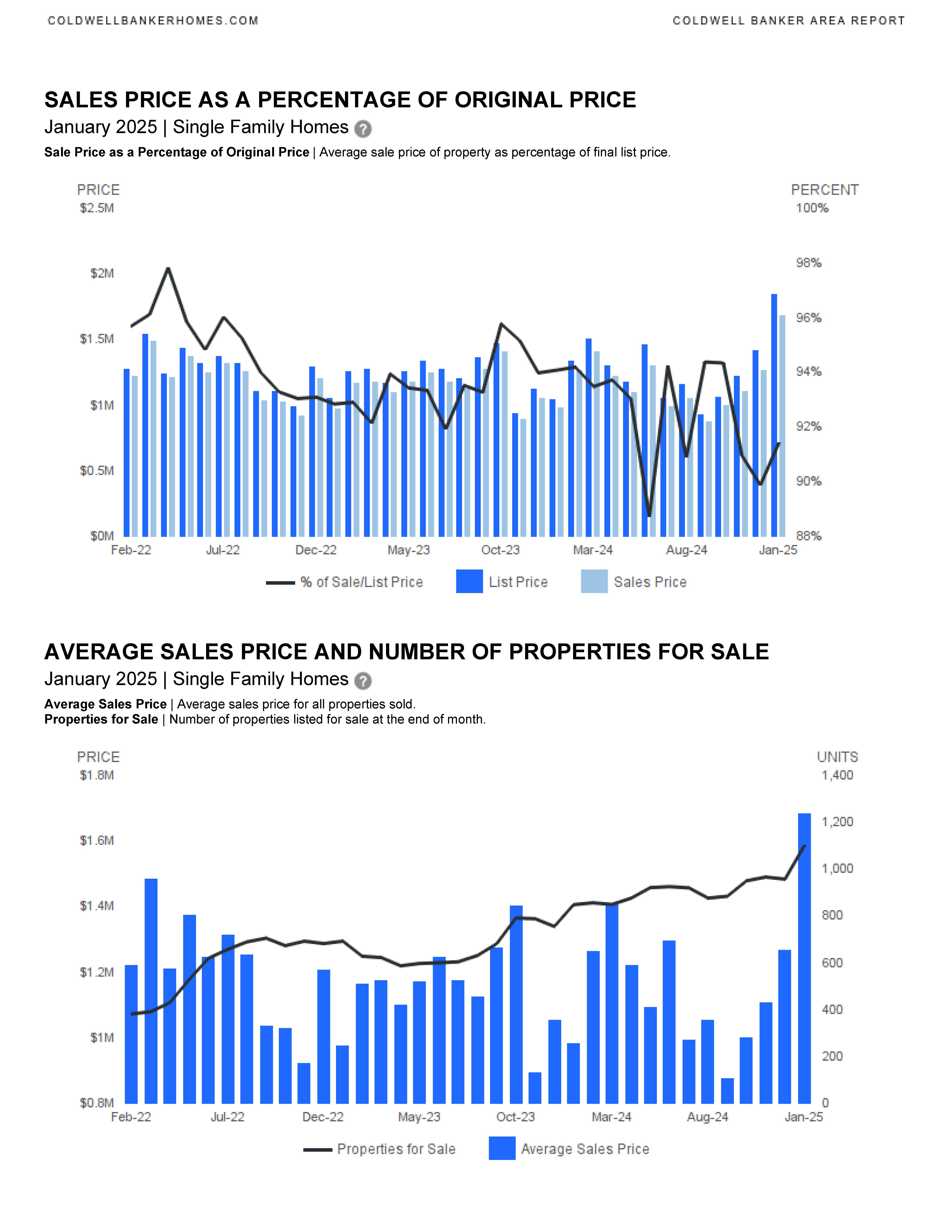
What is the difference between “Median Sales Price” and “Average Sales Price”?
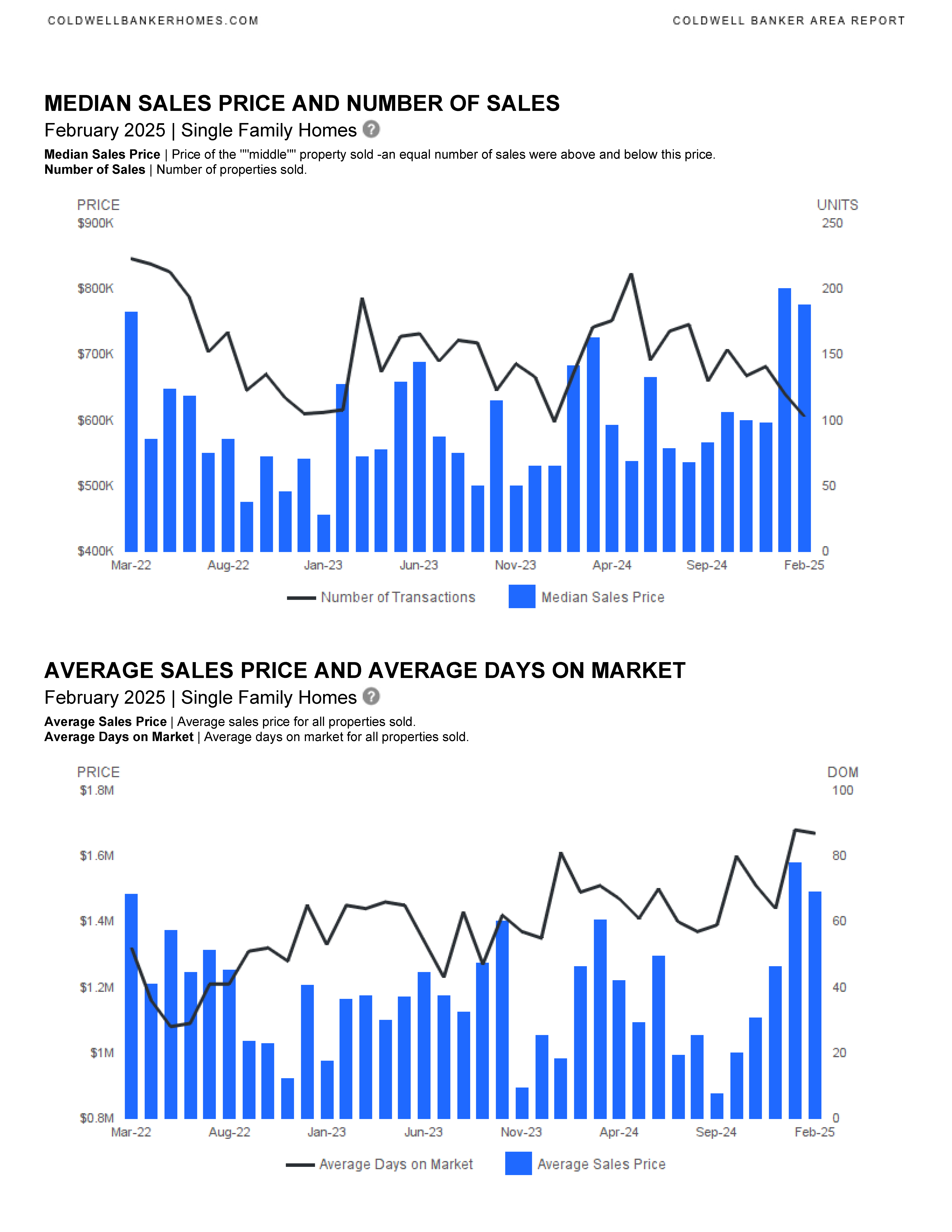
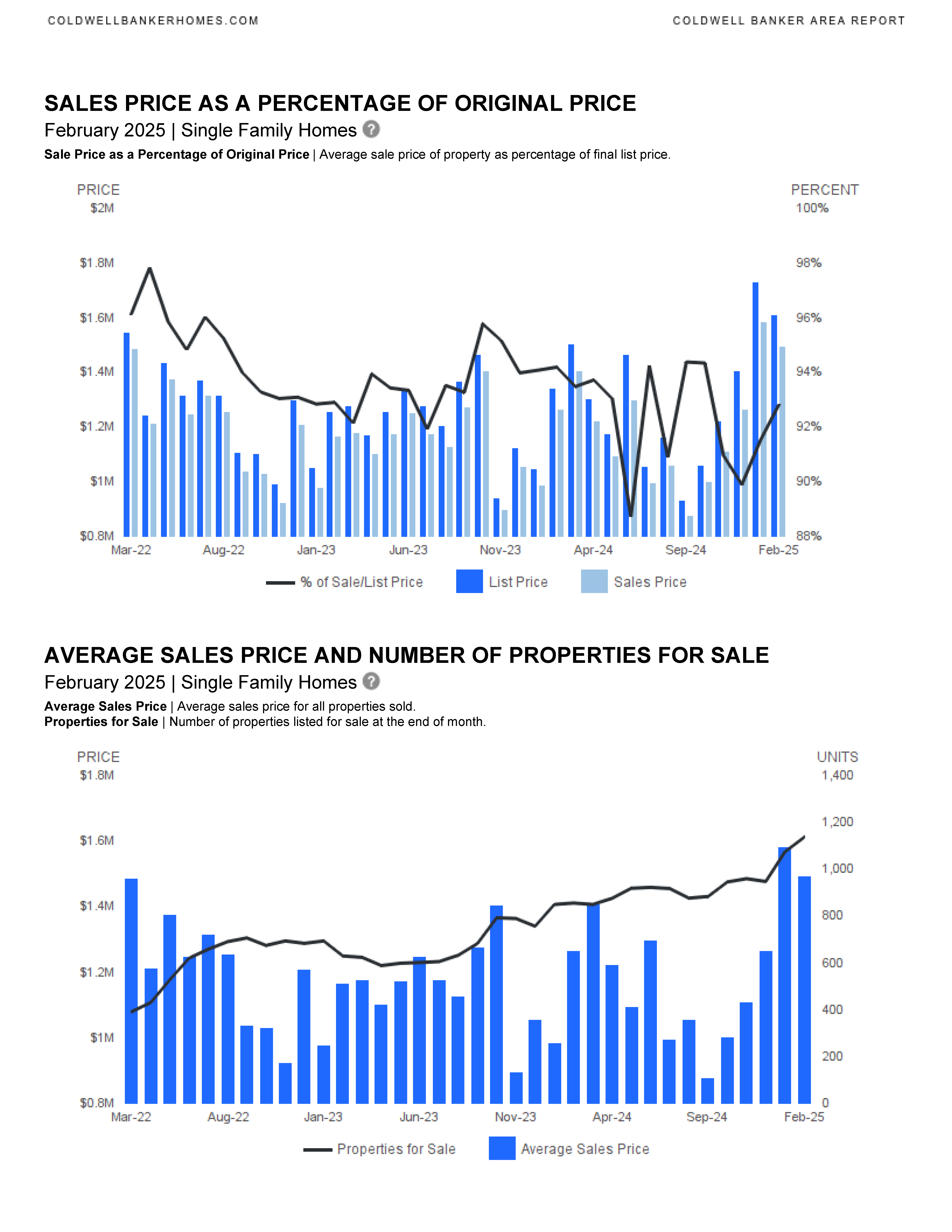
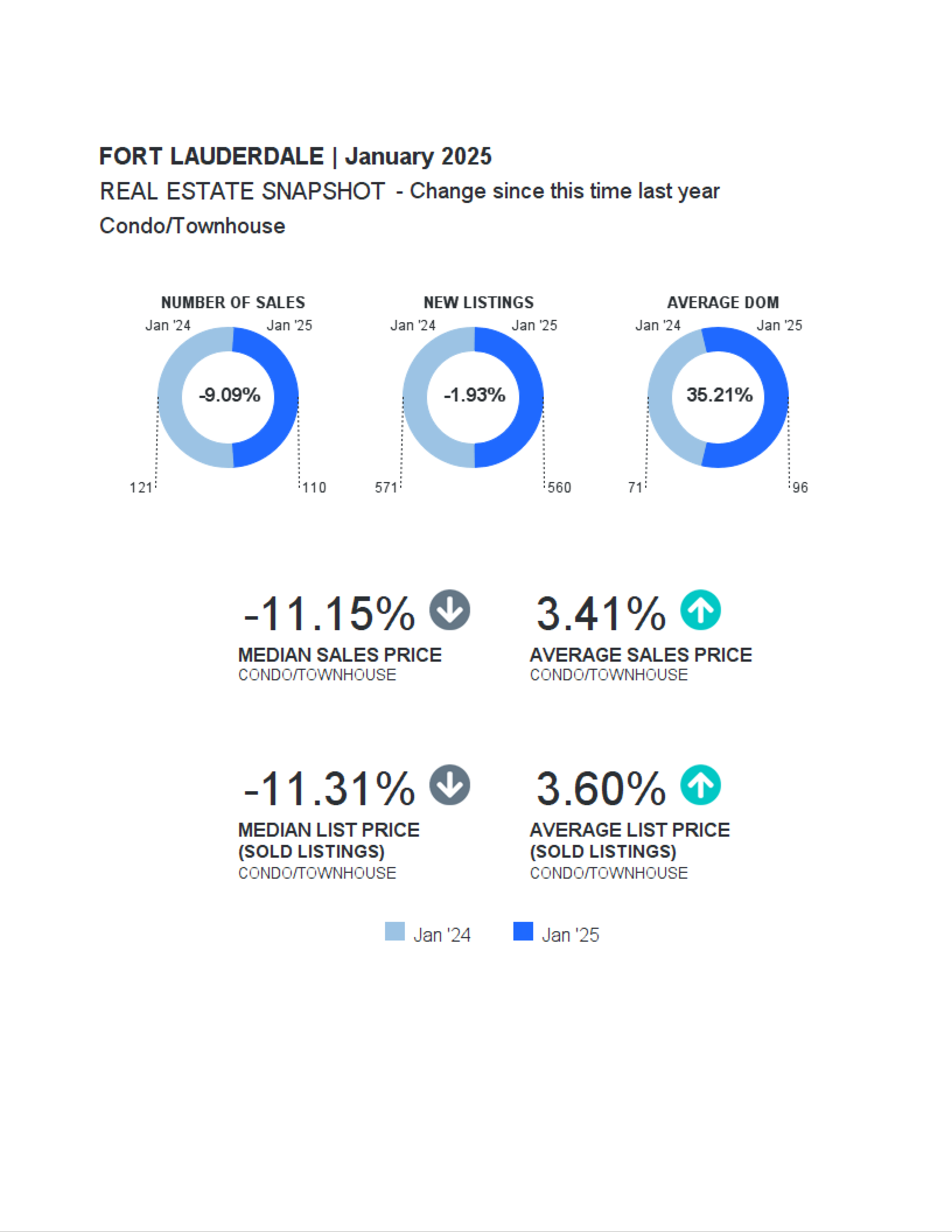
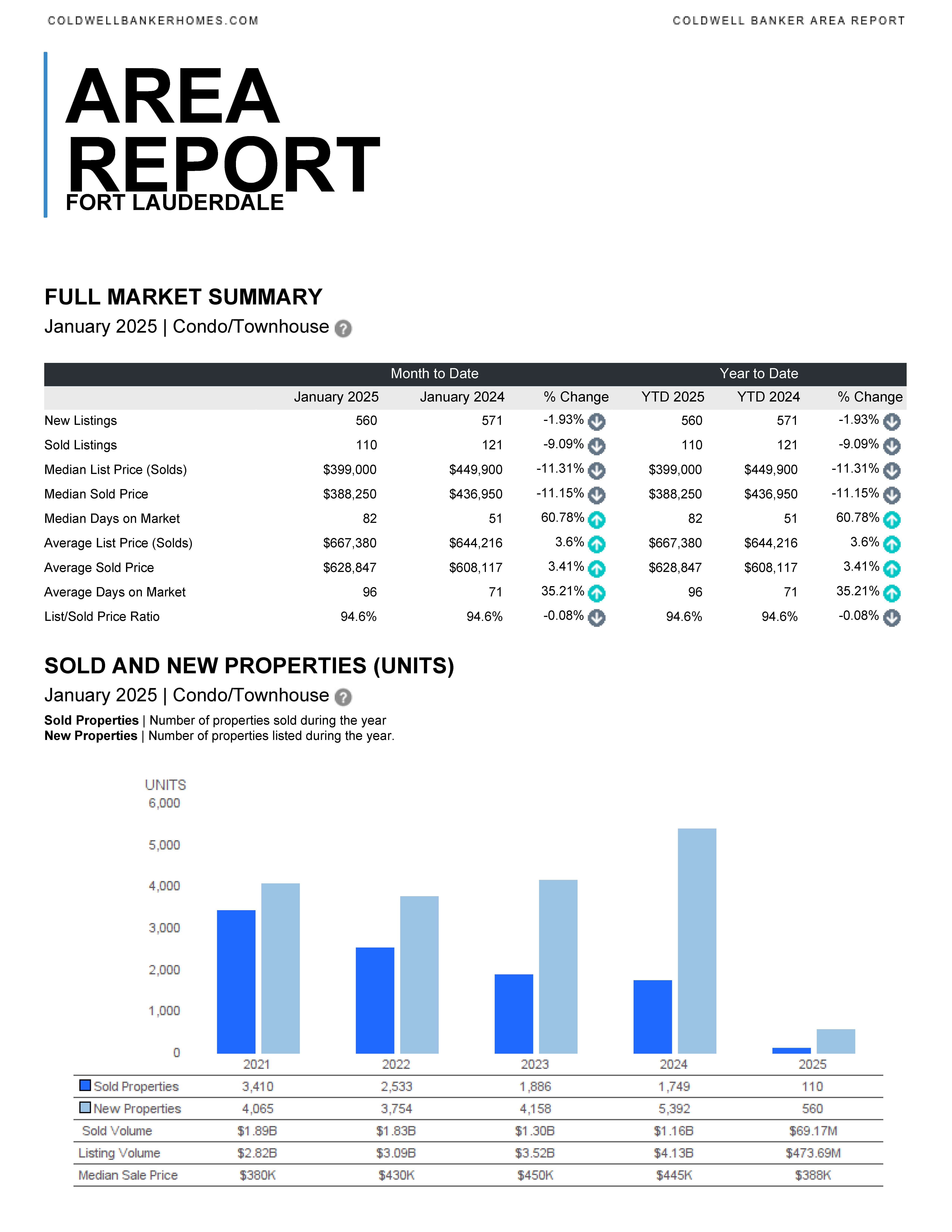
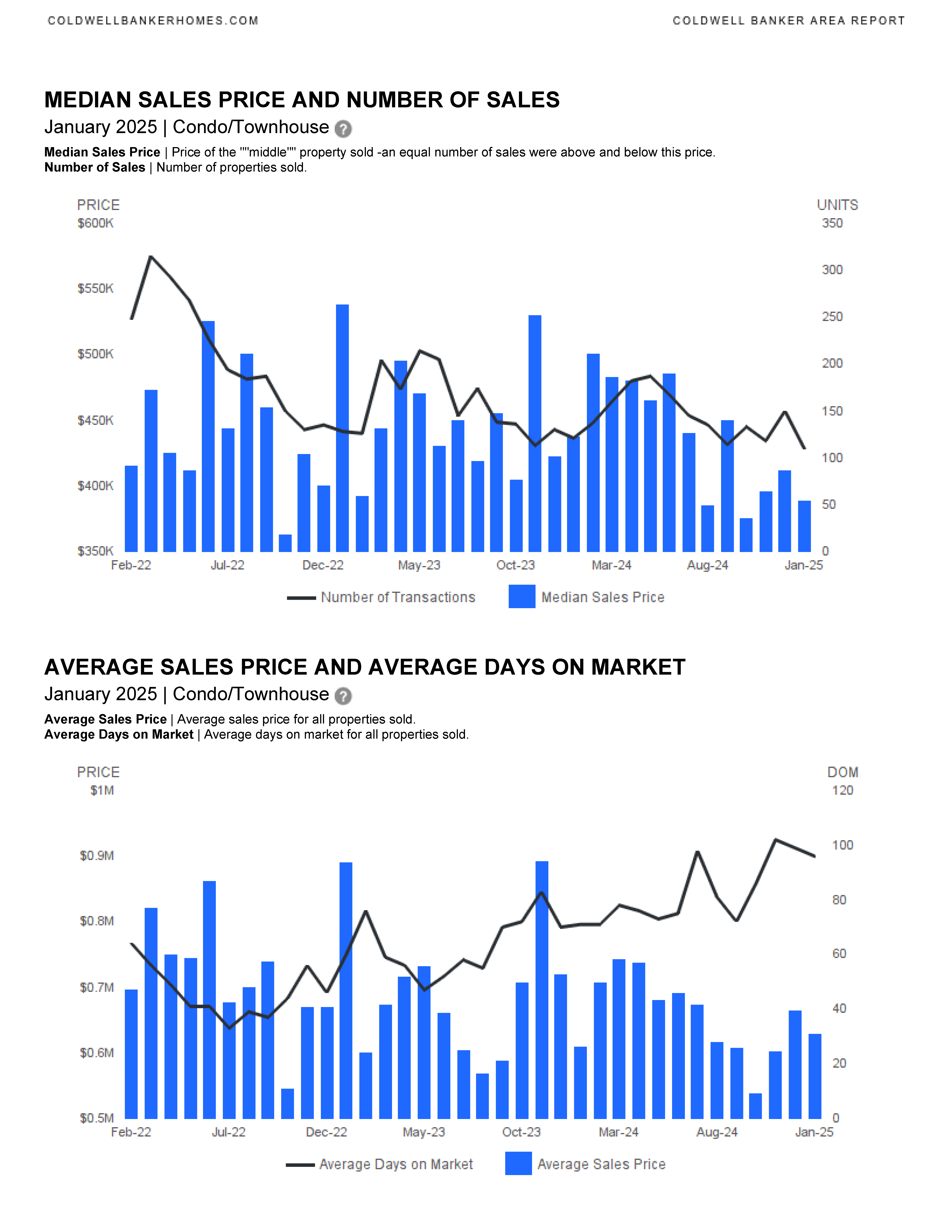
Median Sales Price | Price of the “”middle”” property sold -an equal number of sales were above and below this price.
Average Sales Price | Average sales price for all properties sold.
What does “Absorption Rate” mean?
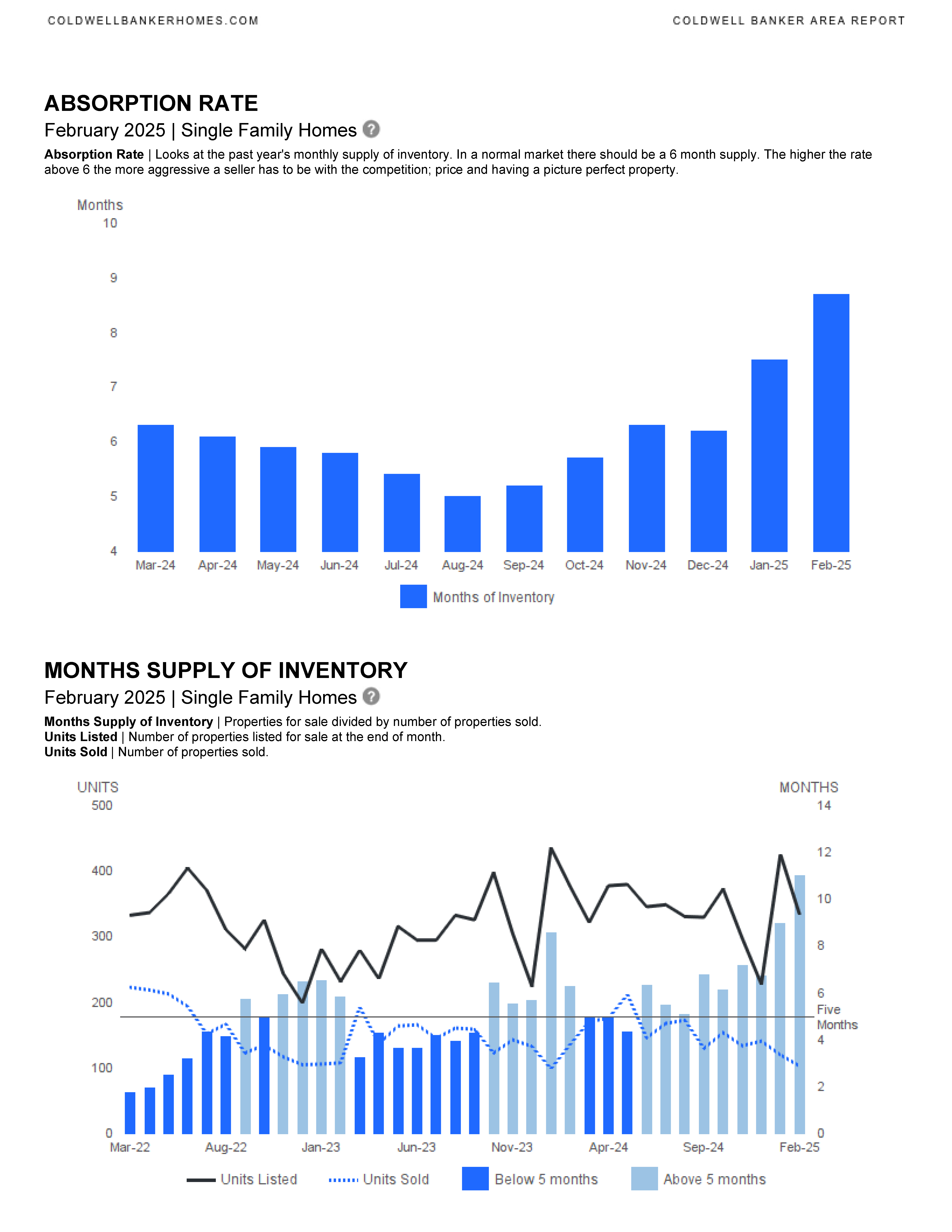
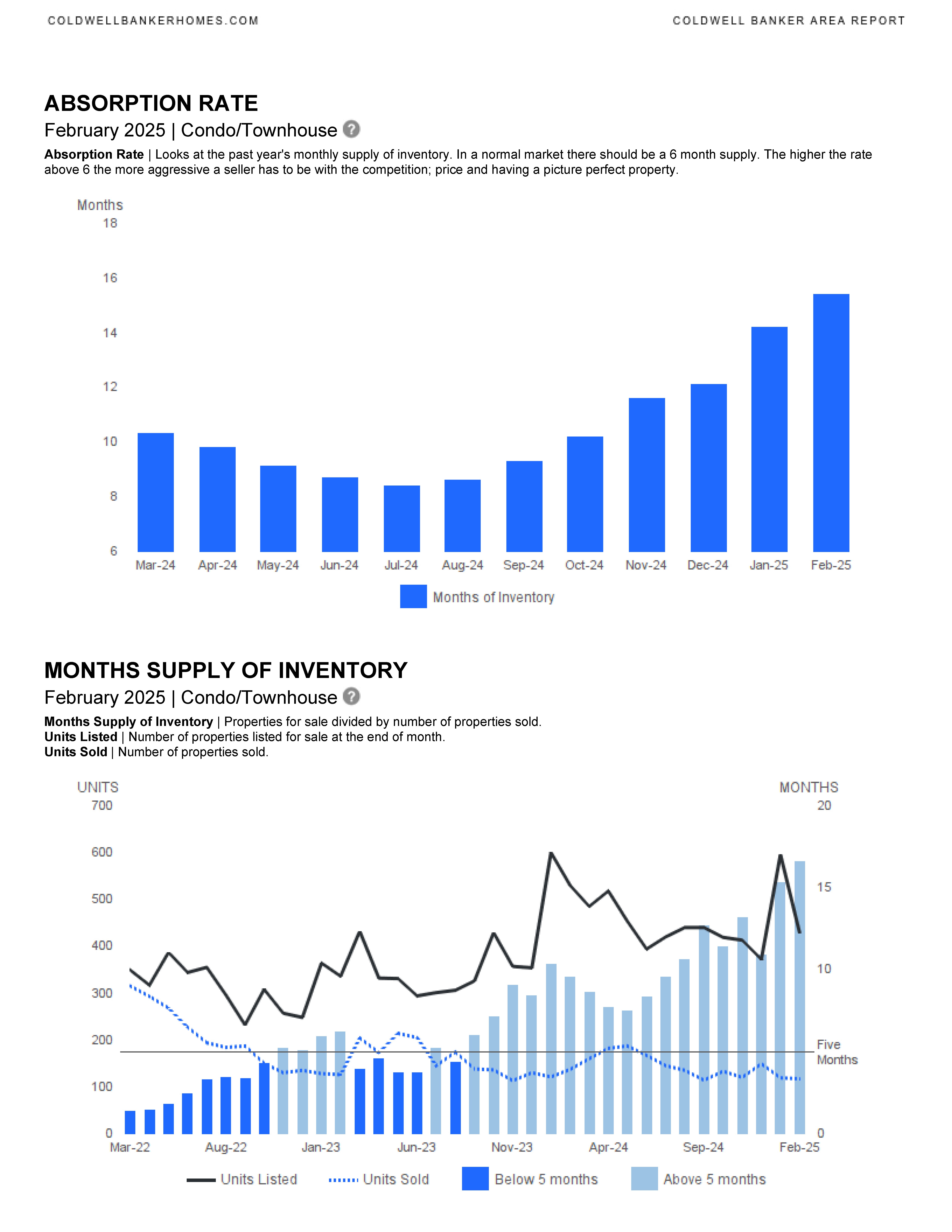
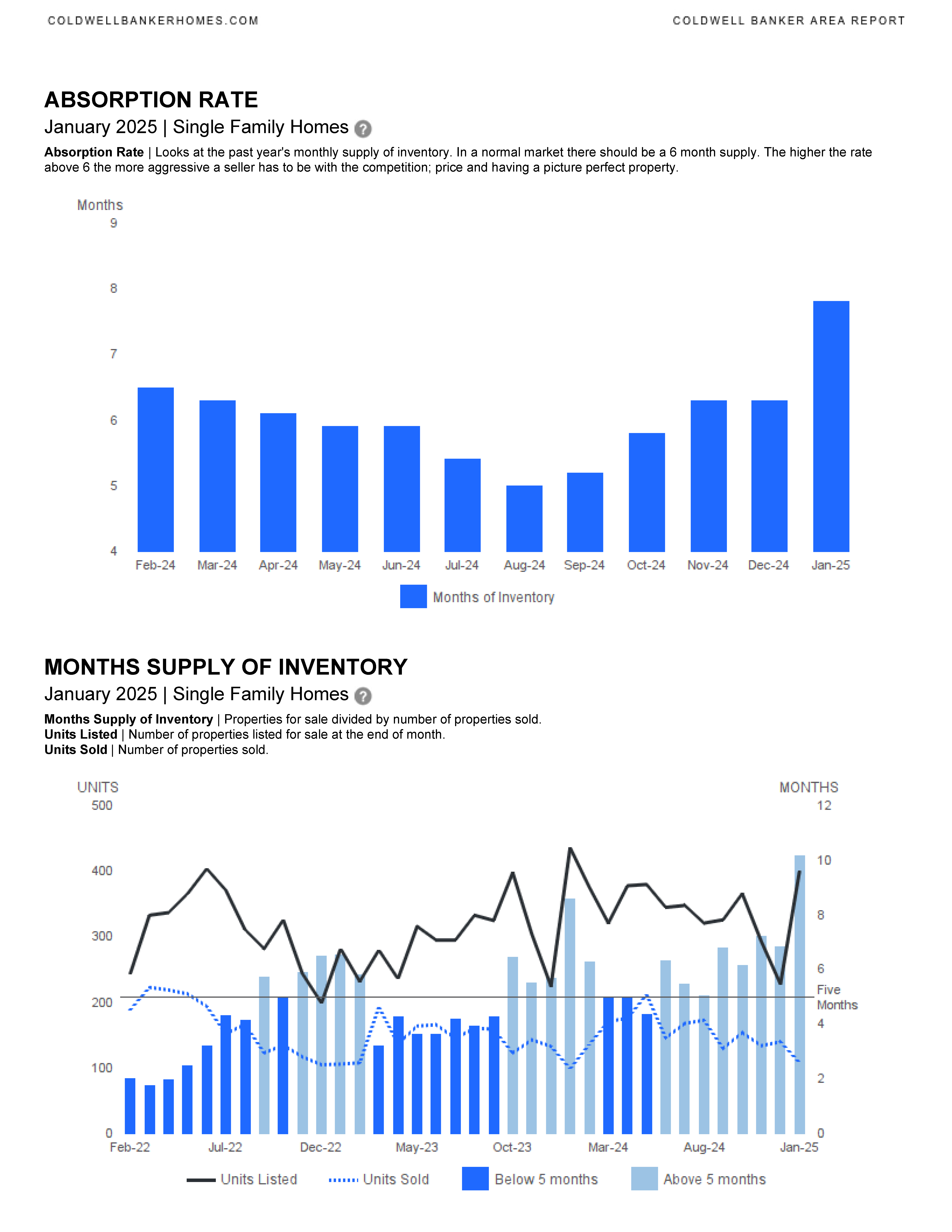
Absorption Rate | Looks at the past year’s monthly supply of inventory. In a normal market there should be a 6 month supply. The higher the rate above 6 the more aggressive a seller has to be with the competition; price and having a picture perfect property.
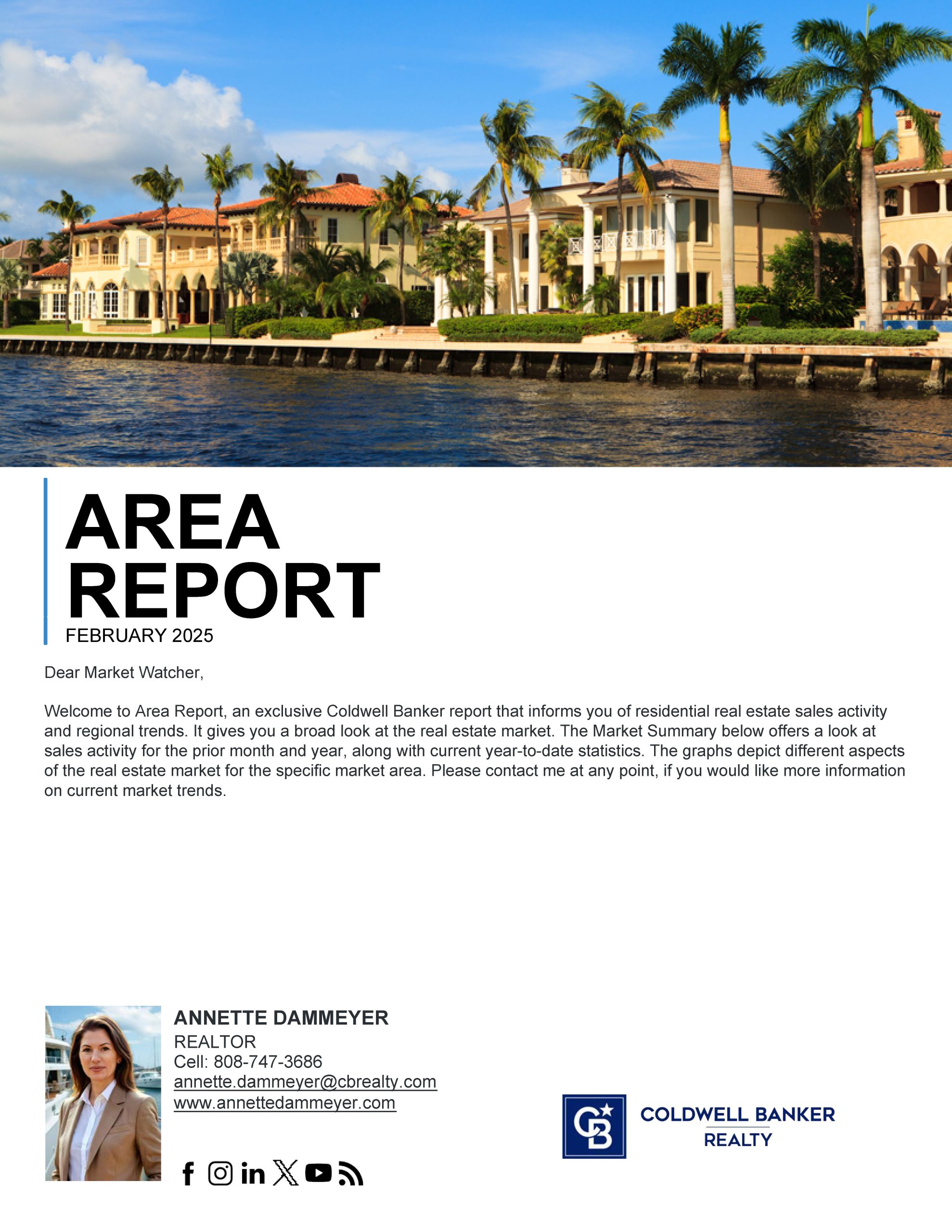
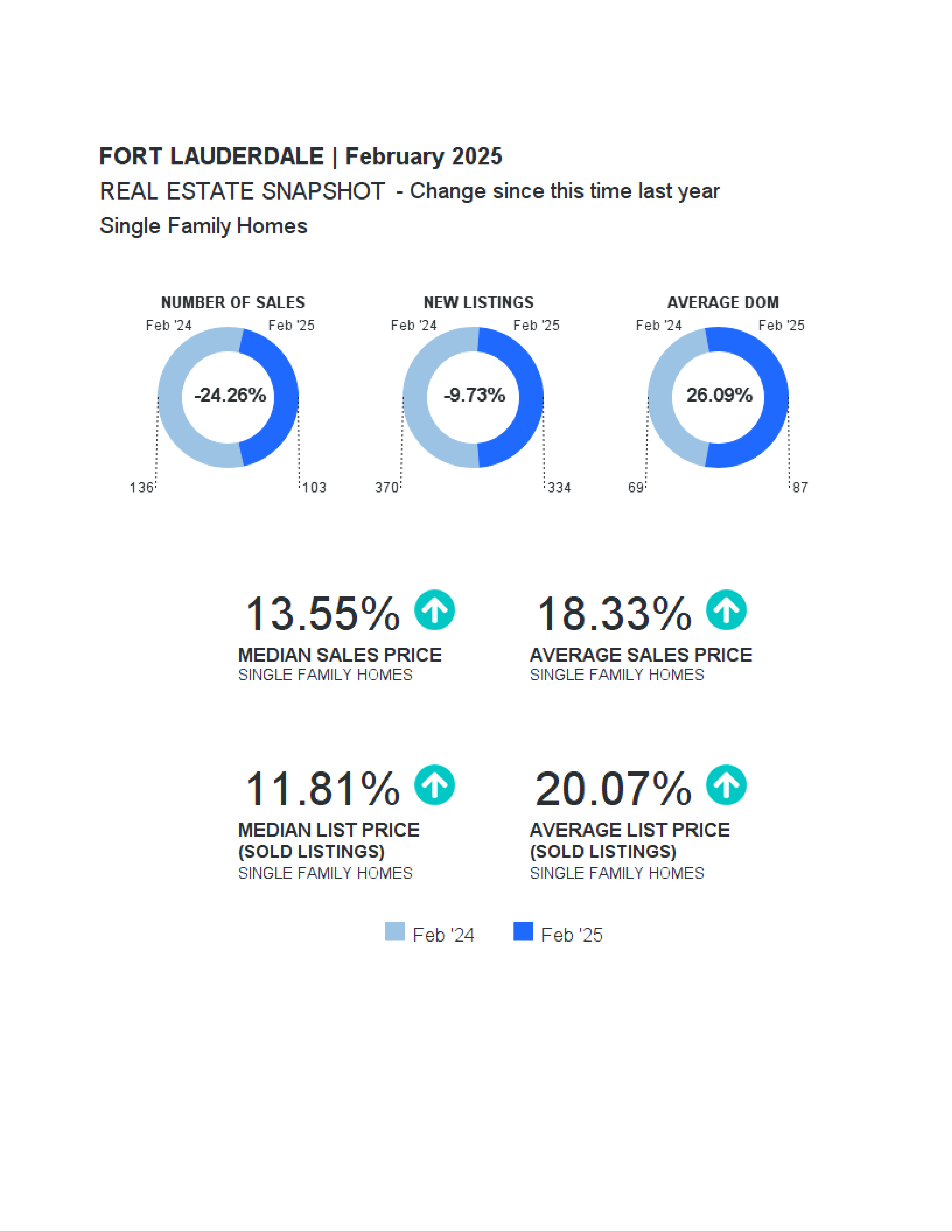
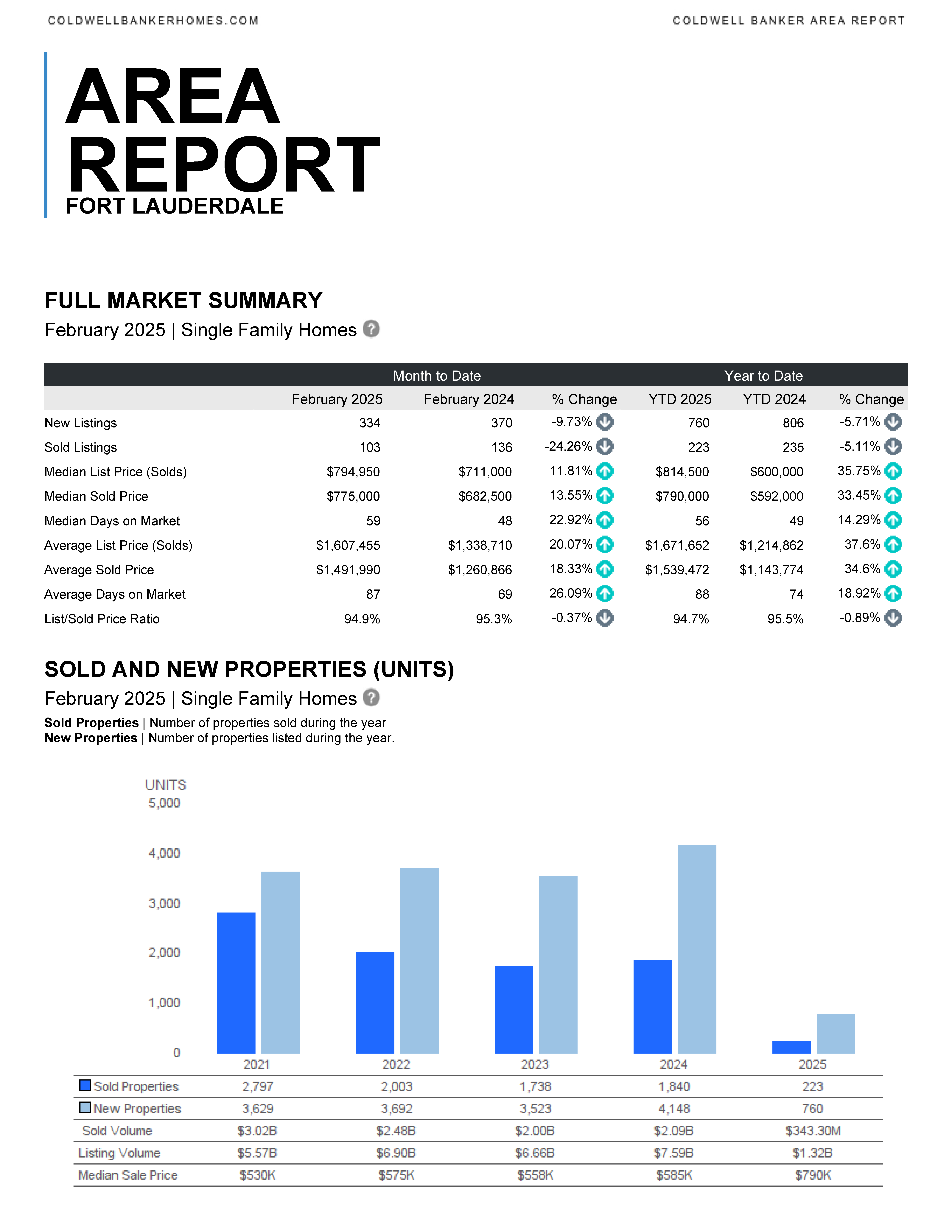
Single Family Home Area Report listed first, Condo/Townhouses listed second:
Please contact me if you would like to be automatically sent updated area market reports for Fort Lauderdale or another SE Florida city. I am here to help.
Let’s start working together!
Annette Dammeyer, REALTOR
Coldwell Banker Realty
901 E Las Olas Blvd STE 101, Fort Lauderdale, FL 33301
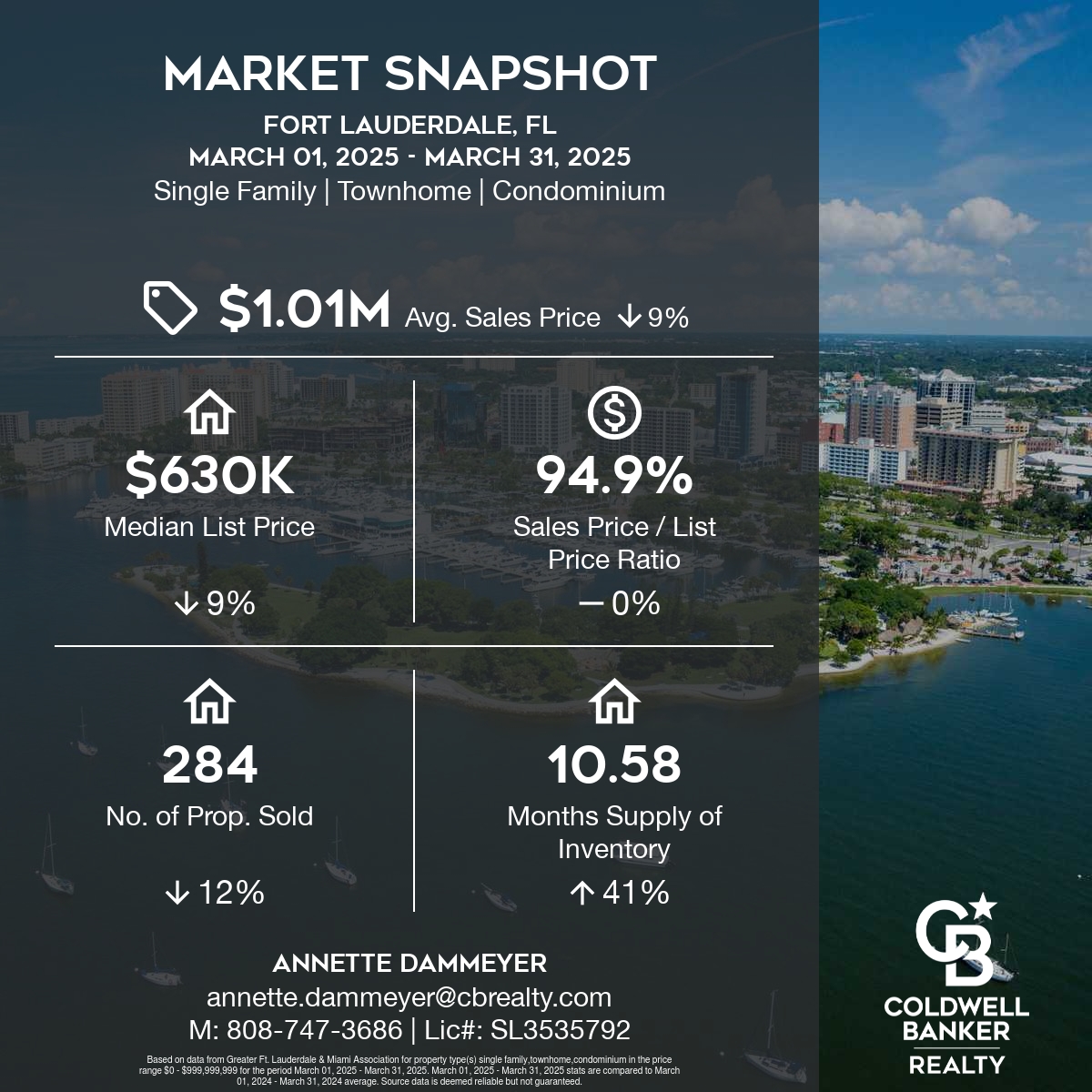
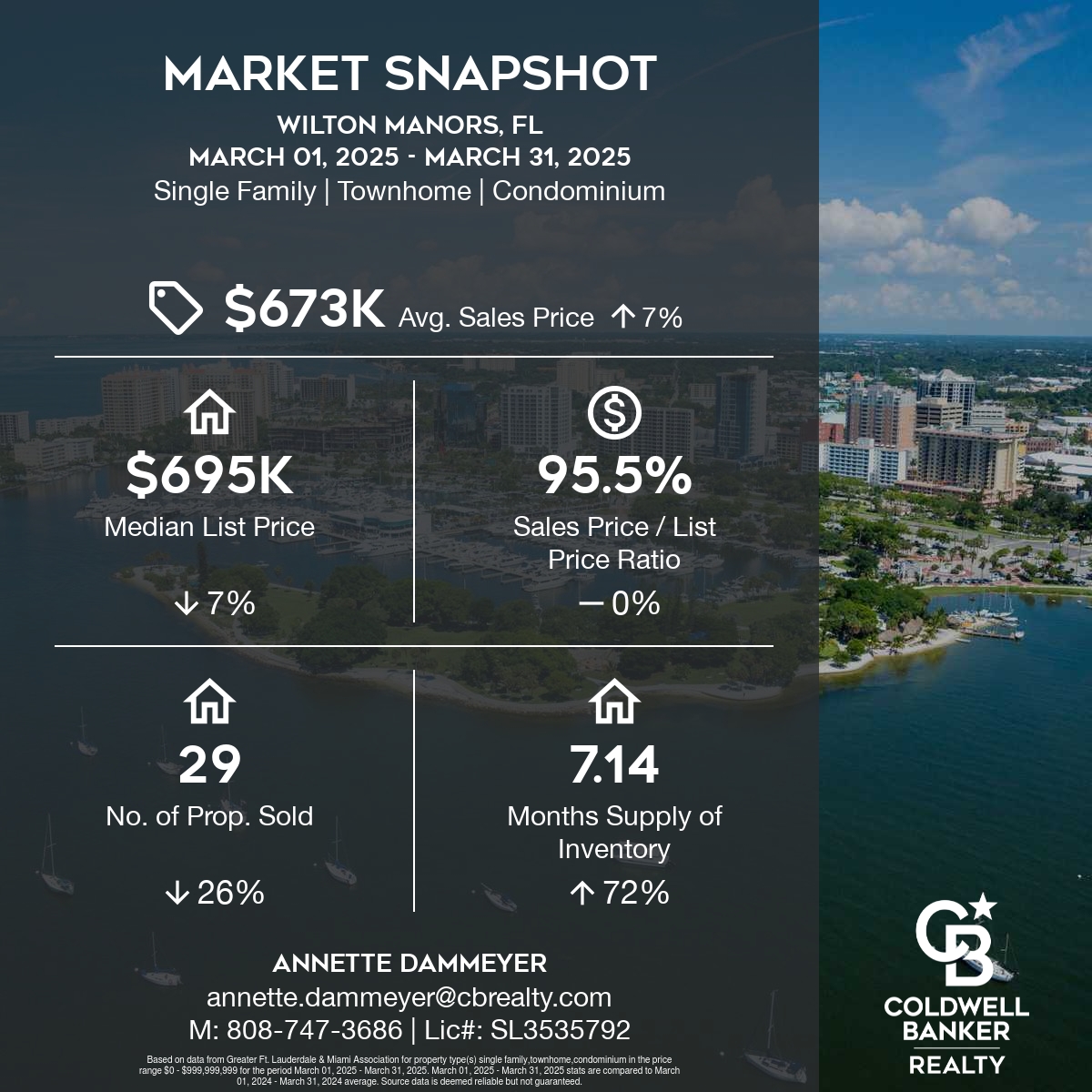
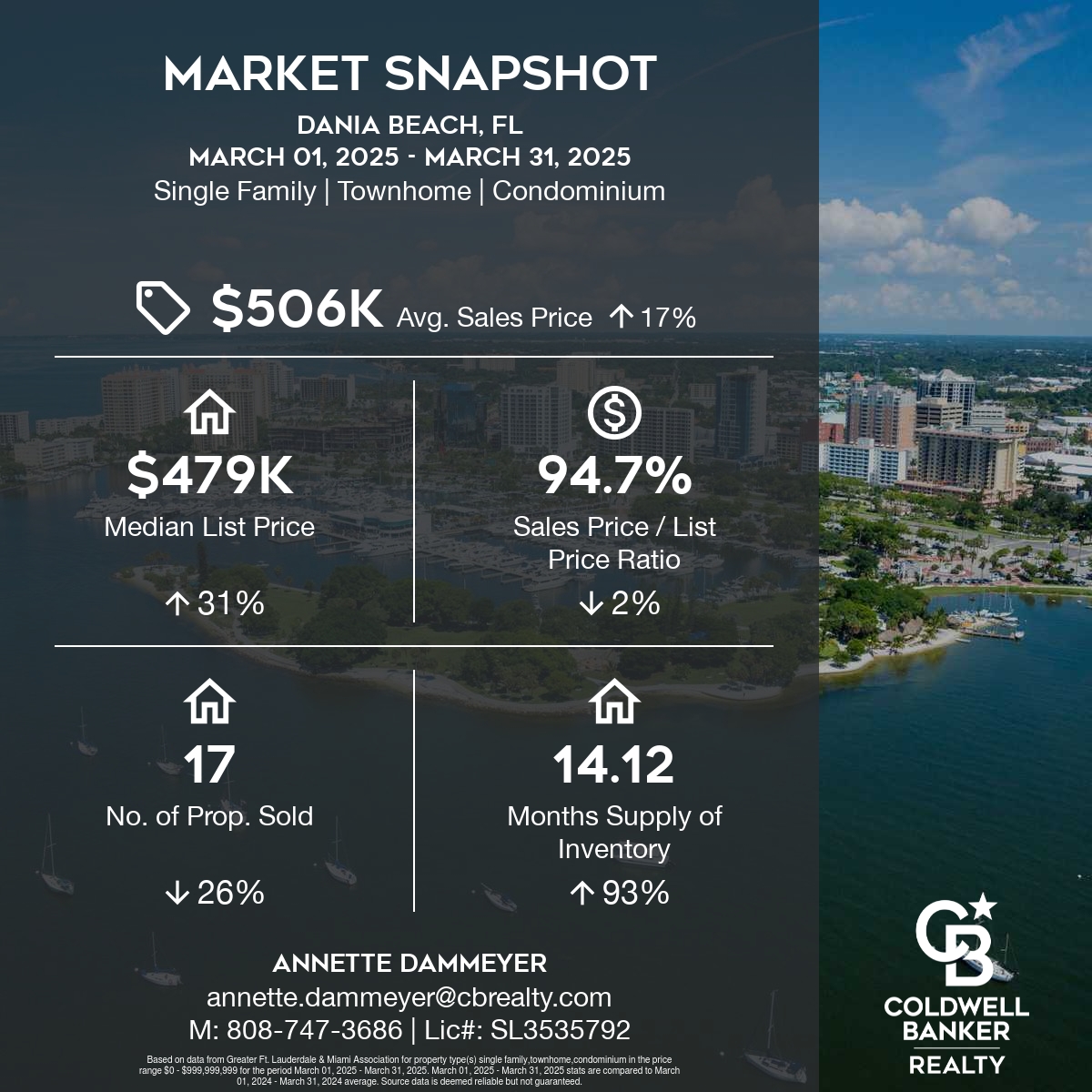
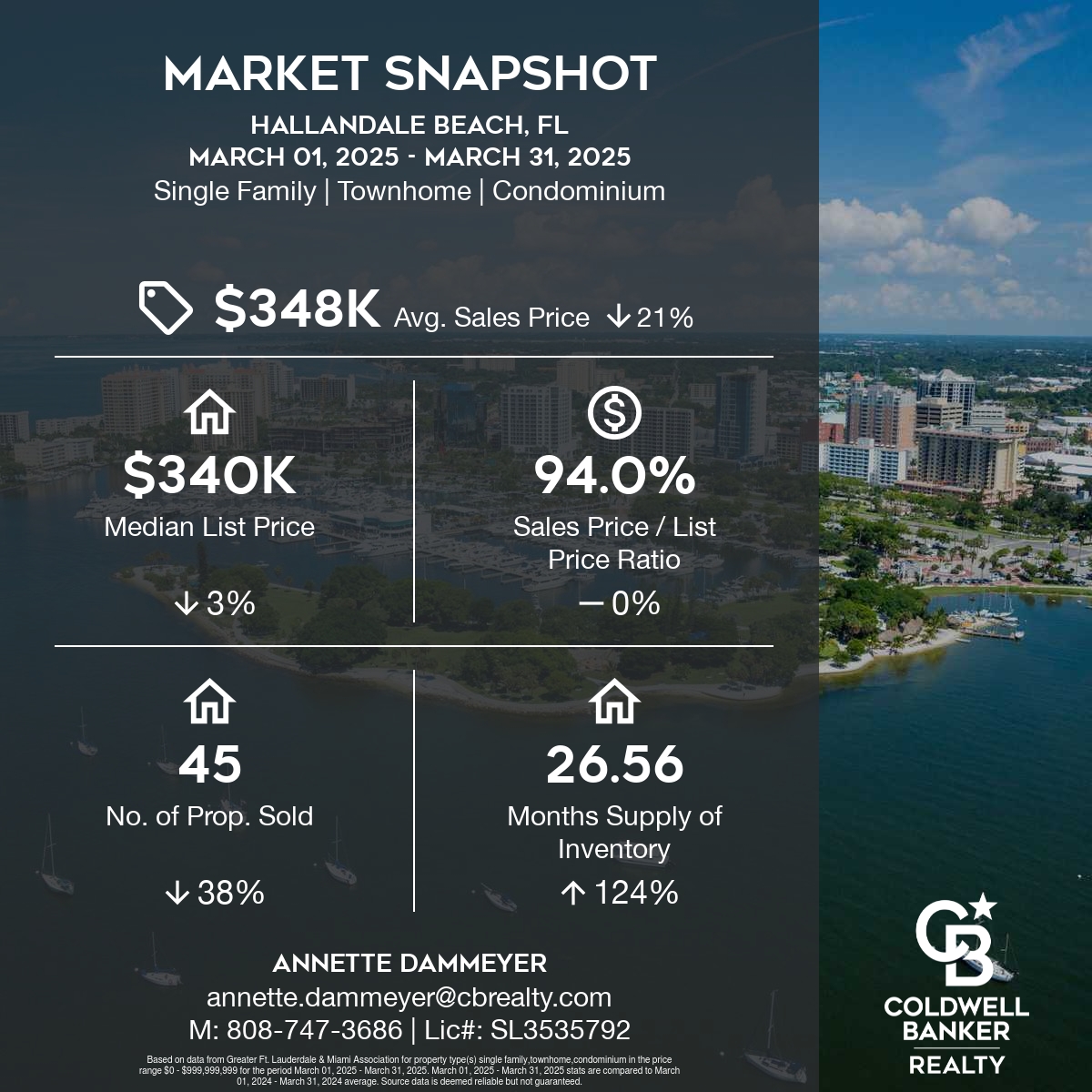
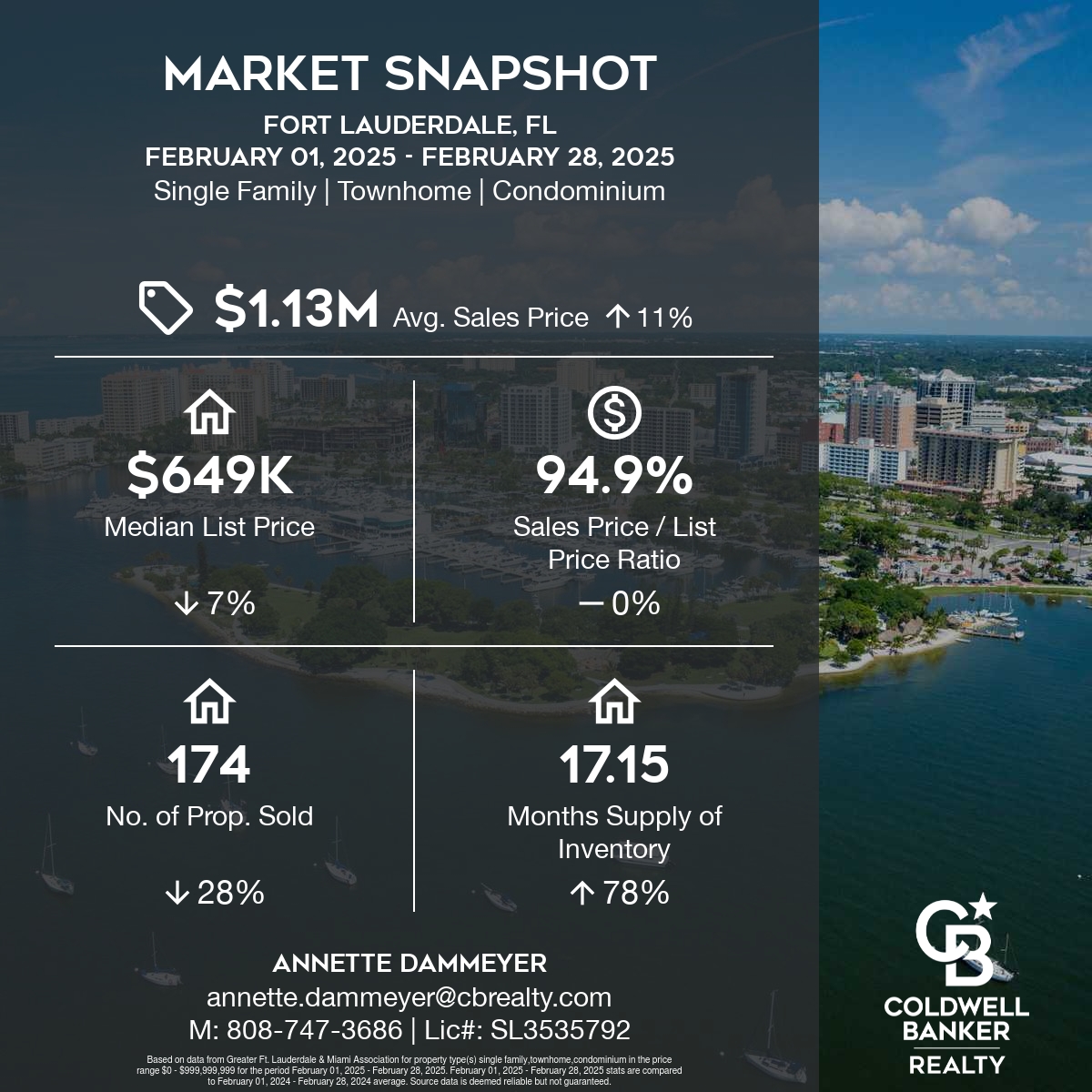
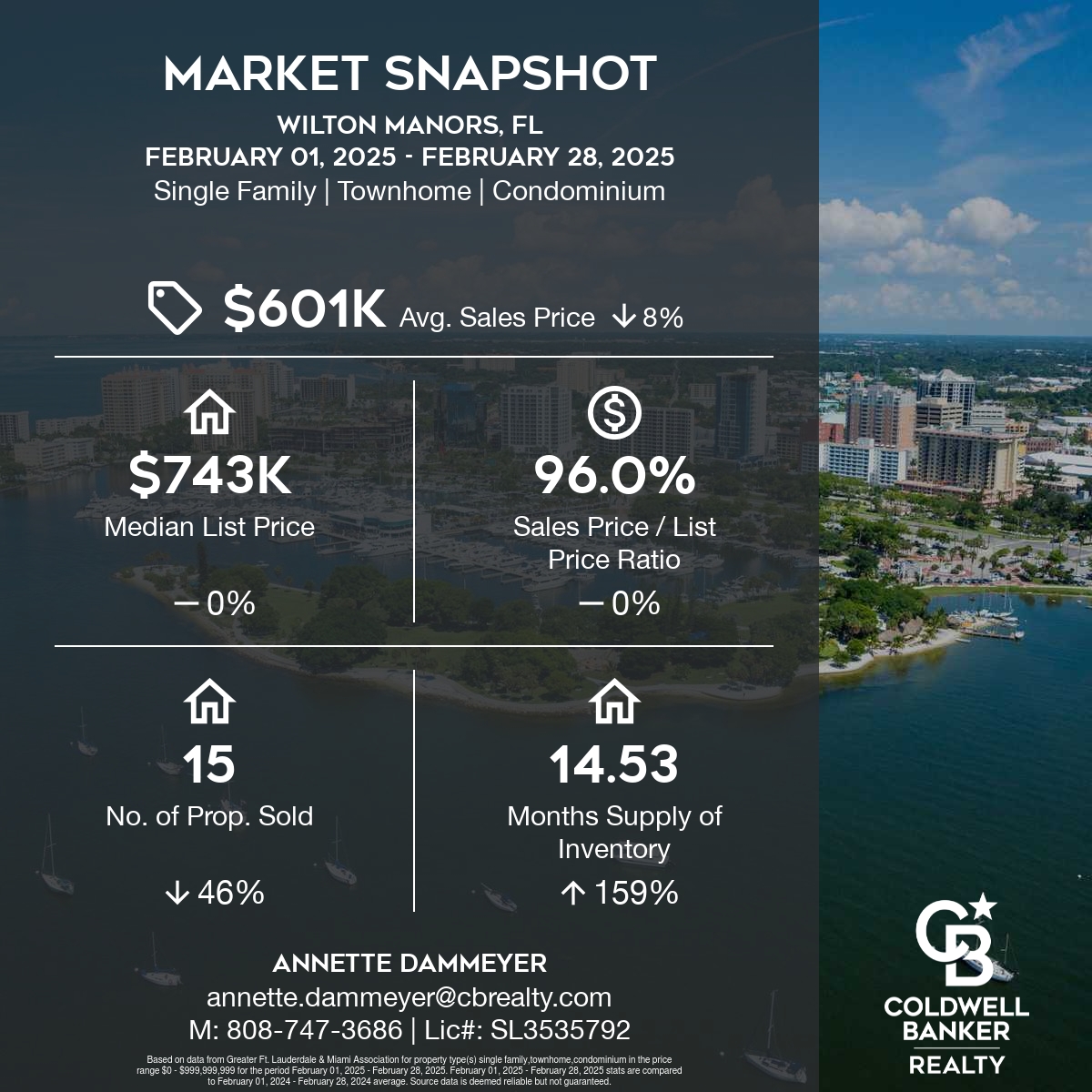
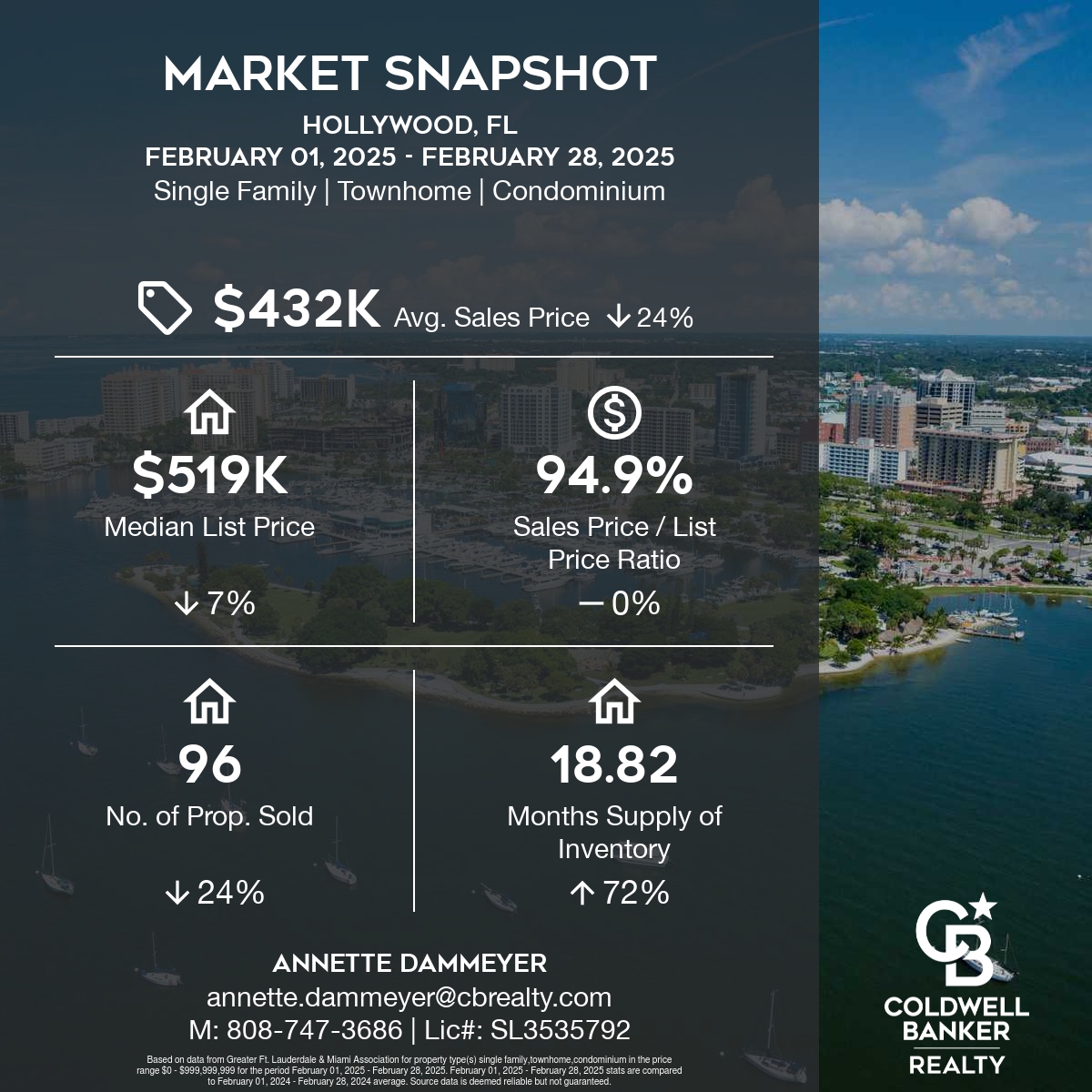
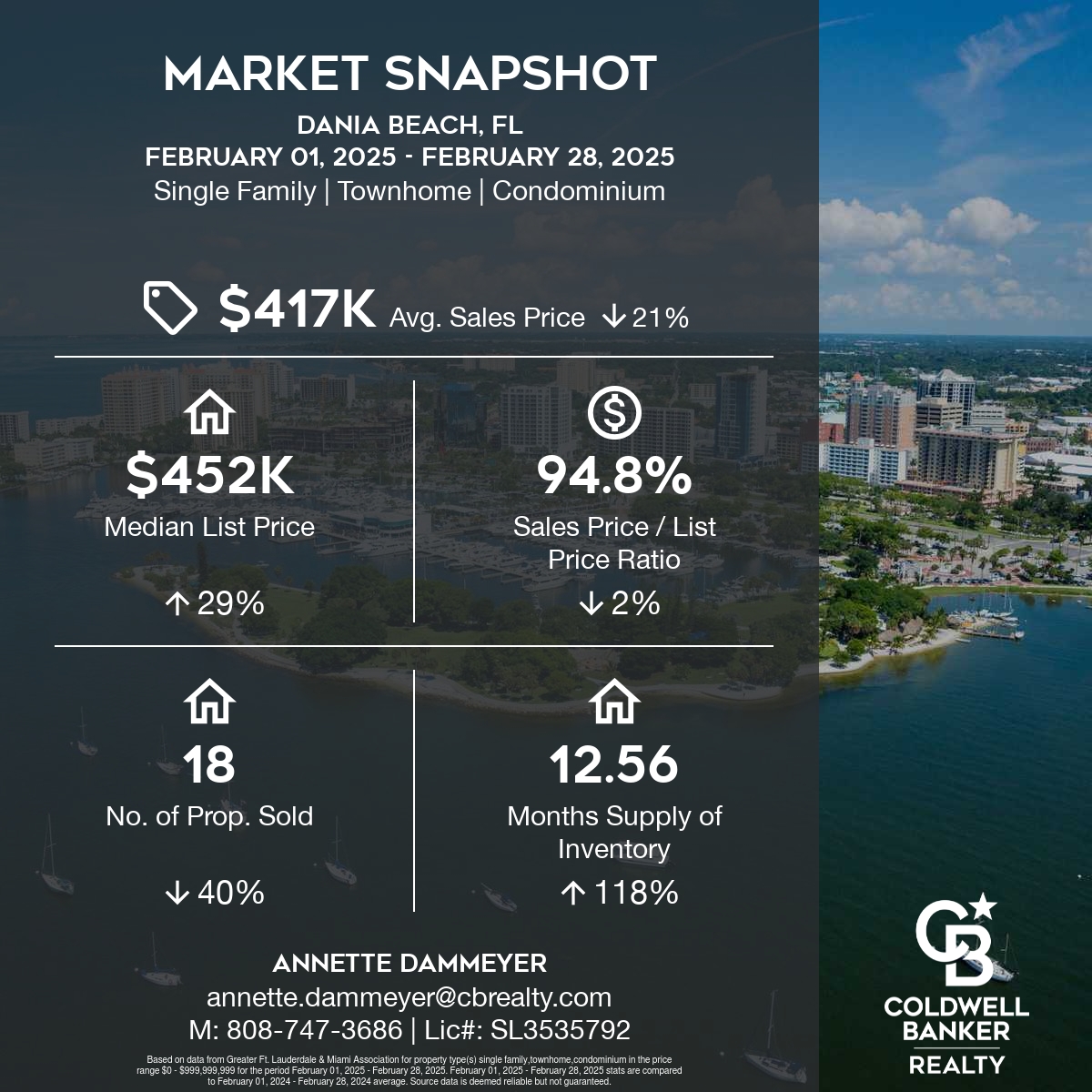
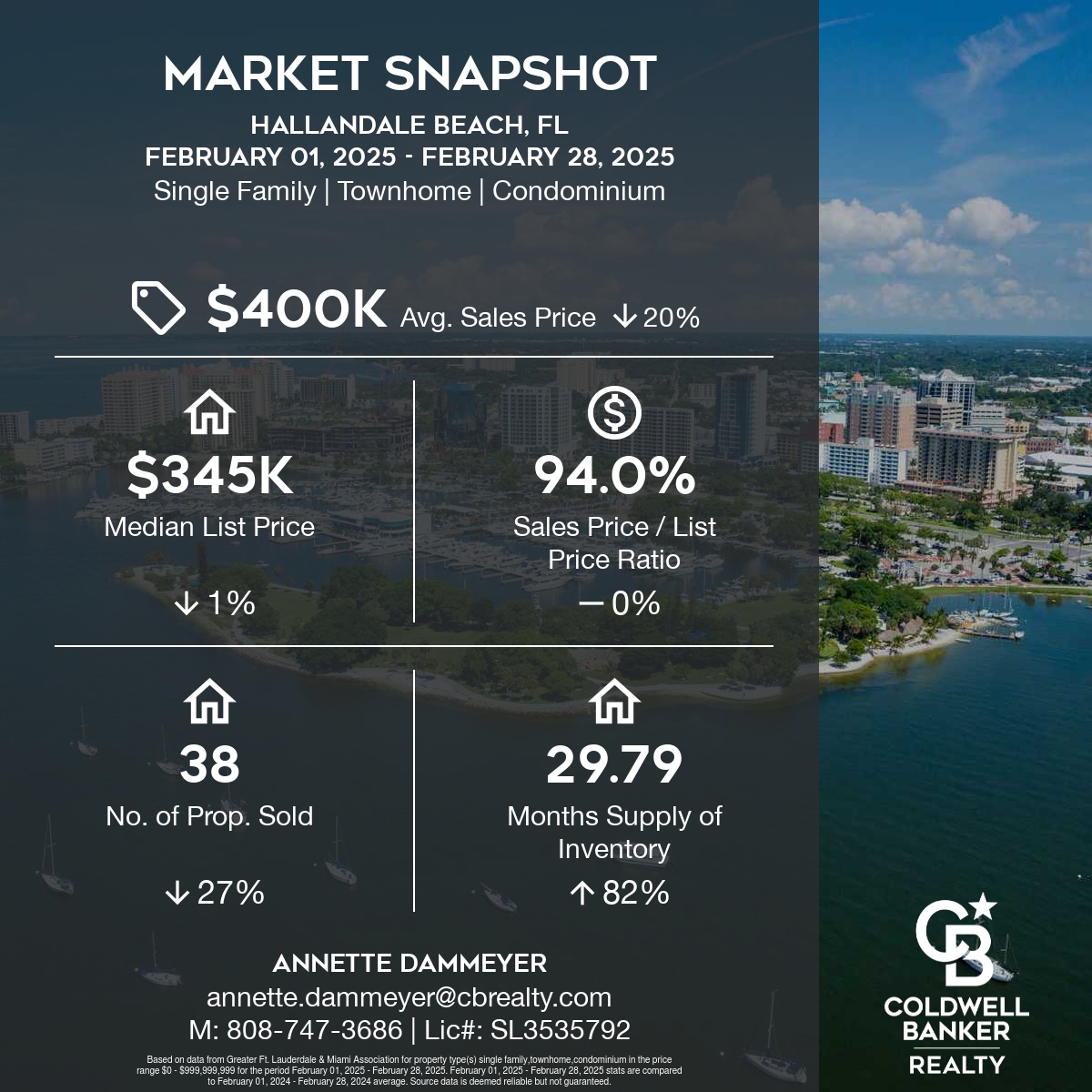
Happy May 1st! Here are the Market Snapshots reflecting the last 30 days for the following areas:
Fort Lauderdale
Wilton Manors
Hollywood
Dania Beach
Hallandale Beach
These take into account all property types (Single Family Homes/Condos/Townhomes).
Please contact me if you would like to be automatically sent updated area Market Snapshots for Fort Lauderdale or another SE Florida city. I am here to help.
Let’s start working together!
Annette Dammeyer, REALTOR
Coldwell Banker Realty
901 E Las Olas Blvd STE 101, Fort Lauderdale, FL 33301
In Florida, wind mitigation inspections are assessments conducted on residential properties to determine how well the structure can withstand wind damage, particularly from hurricanes or strong storms. These inspections are crucial because Florida is prone to severe weather events, and homes need to be resilient against high winds to reduce the risk of damage and lower insurance premiums.
During a wind mitigation inspection, a qualified inspector evaluates various features of the property that contribute to its ability to withstand wind forces. These features may include:
Roof covering: The type and condition of the roof covering material, such as shingles or tiles, are assessed.
Roof geometry: The shape and design of the roof can affect its resistance to wind. Hip roofs, for example, are generally more wind-resistant than gable roofs.
Roof-to-wall connections: The method used to attach the roof to the walls of the structure is examined. Secure connections, such as hurricane straps or clips, can significantly improve the home’s wind resistance.
Roof deck attachment: The material and method used to attach the roof decking to the roof trusses or rafters are evaluated.
Roof shape and design: Certain roof shapes, such as gable or hip roofs, can impact how wind flows over and around the structure.
Opening protection: The presence of impact-resistant windows, shutters, or other protective measures for doors and windows is considered.
Once the inspection is completed, the homeowner receives a wind mitigation inspection report detailing the findings and any recommended improvements. This report can then be submitted to insurance companies to potentially qualify for discounts on windstorm insurance premiums.
To obtain wind mitigation insurance in Florida, follow these steps:
Schedule a wind mitigation inspection: Contact a licensed and certified wind mitigation inspector to conduct an inspection of your property.
Obtain the inspection report: After the inspection, the inspector will provide you with a detailed report outlining the findings and any recommended improvements.
Contact your insurance company: Provide the wind mitigation inspection report to your insurance company and inquire about potential discounts on your windstorm insurance premiums.
Submit the necessary paperwork: Your insurance company may require you to fill out additional paperwork or provide documentation to apply the wind mitigation discounts to your policy.
Review your policy: Once the discounts have been applied, review your insurance policy to ensure that the changes have been made and that you are receiving the appropriate coverage.
By completing a wind mitigation inspection and obtaining wind mitigation insurance, homeowners in Florida can better protect their properties against wind damage and potentially save money on insurance premiums in the long run.
Contact me if you would like referrals for wind inspectors. I am here to help.
Annette Dammeyer, REALTOR
Coldwell Banker Realty
901 E Las Olas Blvd STE 101, Fort Lauderdale, FL 33301
Tax Day is days away, I wanted to share this article if you are finalizing your tax return and could claim these tax-deductible home improvements you may have completed:
By Courtney Klosterman, home insights expert and director of communications at Hippo Insurance
Nearly a quarter of homeowners say they’re planning major renovations this year, and some of those projects may be eligible for a tax deduction. This could help alleviate some of the high costs of homeownership.
Here’s an overview of a few examples of tax-deductible home improvements. As always, your clients should consult a tax professional to understand more about who qualifies for deductions.
Energy-Efficient Upgrades
Homeowners can potentially qualify for an Energy Efficiency Home Improvement Credit of up to $3,200 for energy-efficient improvements made after Jan. 1, 2023. The credit for 2024 is 30% of qualified expenses, but it has certain limits depending on the type of improvement.
Energy efficient upgrades can help reduce energy usage and strain on a home’s critical systems. Upgrades can include structural improvements to the home and the installation of new systems. Here are some sample projects:
A home energy audit may be eligible for a tax credit of up to $150. An auditor will help your clients understand where they’re losing energy and identify health and safety issues in their home. A home energy audit could help save up to 30% on energy bills, according to the Department of Energy. To qualify for the credit, the audit must be conducted by a qualified home energy auditor or someone who is supervised by a qualified auditor. It also must include a written report prepared and signed by a qualified home energy auditor, and the report must be consistent with industry best practices. Find more information in Notice 2023-59.
Install ENERGY STAR’s Most Efficient exterior windows and skylights for a credit of up to $600 based upon eligibility. Replacing windows can help improve insulation and reduce the need to run the HVAC system.
Install biomass stoves that meet ENERGY STAR’s requirements for up to a $2,000 credit. Biomass stoves must have a thermal efficiency rating of at least 75% to qualify, and costs may include labor to install. Biomass can consist of wood pellets and grasses. Although burning biomass can reduce energy usage, insurance experts recommend following wood-burning best practices to help reduce fire and other health risks.
Clean Energy Upgrades
Homeowners could potentially qualify for the Residential Clean Energy Credit if they install new renewable energy properties in their homes. There is no dollar limit for this credit except for fuel cell properties ($500 for each half-kilowatt of capacity).
Using clean energy can help lower reliance on traditional utilities and lower usage and bills. Systems like solar panels are generally easy to maintain, typically only requiring regular cleaning to prevent debris buildup. Here are some sample projects:
Installing a solar water heater can help reduce strain on a traditional water heater and help prolong its life, depending on the type installed. For example, a two-tank solar water heater preheats water before it reaches a traditional water heater. Water heating is typically the second largest energy expense in any home.
Installing geothermal heat pumps can help heat and cool a home more efficiently than traditional heating and cooling systems by transferring heat to the ground rather than generating heat. They tend to be expensive, but according to the Department of Energy, it could potentially see a return on investment for homeowners in five to 10 years depending on available financial incentives.
Battery storage technology helps store excess energy generated from clean energy sources. This gives a home a reliable energy source if the grid goes down.
Historic Home Upgrades
The Federal Historic Rehabilitation Tax Credit could apply if homeowners are undergoing a renovation of a historic home. Historic homes can qualify for this tax credit and other grants since many organizations wish to preserve historical buildings. Taking advantage of these can help lower the financial burden of potential repairs while helping to restore a home’s original beauty. Here are some sample projects:
Upgrading or replacing old pipes may qualify for this tax credit and may be necessary to bring the home up to code and help prevent water damage.
Replacing deteriorated parts in the structure of a home, like posts or beams, may qualify for this credit. Replacement should be visually similar to the original and at least equal to the original’s load-bearing capabilities.
Fully replacing a deteriorating set of stairs using the same or compatible substitute material can make a home safer and also may qualify for this tax credit. The new set of stairs should look similar to the original.
Medically Necessary Upgrades
Homeowners could potentially include medically necessary home upgrades as a part of a medical expense deduction. These include improvements that help make a home more accommodating for a person with a disability, spouse or dependents that live in the home. The amount that can be included in a medical expense deduction depends on how the improvement impacts the home’s value:
If the home’s value increases as a result of the improvement, the medical expense is considered the cost of the improvement minus the increase in home value.
If the home’s value does not increase, it can include the entire cost in the medical expense deduction.
Homeowners can invest in upgrades that can help make their home more accessible and help prevent future maintenance issues (which is especially important if they plan to age in place). For example, lowering kitchen cabinets or installing pull-down shelves can help prevent potential falls and damage when straining for out-of-reach items. Here are some sample projects:
Installing modified smoke detectors and other monitoring systems can help alert those with a disability, like alarms with strobe lights for those who are hard of hearing. Smart monitoring systems, like water leak detectors, can also make it easier to detect issues early in hard-to-reach areas.
Grading, or leveling, the ground can improve accessibility and also help protect a home from water runoff. Grading can help reduce steep slopes and create more accessible pathways for those with mobility challenges. It can also help direct runoff away from a home and prevent standing water.
Bathroom modifications, like grab bars and railings, can help prevent slips and falls. These modifications also can help prevent water splashes that could lead to mold or mildew over time.
Home Office Repairs and Improvements
Homeowners may be eligible to deduct home office repair expenses if they have a dedicated part of their home that they regularly use as their main place of business. The amount that can be deducted depends on whether the project impacts the entire home or just the office. Home office improvements are not tax deductible and would be categorized similarly to capital improvements. Here are some sample projects:
If installing a full home security system, homeowners could potentially deduct the cost of maintaining and monitoring the system that relates to the business part of their home.
Repairing damaged outlets and wiring may be tax deductible and, more importantly, a crucial project to help prevent electrical fires and potential damage to devices. Electrical distribution or lighting equipment (which includes wiring and outlets) was the leading cause of home property damage from 2016 to 2020, according to the April 2023 National Fire Protection Association Home Structure Fires Report.
Replacing home office windows with dual or triple-pane windows to help improve insulation and reduce noise also may be eligible. In addition to the tax benefits, homeowners may find it good for resale value, too, since this can help lower the need for cooling and heating and lower the strain on an HVAC system.
Rental Property Repairs
If homeowners rent out a part of their home, they may be able to deduct repair expenses from the amount of taxable rental income they receive. Limitations apply, such as if they’re renting a space in their current residence.
Maintaining the parts of their home that they rent can help prevent issues from impacting the rest of their home. For example, issues like water leaks or drafts in one area can lead to bigger issues if left unaddressed. Here are some sample projects:
Repairing leaks in a tenant’s bathroom can help prevent long-term mold and mildew issues. Leaks also could impact a home’s structural integrity if drywall or floor joists are left wet over time.
Addressing air leaks in a tenant’s area can help improve insulation, keep them comfortable and lower the need to cool or heat that part of a home. Updating the weather stripping around windows and doors may also apply.
Routinely checking the air vents in a tenant’s part of the home can improve the chances of catching airflow issues early, including dirty vents or leaky ducts. Improved airflow can help boost indoor air quality and regulate temperature throughout your home.
Capital Improvements
Capital improvements are projects that extend a home’s life, add value or refit a home for new uses. These differ from home repairs, which are part of property maintenance but don’t necessarily add value (like fixing a leak). There are some limitations to the types of eligible improvements. For example, homeowners cannot include the cost of installing carpeting if they later remove it. They also cannot include energy-related improvements if they received subsidies or tax credits for those improvements.
Homeowners can add the value of qualifying capital improvements to the cost basis of their home. When they sell their home one day, they may be able to subtract their adjusted cost basis from the sale price. This can help reduce the amount of capital gains taxes they may owe. However, they’ll also need to take into account the tax implications of the capital gains from the sale of their home.
Although homeowners won’t see tax benefits from these improvements right away, these projects can help proactively protect a home by getting ahead of potential issues. Here are some sample projects:
Installing a new HVAC system to replace one that’s over 10 to 25 years old, isn’t running efficiently or is worn beyond repair can help save money and help protect a home. A modern and efficient HVAC system can improve air circulation, maintain temperature control, and help cut down on utility costs in the process.
Installing attic insulation can cost about $1.80 per square foot and can help reduce heating and cooling costs, easing stress on an HVAC system. A better-insulated attic can also help maintain a roof’s temperature and prevent related damage, like the expanding and contracting that can occur with winter ice dams.
Installing water softeners can help reduce calcium and magnesium in the water. This helps reduce buildup in plumbing fixtures and pipes and helps appliances run more efficiently and last longer.
I hope this shared article is useful to you with your tax filing! I am here to help.
Annette Dammeyer, REALTOR
Coldwell Banker Realty
901 E Las Olas Blvd STE 101, Fort Lauderdale, FL 33301
Fort Lauderdale March 2024 real estate statistics have been released!
Fort Lauderdale Area Reports
Single Family Homes
Condominium & Townhouses
Commonly asked questions while reviewing the reports:
What is the difference between “Median Sales Price” and “Average Sales Price”?
Median Sales Price | Price of the “”middle”” property sold -an equal number of sales were above and below this price.
Average Sales Price | Average sales price for all properties sold.
What does “Absorption Rate” mean?
Absorption Rate | Looks at the past year’s monthly supply of inventory. In a normal market there should be a 6 month supply. The higher the rate above 6 the more aggressive a seller has to be with the competition; price and having a picture perfect property.
Single Family Home Area Report listed first, Condo/Townhouses listed second:
Please contact me if you would like to be automatically sent updated area market reports for Fort Lauderdale or another SE Florida city. I am here to help.
Let’s start working together!
Annette Dammeyer, REALTOR
Coldwell Banker Realty
901 E Las Olas Blvd STE 101, Fort Lauderdale, FL 33301
In Florida, a four-point inspection is a specialized assessment of four key systems in a residential property: the roof, electrical system, plumbing system, and HVAC (heating, ventilation, and air conditioning) system. This inspection is often required by insurance companies for homeowners seeking or renewing insurance policies, particularly for older homes.
Here’s why each component is assessed:
Roof: The inspector evaluates the age, condition, and integrity of the roof covering material (such as shingles or tiles), signs of damage, and any areas of concern like leaks or missing shingles. Roofs are crucial for protecting the home from weather elements, and their condition affects insurance risk.
Electrical System: This part of the inspection focuses on the electrical wiring, panel, and fixtures. The inspector looks for outdated wiring, overloaded circuits, faulty connections, and potential fire hazards. Ensuring the electrical system is up to code and safe reduces the risk of fire, which is a significant concern for insurance companies.
Plumbing System: The plumbing inspection assesses the condition of pipes, fixtures, and water heaters. The inspector checks for leaks, corrosion, water pressure issues, and signs of water damage. A properly functioning plumbing system is essential for preventing water damage and maintaining the integrity of the home’s structure.
HVAC System: The inspection of the heating, ventilation, and air conditioning system involves checking for proper installation, age, condition, and efficiency. Inspectors look for signs of wear and tear, malfunctioning components, and potential safety hazards. A well-maintained HVAC system ensures comfort and safety for occupants and reduces the risk of damage or accidents.
The importance of a four-point inspection for home insurance lies in risk assessment. Insurance companies need to understand the condition of these critical systems to determine the level of risk associated with insuring the property. Older homes, in particular, may have outdated or deteriorating systems, which could pose higher risks for insurance providers.
By requiring a four-point inspection, insurance companies can:
Assess Risk: Inspectors provide detailed information about the condition of the home’s key systems, allowing insurance companies to assess the level of risk accurately.
Prevent Claims: Identifying potential issues before they become major problems helps prevent costly insurance claims. For instance, discovering a leaky roof or faulty wiring early on allows homeowners to address these issues proactively, reducing the likelihood of future damage.
Determine Premiums: The results of the inspection can influence insurance premiums. Homes with well-maintained systems may qualify for lower premiums, while those with significant issues may face higher costs or require repairs before coverage can be approved.
In summary, a four-point inspection in Florida is a vital tool for insurance underwriting, providing insurers with essential information about the condition of a home’s roof, electrical, plumbing, and HVAC systems. By identifying potential risks and ensuring the property meets safety standards, insurers can offer appropriate coverage and premiums while helping homeowners maintain a safe and secure living environment.
All 4-Point Inspection Forms must be completed and signed by a verifiable Florida-licensed inspector.
Contact me today for any real estate assistance you may need, including resources and referrals for home inspections. I am here to help!
If you are ready to market and sell your property, let’s make an appointment to discuss how to get it listed and sold. I am committed to my clients. Contact me if you are looking for a dedicated agent who will:
– Call you back and respond to your messages and emails PROMPTLY
– Keep you informed throughout the process
– Negotiate on your behalf with integrity
– Diligently work to sell your property
– Communicate with all parties with respect and resourcefulness
– Utilize over a decade of experience to keep the process as streamlined and stress-free as possible
Let’s start working together!
Annette Dammeyer, REALTOR
Coldwell Banker Realty
901 E Las Olas Blvd STE 101, Fort Lauderdale, FL 33301