
 Facebook
 X
X
 Pinterest
 Copy Link
September 2025 ~ Navigating Today’s Market with Resilience & Autumn Comforts

September 2025 Newsletter
Hello September! As the summer sun begins to mellow and we ease into the rhythm of fall, I’m excited to welcome you to this month’s newsletter—a space where real estate meets lifestyle, and community comes first.
In this issue, we’re diving into the unique challenges and opportunities facing Hollywood, FL homeowners today, with practical insights to help you stay confident and informed. This information also applies to other SE Florida cities. We’re also stirring up some seasonal inspiration with autumn drink ideas that bring cozy vibes to your gatherings, plus a look at multi-use furniture that blends style with smart living—perfect for maximizing space without sacrificing charm. And for those thinking ahead, we’re spotlighting the sustainable home features today’s buyers are actively seeking—because eco-conscious upgrades aren’t just good for the planet, they’re great for your property value too. As always, you’ll find my monthly local market reports included to keep you up to date on the latest trends and shifts in our South Florida real estate landscape. Here’s to a season of fresh ideas, warm connections, and homes that truly reflect the lives we love. Kind regards, |
|||||||||||
National Stories
|
|||||||||||
|
Real Estate Updates | Area Reports | July 2025
|
|||||||||||
Autumn is a great time for a coffee walk and talk! If you have any questions or simply want to discuss your home options, I’m here for you. Let’s have a conversation tailored to your goals, and map out the next steps together. I’m here to help and guide you every step of the way with experience and integrity.CONTACT ANNETTELet’s start working together!
Annette Dammeyer, REALTOR®, ABR®, AHWD® Coldwell Banker Realty 901 E Las Olas Blvd STE 101, Fort Lauderdale, FL 33301 808.747.3686 SL 3535792
|


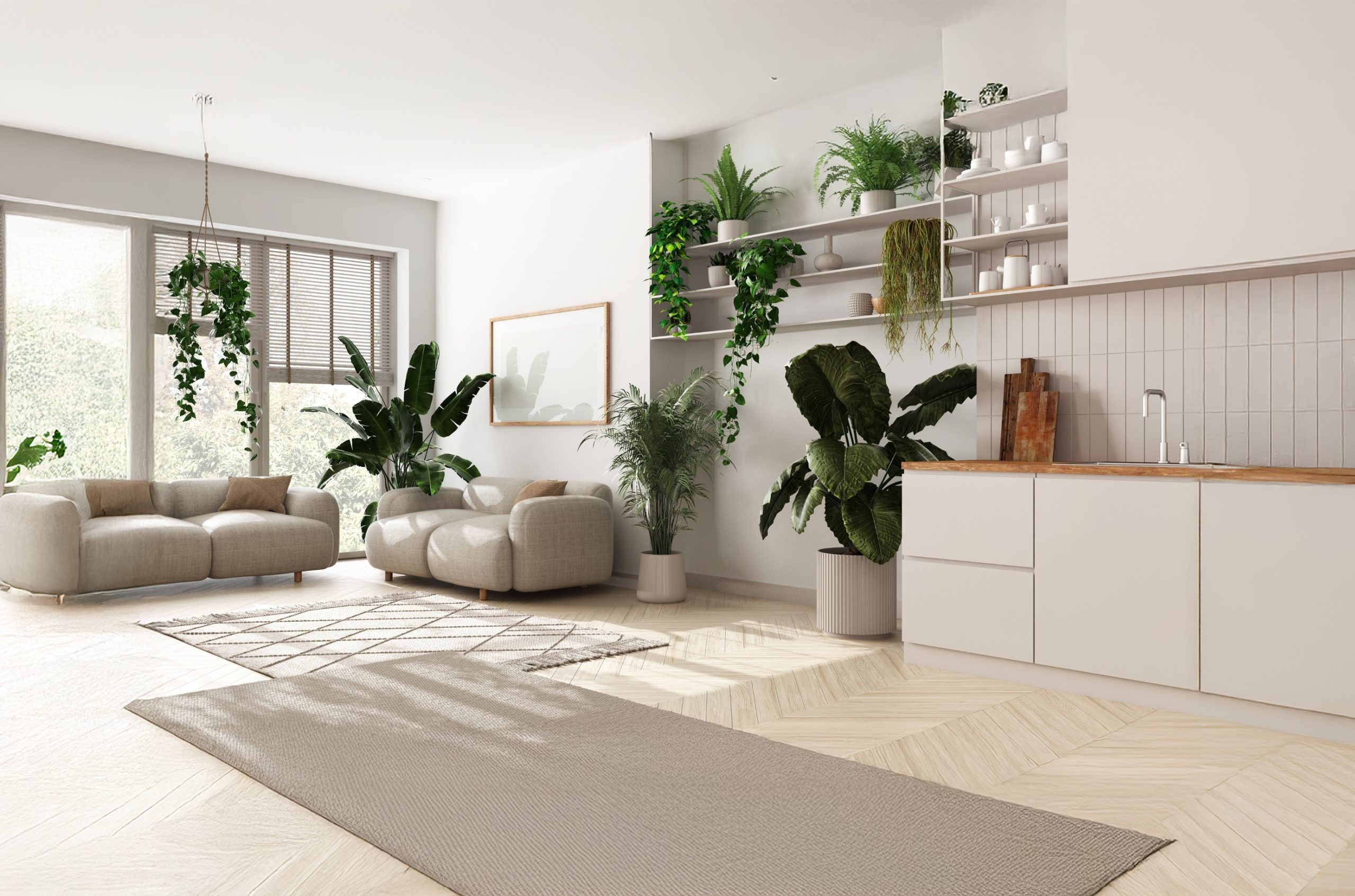

Hollywood Homeowners: Navigating Challenges, Building Resilience

🌴 Hollywood Homeowners Sound the Alarm: What You Need to Know & How to Protect Your Property
Hollywood, Florida may be known for its breezy boardwalks and waterfront charm, but behind the palm trees, many homeowners are facing a storm of financial and structural challenges. From soaring insurance premiums to surprise condo assessments, the landscape is shifting—and fast. If you own property in Hollywood, here’s what’s happening, why it matters, and how to stay ahead of the curve.
💸 1. Insurance Costs Are Among the Highest in the Country
Florida’s property insurance market is evolving. Rates have jumped 34% statewide, and coastal homeowners are seeing premiums of $5,000–$8,000+ annually—with some projections nearing $15,000 by 2025.
Why it matters:
• Many insurers have pulled out of Florida, reducing competition.
• Climate risks and litigation have driven up costs.
• Homeowners are struggling to find affordable, comprehensive coverage.
What you can do:
✅ Shop around: Use platforms like Policygenius or Insurify to compare quotes. FLOIR.com has state resources as well.
✅ Mitigate risk: Install storm shutters, reinforce roofing, and document upgrades—these can reduce premiums.
✅ Explore Citizens Insurance: Florida’s state-backed insurer may be a fallback option if private coverage is unavailable.
✅ Consult a local insurance advisor: They can help navigate exclusions and find hidden savings. Note: I have insurance advisor referrals for you if needed.
🧾 2. Special Assessments & Condo Reform Fallout
Florida has implemented significant condo reform following the Surfside collapse, impacting structural integrity, financial transparency, and reserve requirements for condominium associations. These reforms have implications for special assessments, which are charges levied on unit owners in addition to regular fees, often to cover unexpected costs or major repairs.
Why it matters:
• Post-Surfside safety reforms require costly upgrades.
• Boards may push assessments without full transparency.
• Owners feel blindsided by sudden financial burdens.
What you can do:
✅ Attend board meetings: Stay informed and ask questions.
✅ Review your condo docs: Understand your rights and obligations.
✅ Join or form owner coalitions: Collective voices can influence board decisions.
✅ Consult legal aid: Organizations like Legal Aid Service of Broward County offer guidance.
🧱 3. Aging Infrastructure & Mandatory Recertifications
The 40-year building recertification process is revealing structural issues that require expensive repairs. Some boards are pushing for upgrades that go beyond safety requirements.
Why it matters:
• Repairs can trigger assessments or loan obligations.
• Delays or noncompliance can lead to fines or evacuation orders.
• Owners are questioning the necessity and scope of proposed work.
What you can do:
✅ Request engineering reports: Ask for third-party evaluations.
✅ Challenge excessive upgrades: Push for cost-effective solutions.
✅ Explore financing options: Look into PACE programs or low-interest loans for necessary repairs.
✅ Stay proactive: Schedule your own inspections to anticipate future needs.
🗣️ 4. Trust & Governance
Many homeowners feel disconnected from their boards, citing poor communication and lack of transparency.
Why it matters:
• Mismanaged funds and opaque decisions erode trust.
• Boards may not reflect the community’s best interests.
• Owners are demanding accountability.
However, there have been recent changes to be aware of: Florida has implemented new legislation, primarily House Bill 1203, impacting Homeowners Associations (HOAs) with the goal of enhancing transparency and accountability.
Key Changes in Florida HOA Documentation Laws:
- Online Posting of Governing Documents:
HOAs with 100 or more parcels must make their governing documents (including the Declaration, Articles of Incorporation, Bylaws, and Rules and Regulations) accessible online through a website or mobile application, starting January 1, 2025.
- Financial Transparency:
HOAs with at least 1,000 parcels are required to prepare audited financial statements annually, regardless of total revenue. Smaller associations must also provide detailed financial reports based on revenue thresholds.
- Access to Official Records:
HOAs must provide access to official records within 10 business days of a written request from a parcel owner. Official records include meeting minutes, financial reports, and other documents related to the HOA’s operation.
What you can do:
✅ Run for a board seat: Bring fresh perspective and transparency.
✅ Use platforms like HOA Express: Improve communication and document access.
✅ Request audit reports: Ensure financial clarity.
✅ Educate your neighbors: Host informal meetups or share resources to build community awareness.
🌟 Final Thoughts: Empowerment Starts with Information
Hollywood homeowners are resilient, but navigating these challenges requires vigilance, collaboration, and smart planning. Whether you’re in a single-family home or a high-rise condo, staying informed and proactive is your best defense.
As a longtime real estate professional and a neighbor here in the Hollywood area, I know how overwhelming these changes can feel. But you’re not alone—and you’re not powerless. Whether you’re navigating rising insurance costs, condo board decisions, or planning for long-term property health, knowledge is your greatest asset.
If you have questions about your home’s value, want help interpreting your condo docs, or simply need a sounding board, I’m here. Let’s turn uncertainty into clarity, and challenges into smart, confident moves.
📩 Feel free to reach out—whether it’s for a consultation, a coffee, or a conversation. Together, we can protect what matters most.
CONTACT ANNETTE
Let’s start working together!

Annette Dammeyer, REALTOR®, ABR®, AHWD®
Coldwell Banker Realty
901 E Las Olas Blvd STE 101, Fort Lauderdale, FL 33301
808.747.3686
SL 3535792
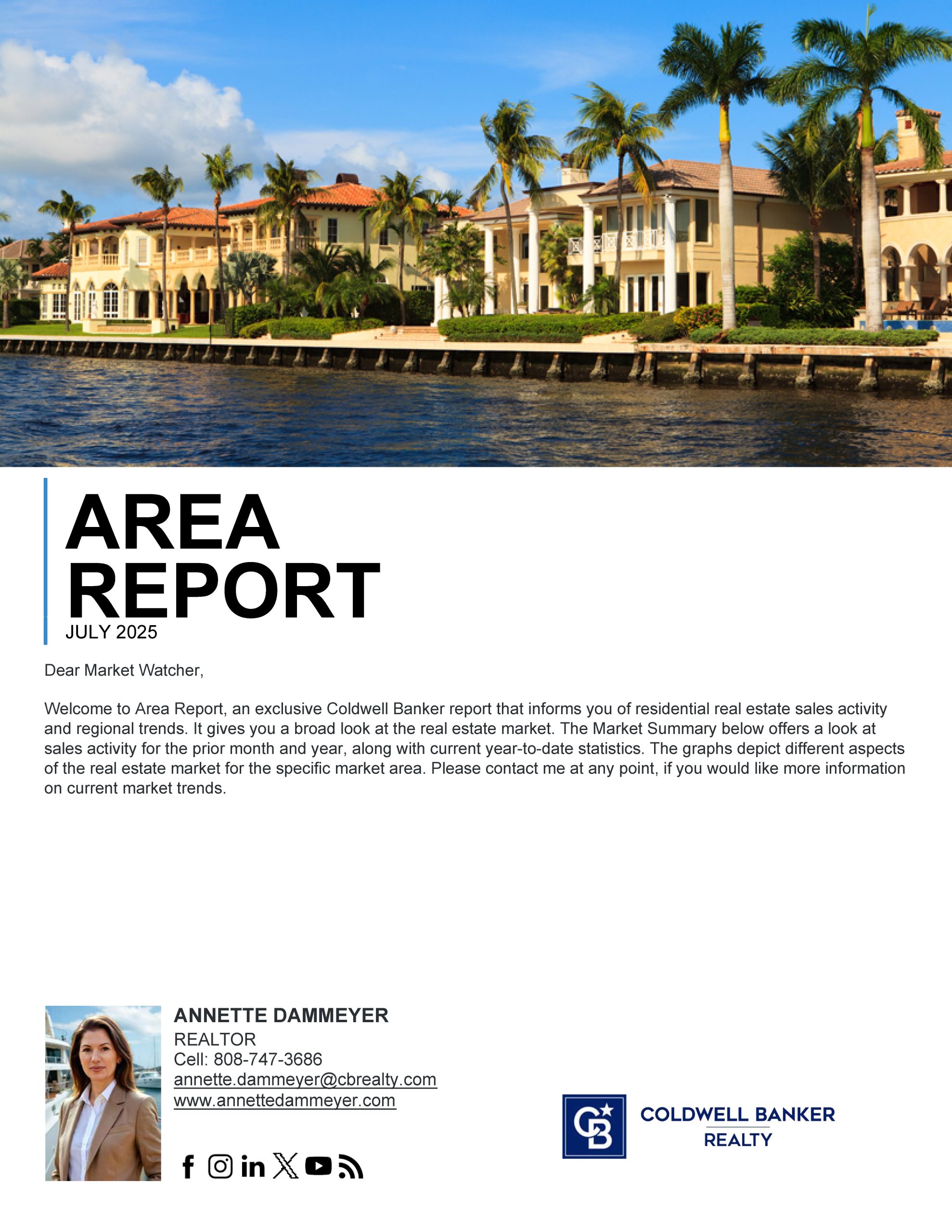
Fort Lauderdale July 2025 Area Report
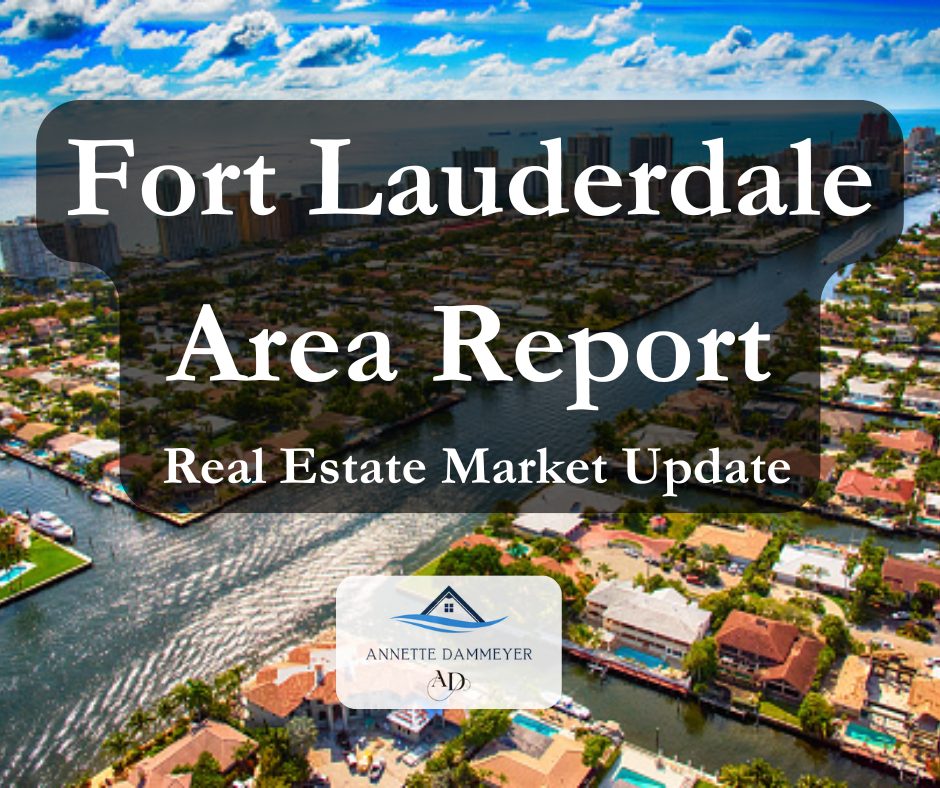
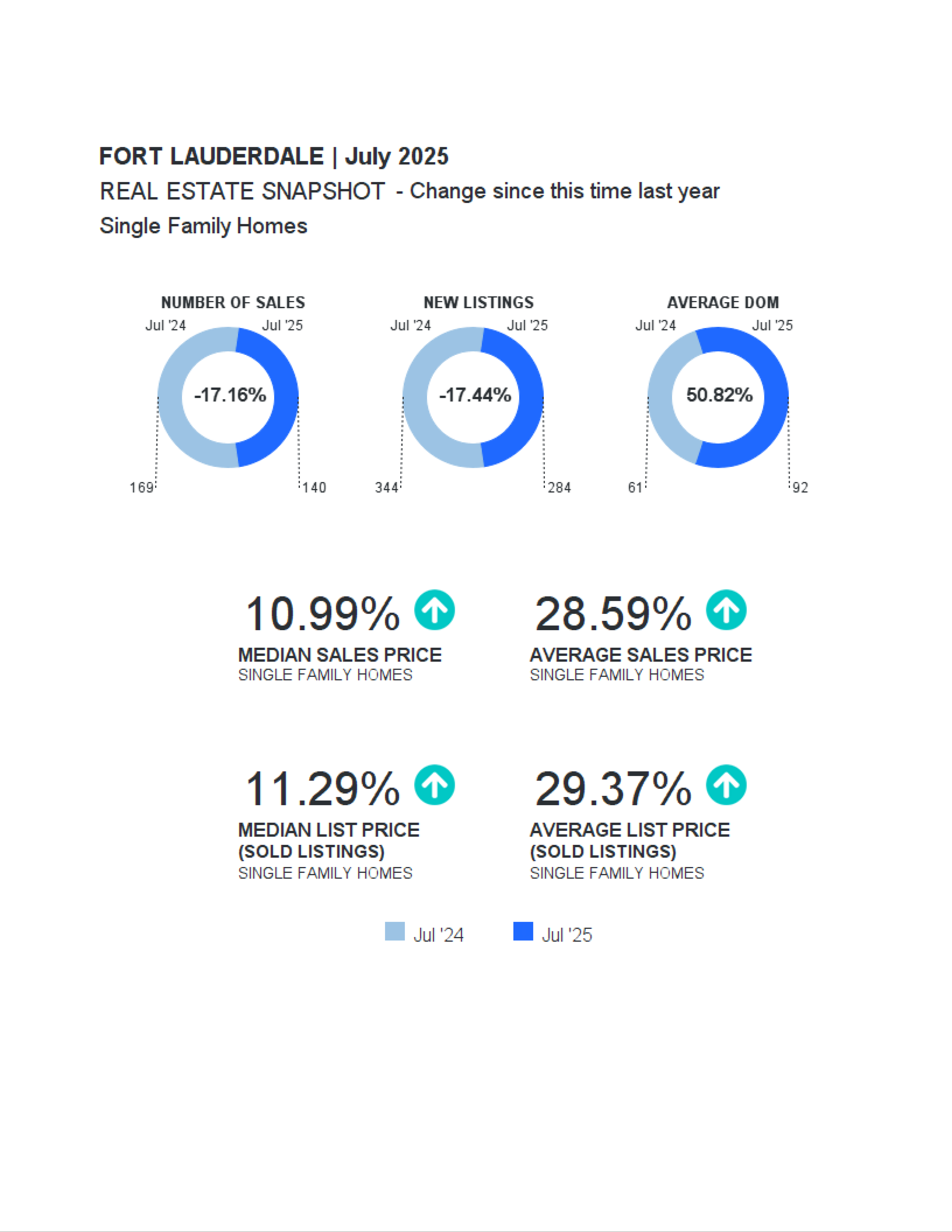
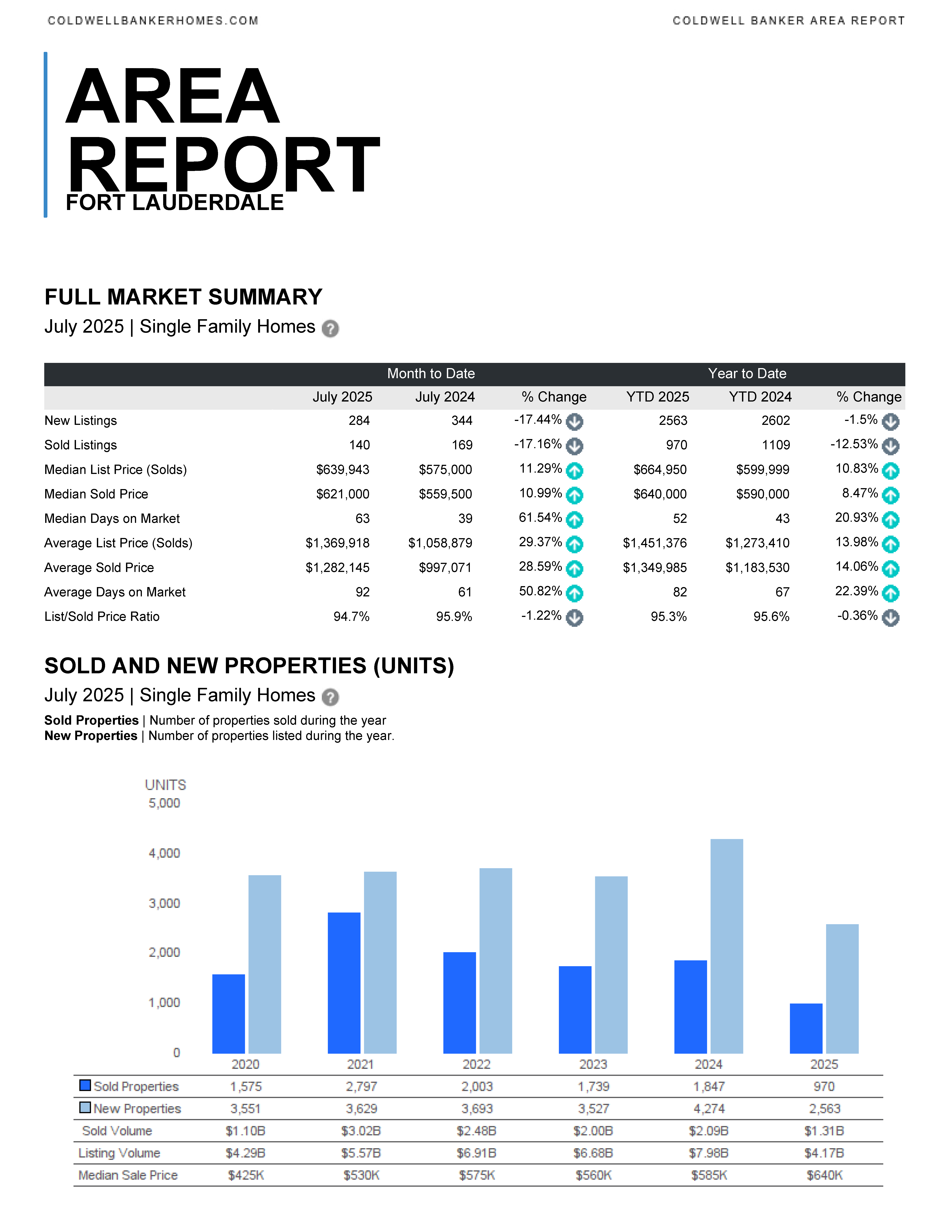
Fort Lauderdale July 2025 real estate statistics have been published.
Fort Lauderdale Area Reports
Single Family Homes
Condominium & Townhouses
Fort Lauderdale Real Estate Market Overview
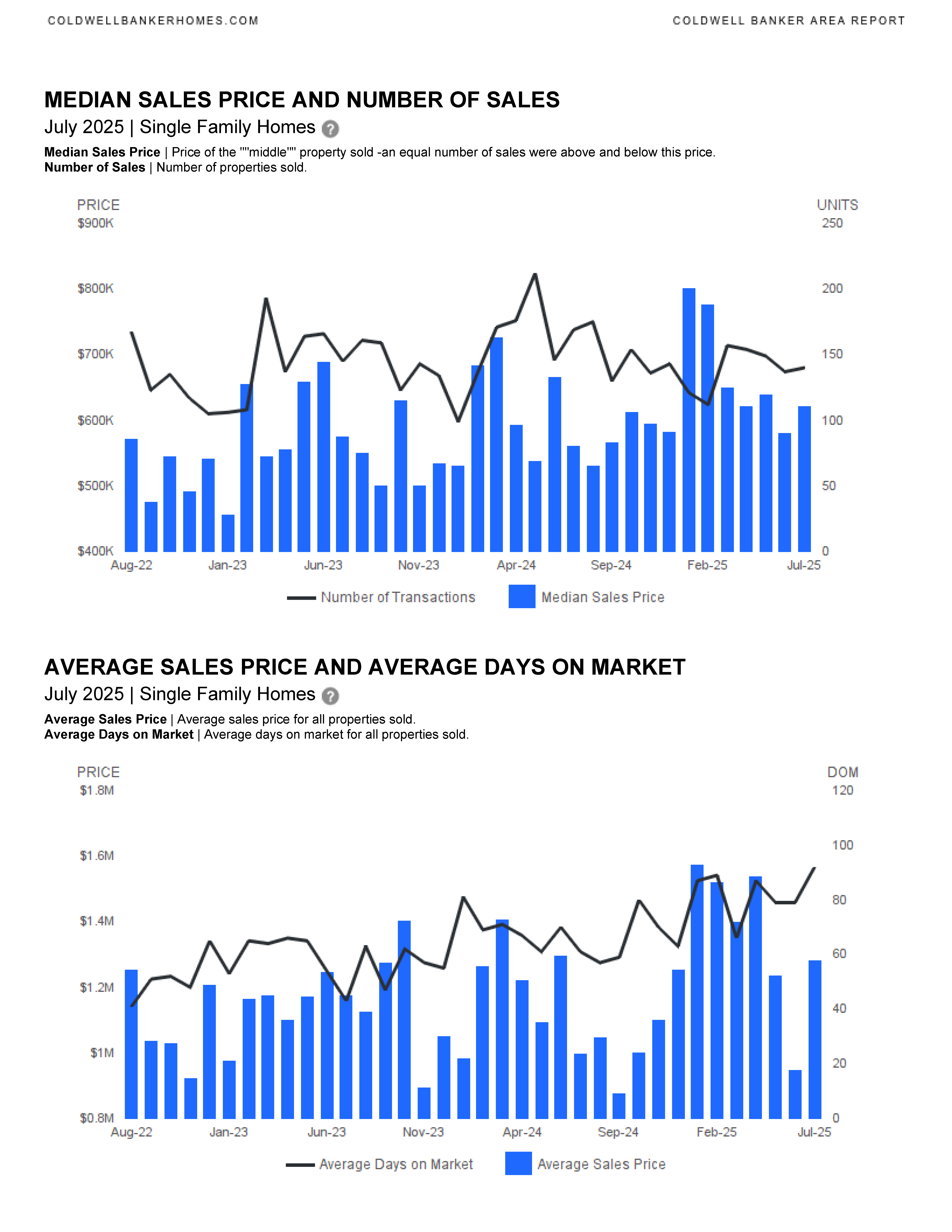
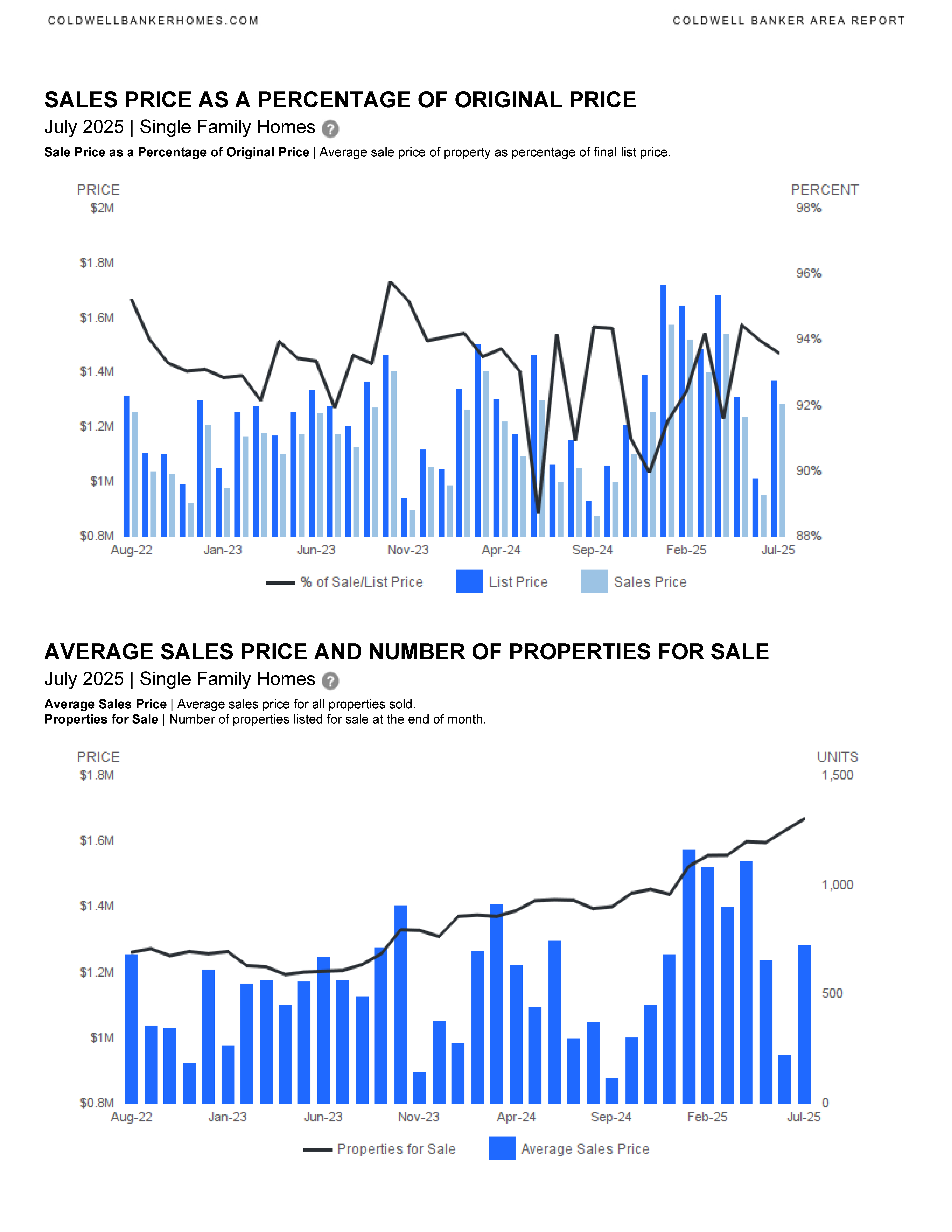
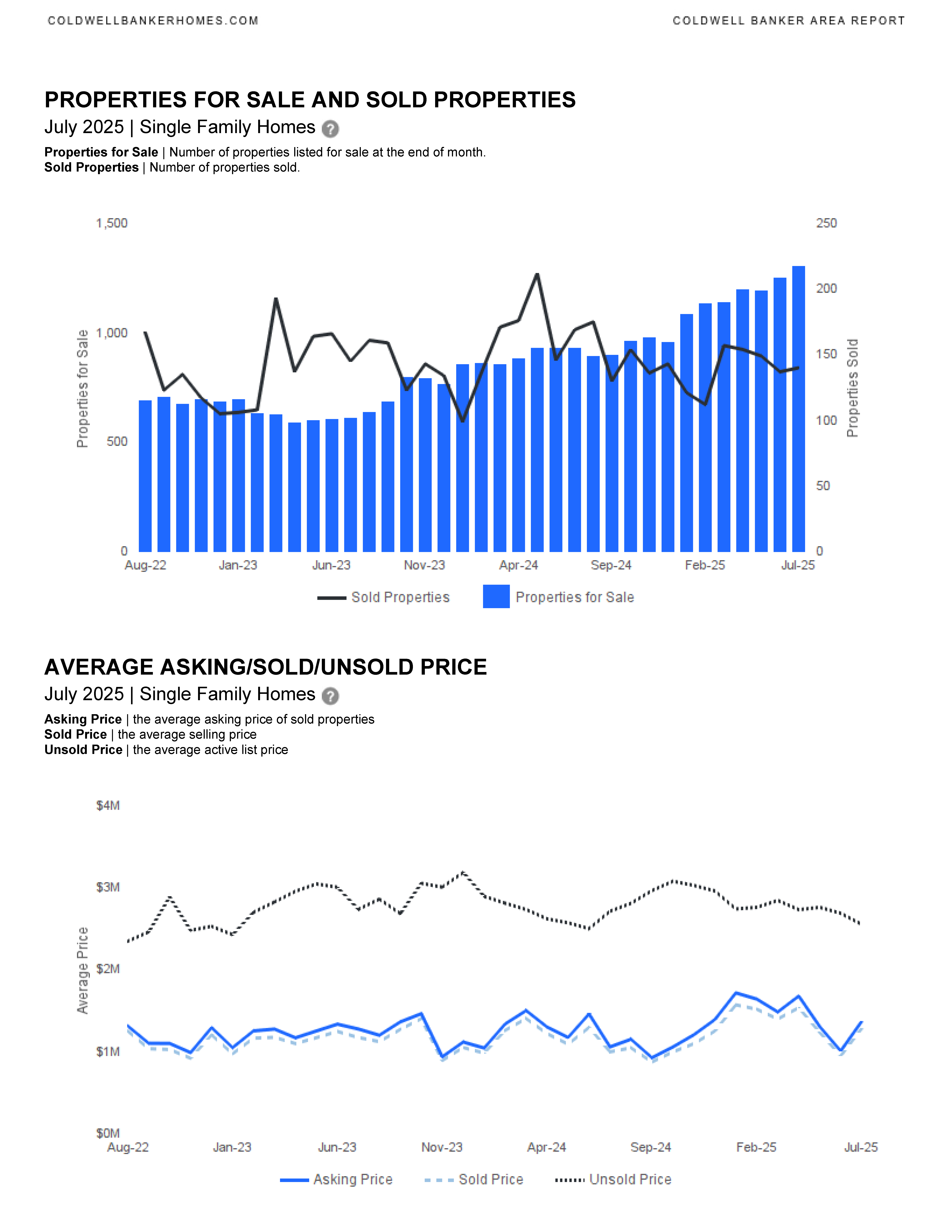
The July 2025 Area Report provides insights into the residential real estate market trends in Fort Lauderdale, focusing on single-family homes and condo/townhouse properties.
- Single Family Homes Performance
- Number of sales decreased by 17.16% year-to-date, totaling 1,109 sales.
- New listings fell by 17.44% month-to-date, with 344 new listings.
- Median sales price increased by 10.99% year-to-date, reaching $640,000.
- Average sales price rose by 28.59% month-to-date, now at $1,282,145.
- Average days on market increased by 50.82% month-to-date, averaging 92 days.
Condo/Townhouse Market Insights
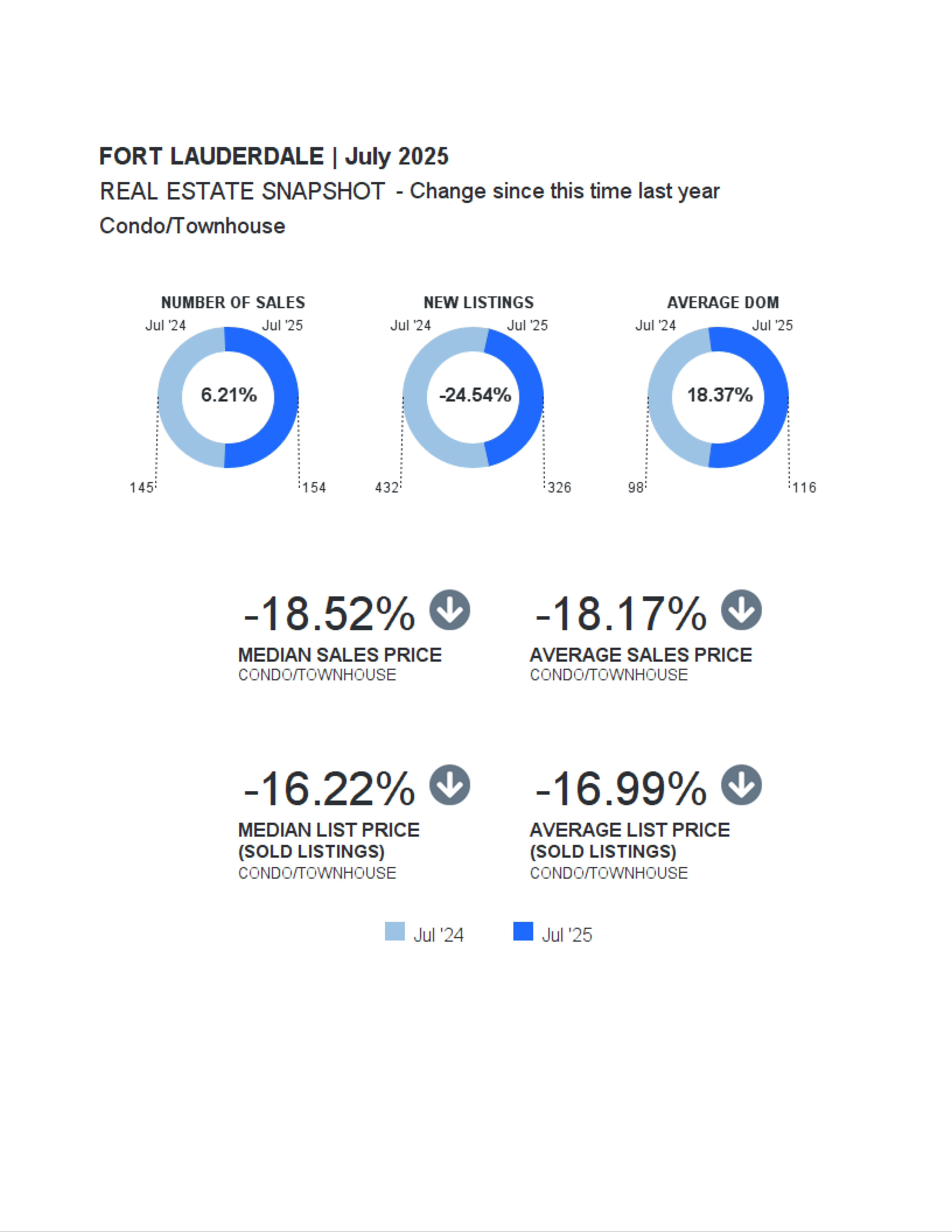
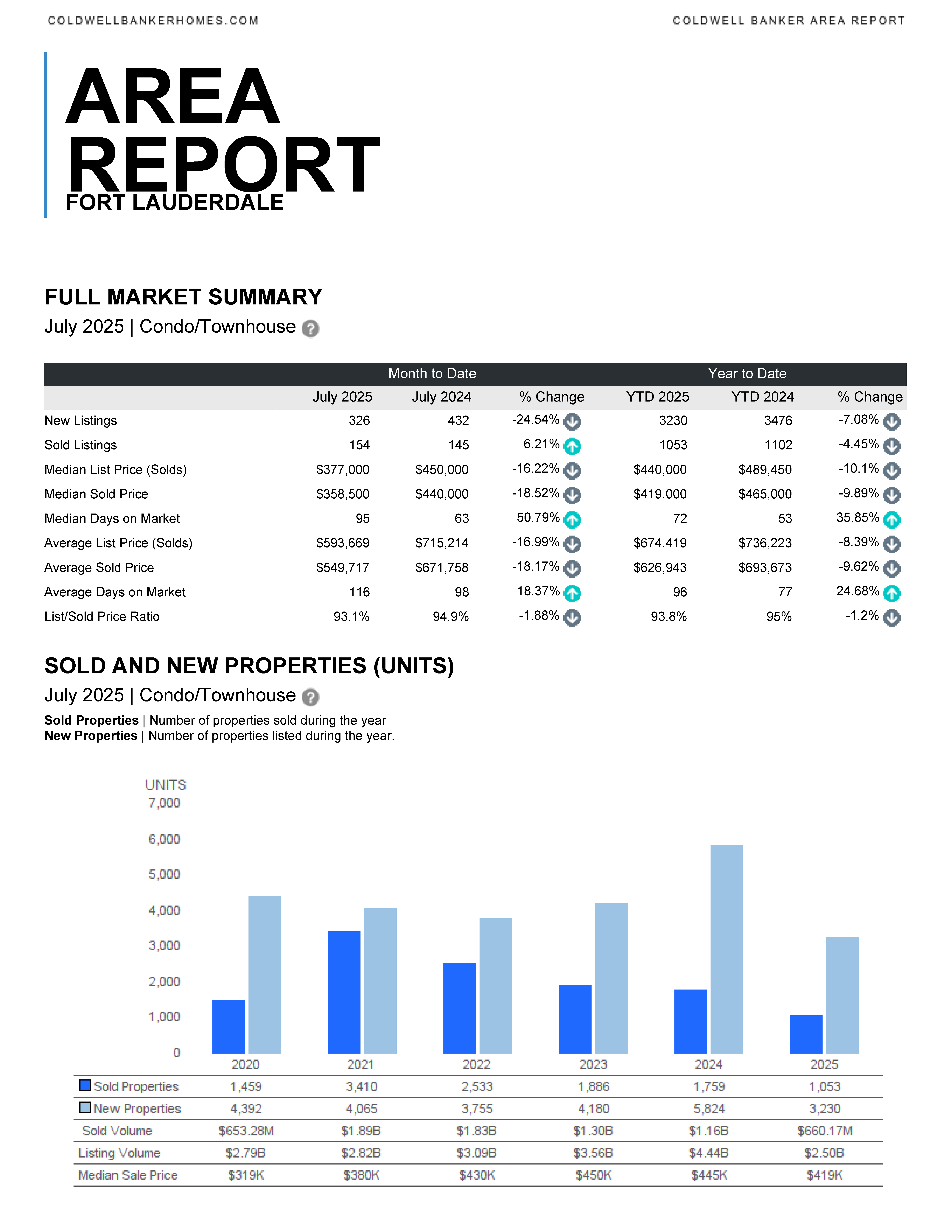
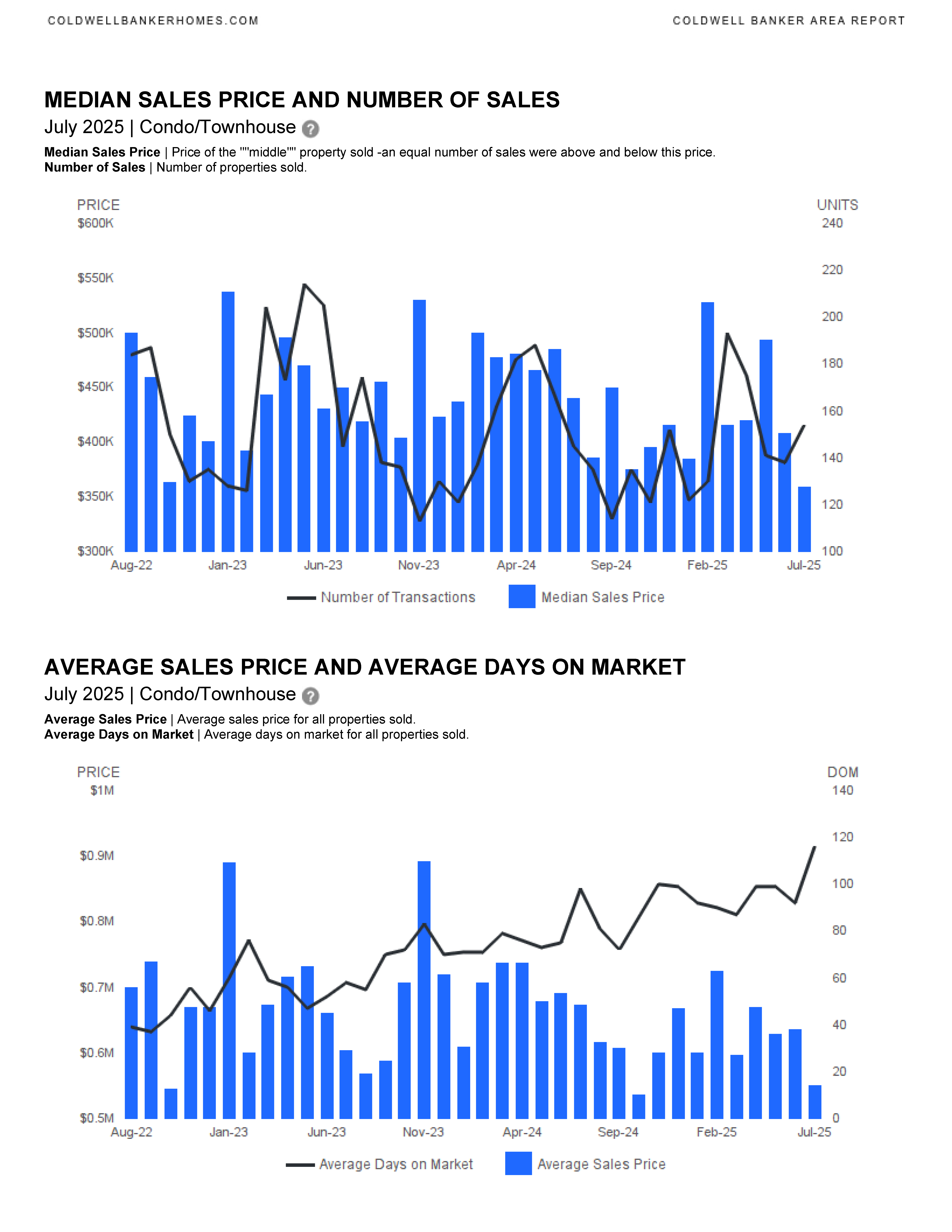
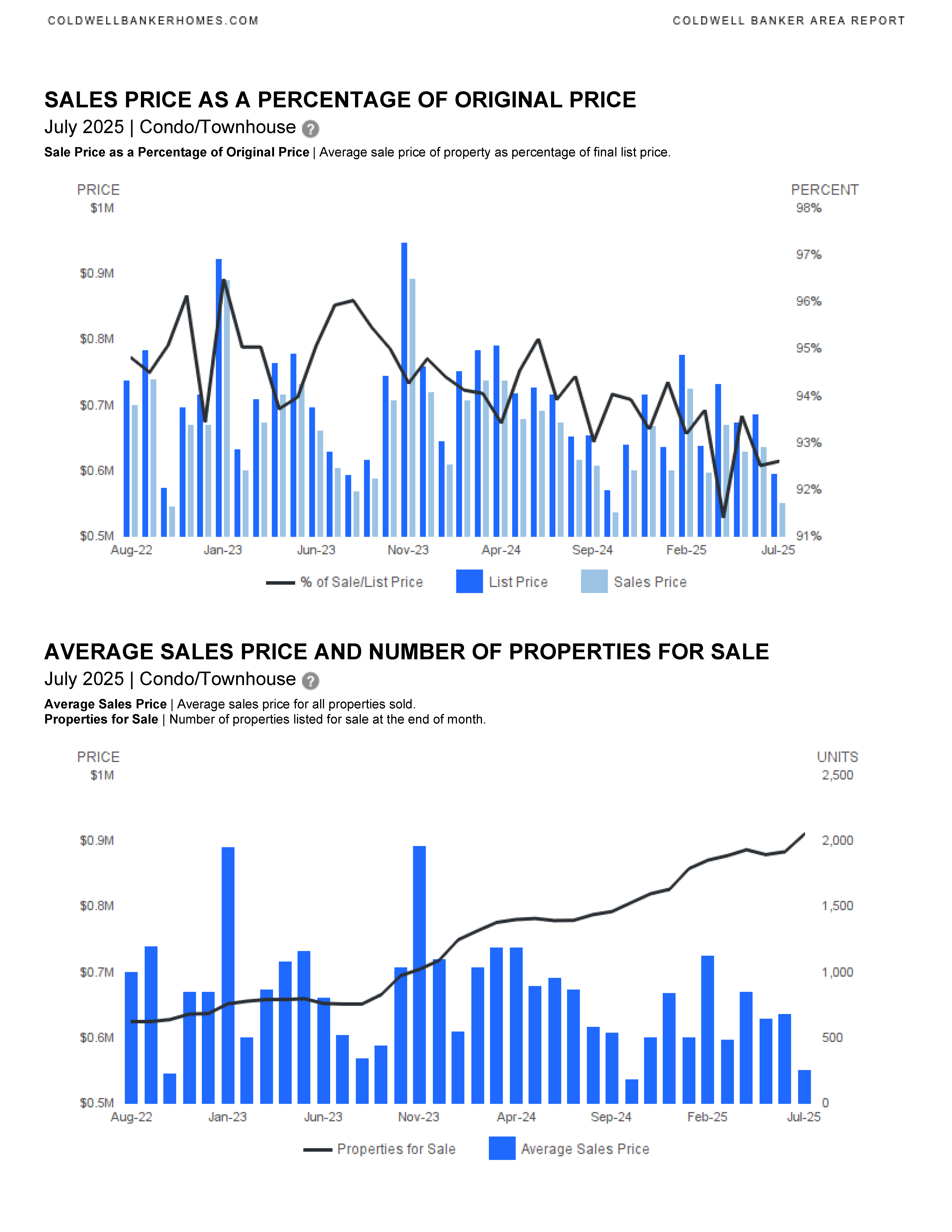
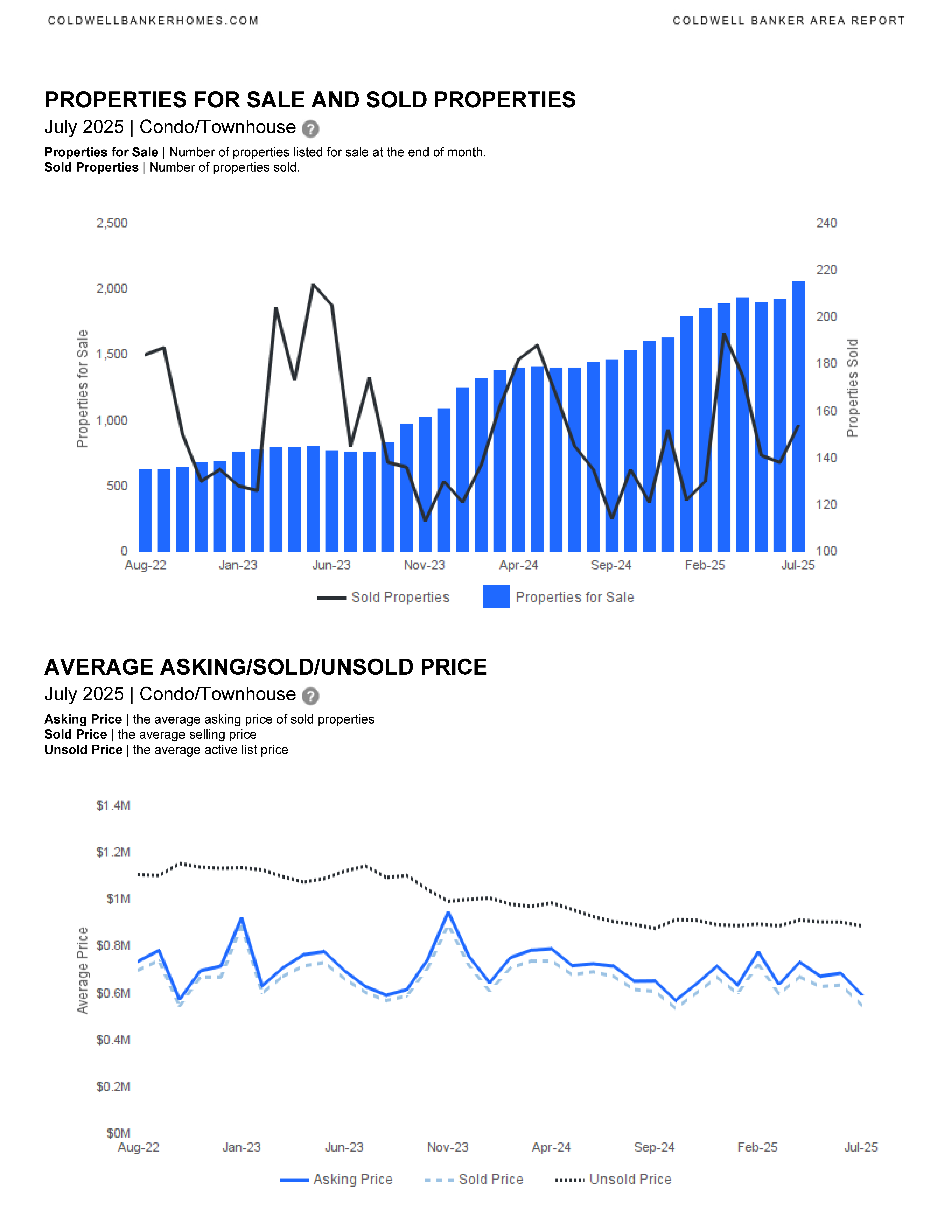
The report highlights a decline in sales and prices for condo/townhouse properties in Fort Lauderdale as of July 2025.
- Condo/Townhouse Sales Trends
- Number of sales increased by 6.21% month-to-date, totaling 145 sales.
- New listings decreased by 24.54% month-to-date, with 432 new listings.
- Median sales price dropped by 18.52% year-to-date, now at $358,500.
- Average sales price decreased by 18.17% month-to-date, currently at $549,717.
- Average days on market increased by 18.37% month-to-date, averaging 116 days.
Key Market Statistics and Comparisons
The report provides comparative statistics for both single-family homes and condo/townhouse properties, illustrating market dynamics.
- Comparative Market Data
- Single-family homes saw a median list price increase of 11.29% year-to-date.
- Condo/townhouse median list price decreased by 16.22% month-to-date.
- List/sold price ratio for single-family homes is 94.7%, while for condos/townhouses it is 93.1%.
- The average days on market for single-family homes is 92 days compared to 116 days for condos/townhouses.
Overall Market Trends and Observations
The report concludes with observations on the overall market trends affecting both property types in Fort Lauderdale.
- Market Observations
- The real estate market shows mixed trends with rising prices for single-family homes and declining prices for condos/townhouses.
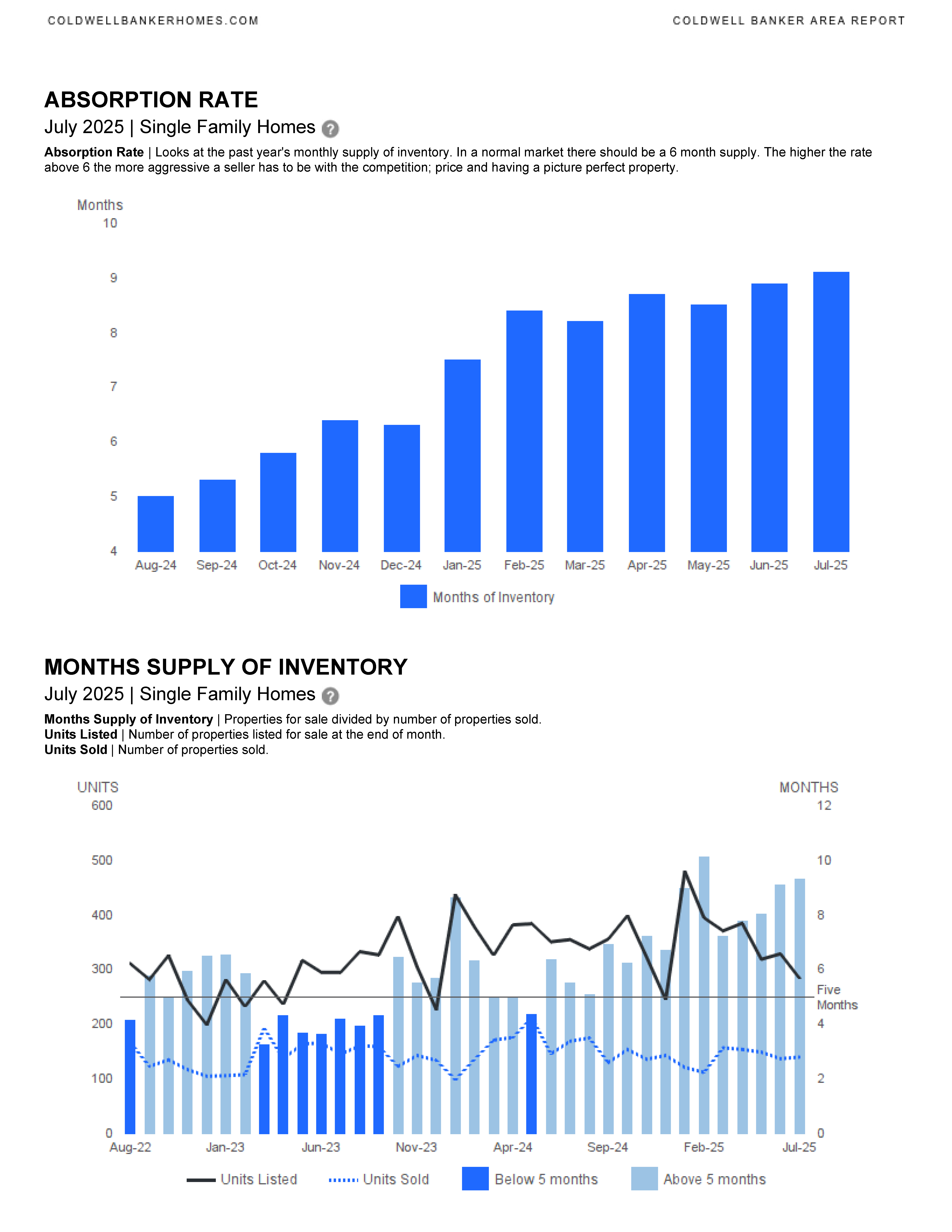
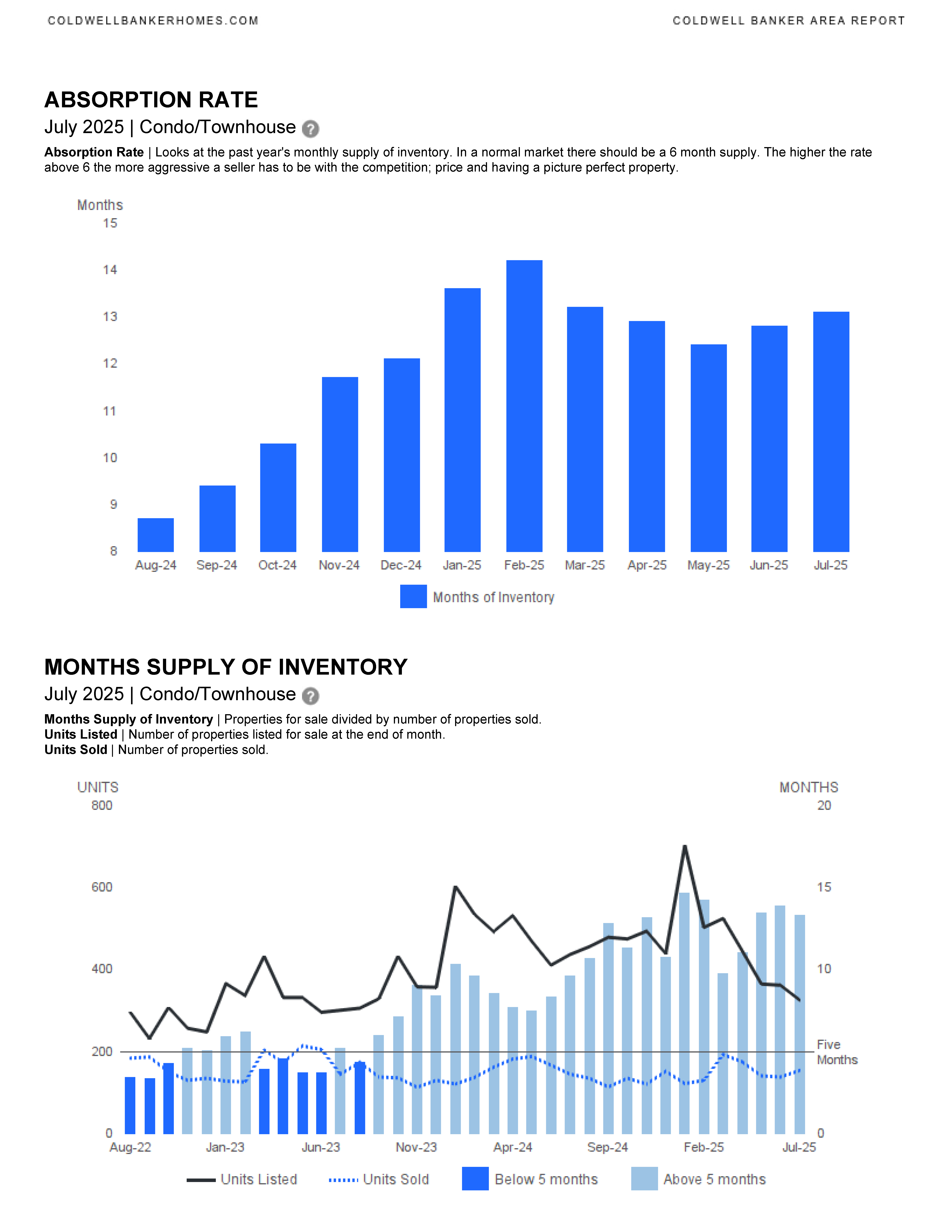
- The absorption rate indicates a competitive market for single-family homes, while condos may require adjustments in pricing strategies.
- The overall inventory levels and sales activity suggest a need for sellers to be proactive in pricing and presentation.

We are entering a new real estate market in SE Florida. This is the time to work with an experienced and knowledgeable real estate professional. Please contact me if you would like to be sent updated market reports for YOUR specific neighborhood, Fort Lauderdale, or another SE Florida city. We can discuss the market, current trends and how we can work together to accomplish your real estate goals. I am here to help.
CONTACT ANNETTE
Let’s start working together!
Annette Dammeyer, REALTOR®, ABR®, AHWD®
Coldwell Banker Realty
901 E Las Olas Blvd STE 101, Fort Lauderdale, FL 33301
808.747.3686
SL 3535792
Home Buyer Checklist

🏡 Your Ultimate SE Florida Home Buyer Checklist
From Dreaming to Closing — A Trusted Agent’s Guide
Buying a home in Southeast Florida isn’t just a transaction—it’s a lifestyle decision. Whether you’re drawn to waterfront views, vibrant communities, or year-round sunshine, this comprehensive checklist will guide you from your first thought to the final signature. As a local real estate expert, I’ve broken down every step with practical advice and tips tailored to our unique market.
✅ 1. Decide to Buy
- Clarify your “why”: Are you relocating, upsizing, downsizing, investing, or seeking a lifestyle upgrade (e.g., waterfront living)?
- Assess financial readiness:
- Review credit score
- Know your estimated PITI. PITI refers to the four components that typically make up your monthly mortgage payment: principal, interest, taxes, and insurance. Here’s a breakdown of what each element represents:
- Principal: This is the portion of your payment that goes towards repaying the actual loan amount you borrowed from the lender to buy the home.
- Interest: This is the cost of borrowing the money, charged by the lender as a percentage of your loan principal.
- Taxes: These are the property taxes levied by your local government, used to fund public services like schools and infrastructure.
- Insurance: This is typically homeowner’s insurance, which protects your home from damage or loss due to events like natural disasters.
- Estimate your total monthly budget (mortgage, taxes, insurance, HOA fees, spending habits, savings)
- Factor in SE Florida-specific costs (flood insurance, hurricane prep)
- Explore timing: Consider seasonal market trends (e.g., winter influx, summer inventory shifts) and your specific timing needs
💰 2. Get Pre-Approved
- Choose a local lender familiar with SE Florida’s market and insurance nuances. I have excellent local lender resources that I can refer to you.
- Gather documents:
- Income verification (W-2s, tax returns)
- Bank statements
- Debt obligations
- Understand loan options:
- Conventional, FHA, VA, jumbo loans
- Waterfront or condo-specific financing considerations
- Understand the difference between Pre-Qualification and Pre-Approval. Pre-qualification is an informal estimate of how much you might be able to borrow. It’s based on basic financial information you provide—like your income, debts, and assets—but it’s not verified. There’s usually no credit check involved, and no documentation required. Think of it as a ballpark figure to help you begin your search. Pre-approval is a more formal process. It involves submitting financial documents—like tax returns, W-2s, and bank statements—and undergoing a credit check. The lender reviews everything and gives you a conditional commitment for a specific loan amount. Sellers often prefer a pre-approval as it shows them you are a serious buyer and have a higher likelihood of securing the loan.
🧭 3. Define Your Criteria
- Location priorities:
- Proximity to beaches, schools, work, or boating access
- Flood zones and elevation
- Home features:
- Bedrooms, layout, outdoor space, pool, dock
- Age of roof, windows, and HVAC (important for insurance)
- Lifestyle fit:
- Gated communities, walkability, pet-friendliness, HOA rules
🕵️♀️ 4. Partner with a Local Expert
- Choose a real estate agent who:
- Specializes in SE Florida neighborhoods and waterfront properties
- Communicates clearly and advocates for your goals
- Discuss strategy:
- Market conditions
- Offer tactics
- Negotiation style
- Understand the benefits of working with a buyer’s agent and your responsibilities regarding buyer’s agent commissions
- A written buyer-broker agreement is now required when working with a real estate agent who is a member of the Multiple Listing Service (MLS). This agreement must be signed before the buyer begins touring properties with the agent and will outline the services your real estate professional will provide you, and what they will be paid for those services.
🔍 5. Start the Search
- Tour homes in person or virtually (drone footage, video walkthroughs)
- Evaluate curb appeal and potential (consider staging possibilities)
- Ask about local quirks:
- Drainage, easements, seawall conditions
- Community restrictions or assessments
- If you are looking for a waterfront home for your boat, I have provided in-depth information here: Guide for Boaters Buying SE Florida Waterfront Homes with Docks
- I will set you up on a personized search that will pull all current and just listed properties on the market that fit your requirements
📑 6. Make an Offer
- Review comps and recent sales – I will provide you with a current Comparative Market Analysis (CMA) for the property
- Craft a strong offer:
- Price, deposit, contingencies
- Closing timeline
🧾 7. Under Contract: Due Diligence
- Schedule inspections:
- General home, roof, 4-point, wind mitigation, termite- For an explanation of a 4-point inspection, view: 4-Point Inspection
- Pool, dock, seawall (if applicable)
- Review disclosures:
- HOA docs, insurance history, flood disclosure, permits
- Negotiate repairs or credits based on findings
🛡️ 8. Secure Insurance
- Get quotes early:
- Homeowners, flood, windstorm
- Understand coverage:
- Replacement cost vs. actual cash value
- Deductibles for hurricanes
- Check insurability:
- Roof age, electrical panel, plumbing type
- Condominium milestone reports, reserves, deductibles, litigation
🧮 9. Finalize Financing
- Lock in your rate
- Submit final documents
- Review Closing Disclosure (3 days before closing)
📦 10. Prepare for Closing
- Schedule final walk-through
- Transfer utilities – I can assist you with this through my Utility Connect program (it’s a free service I offer)
- Confirm title and escrow details
- Bring ID and certified funds to closing
🎉 11. Closing Day!
- Sign documents
- Receive keys
- Celebrate your new home!
🌴 Bonus Tips for SE Florida Buyers
- Check hurricane shutters and/or impact windows (performance, protection, price)
- Explore homestead exemption for property tax savings (if this will be your primary residence)
- Plan for seasonal maintenance (AC servicing, landscaping, pest control)
Ready to Start Your Journey?
Whether you’re buying your first home or your dream waterfront retreat, I’m here to help you move forward with clarity and confidence. Let’s make your move in SE Florida seamless and successful.
CONTACT ANNETTE
Let’s start working together!
Annette Dammeyer, REALTOR®, ABR®, AHWD®
Coldwell Banker Realty
901 E Las Olas Blvd STE 101, Fort Lauderdale, FL 33301
808.747.3686
SL 3535792
SE Florida Market Snapshot – July 2025
Market Trends in SE Florida
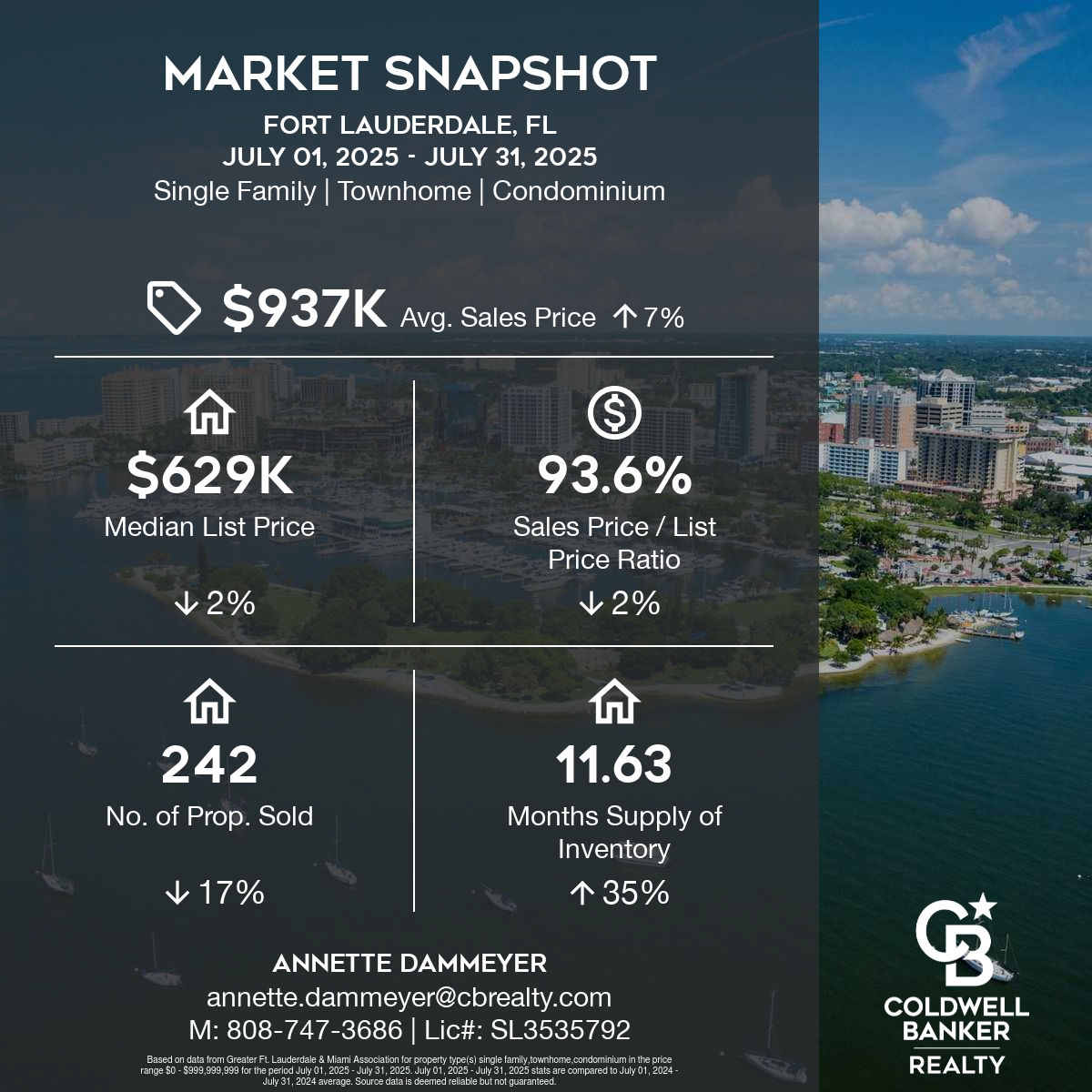
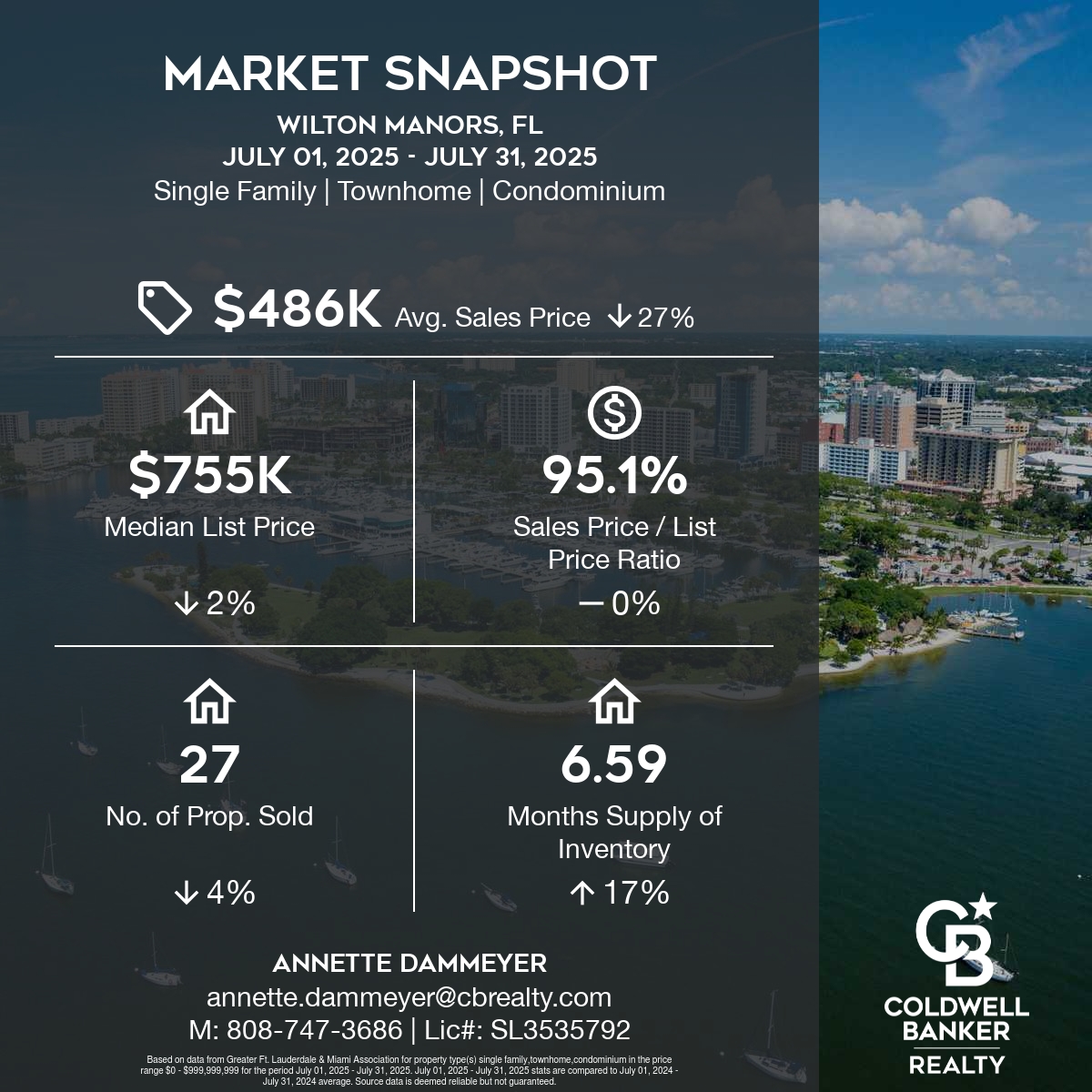
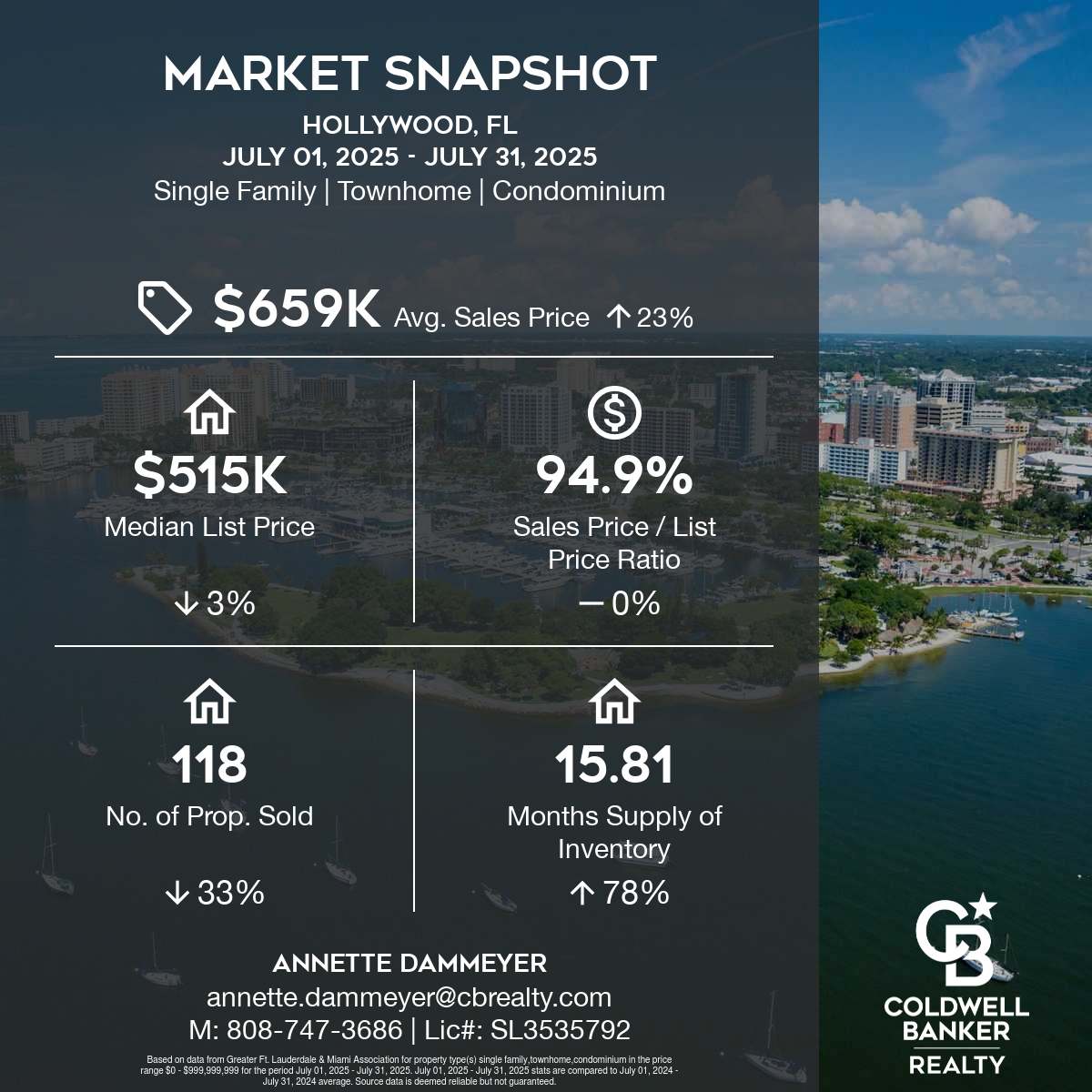
The real estate market is adjusting. With the increase in months of supply of inventory, SE Florida is leaning towards a “buyer’s market”. Seller’s are now reassessing their asking price on their properties for sale. It is crucial to examine other similar homes on the market to establish an aggressive original listing price, generating multiple buyer’s attention to your property. This is also an important time to consider a decrease in asking price if the property has been on the market without active offers. I welcome any discussions you may want to have regarding your neighborhood trends. Please reach out to chat, even if you are not ready to buy or sell, but just would like to discuss current real estate updates. Here are the Market Snapshots reflecting the last month (compared to the same month last year) for the following areas:
- Fort Lauderdale
- Wilton Manors
- Hollywood
- Dania Beach
- Hallandale Beach
These take into account all property types (Single Family Homes/Condos/Townhomes).
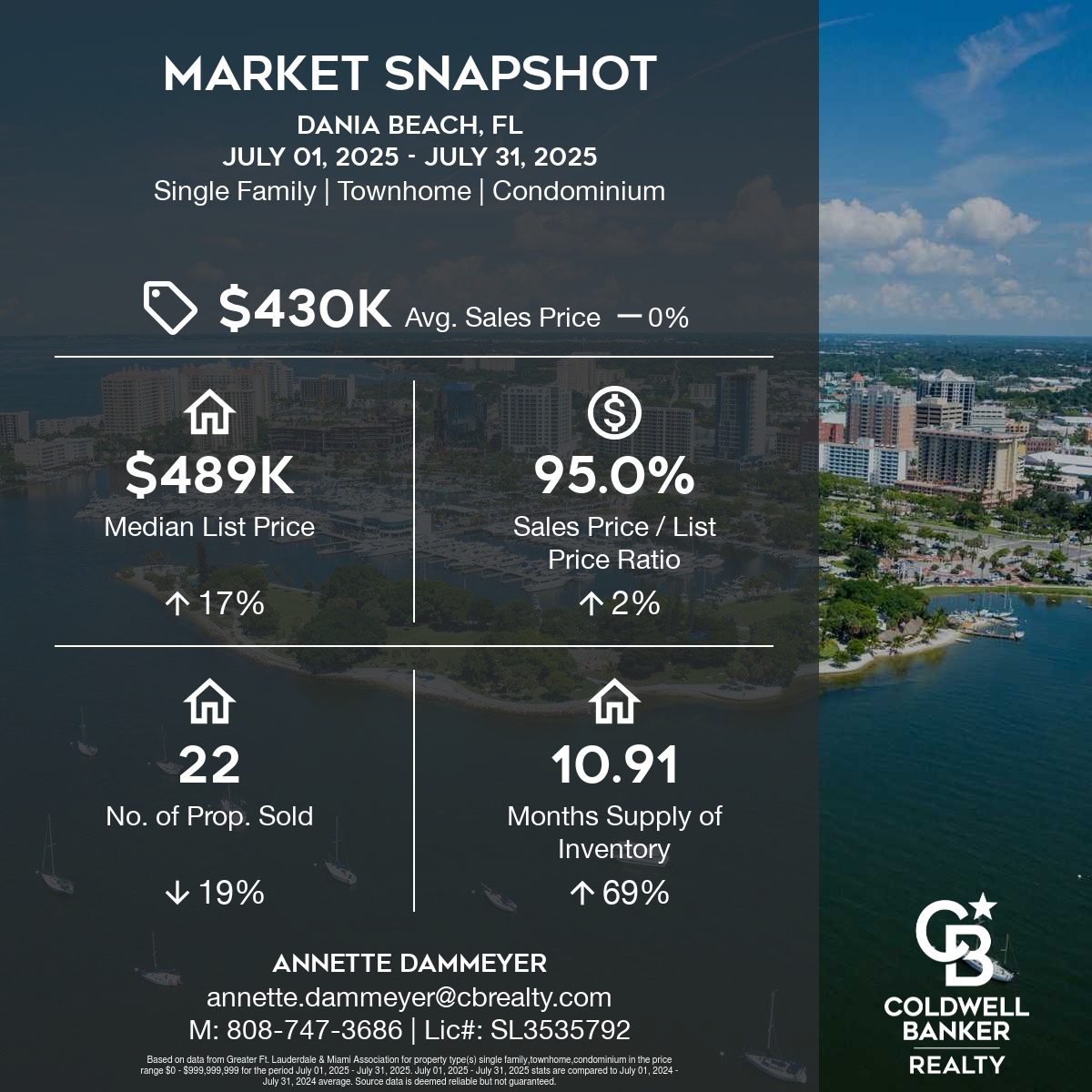
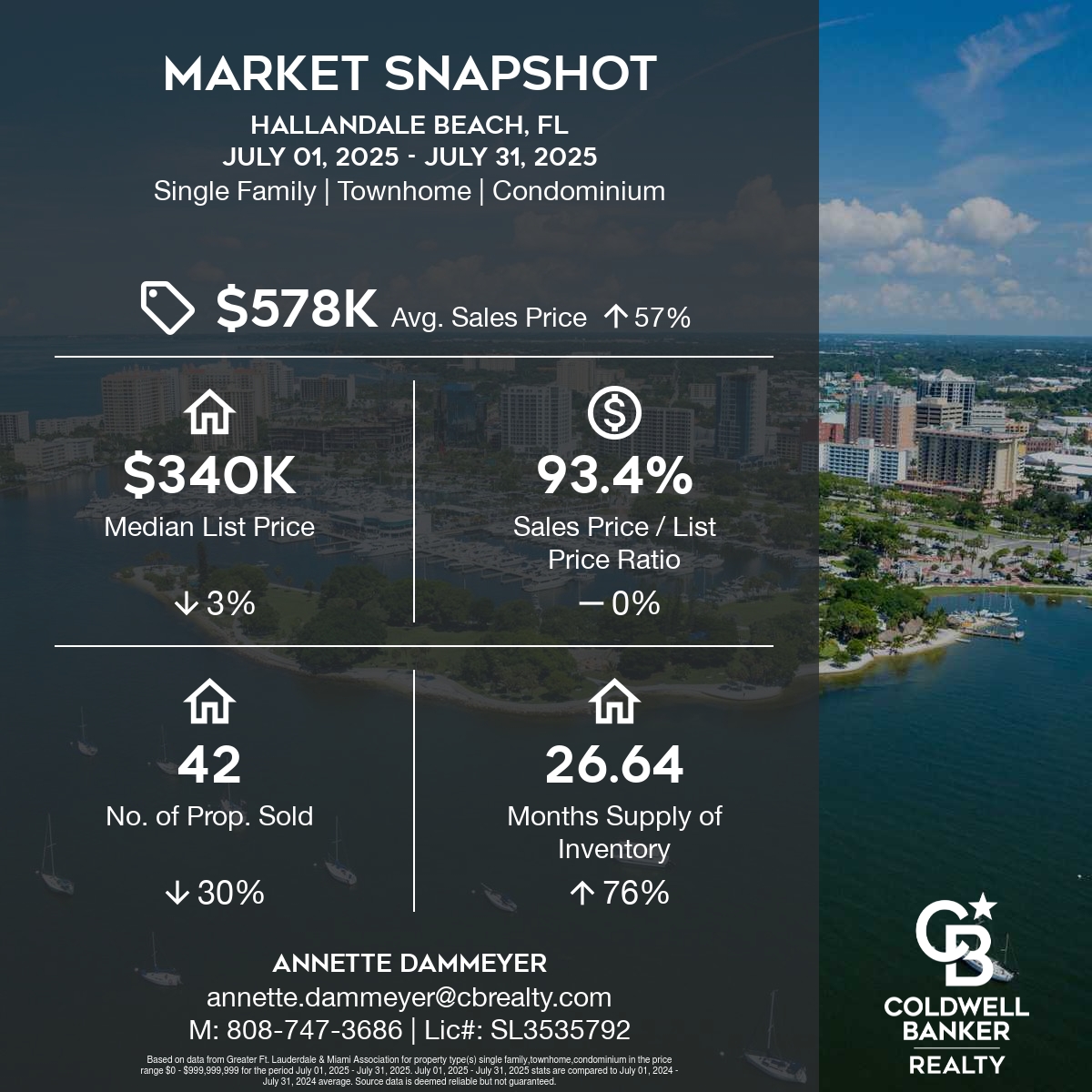
The real estate landscape in South Florida is evolving quickly—and making smart, timely decisions has never been more important. Whether you’re considering selling, buying, or simply staying informed, I’m here to be your local guide and resource.
Let’s talk about current market trends and how we can align your goals with today’s opportunities. I’d be happy to provide customized market reports for Fort Lauderdale, any SE Florida city, or even your specific neighborhood—all automatically delivered to your inbox.
Call or email me anytime. I’m here to help you move forward with clarity and confidence
CONTACT ANNETTE
Let’s start working together!
Annette Dammeyer, REALTOR®, ABR®, AHWD®
Coldwell Banker Realty
901 E Las Olas Blvd STE 101, Fort Lauderdale, FL 33301
808.747.3686
SL 3535792
August 2025 Essentials: Seller Checklist, Curb Appeal Tips & Buying Smarts

August 2025 Newsletter
|
August is nearly here, and with it comes a renewed focus on the essentials. Whether you’re prepping to list your home or simply refreshing your space, this month’s newsletter dives into the real estate fundamentals that matter most in our Southeast Florida market. Inside, you’ll find my Ultimate Home Seller’s Checklist — a must-have guide to navigate your sale with confidence, plus stylish updates that add curb appeal, like outdoor water features and statement garage doors. And for those exploring homeownership, check out the 7 clear and practical steps to help you understand what you can afford and how to get started. Let’s simplify the process, elevate the experience, and keep our community inspired. I’m here for any questions or consultations — just reach out! Warm regards, |
|||||||||||
|
|||||||||||
|
Real Estate Updates | Area Reports | June 2025
|
|||||||||||
|
|
|||||||||||
If you have any questions or simply want to talk through your options, I’m here for you. Let’s have a conversation tailored to your goals, and map out the next steps together. I’m here to help and guide you every step of the way with experience and integrity.CONTACT ANNETTELet’s start working together!
Annette Dammeyer, REALTOR®, ABR®, AHWD® Coldwell Banker Realty 901 E Las Olas Blvd STE 101, Fort Lauderdale, FL 33301 808.747.3686 SL 3535792
|
|||||||||||



Fort Lauderdale June 2025 Area Report
Fort Lauderdale June 2025 real estate statistics have been published.
Fort Lauderdale Area Reports
Single Family Homes
Condominium & Townhouses
Fort Lauderdale Real Estate Market Overview
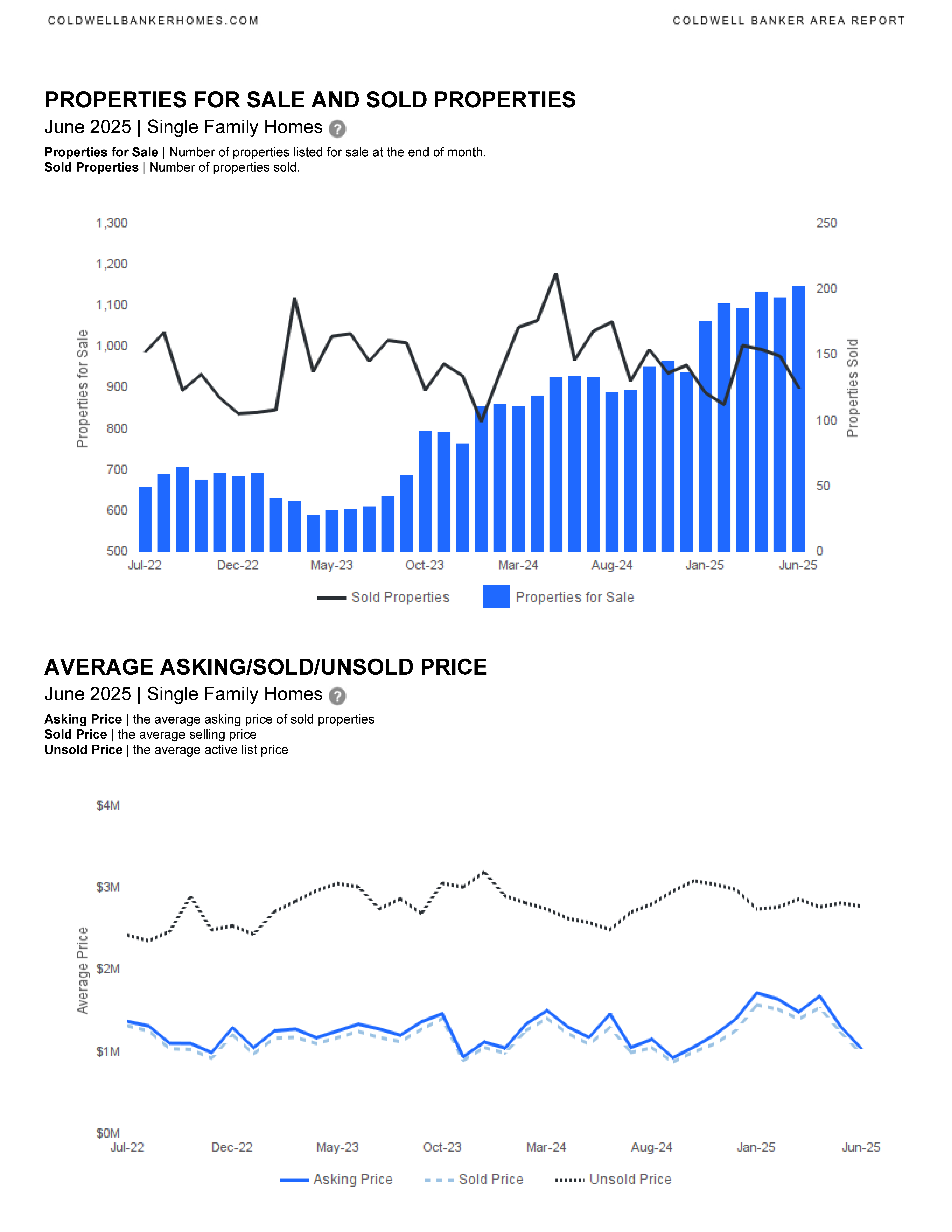
The following is a real estate market report for Fort Lauderdale, detailing sales activity, trends, and statistics for single-family homes and condos/townhouses as of June 2025.
Summary:
Single Family Homes Sales Overview
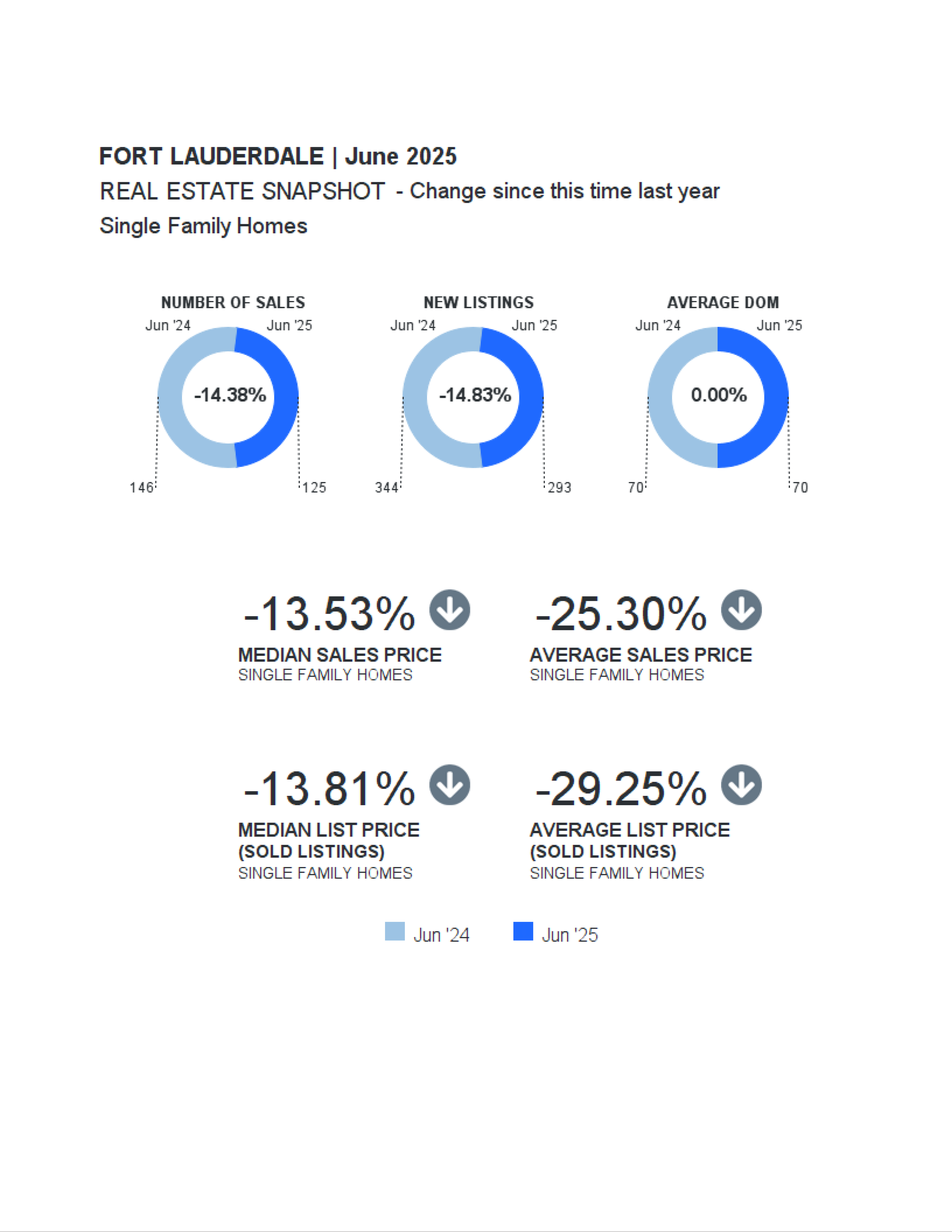
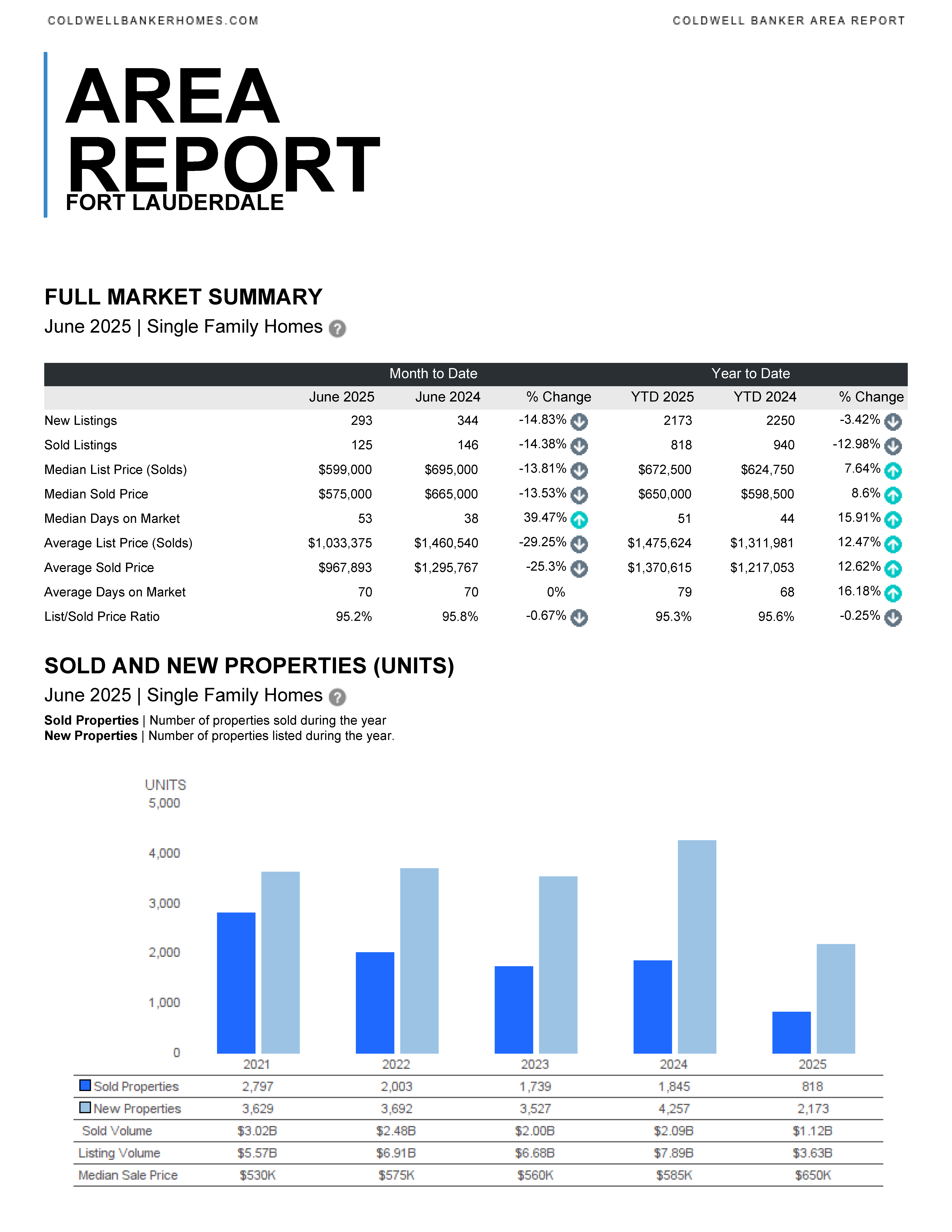
The single-family homes market has experienced a decline in sales and prices compared to last year. Key metrics indicate a significant drop in both the number of sales and average prices, reflecting a challenging market environment.
- Number of Sales: 146 (down 13.53% from last year)
- New Listings: 293 (down 14.83% month-to-date)
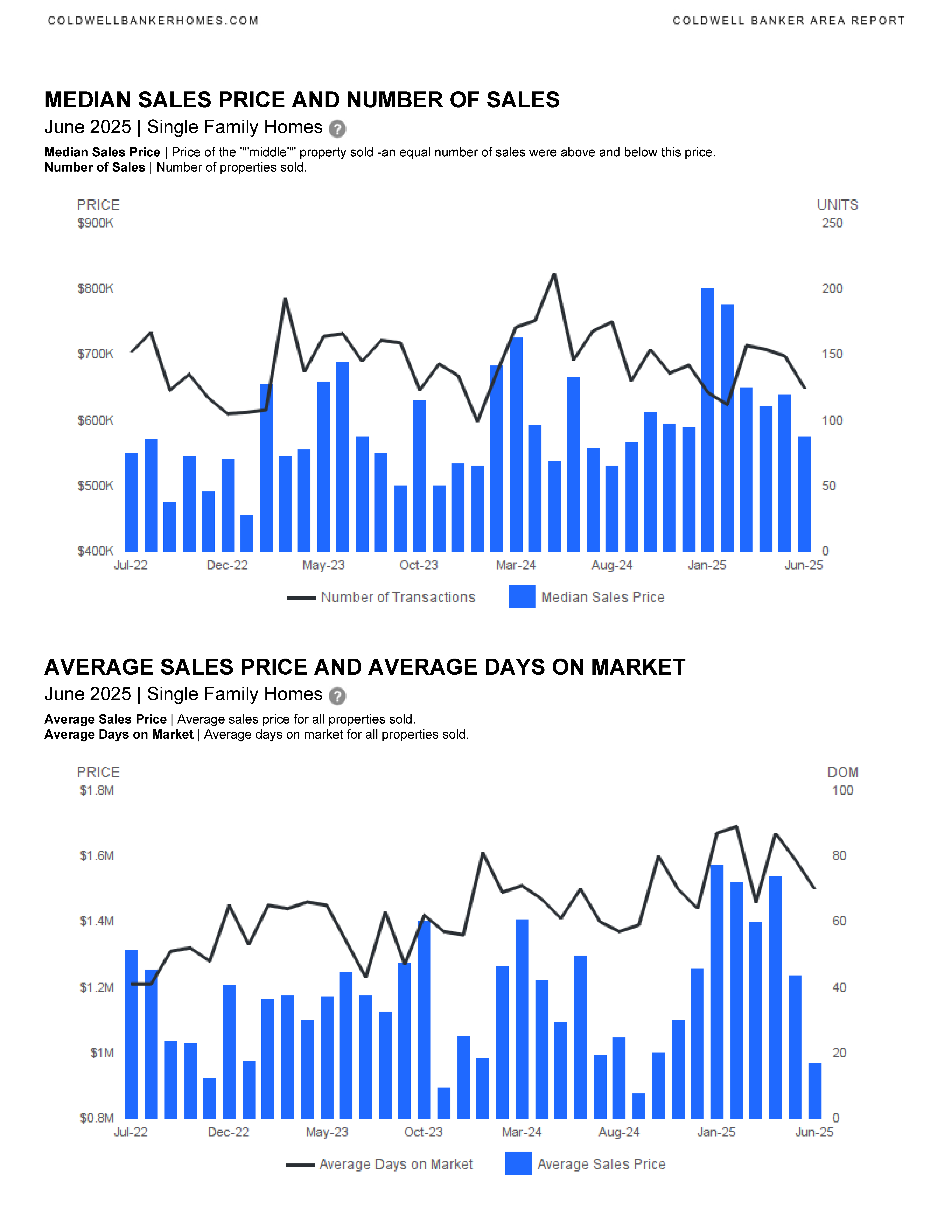
- Median Sales Price: $575,000 (down 13.53% year-over-year)
- Average Sales Price: $967,893 (down 25.3% year-over-year)
- Median Days on Market: 53 (up 39.47% year-over-year)
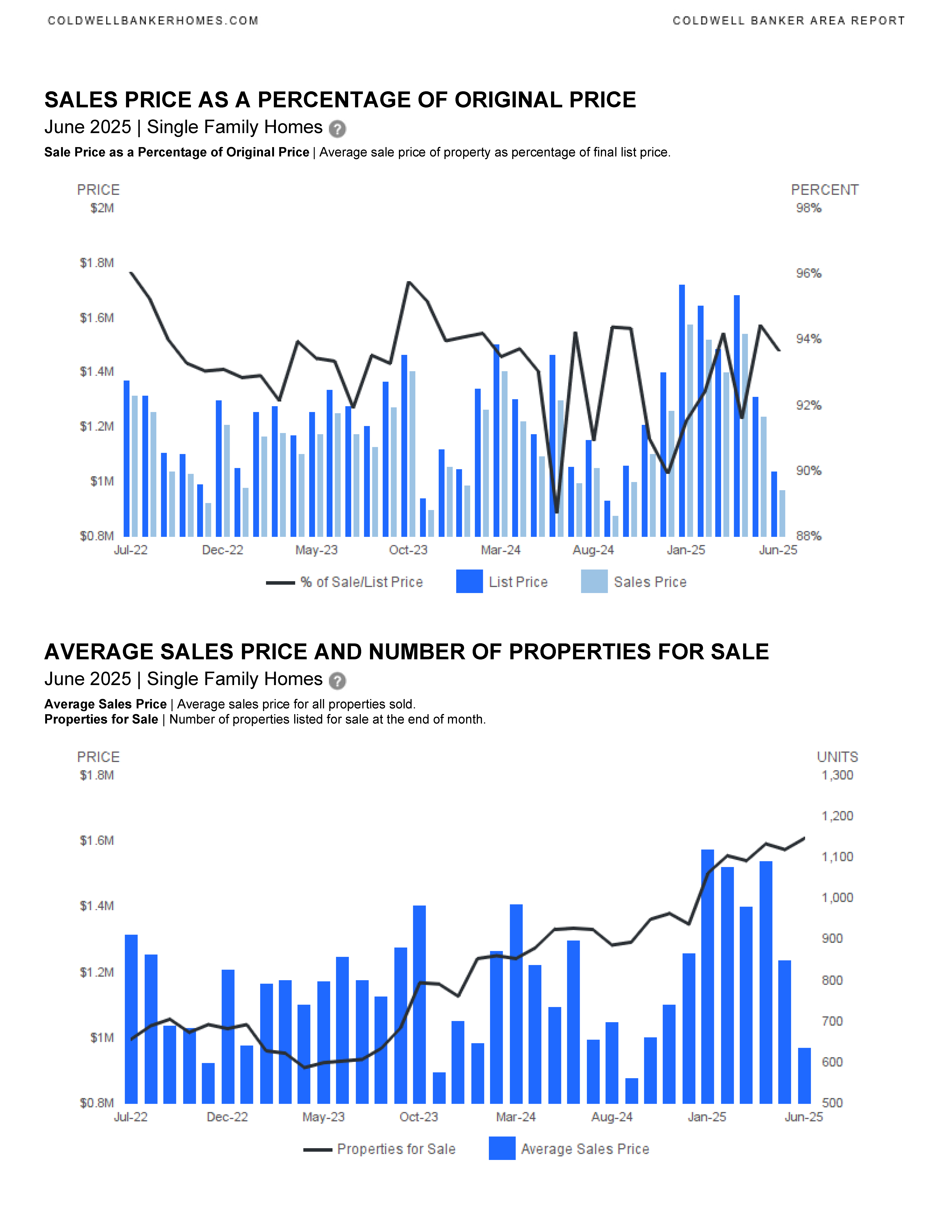
- List/Sold Price Ratio: 95.2% (down 0.67% from last year)
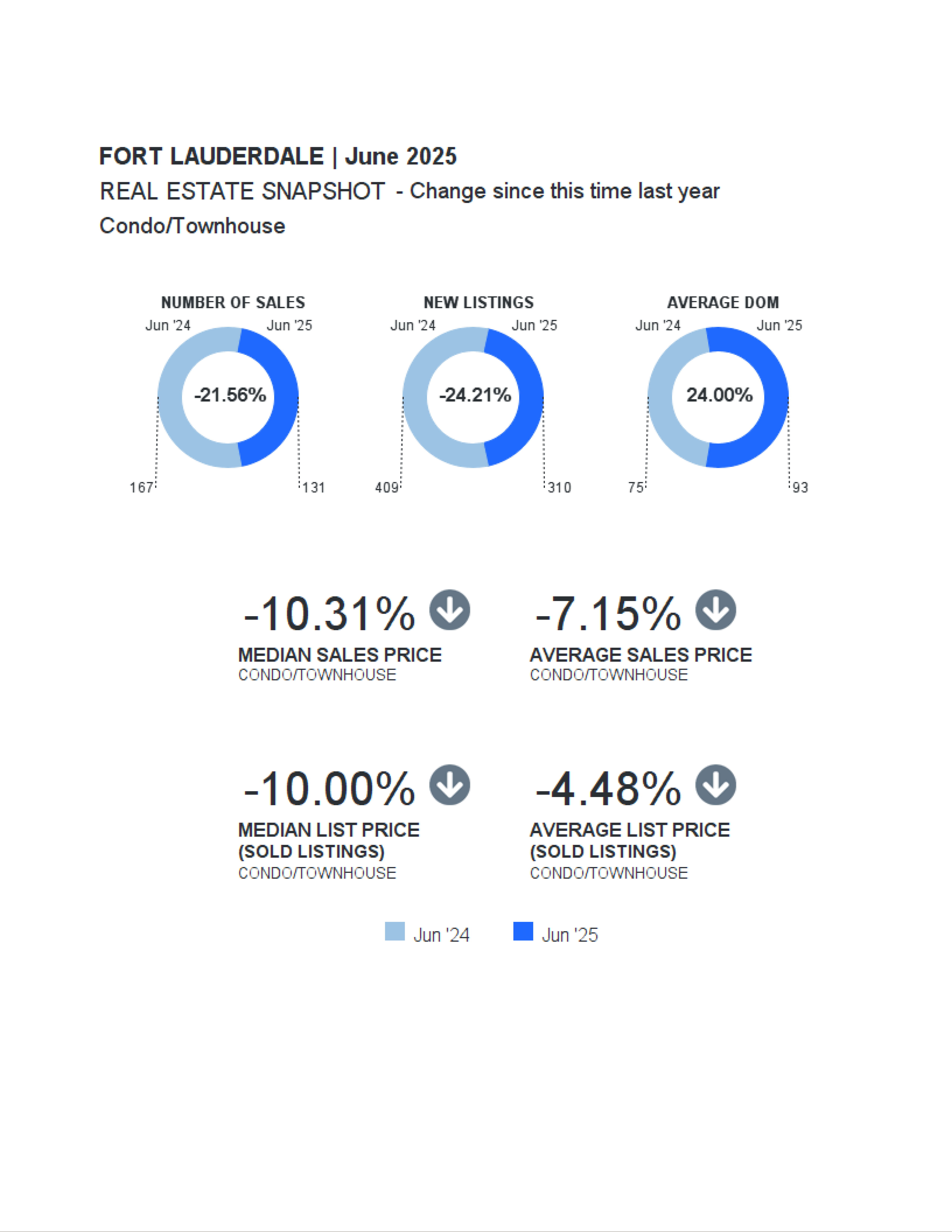
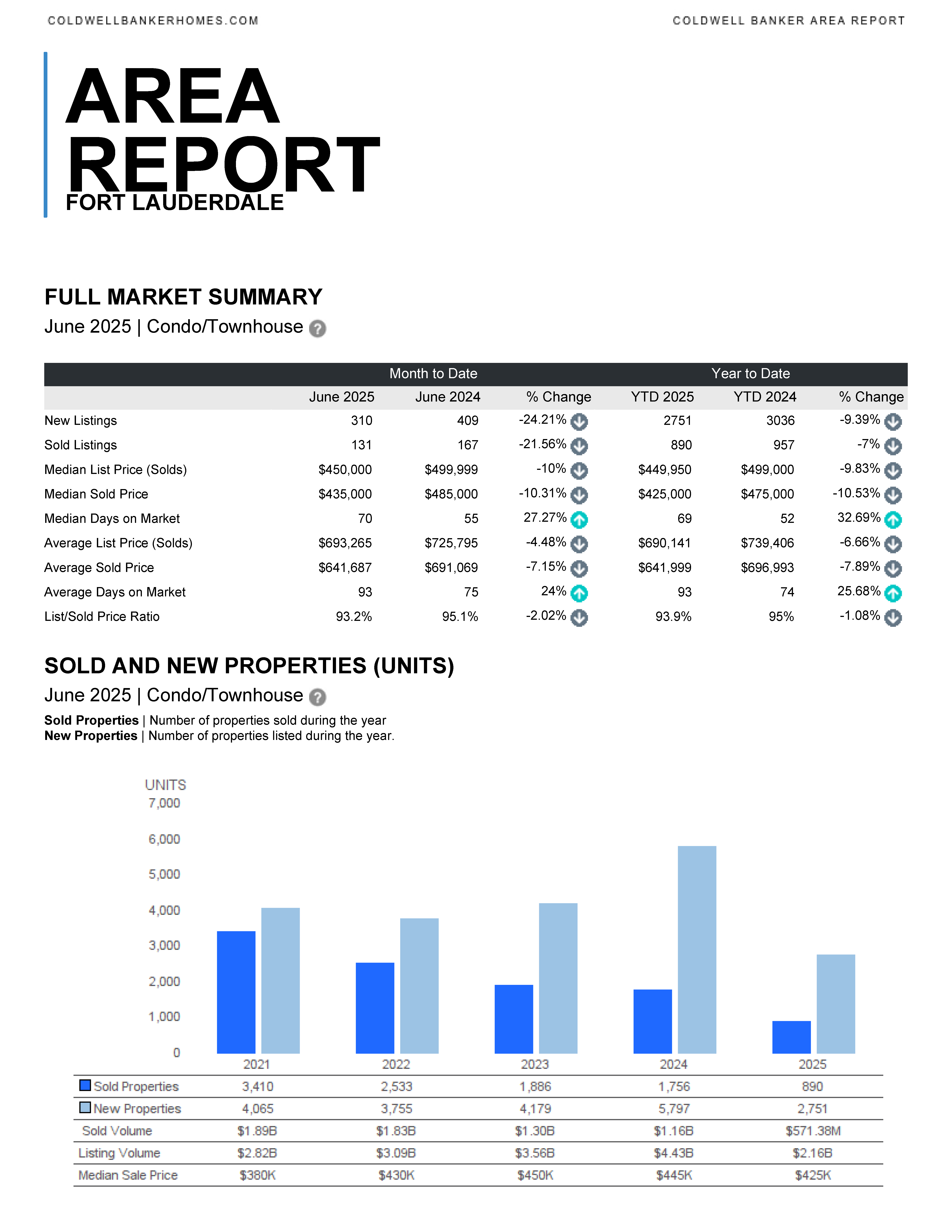
Condo/Townhouse Market Overview
The condo/townhouse market has also seen a decrease in sales and prices, with notable declines in both new listings and sold properties. This trend suggests a tightening market for these types of properties.
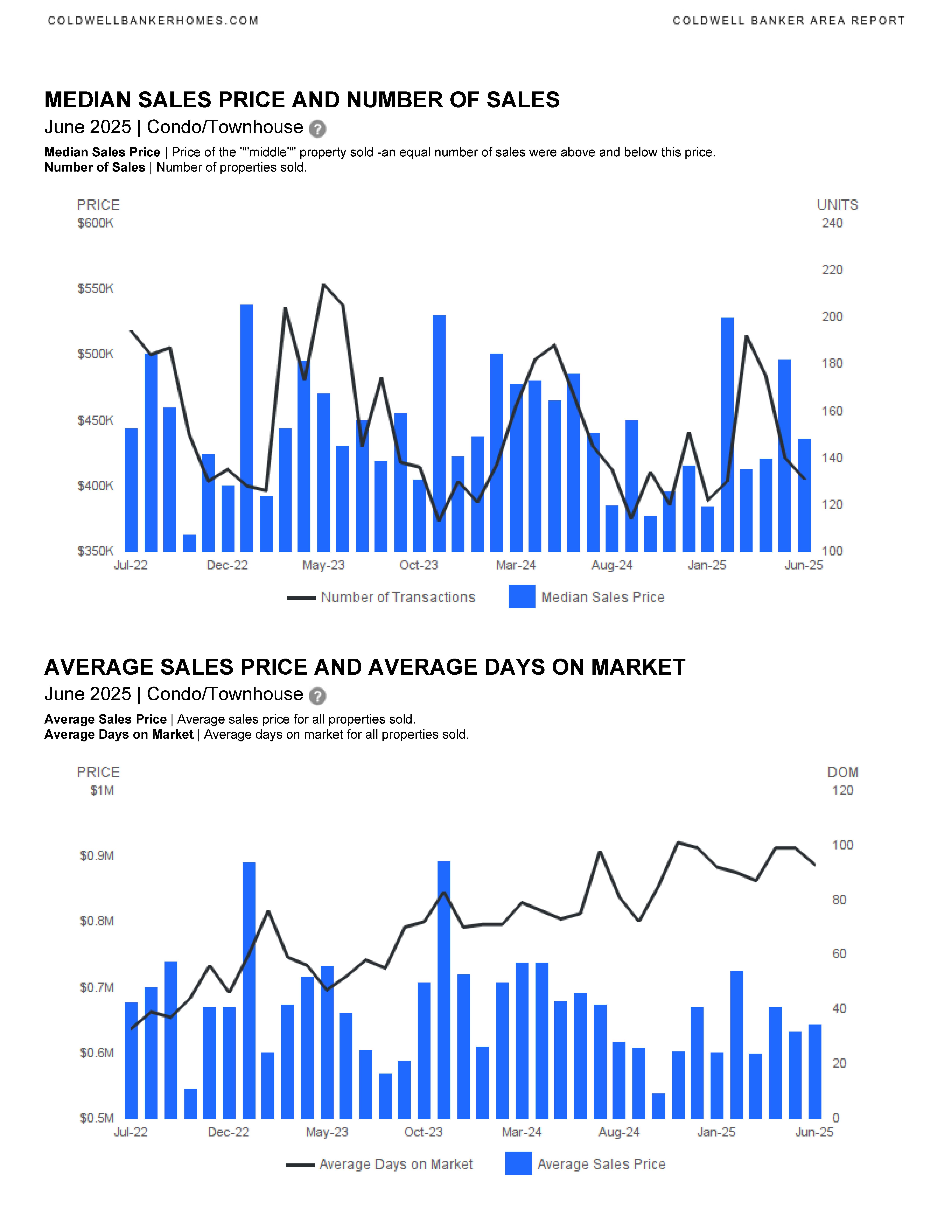
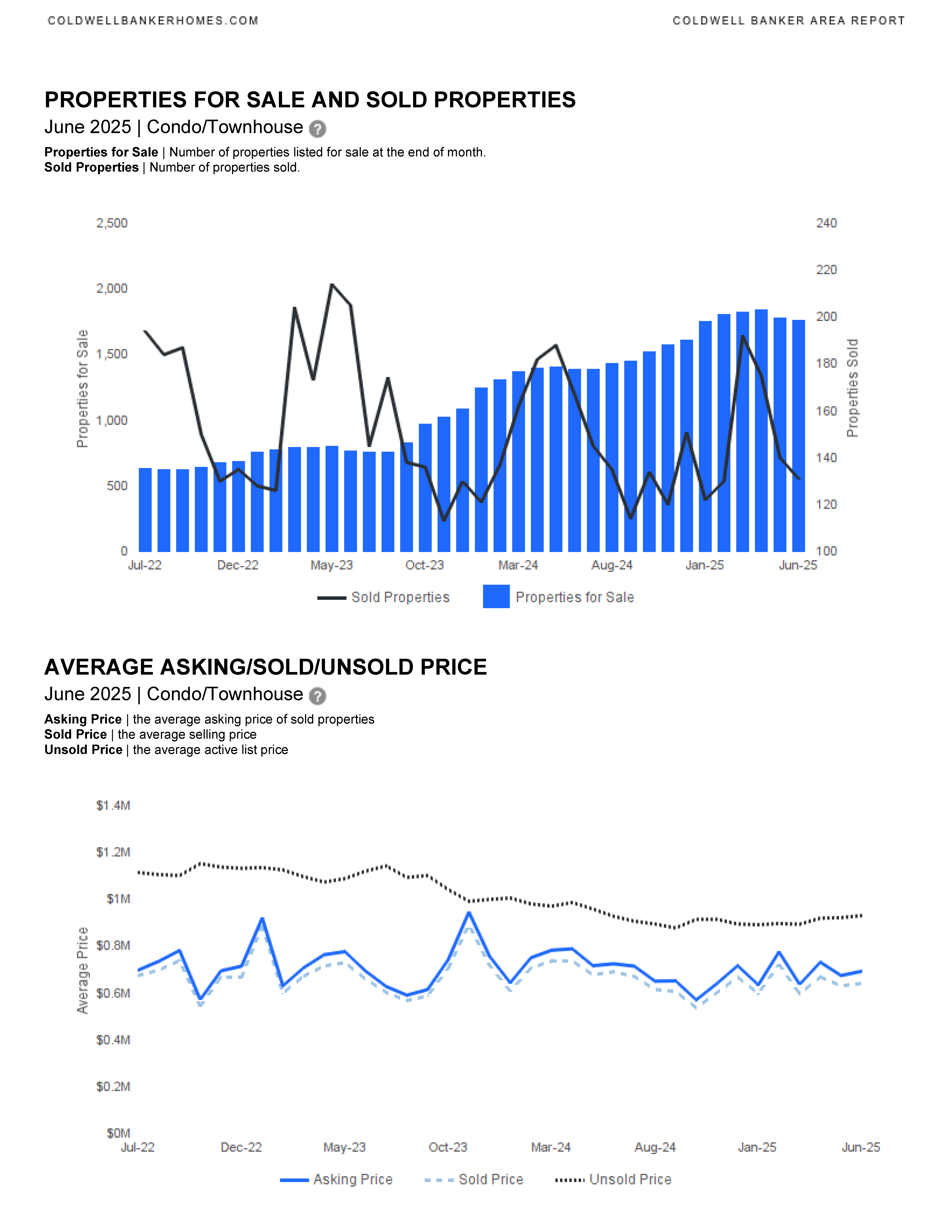
- Number of Sales: 167 (down 10.31% from last year)
- New Listings: 310 (down 24.21% month-to-date)
- Median Sales Price: $435,000 (down 10.31% year-over-year)
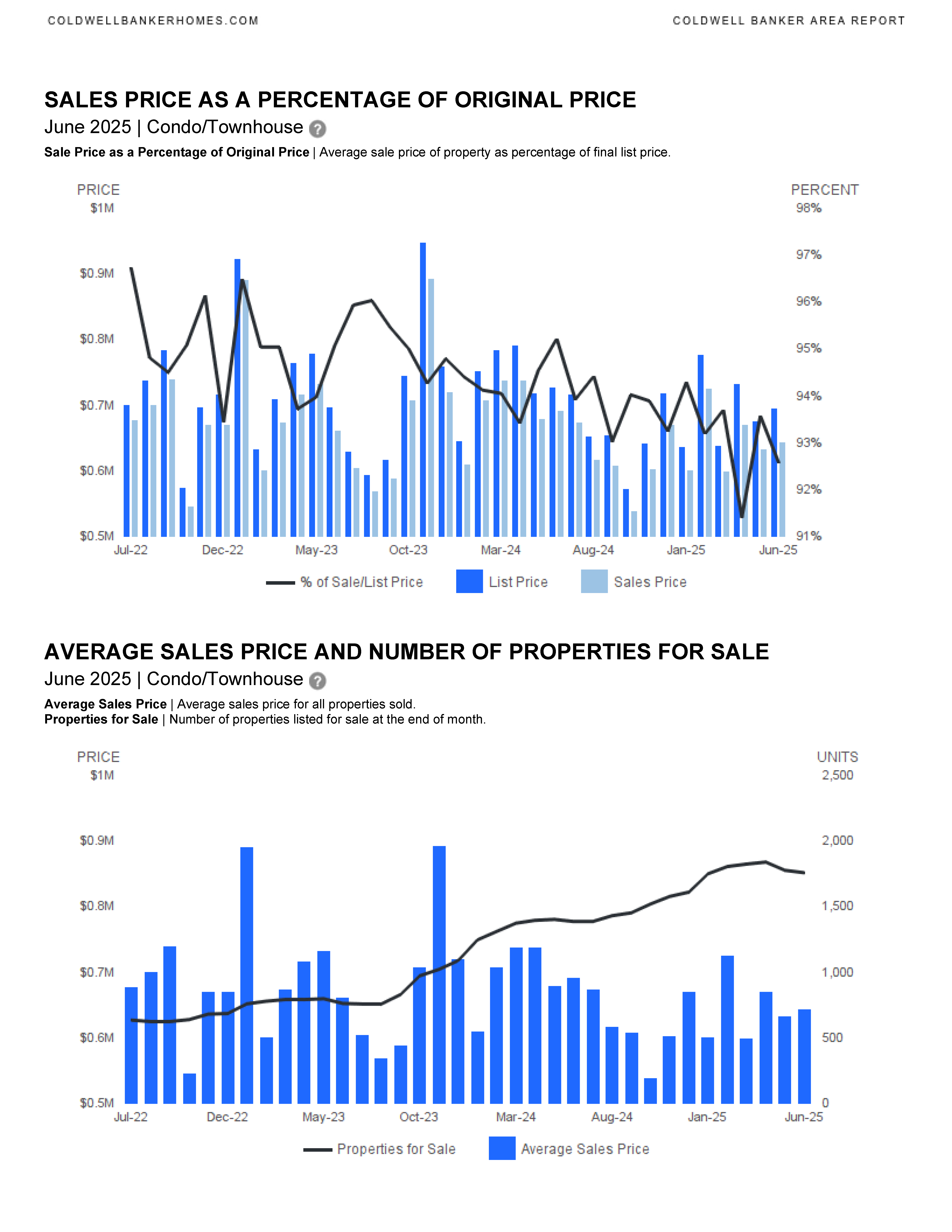
- Average Sales Price: $641,687 (down 7.15% year-over-year)
- Median Days on Market: 70 (up 27.27% year-over-year)
- List/Sold Price Ratio: 93.2% (down 2.02% from last year)
Year-to-Date Market Trends
Year-to-date statistics reveal a consistent decline in both single-family homes and condo/townhouse sales, indicating a broader trend in the real estate market.
- Year-to-Date Sold Listings for Single Family Homes: 818 (down 12.98% from last year)
- Year-to-Date Sold Listings for Condo/Townhouse: 890 (down 7% from last year)
- Year-to-Date Median List Price for Single Family Homes: $672,500 (up 7.64% from last year)
- Year-to-Date Median List Price for Condo/Townhouse: $449,950 (down 9.83% from last year)
Market Dynamics and Inventory Insights
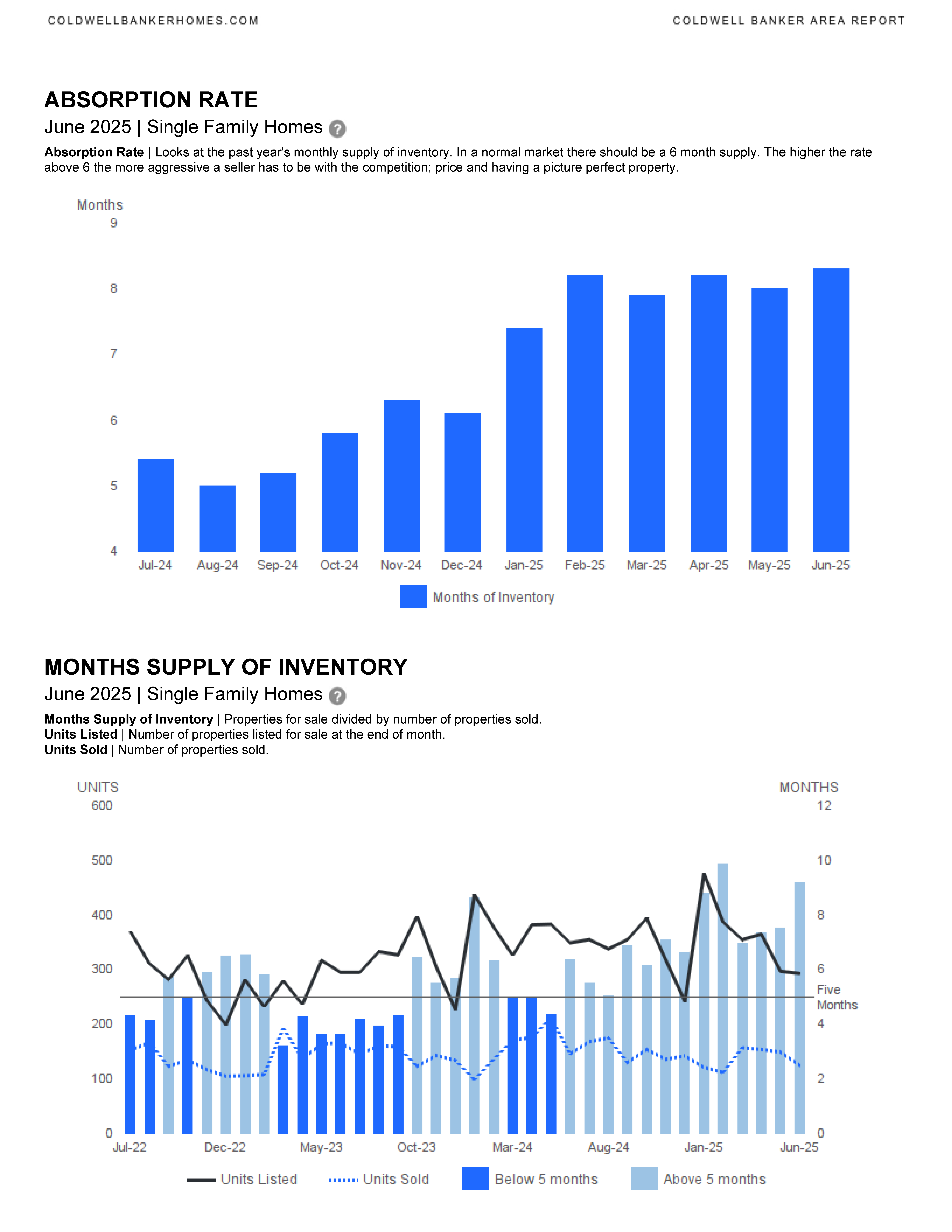
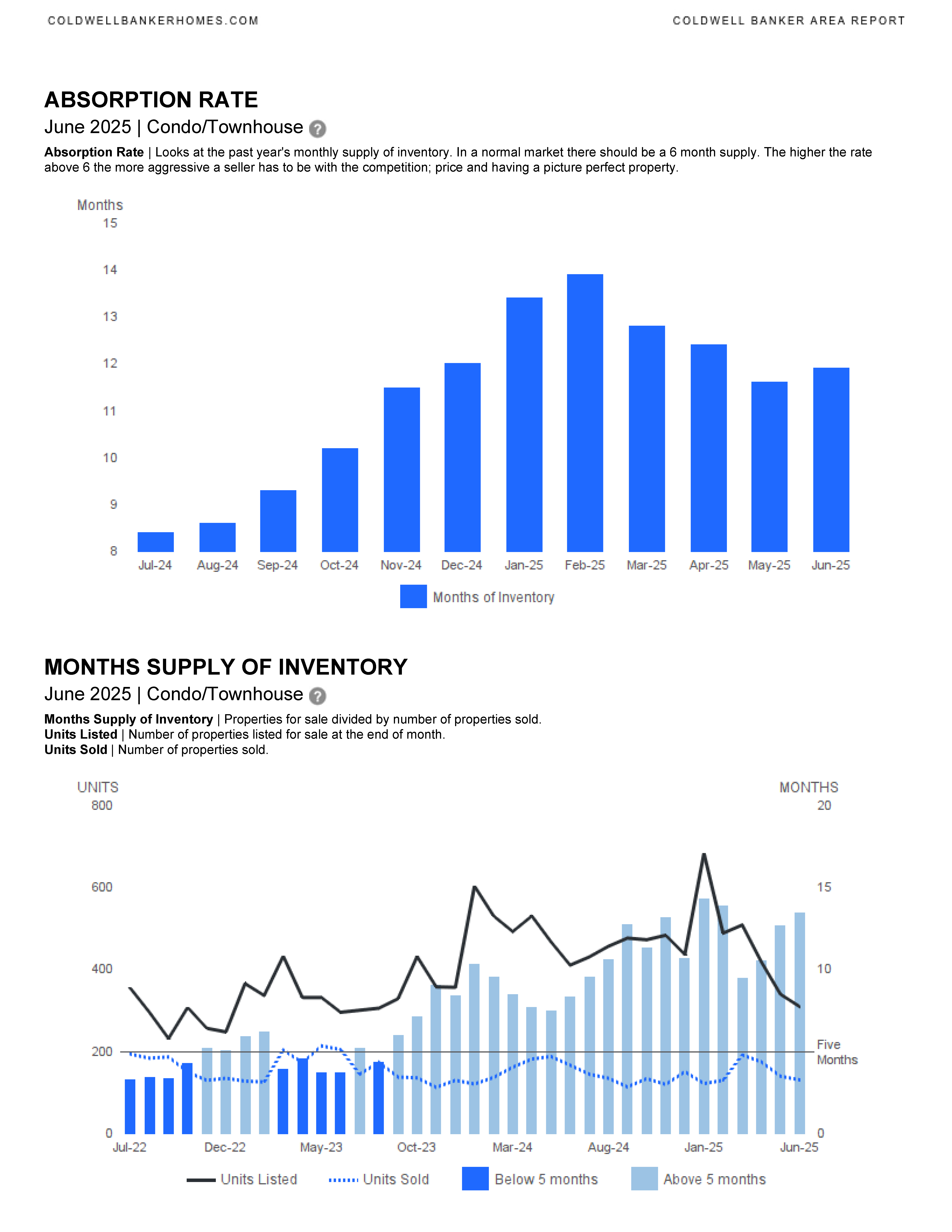
The market dynamics show an increase in the average days on market, suggesting a shift towards a buyer’s market. The absorption rate indicates a need for sellers to be competitive.
- Average Days on Market for Single Family Homes: 70 (no change year-over-year)
- Average Days on Market for Condo/Townhouse: 93 (up 24% year-over-year)
- Months Supply of Inventory: Indicates a need for a competitive pricing strategy for sellers.
- Higher absorption rates suggest a more aggressive approach is necessary for sellers to attract buyers.
Conclusion
The report highlights significant trends in the residential real estate market, with declines in sales and prices for both single-family homes and condos/townhouses. For further insights and personalized information, contact me, I’m always available to talk.

We are entering a new real estate market in SE Florida. This is the time to work with an experienced and knowledgeable real estate professional. Please contact me if you would like to be sent updated market reports for YOUR specific neighborhood, Fort Lauderdale, or another SE Florida city. We can discuss the market, current trends and how we can work together to accomplish your real estate goals. I am here to help.
CONTACT ANNETTE
Let’s start working together!
Annette Dammeyer, REALTOR®, ABR®, AHWD®
Coldwell Banker Realty
901 E Las Olas Blvd STE 101, Fort Lauderdale, FL 33301
808.747.3686
SL 3535792
SE Florida Market Snapshot – June 2025
Market Trends in SE Florida
The real estate market is adjusting. With the increase in months of supply of inventory, SE Florida is leaning towards a “buyer’s market”. Seller’s are now reassessing their asking price on their properties for sale. It is crucial to examine other similar homes on the market to establish an aggressive original listing price, generating multiple buyer’s attention to your property. This is also an important time to consider a decrease in asking price if the property has been on the market without active offers. I welcome any discussions you may want to have regarding your neighborhood trends. Please reach out to chat, even if you are not ready to buy or sell, but just would like to discuss current real estate updates. Here are the Market Snapshots reflecting the last month (compared to the same month last year) for the following areas:
- Fort Lauderdale
- Wilton Manors
- Hollywood
- Dania Beach
- Hallandale Beach
These take into account all property types (Single Family Homes/Condos/Townhomes).
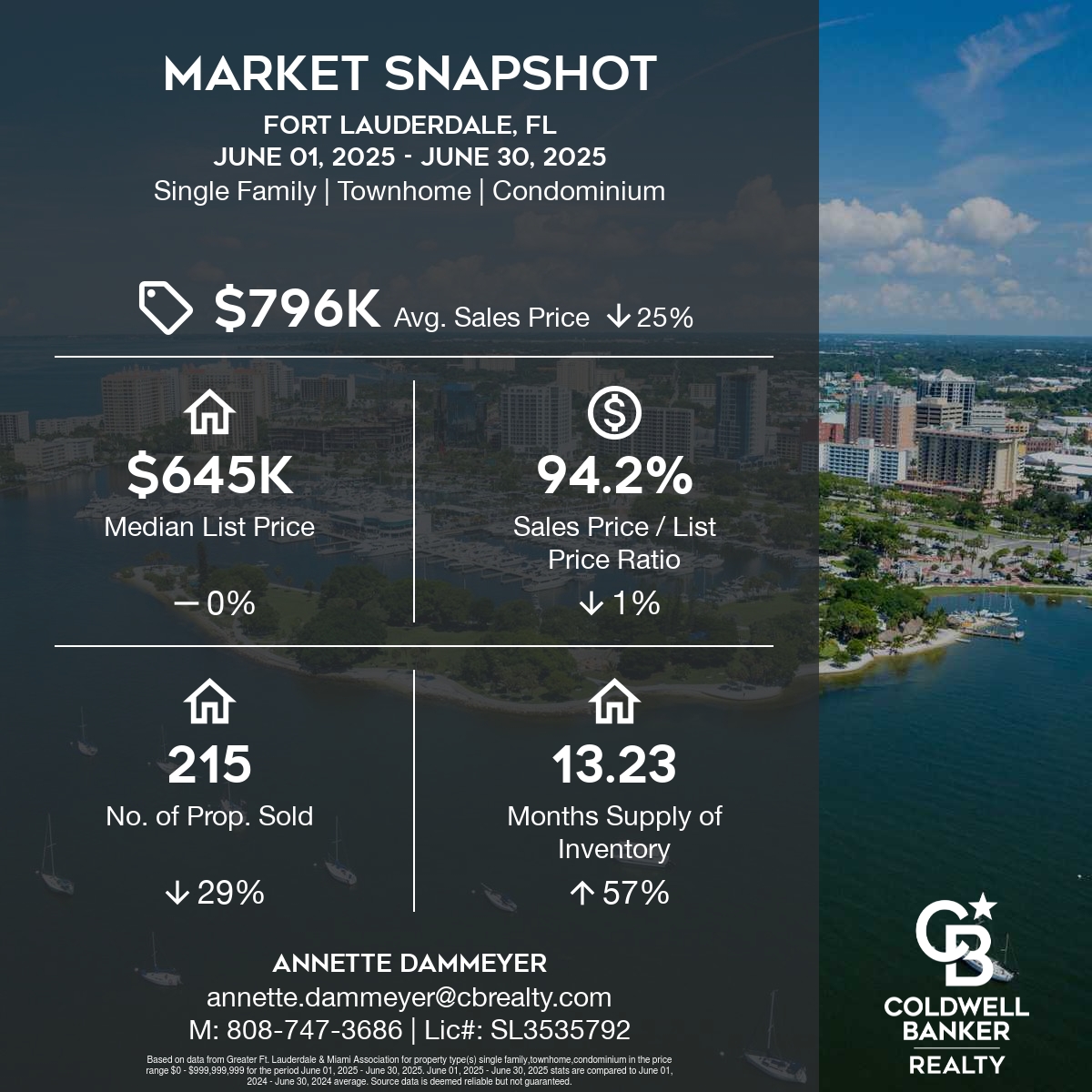
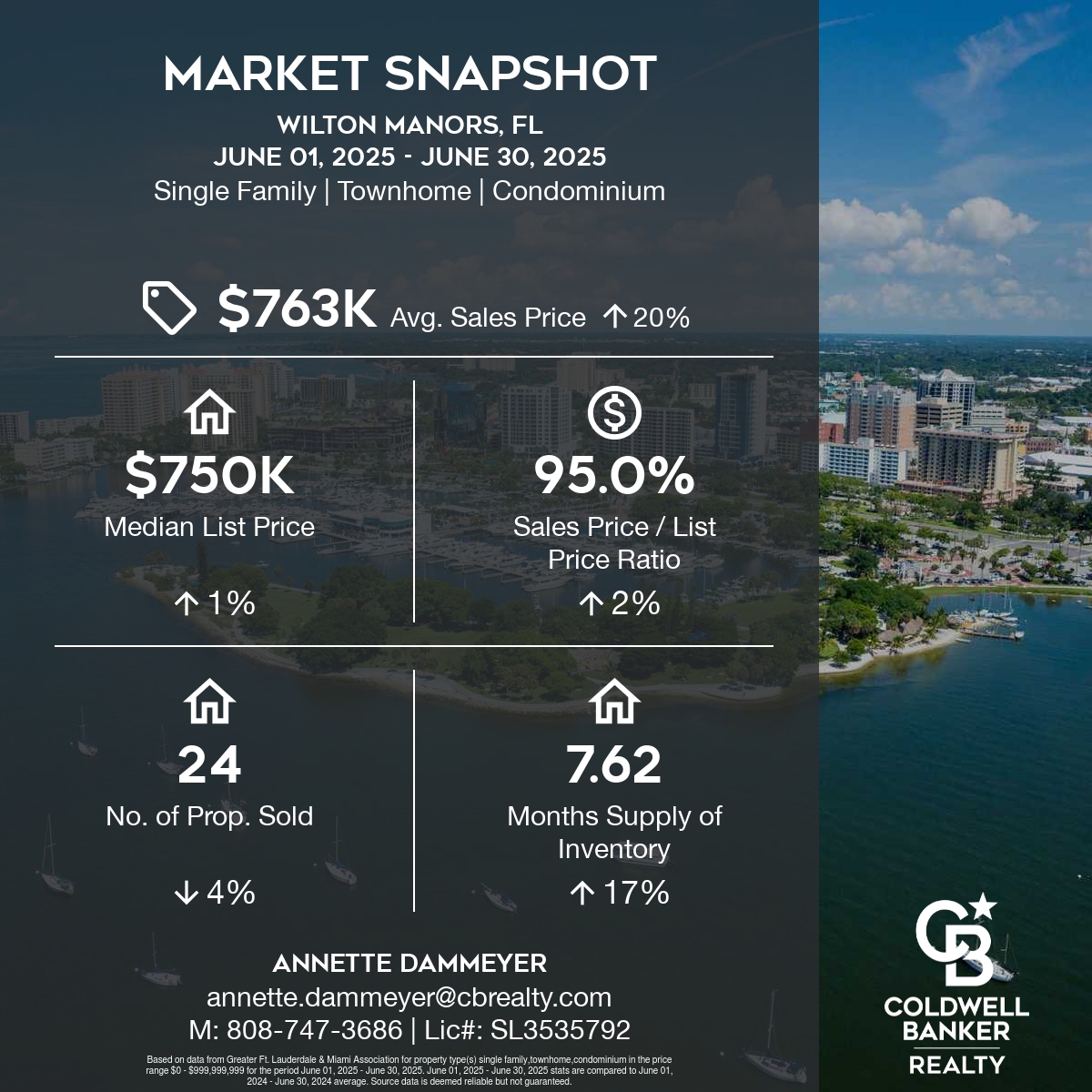
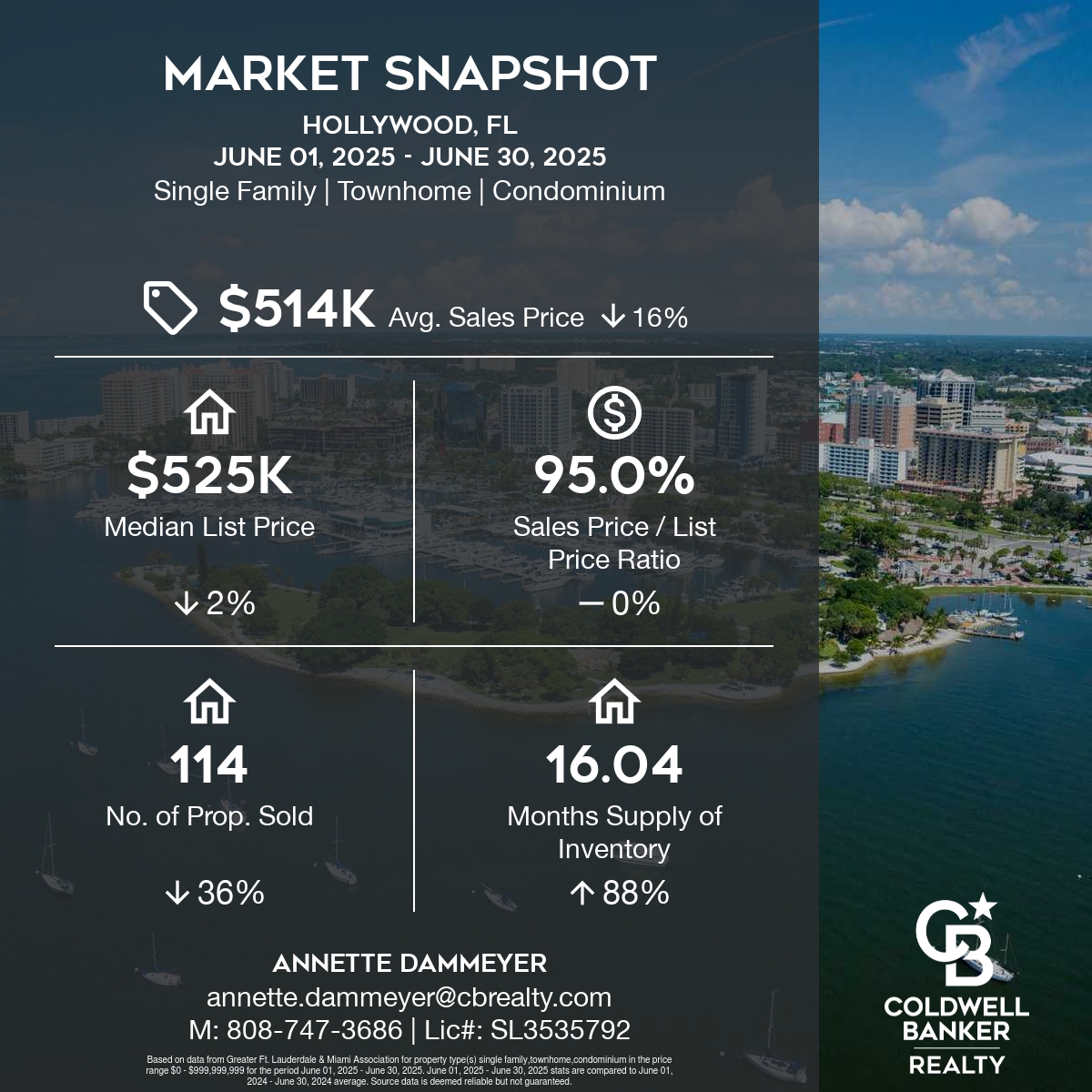
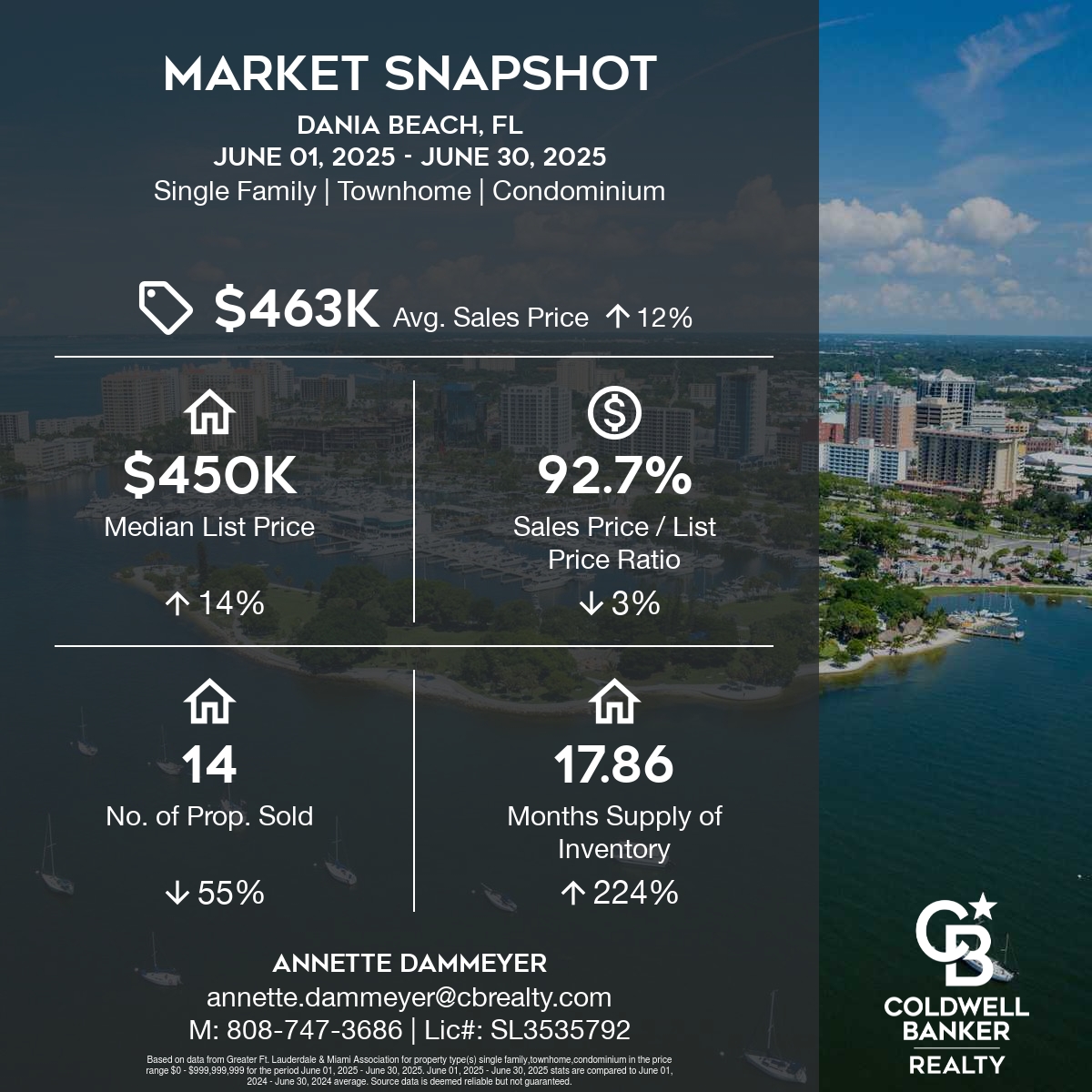
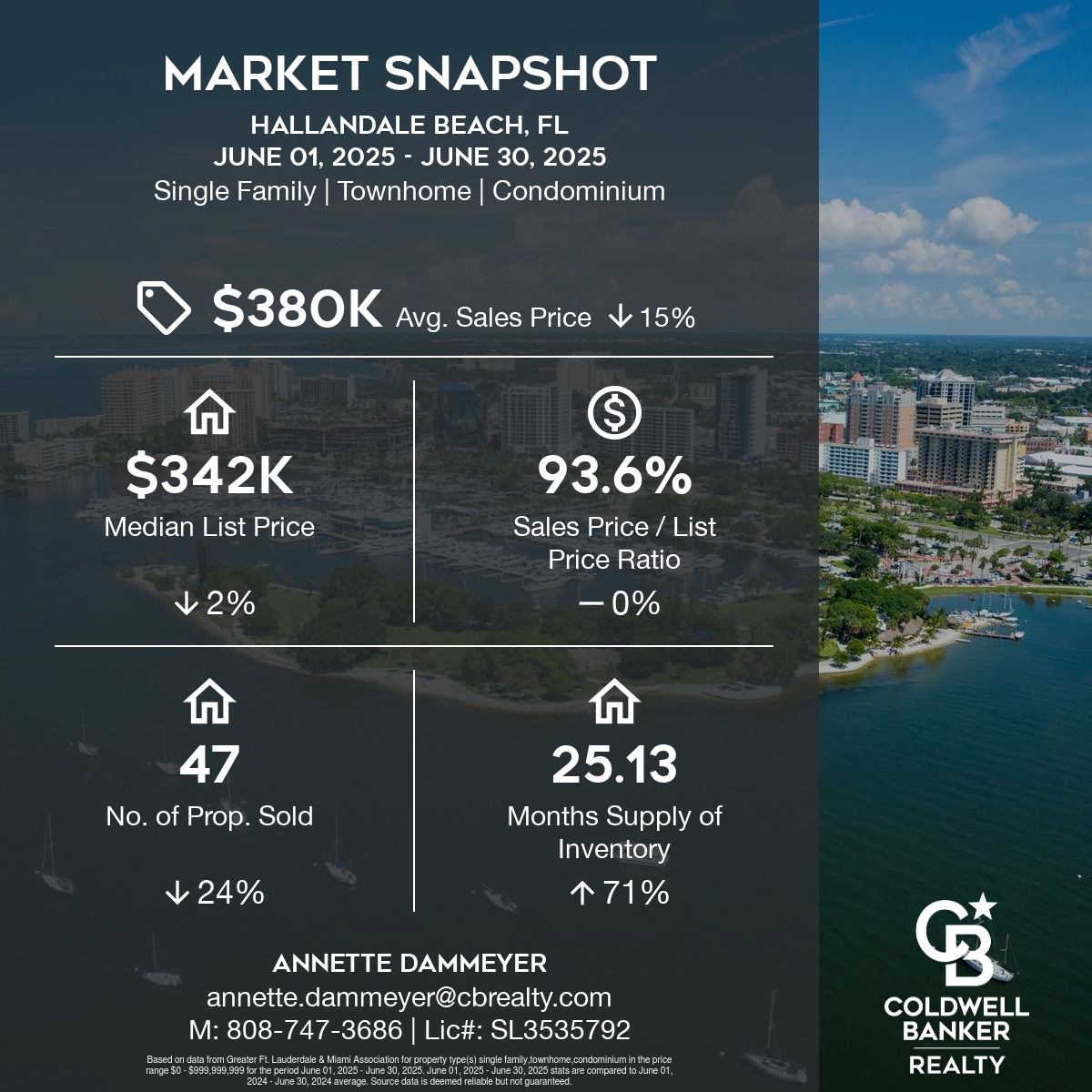
With the rapidly changing real estate market, now is the time to make informed decisions. Contact me today to discuss the current market trends and how we can work together to accomplish your real estate goals. Please call or email me if you would like to be automatically sent detailed market reports for Fort Lauderdale, another SE Florida city, or your specific neighborhood. I am here to help.
CONTACT ANNETTE
Let’s start working together!
Annette Dammeyer, REALTOR®, ABR®, AHWD®
Coldwell Banker Realty
901 E Las Olas Blvd STE 101, Fort Lauderdale, FL 33301
808.747.3686
SL 3535792
July 2025 ~ Unlock Equity, Spark Joy & Celebrate!

July 2025 NewsletterJuly is nearly here, and you know what that means—fireworks, family, and a fresh batch of inspiration to make your home sparkle all year long! I’m delighted to bring you this month’s newsletter, filled with practical tips and creative ideas to elevate your space and your equity. Whether you’re cooling off poolside or prepping your patio for the perfect Fourth of July bash, I’ve curated articles that speak to the way we live—and dream—here in beautiful South Florida. This issue, we’re exploring:
Wherever you are on your homeownership journey, I’m here to help you make informed, confident, and creative choices—every step of the way. Wishing you a safe, joyful and fun-filled July! Warmly, |
|||||||||||
National Stories
|
|||||||||||
|
|
|||||||||||
|
Real Estate Updates | Area Reports | May 2025
|


Enjoy your July and celebrate in style! If you are interested in evaluating your home equity, I offer complimentary comparative market analyses to give you a clear picture of your home’s value in today’s SE Florida market. I’m here to help and guide you every step of the way with experience and integrity.
CONTACT ANNETTE
Let’s start working together!
Annette Dammeyer, REALTOR®, ABR®, AHWD®
Coldwell Banker Realty
901 E Las Olas Blvd STE 101, Fort Lauderdale, FL 33301
808.747.3686
SL 3535792
Fort Lauderdale May 2025 Area Report
Fort Lauderdale May 2025 real estate statistics have been released.
Fort Lauderdale Area Reports
Single Family Homes
Condominium & Townhouses
Fort Lauderdale Real Estate Market Overview
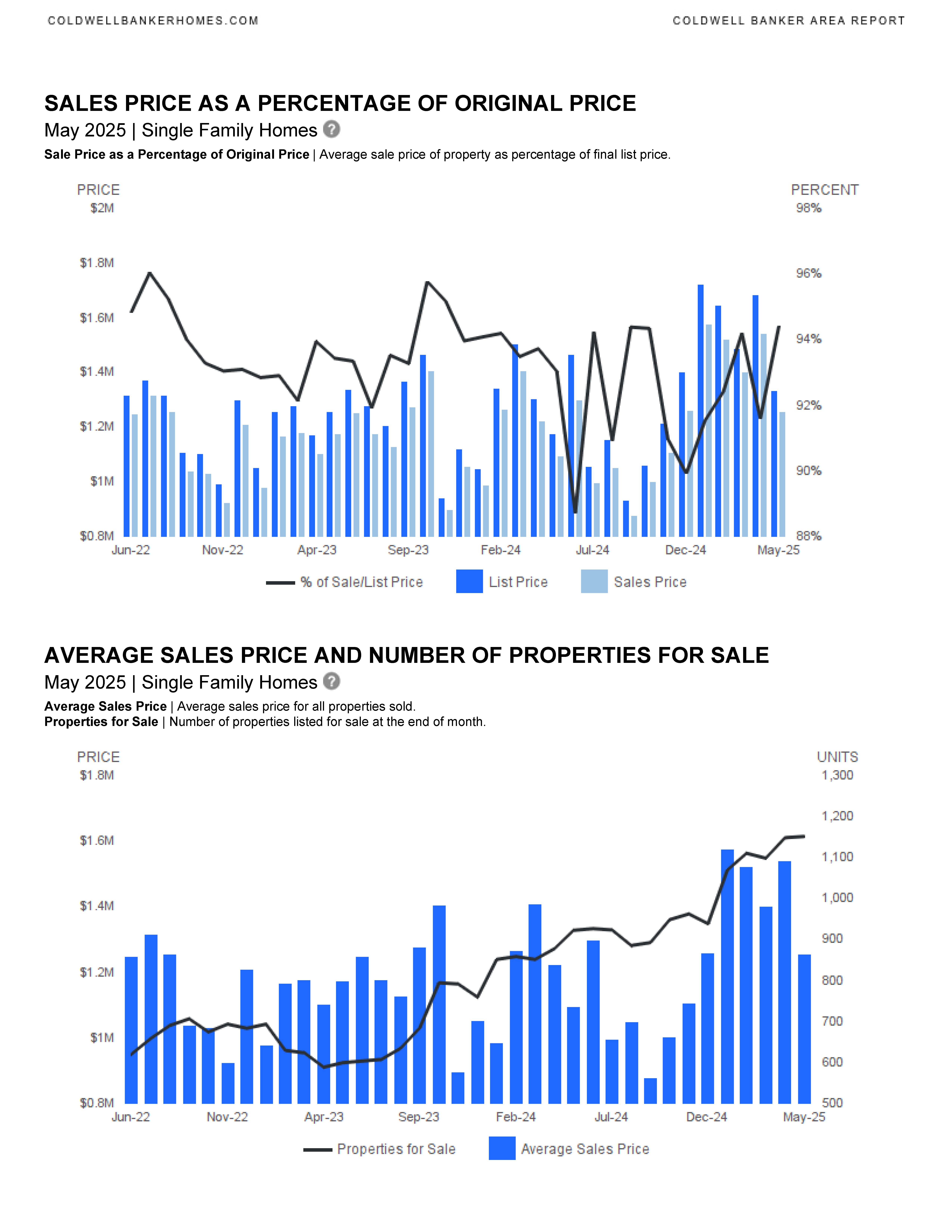
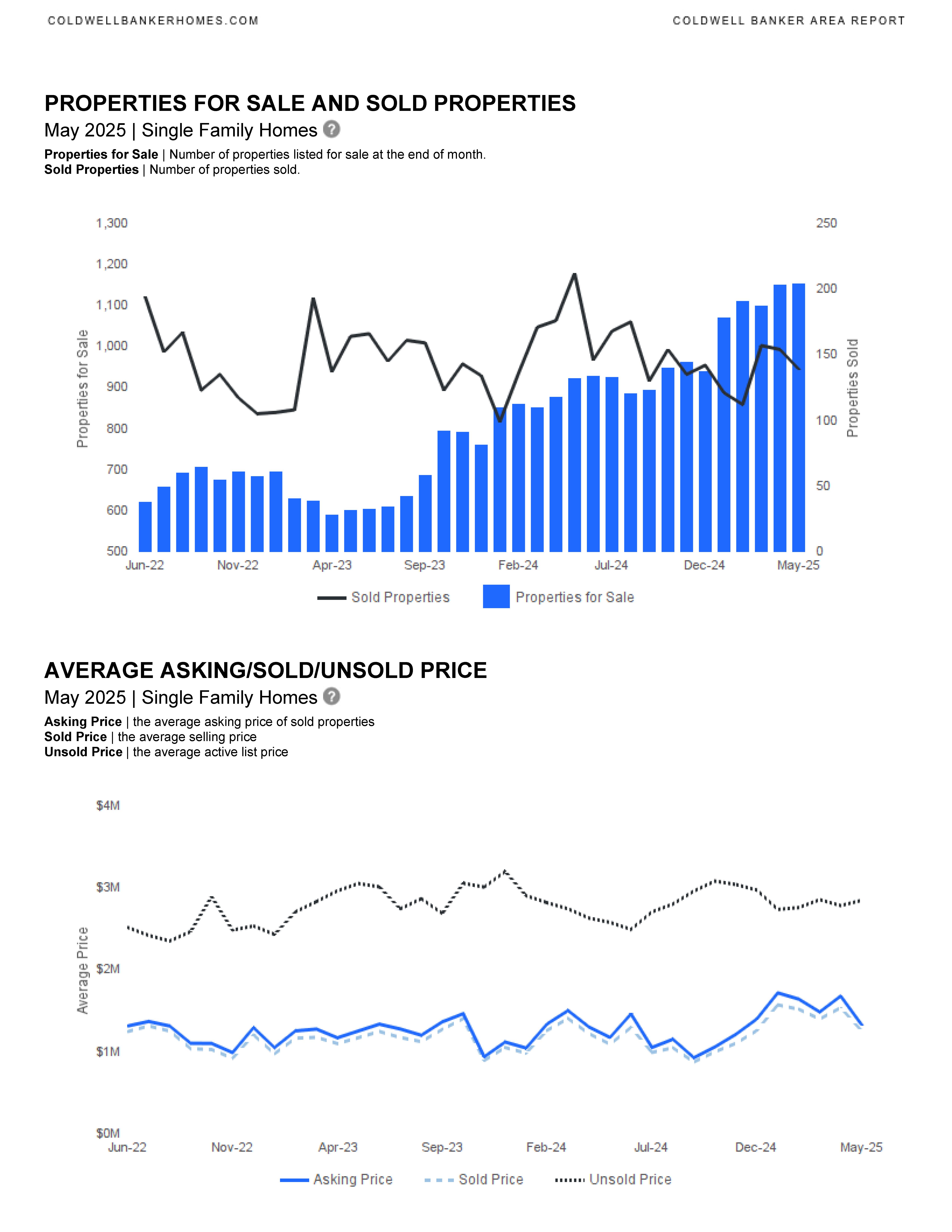
The Fort Lauderdale real estate market has experienced significant changes in sales activity and pricing trends over the past year. Both single-family homes and condo/townhouse markets show a decline in sales volume, while prices have generally increased.
Summary:
Single Family Homes Sales Activity
Sales of single-family homes in Fort Lauderdale have decreased significantly compared to last year. The median sales price has risen, indicating a shift towards higher-value properties.
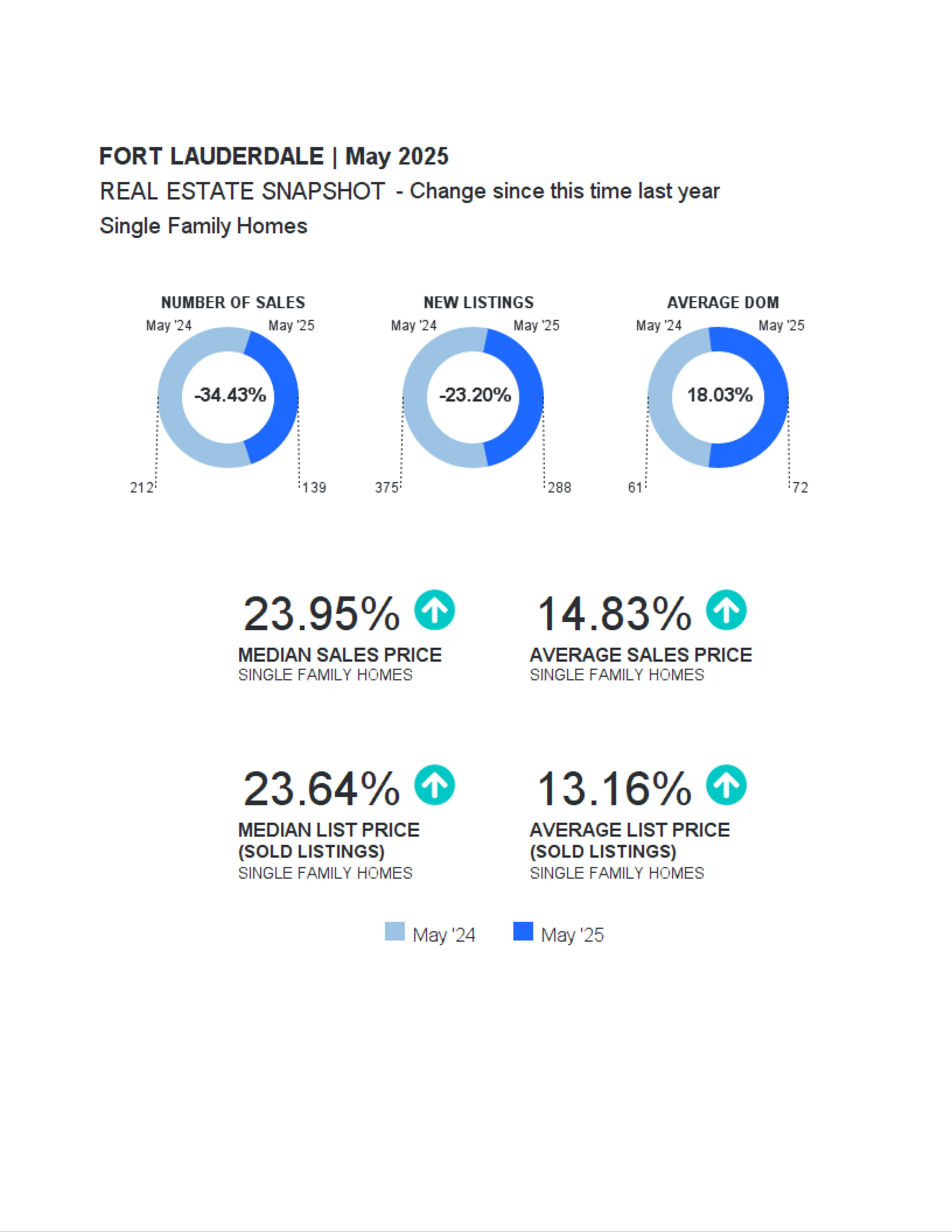
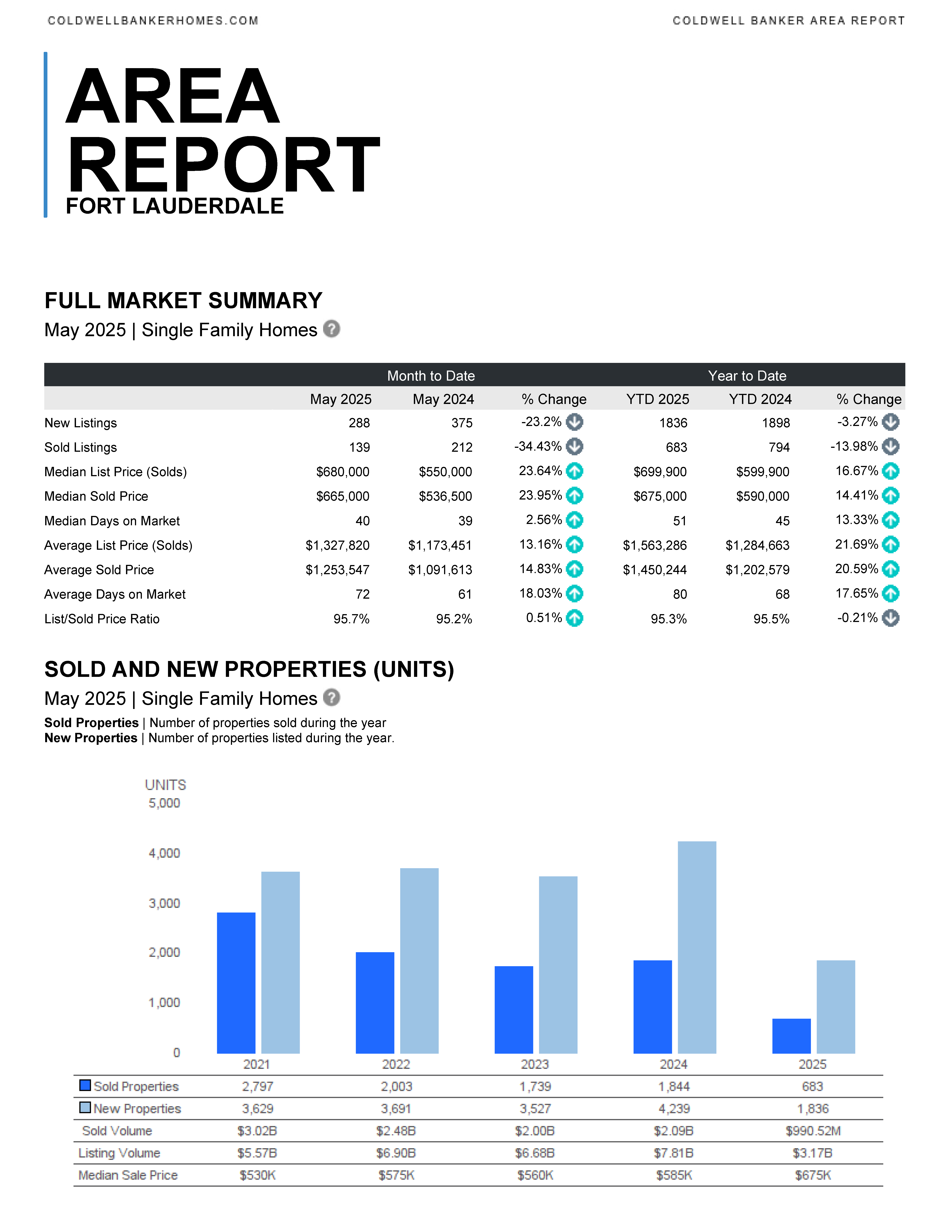
- Number of sales decreased from 212 in May ’24 to 139 in May ’25, a drop of 34.43%.
- New listings fell from 375 in May ’24 to 288 in May ’25, a decrease of 23.2%.
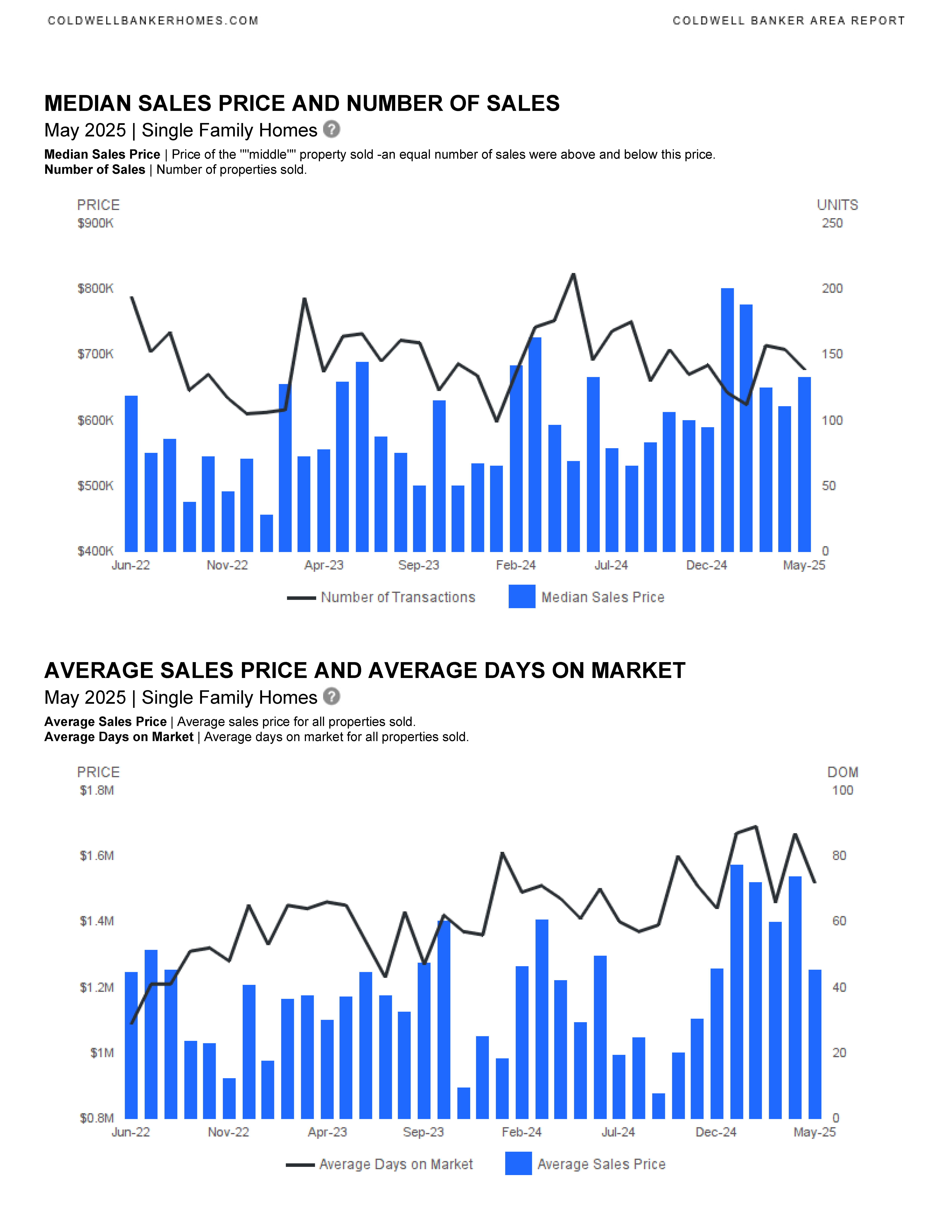
- Median sales price increased by 23.95%, from $536,500 to $665,000.
- Average sales price rose by 14.83%, from $1,091,613 to $1,253,547.
- Average days on market increased from 61 to 72 days, an 18.03% rise.
Condo/Townhouse Market Trends
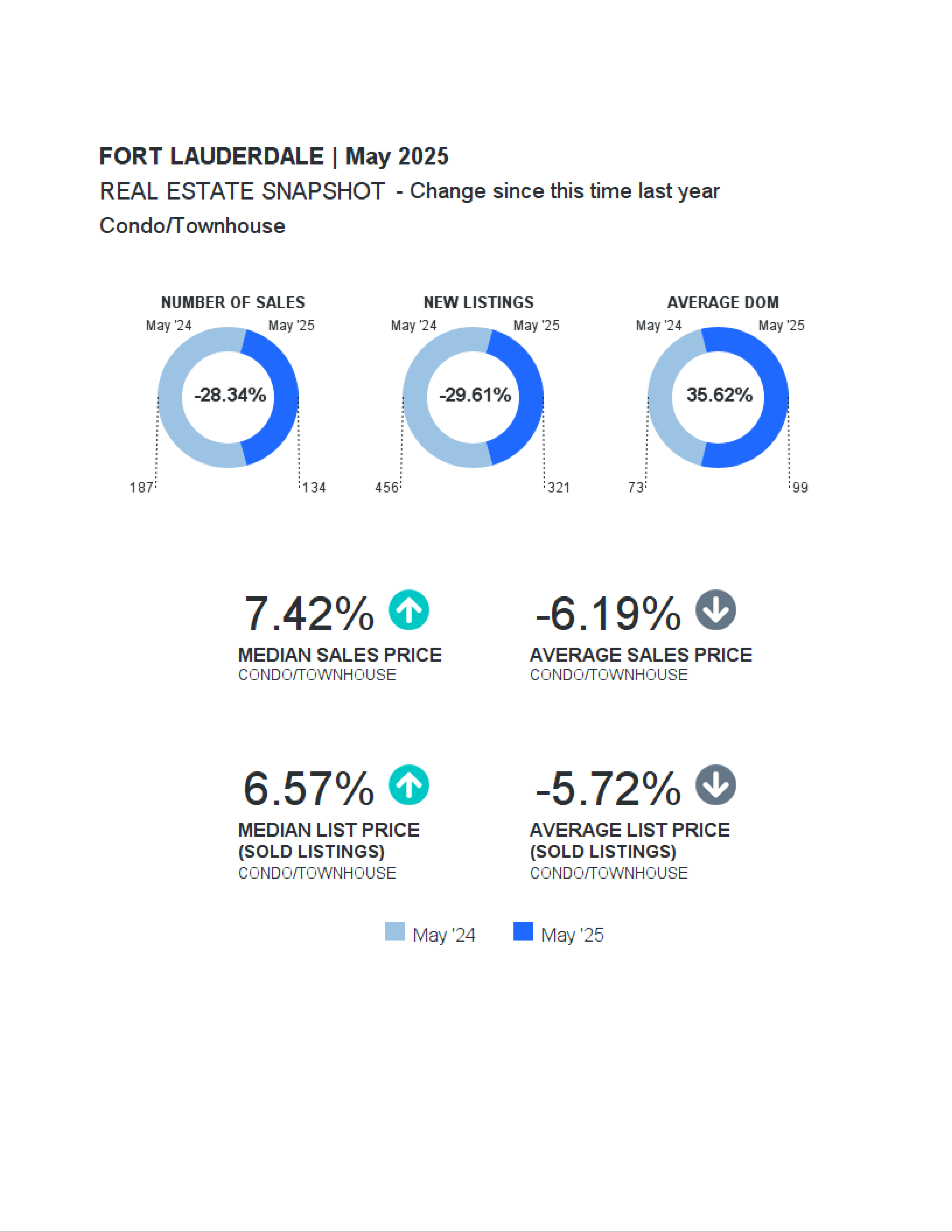
The condo/townhouse market in Fort Lauderdale has also seen a decline in sales, with a slight increase in median prices. This indicates a competitive market despite fewer transactions.
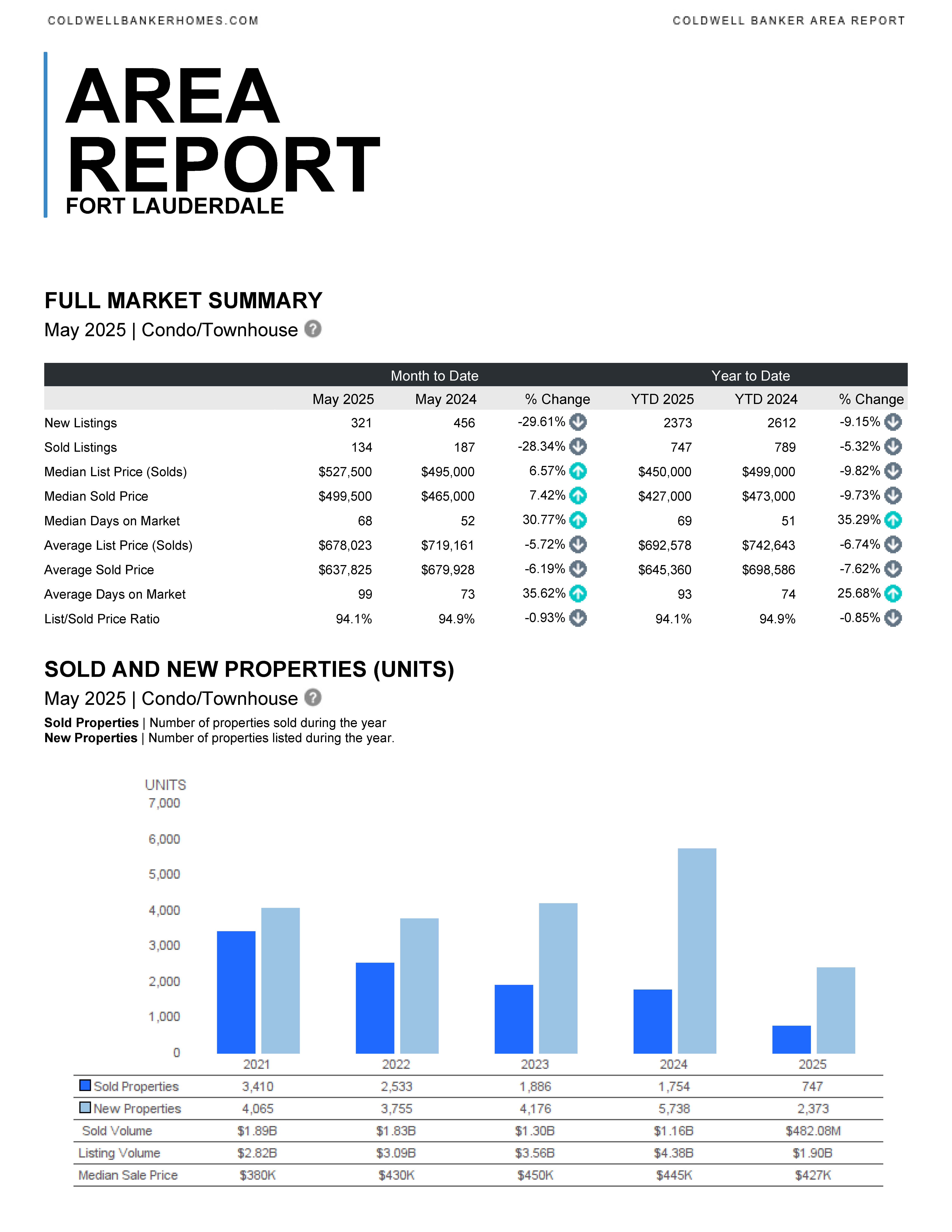
- Number of sales decreased from 187 in May ’24 to 134 in May ’25, a decline of 28.34%.
- New listings dropped from 456 in May ’24 to 321 in May ’25, a decrease of 29.61%.
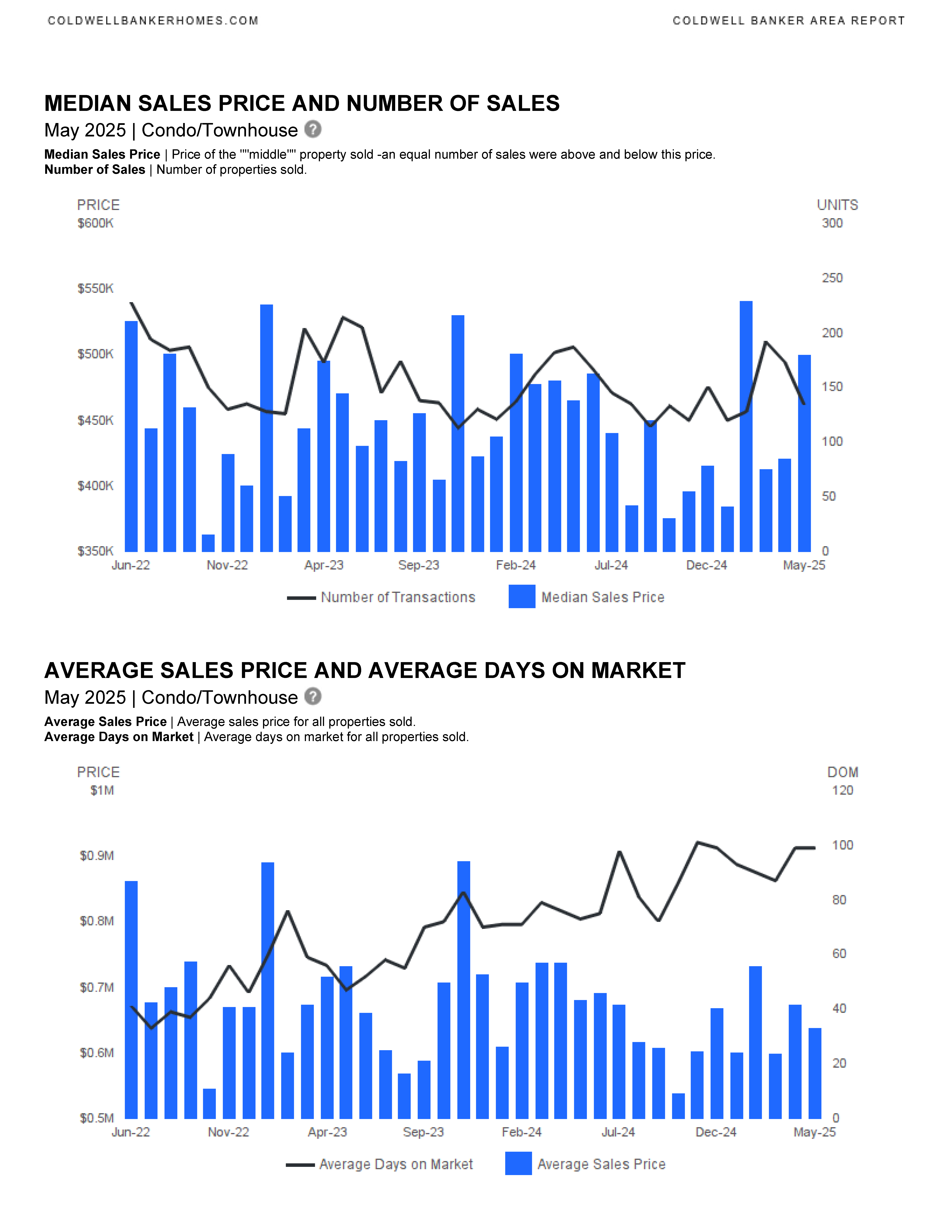
- Median sales price increased by 7.42%, from $465,000 to $499,500.
- Average sales price decreased by 6.19%, from $679,928 to $637,825.
- Average days on market increased from 73 to 99 days, a rise of 35.62%.
Market Summary and Key Statistics
The overall market summary highlights the trends in listings, sales, and pricing for both single-family homes and condos/townhouses. The data reflects a tightening inventory and rising prices.
- Total new listings for single-family homes year-to-date: 1,898, down 3.27% from last year.
- Total sold listings for single-family homes year-to-date: 794, down 13.98% from last year.
- Total new listings for condos/townhouses year-to-date: 2,612, down 9.15% from last year.
- Total sold listings for condos/townhouses year-to-date: 789, down 5.32% from last year.
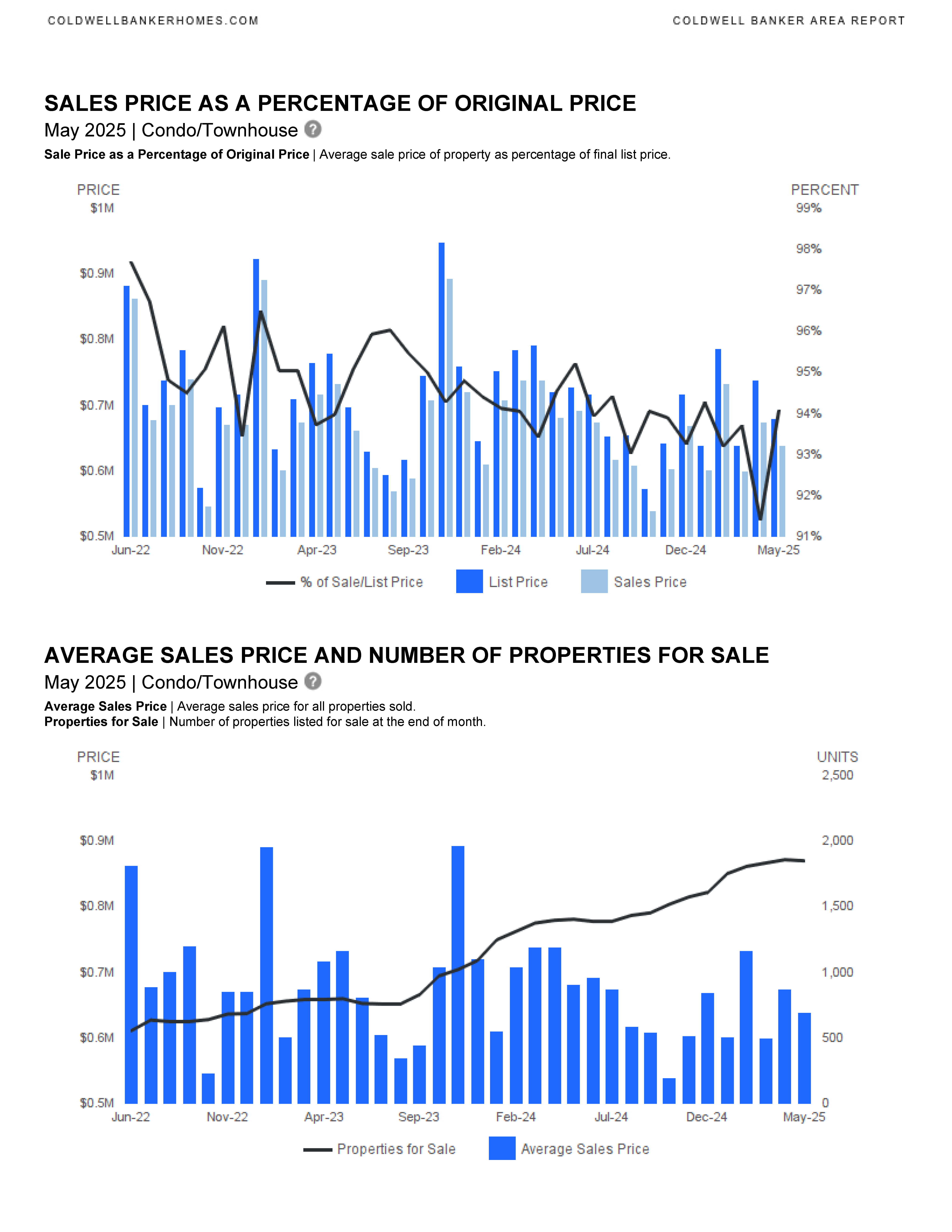
- The list/sold price ratio for single-family homes is 95.7%, while for condos/townhouses it is 94.1%.
Commonly asked questions while reviewing the reports:
What is the difference between “Median Sales Price” and “Average Sales Price”?
Median Sales Price | Price of the “”middle”” property sold -an equal number of sales were above and below this price.
Average Sales Price | Average sales price for all properties sold.
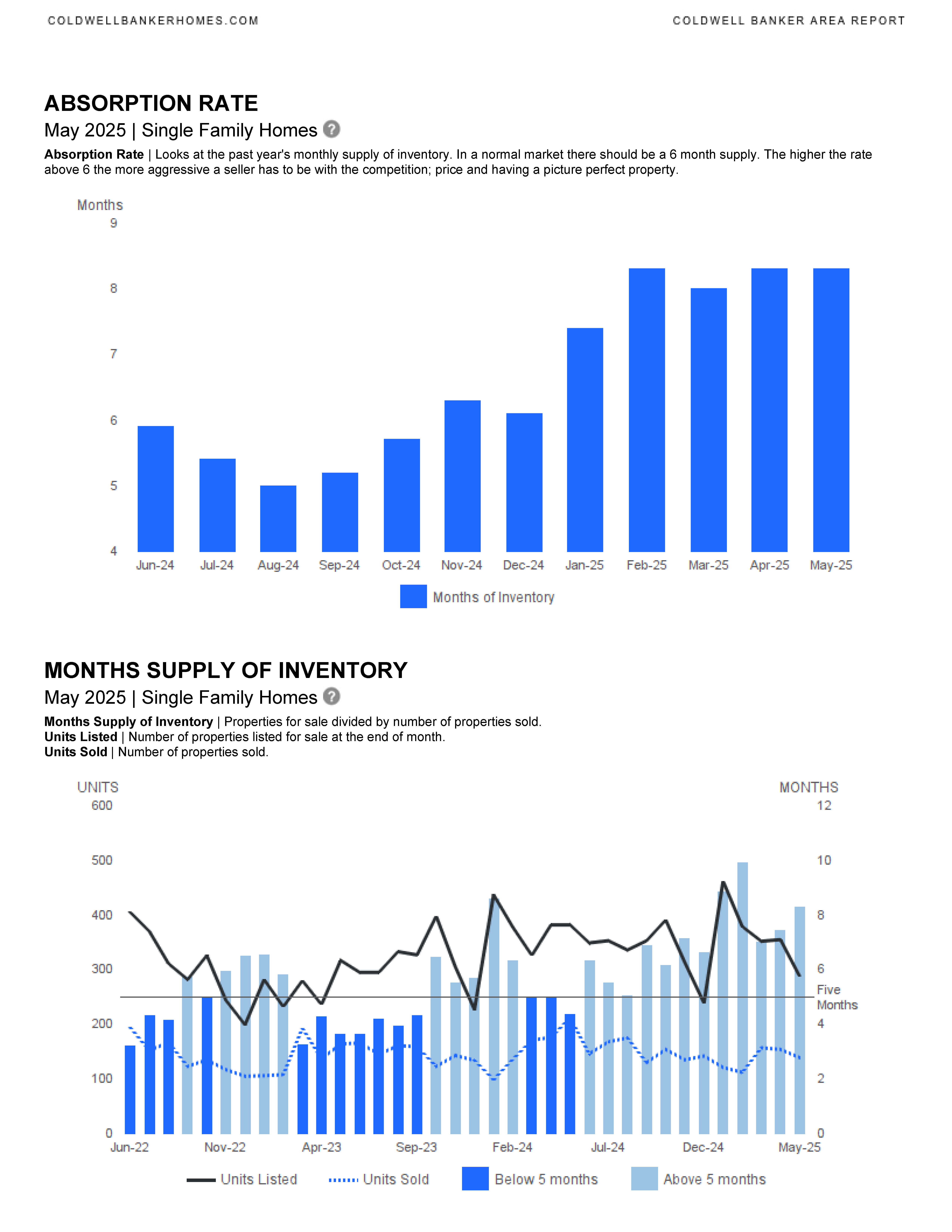
What does “Absorption Rate” mean?
Absorption Rate | Looks at the past year’s monthly supply of inventory. In a normal market there should be a 6 month supply. The higher the rate above 6 the more aggressive a seller has to be with the competition; price and having a picture perfect property.
Single Family Home Area Report listed first, Condo/Townhouses listed second:
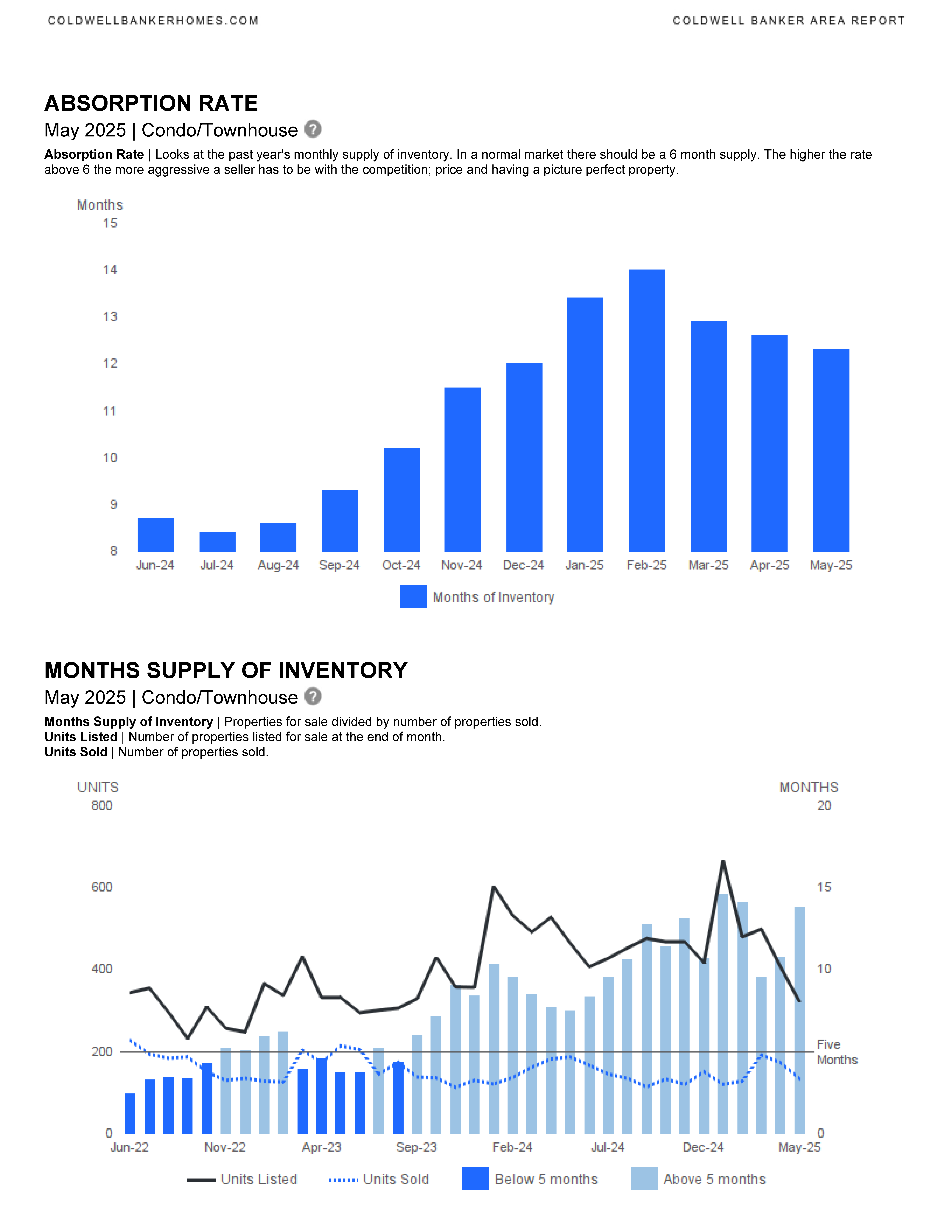

We are entering a new real estate market in SE Florida. This is the time to work with an experienced and knowledgeable real estate professional. Please contact me if you would like to be sent updated market reports for Fort Lauderdale, or another SE Florida city. We can discuss the market, current trends and how we can work together to accomplish your real estate goals. I am here to help.
CONTACT ANNETTE
Let’s start working together!
Annette Dammeyer, REALTOR®, ABR®, AHWD®
Coldwell Banker Realty
901 E Las Olas Blvd STE 101, Fort Lauderdale, FL 33301
808.747.3686
SL 3535792


